
Enhancing Counting Skills Easy Worksheets for Ages 3-5
3 filtered results
Difficulty Level
Grade
Age
-
From - To
Subject
Activity
Standards
Enhancing Counting Skills Easy Worksheets for Ages 3-5 provide young learners a fun, interactive way to master counting. Tailored for preschool and kindergarten kids, each worksheet offers engaging activities to develop strong numerical foundations. From counting objects and connecting numbers to simple math puzzles and colorful illustrations, these resources make learning both enjoyable and effective. Parents and teachers can easily access and print diverse worksheets to support school-readiness and boost early math confidence. Perfect for hands-on practice, they inspire curiosity and foster a lifelong love for learning. Delight your child with our expertly designed worksheets today!
Favorites
With answer key
Interactive
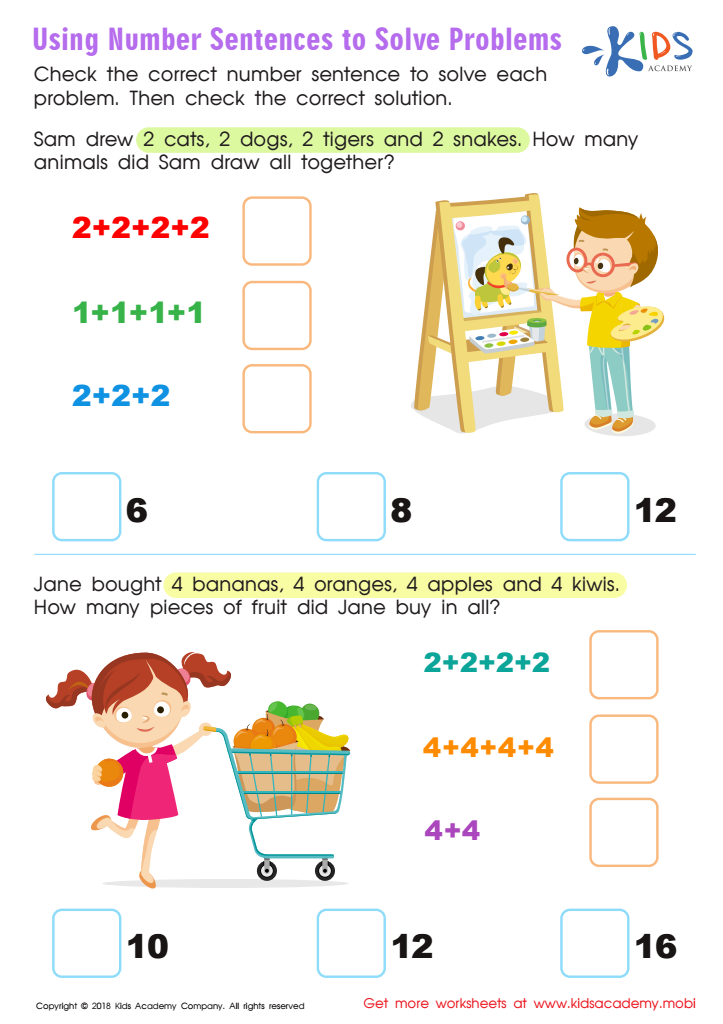
Using Number Sentences to Solve Problems Worksheet
Solving math problems requires an efficient strategy. Picture representation can help young mathematicians with basic addition problems, especially when it involves repeated addends. As they gain confidence, they'll be able to apply their number sentence solving abilities to more complex equations.
 Assign to My Students
Using Number Sentences to Solve Problems Worksheet
Worksheet
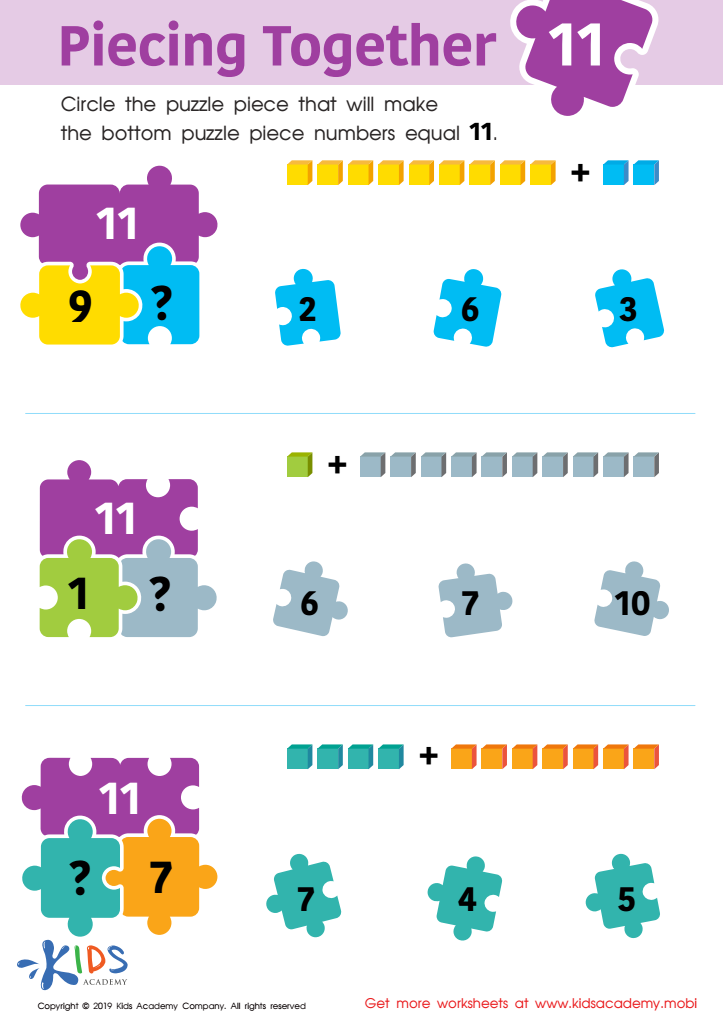
Piecing Together 11 Worksheet
Engage your preschoolers with learning-filled fun! Show them this colorful worksheet, and ask them to identify the figures. Each puzzle piece features an equation, except one which is missing. Help the kids solve the problems and circle the piece that'll make the numbers equal 11. It's a surefire way to make learning enjoyable!
Piecing Together 11 Worksheet
Worksheet
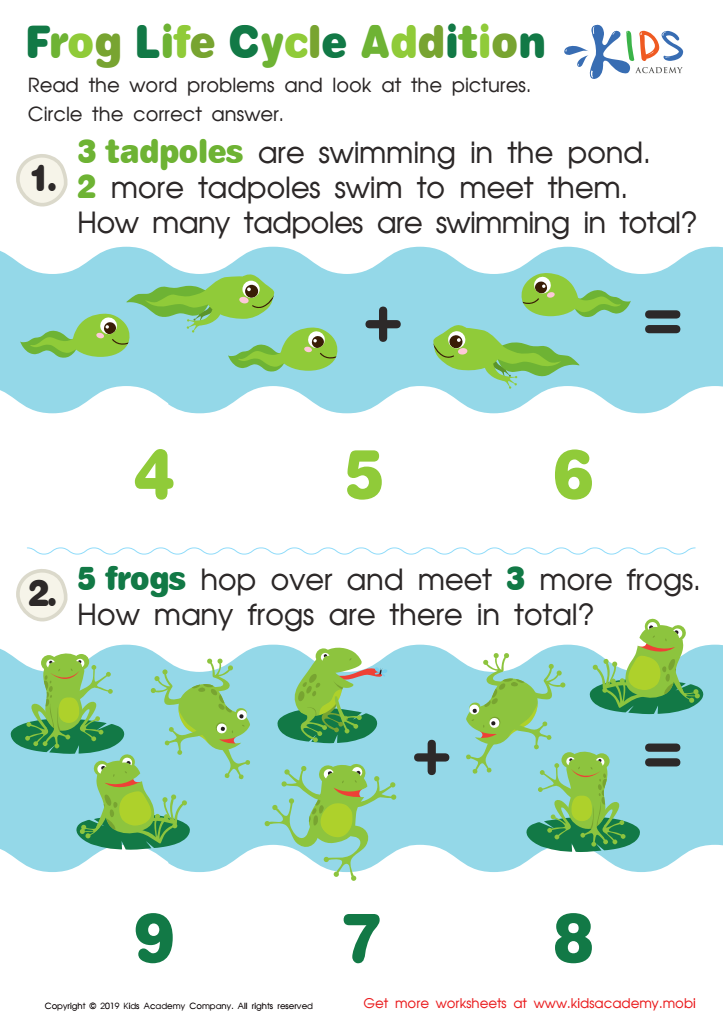
Frog Life Cycle Addition Worksheet
Look at this worksheet with your kids. Read the two word problems aloud, pointing at the pictures showing the frog's life cycle. Help your kids add simple equations and circle the correct answer. Fascinating creatures, frogs go through a cycle before becoming an adult.
Frog Life Cycle Addition Worksheet
Worksheet
Join Kids Academy for Free
Who is primarily going to use this learning content?


.jpg)





Enhancing counting skills in young children ages 3-5 is crucial for a strong foundation in early mathematics and overall cognitive development. At this formative age, children's brains are highly receptive to new information, making it the perfect time to introduce basic numerical concepts. Counting exercises not only help children recognize numbers and sequences but also foster a wide array of other essential skills.
Firstly, counting skills develop a child's understanding of quantity and number sense, which are foundational for more advanced mathematical operations like addition and subtraction. It strengthens memory and promotes the ability to concentrate and pay attention to details. Furthermore, engaging in counting activities enhances children's problem-solving abilities and logical thinking, which are applicable across various life situations.
Incorporating easy and fun counting activities can also support fine motor skills as children often use their fingers or objects to count. Additionally, counting in group settings teaches social skills such as taking turns, listening, and cooperating.
By prioritizing these skills early on, parents and teachers can ensure that children are better prepared for the academic challenges of formal schooling. These early skills set children on a path towards a lifelong appreciation for mathematics and improved self-confidence in their academic abilities, fostering a more holistic development.








