Number comparison Easy Worksheets for Ages 3-5
3 filtered results
-
From - To
Discover our engaging "Number Comparison Easy Worksheets" designed specifically for children aged 3-5! These worksheets serve as a fun and interactive way for young learners to develop their number recognition and comparison skills. With colorful illustrations and simple activities, kids will easily grasp concepts like more, less, and equal. Our resources provide a great opportunity for preschoolers to build a strong foundation in mathematics while enhancing their critical thinking abilities. Perfect for classroom use or at-home learning, these worksheets will keep your little ones entertained while fostering essential early math skills. Start your child’s mathematical journey today!
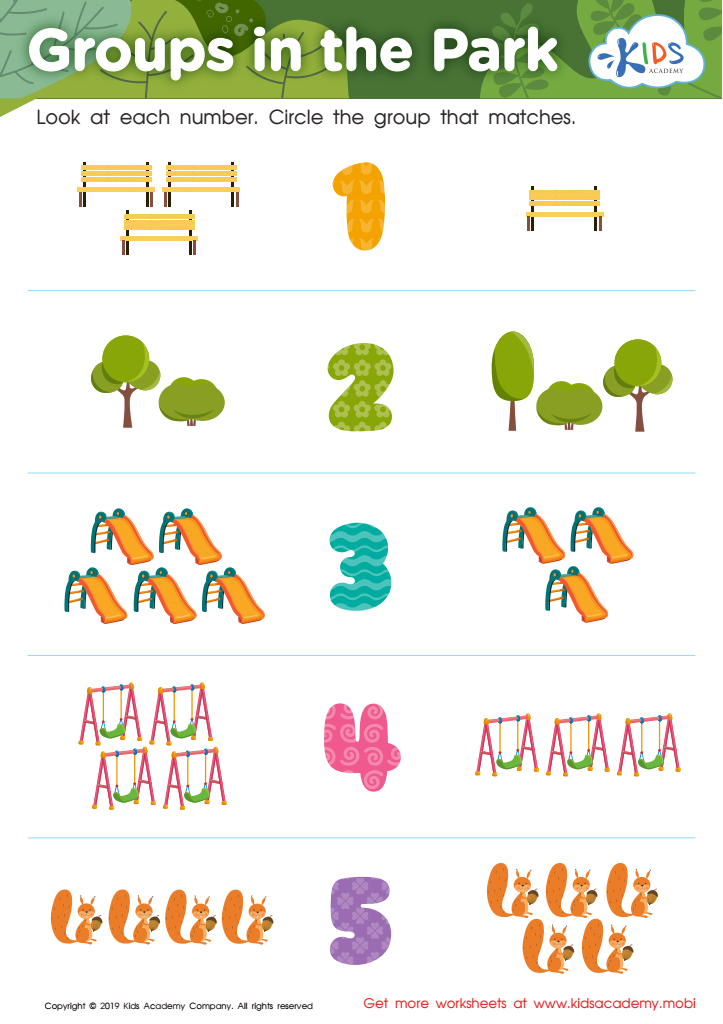
Groups in the Park Worksheet
 Assign to My Students
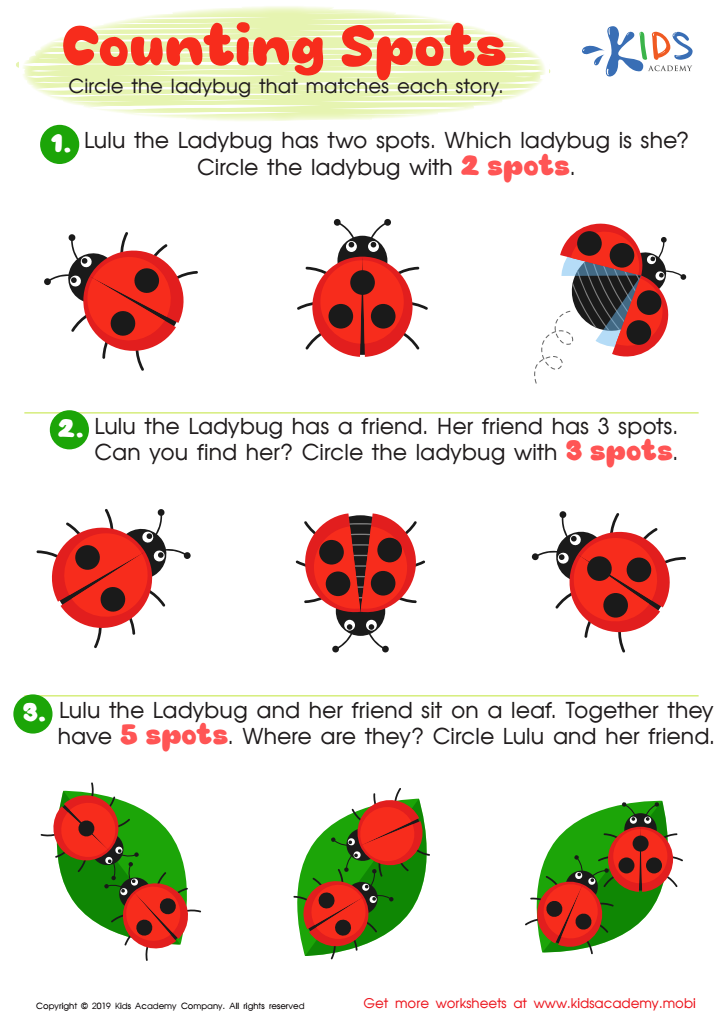
Counting Spots Worksheet
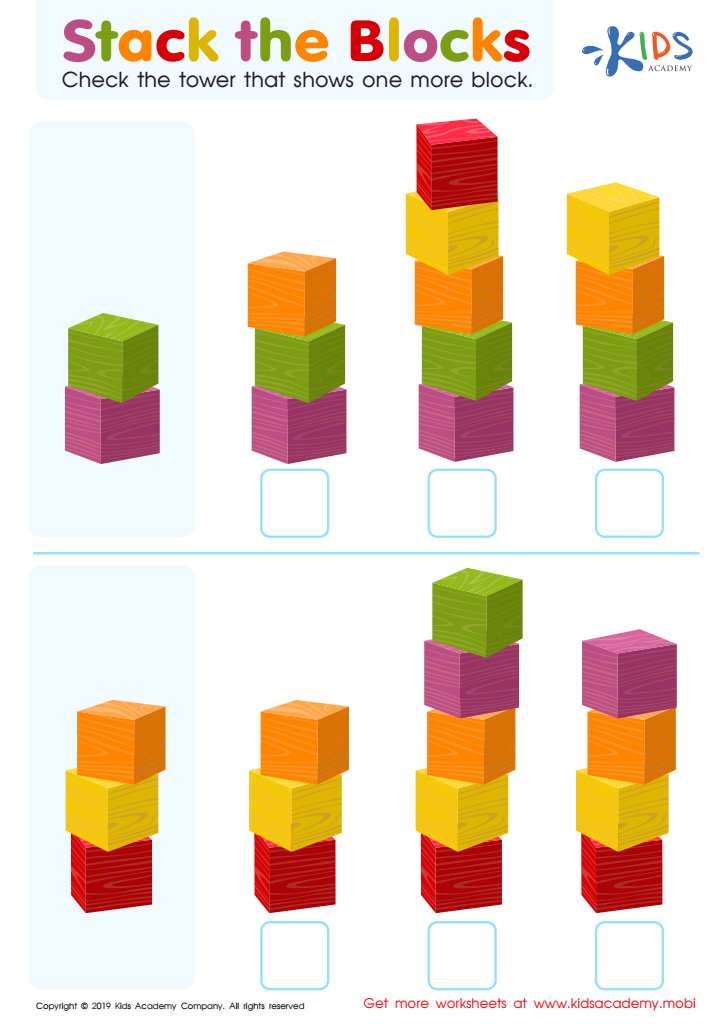
Stack the Blocks Worksheet






Number comparison, especially tailored for ages 3-5, is a foundational skill crucial for early childhood development. During these formative years, children begin to grasp basic mathematical concepts, making it essential for parents and teachers to actively engage with this learning process. Understanding number comparison helps children develop critical thinking and problem-solving skills, laying the groundwork for future mathematical understanding.
Incorporating number comparison activities fosters numeracy skills, such as recognizing the differences between quantities and understanding the concept of more or less. These activities also enhance language skills, as children learn to articulate their reasoning using mathematical vocabulary. Engaging in number comparison allows for hands-on exploration, making abstract concepts concrete and relatable.
Moreover, introducing these skills early cultivates a positive attitude towards math, reducing anxiety and encouraging a growth mindset as children progress in their education. It also promotes social learning, as peers can collaborate through games and activities centered around comparing numbers, thus enhancing their communication skills.
Ultimately, by focusing on number comparison during early childhood, parents and teachers play a pivotal role in shaping children’s academic confidence and readiness for more complex mathematical concepts in later years. This engagement is beneficial not only for learning but also for holistic development.








