Check out this FREE "Problem-Solving Skills" Trial Lesson for age 3-5!

Subtracting with Objects from Stories

Favorites
With answer key
Interactive
  • 3-5
  • Problem-Solving Skills
  • Easy
Harvesting Subtraction Stories Worksheet

Harvesting Subtraction Stories Worksheet

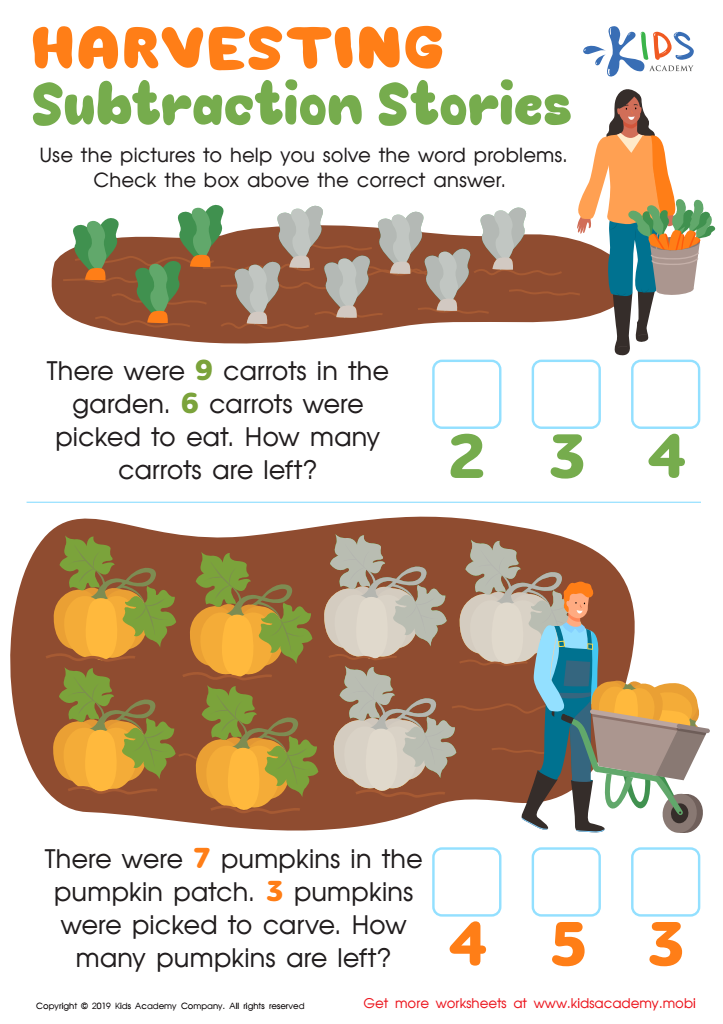
Before starting the exercise, ask your kids if they know what harvesting is. Show them the pictures and explain if needed. Help them read the word problems, use the pictures to find the answer and check the box above. There are two simple word problems in the printout.
Harvesting Subtraction Stories Worksheet
Worksheet
Firewood Subtraction Worksheet

Firewood Subtraction Worksheet

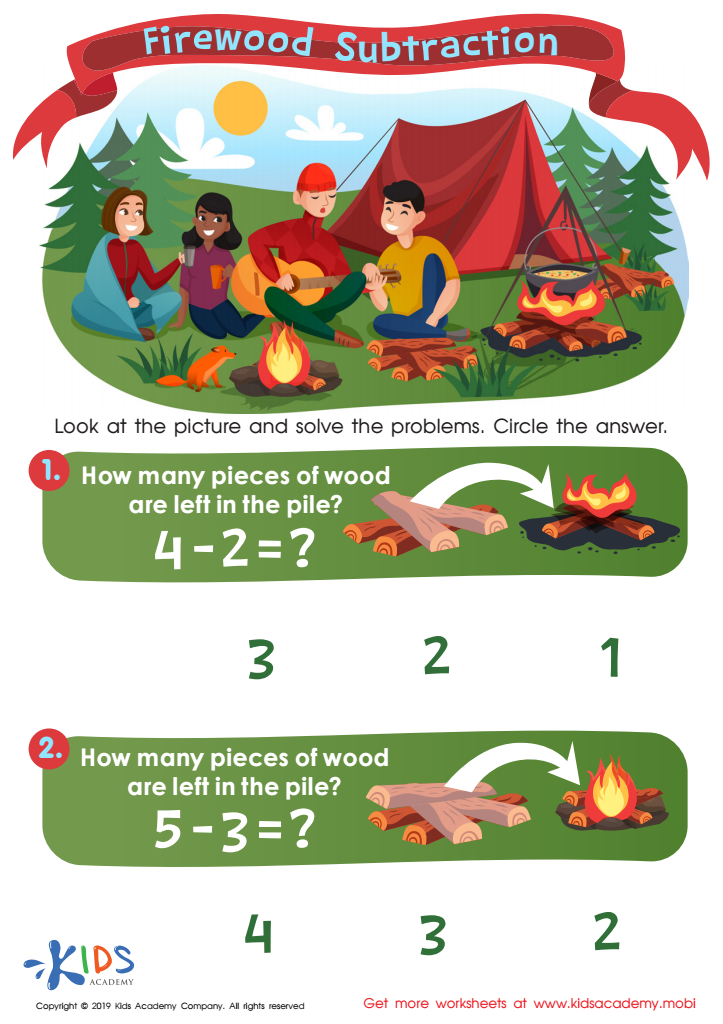
Guide your students to show that math can be fun! If your kindergartners need help with addition and subtraction, the simple problems in this worksheet are ideal. Ask them to look at the two pictures and find the correct answers. Help them check their work to build their confidence in math.
Firewood Subtraction Worksheet
Worksheet
Add up the Dollars Worksheet

Add up the Dollars Worksheet

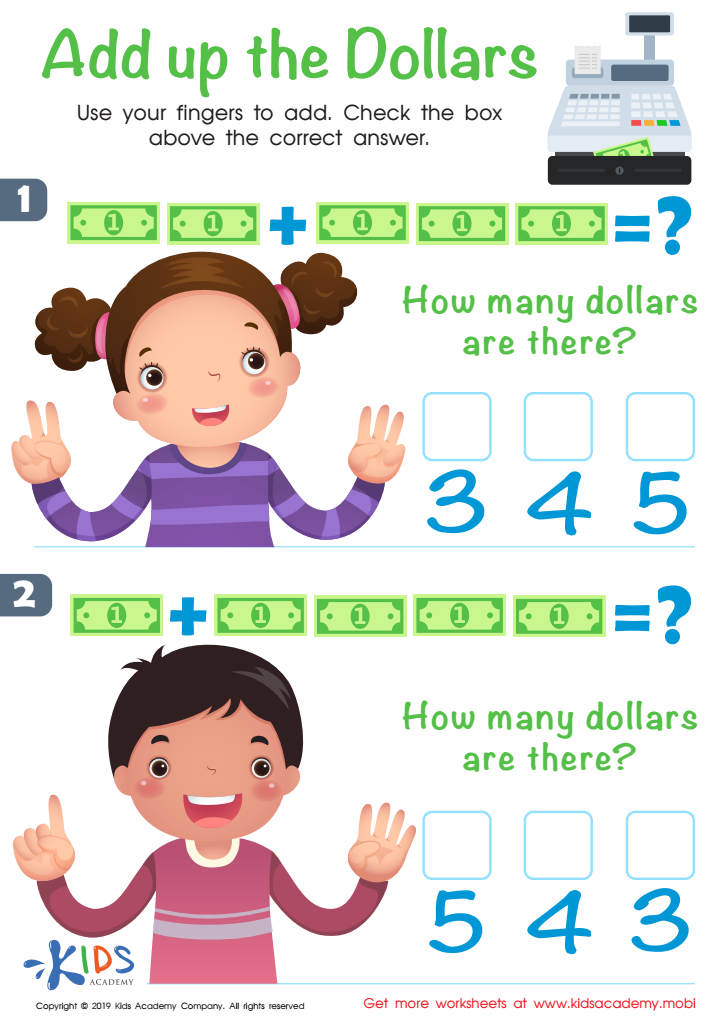
Money is key in life. It buys what we love and need. Get students to learn with exercises full of colour and familiar items like this worksheet. It shows two kids and some money. Ask pupils to use their fingers to add the money and check the box with the right answer.
Add up the Dollars Worksheet
Worksheet
Birthday Party Subtraction Worksheet

Birthday Party Subtraction Worksheet

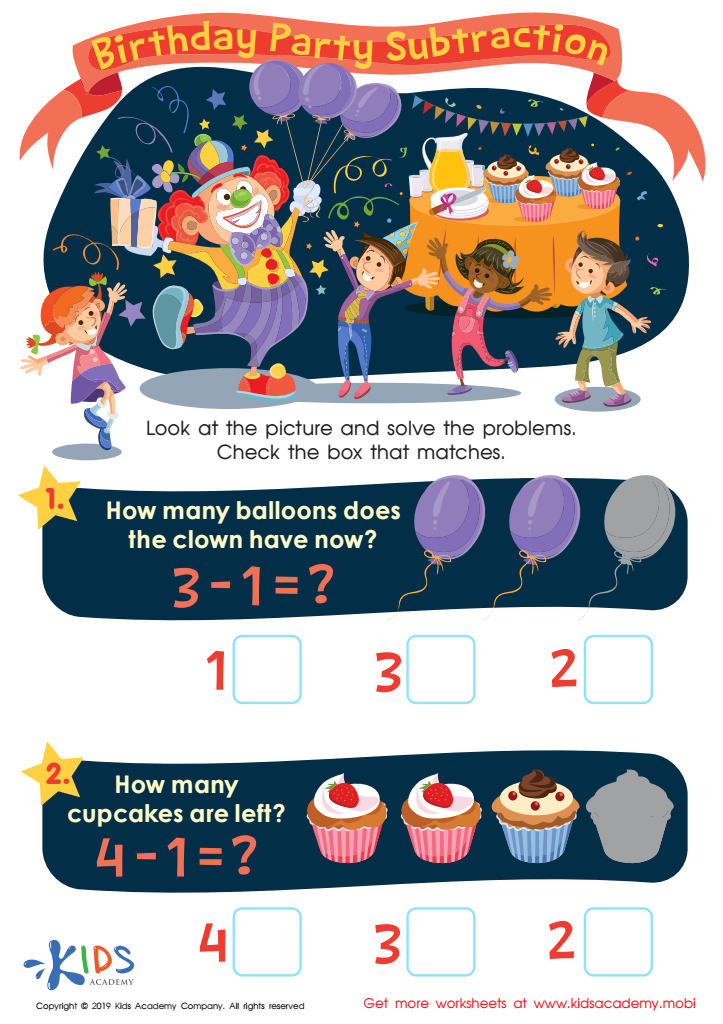
Kids love birthday parties, with fun activities and yummy treats. Make math fun with this worksheet! It has pictures of a party, and your kids should solve the problems and check the matching box. They'll get to learn math, and have fun too!
Birthday Party Subtraction Worksheet
Worksheet
Enrichment: Firefighter Ladders Worksheet

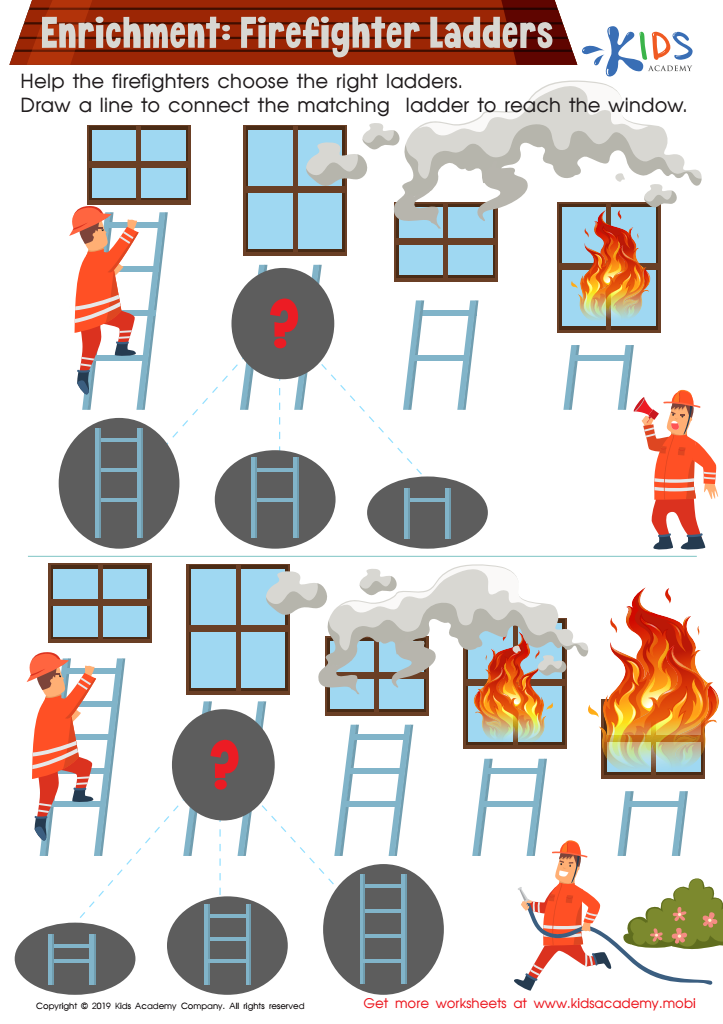
Enrichment: Firefighter Ladders Worksheet

Firefighters are vital to their communities. If your kids want to become firefighters, they'll love this worksheet. Ask them to spot the firemen in the picture. Then, help the firemen pick the right ladders to reach the windows. Draw lines to connect the ladders that match. It's a great learning activity!
Enrichment: Firefighter Ladders Worksheet
Worksheet
Selling the Bracelets Worksheet

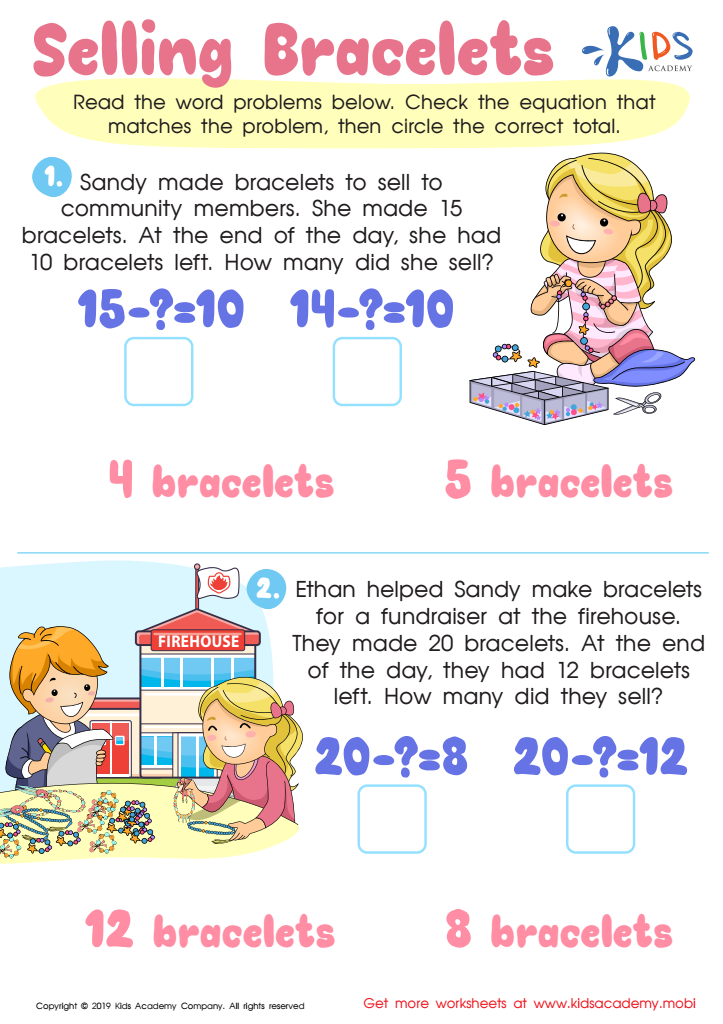
Selling the Bracelets Worksheet

Engage your kids with learning by making it fun! Try this creative worksheet: your kids can practice subtraction while making bracelets. Download the pdf; read the two word problems to them and help them choose the correct total. Have fun! (80 words)
Selling the Bracelets Worksheet
Worksheet
Kindness Maze Worksheet

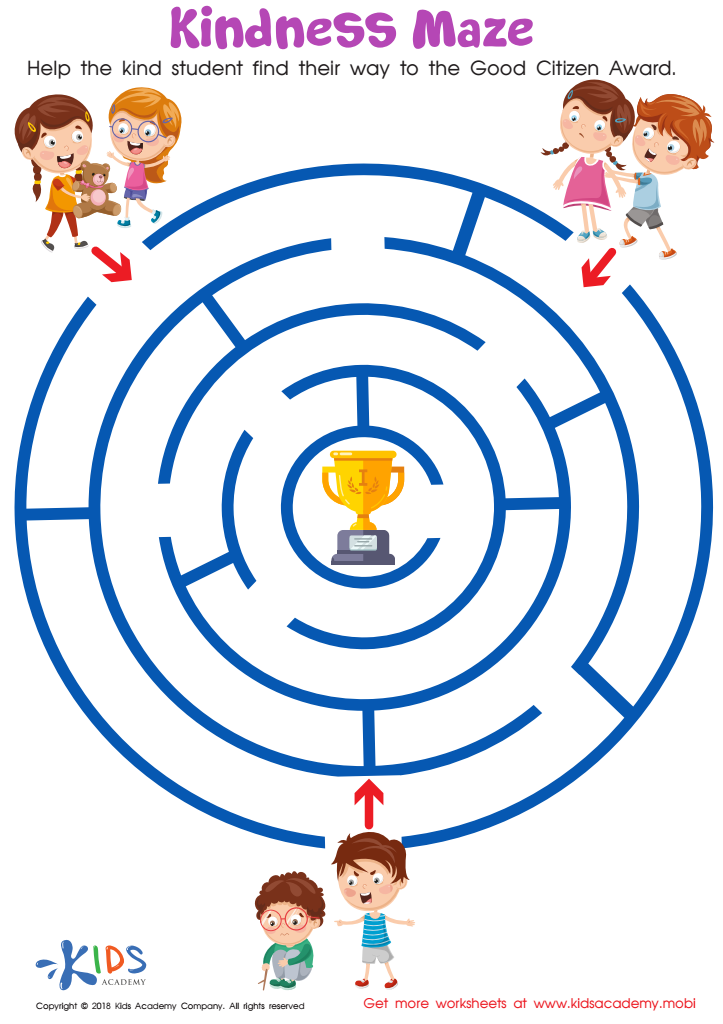
Kindness Maze Worksheet

Rewards come in many forms for kind deeds. When your children do good, you can choose to reward them with a gift or compliment. The students in this worksheet have been awarded the Good Citizen Award for kindness. Let your kids help the students find their way to the award - at the center of the maze. Guide them through to get their prize.
Kindness Maze Worksheet
Worksheet


Problem-solving skills are crucial for young children ages 3-5 because they lay the foundation for critical thinking, independence, and resilience. At this formative stage, children encounter situations that require them to think creatively and make decisions, ranging from figuring out how to build a block tower to resolving conflicts with peers. By fostering problem-solving abilities, parents and teachers equip children with the tools to approach challenges confidently and think analytically.

Developing these skills early on promotes cognitive development by encouraging curiosity and experimentation. This helps children learn cause and effect, improve their memory, and enhance their attention spans. Additionally, problem-solving impacts social and emotional growth. When children navigate social interactions and emotional reactions, they build empathy, patience, and the ability to cope with frustration.

Furthermore, the confidence gained through successful problem-solving experiences fosters a positive self-concept. Children who believe in their ability to solve problems are more likely to take on new challenges, thereby continuously growing and learning. By valuing and nurturing problem-solving abilities in young children, parents and teachers set the stage for future academic success and a lifelong love of learning. This holistic development not only benefits individual children but also contributes to the welfare of the whole community.