Story sequencing Easy Worksheets for Ages 3-5
3 filtered results
-
From - To
Discover our engaging "Story Sequencing Easy Worksheets" designed specifically for children aged 3-5! These worksheets help young learners enhance their comprehension and critical thinking skills as they practice arranging story events in the correct order. By using colorful images and simple prompts, kids will enjoy connecting scenes and narrating their own stories. Our user-friendly layout ensures that these materials are accessible and fun for early learners, making storytime an interactive experience. Foster creativity and cognitive development in your child with our entertaining and educational worksheets! Perfect for both classroom use and at-home learning. Explore the magic of storytelling today!
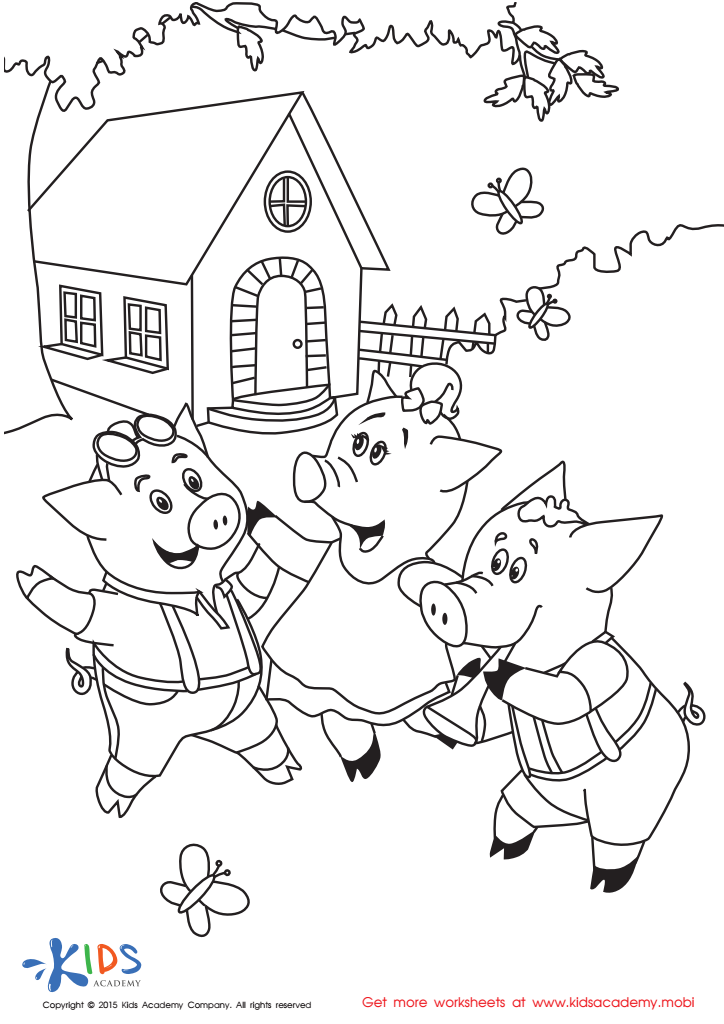
Folktales Printable PDF Worksheet: The 3 Little Pigs
 Assign to My Students
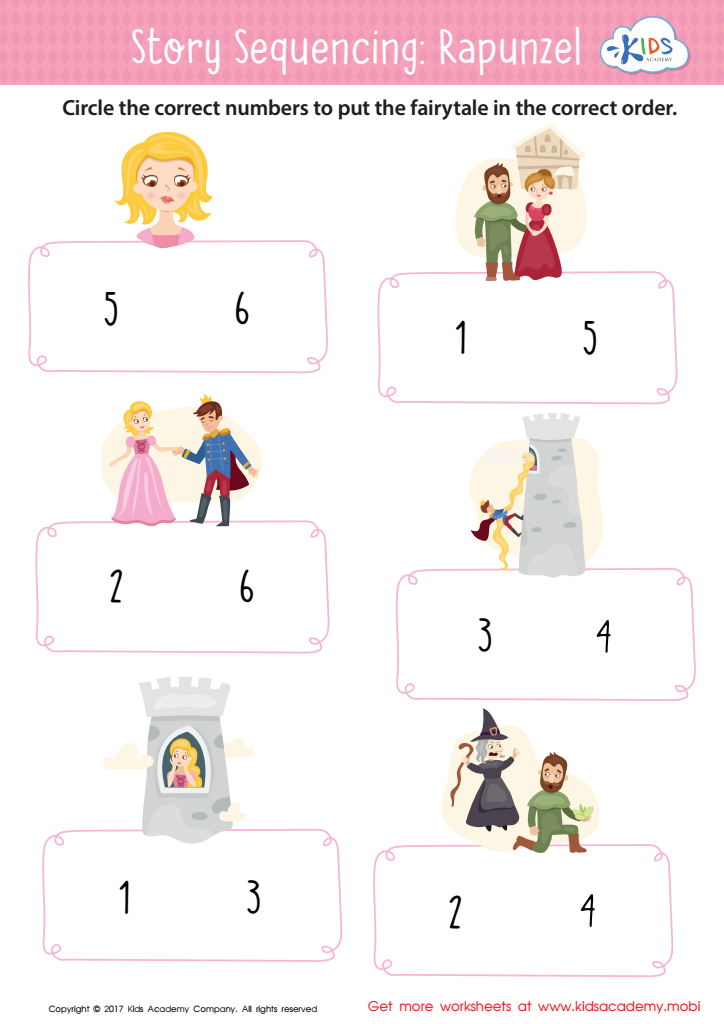
Rapunzel Story Sequencing Worksheet
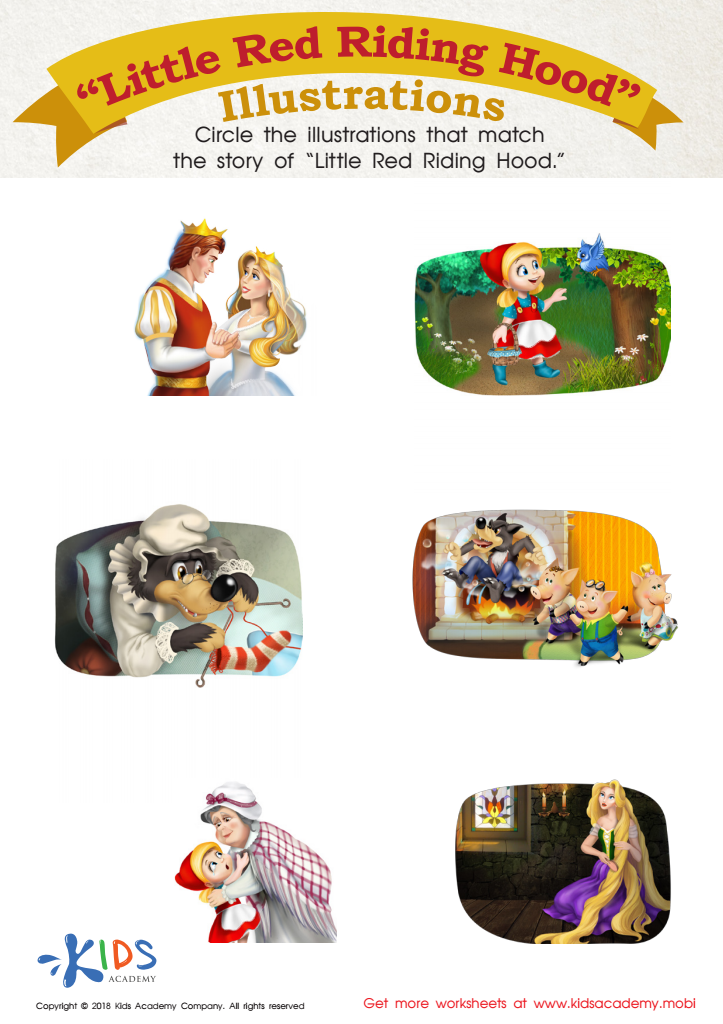
Little Red Riding Hood: Illustrations Worksheet








Story sequencing is essential for young children aged 3-5 because it lays the foundation for critical thinking, comprehension, and narrative skills. At this early developmental stage, learning to sequence stories helps children understand the structure of narratives, including the beginning, middle, and end. This understanding promotes their abilities to predict outcomes and make connections between events, which enhances cognitive development.
Moreover, story sequencing encourages language development. As children recount and arrange events in a tale, they practice vocabulary and enhance their expressive language skills. It also fosters listening skills, requiring them to pay attention to the order of events presented, which is vital for effective communication.
For teachers and parents, engaging children in story sequencing activities creates interactive learning moments that boost engagement. It promotes collaborative activities, whether through physical tasks like using cards or verbal retellings, which strengthens social skills as children learn to share and listen to one another's ideas. Additionally, story sequencing nudges creativity, allowing children to explore different endings or perspectives within a story, enhancing their imagination. Overall, prioritizing story sequencing in early childhood education is crucial for building a solid foundation for future literacy skills and overall cognitive development.








