Visual Perception Skills Easy Worksheets for Ages 3-5
4 filtered results
-
From - To
Enhance your child's learning with our Visual Perception Skills Easy Worksheets designed specifically for ages 3-5. These engaging and age-appropriate activities help strengthen essential skills such as shape recognition, pattern identification, and spatial awareness. Our worksheets foster creativity, critical thinking, and problem-solving, making learning both fun and educational. Each worksheet is designed to capture the attention of young learners while promoting hand-eye coordination and observational skills. Whether used at home or in the classroom, these printable resources provide an effective and enjoyable way to encourage early childhood development. Start your child's learning journey today with our easy-to-use visual perception worksheets!
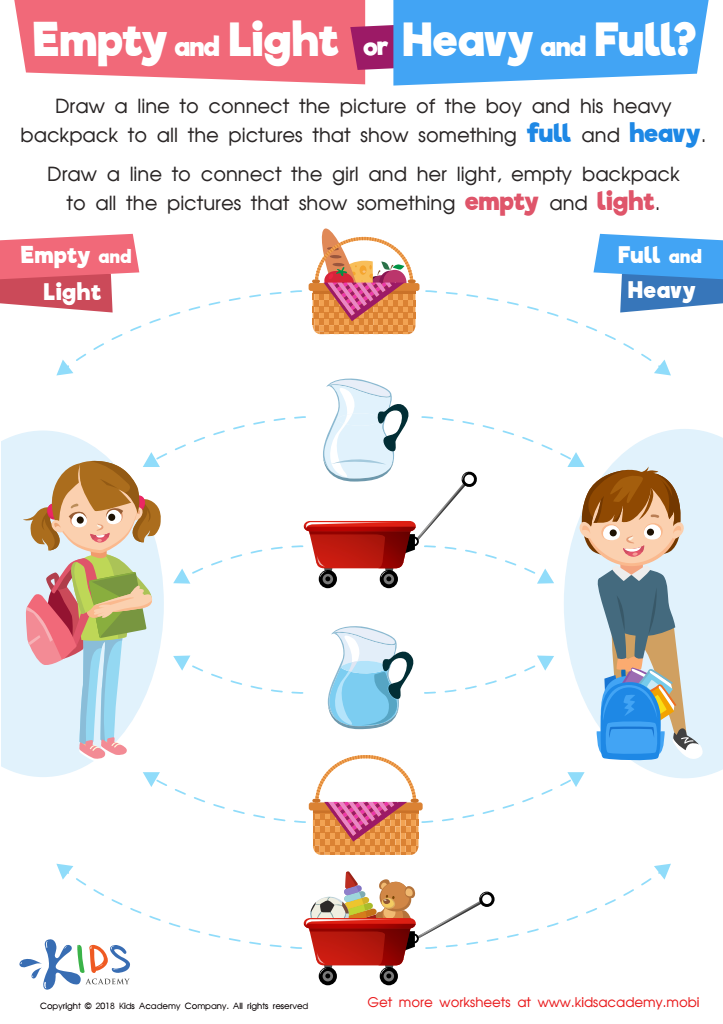
Empty and Light or Heavy and Full? Worksheet
 Assign to My Students
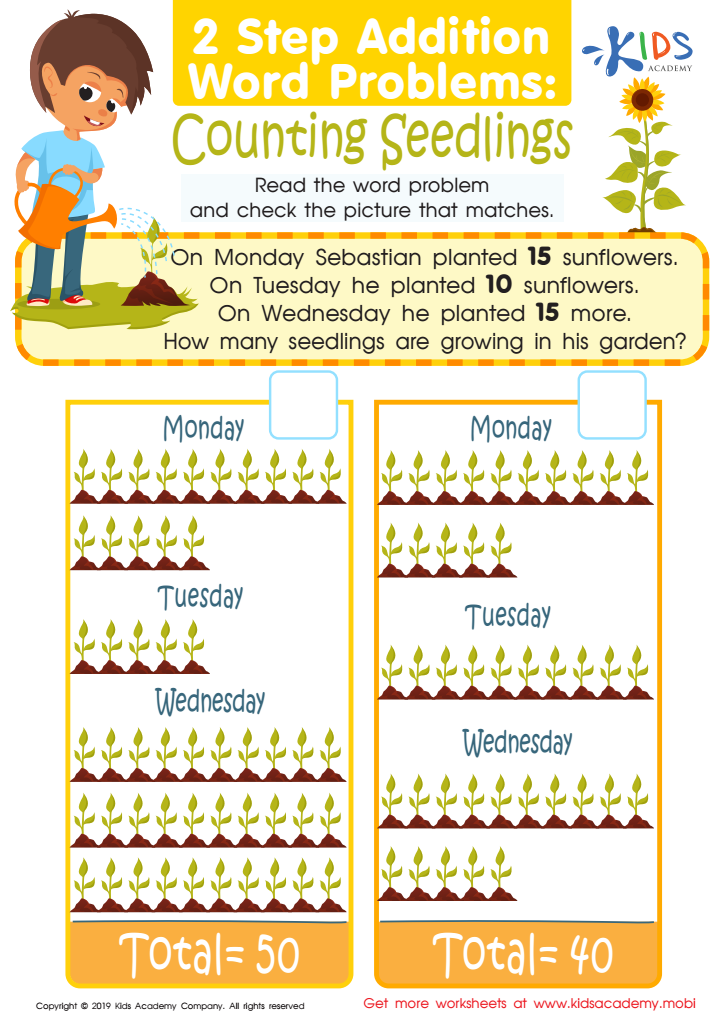
Counting Seedlings Worksheet
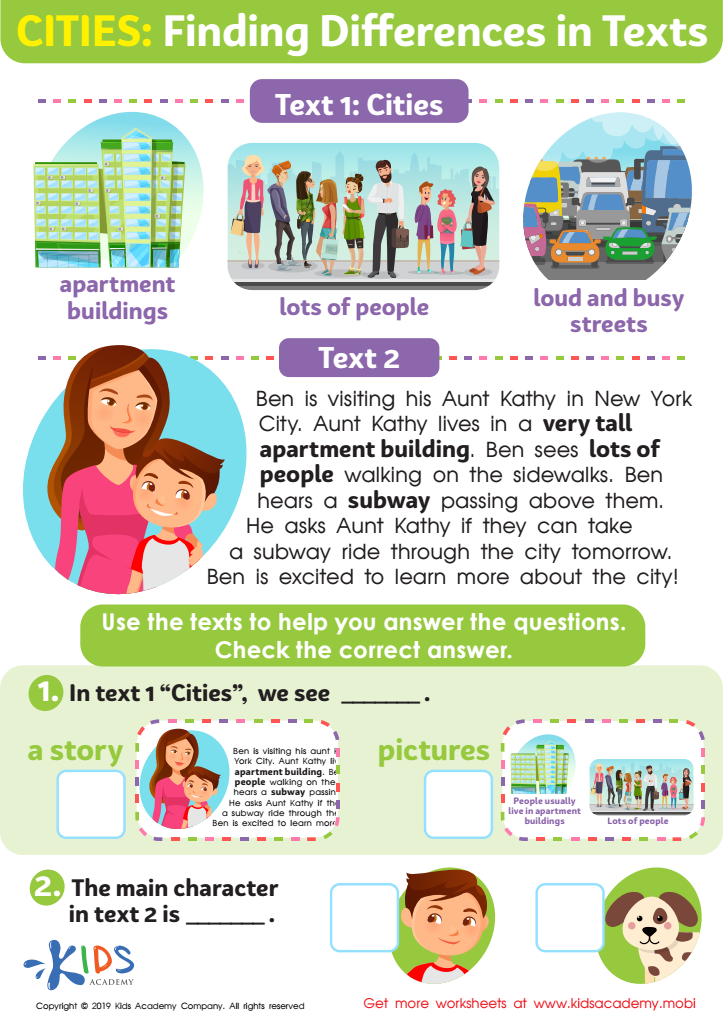
Cities: Finding Differences Worksheet
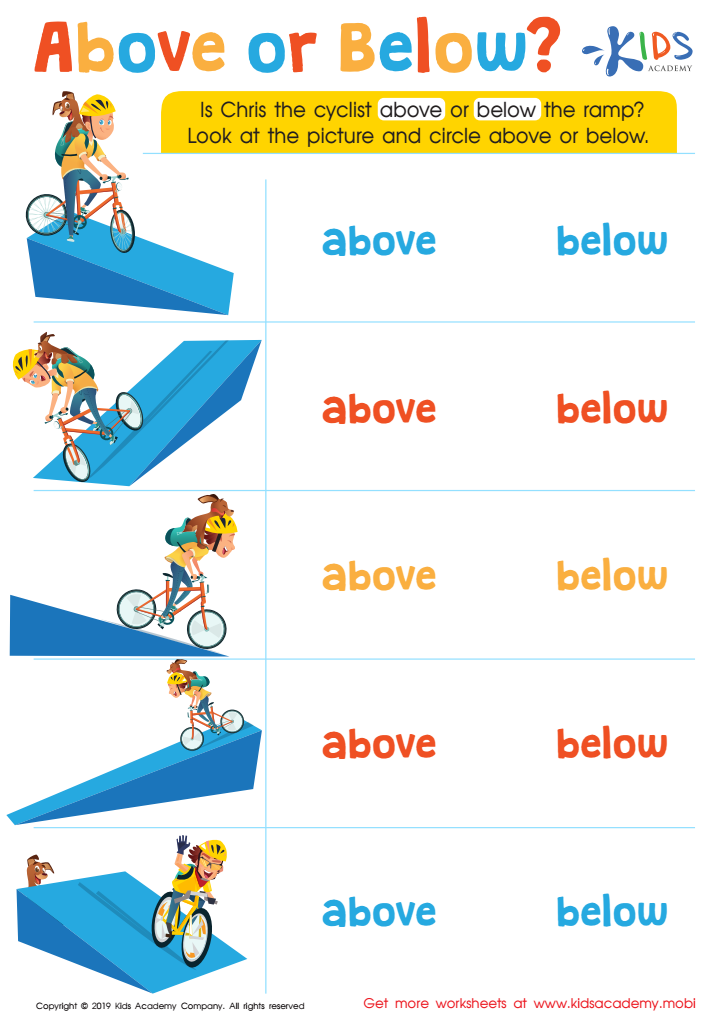
Above or Below? Worksheet







Visual perception skills are crucial for the early development of children aged 3-5, as they form the foundation for many learning processes. Parents and teachers should prioritize these skills because they significantly influence a child’s ability to interpret and interact with their environment. At this age, children are developing essential skills like recognizing shapes, colors, and spatial relationships, which are vital for academic tasks such as reading, writing, and math.
Strong visual perception abilities aid in tasks like sorting objects, identifying differences, and understanding maps and diagrams. For instance, a child who recognizes shapes and patterns will excel in early math activities and improve their problem-solving capabilities. Additionally, these skills play a role in sports and physical activity, promoting coordination and motor skills.
By fostering visual perception through engaging activities like puzzles, drawing, and interactive games, caregivers can enhance not only cognitive development but also social skills. Children who master these skills gain confidence, making them more willing to participate in classroom activities. Ultimately, nurturing visual perception is an investment in a child’s current learning and future academic success, thus highlighting its importance for parents and educators alike.








