Check out this FREE Trial Lesson on Numbers for age 3-5!

What Comes Next?

Favorites
With answer key
Interactive
  • 3-5
  • Counting skills
  • Numbers
  • Easy
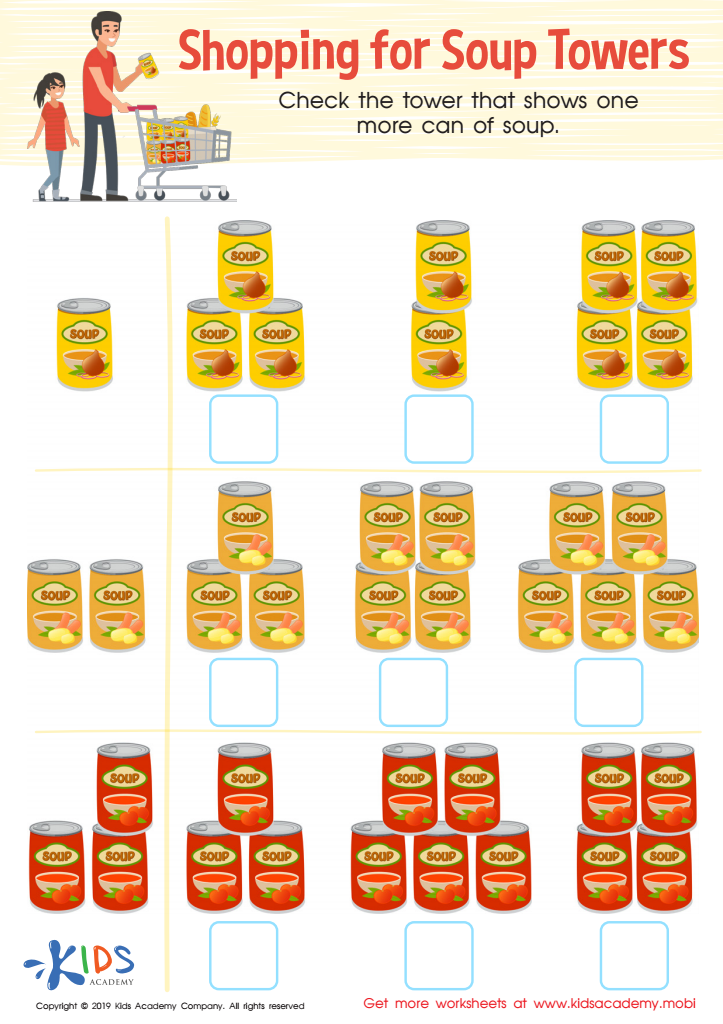
Soup Towers Worksheet

Soup Towers Worksheet

Do your kids come shopping? Transform it into a learning experience! Point out items and ask your kids what they are. Count each stack of cans, and have them check the tower with an extra can of soup. It's a great way to teach them counting and counting up!
Soup Towers Worksheet
Worksheet
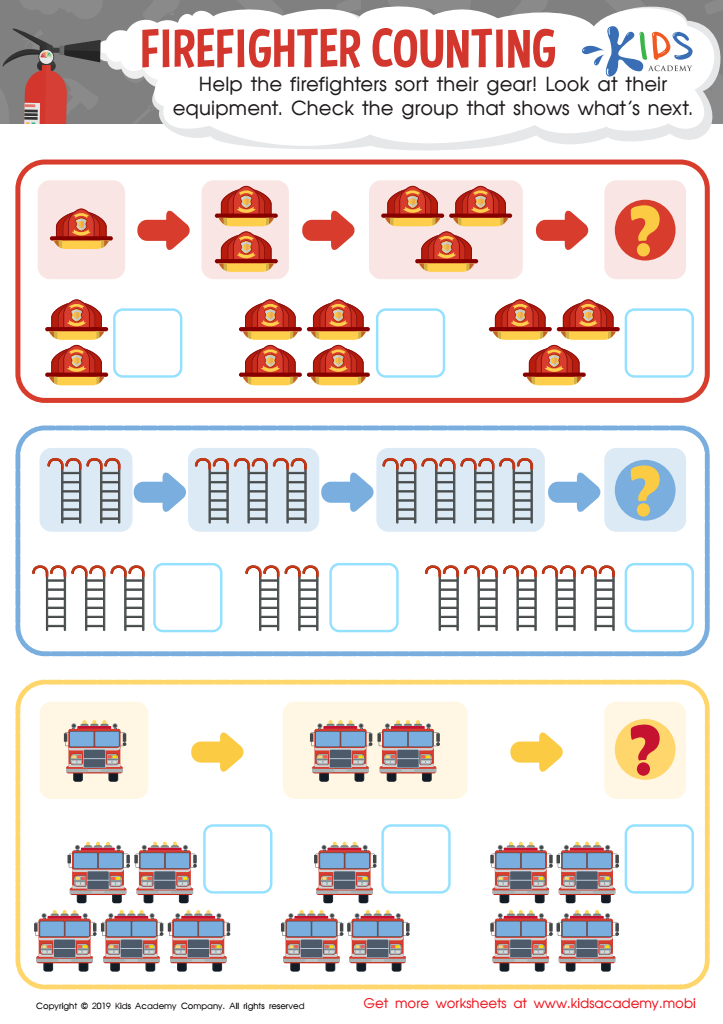
Firefighter Counting Worksheet

Firefighter Counting Worksheet

Firefighters are a vital part of any community. When a fire breaks out, they respond promptly to protect citizens and extinguish the blaze. Wearing specialized gear, they not only make the job easier, but safer too. Get your kids involved and help the firefighters sort their gear. Count the equipment, and check the group for the next steps.
Firefighter Counting Worksheet
Worksheet
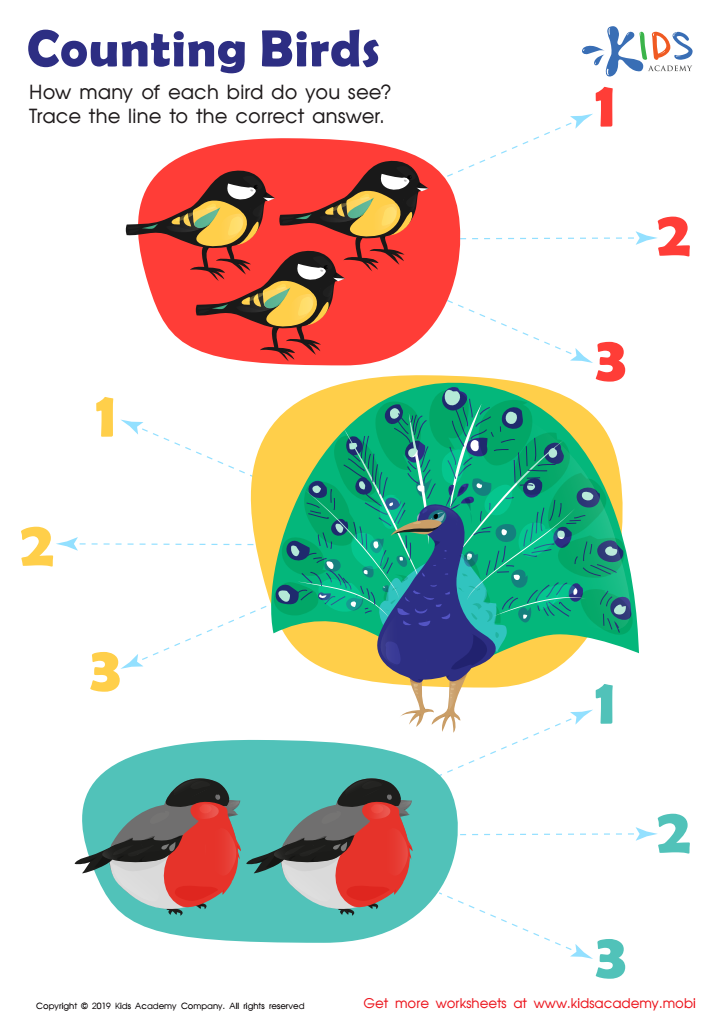
Counting Birds Worksheet

Counting Birds Worksheet

Kids love counting! With each number they learn, they can make a one-to-one representation with an item. The more practice they get, the better. Try this counting worksheet with traceable lines, to give your children practice and work on their fine motor skills. They will enjoy connecting the picture to the right number, and will feel like mathematicians with each success!
Counting Birds Worksheet
Worksheet
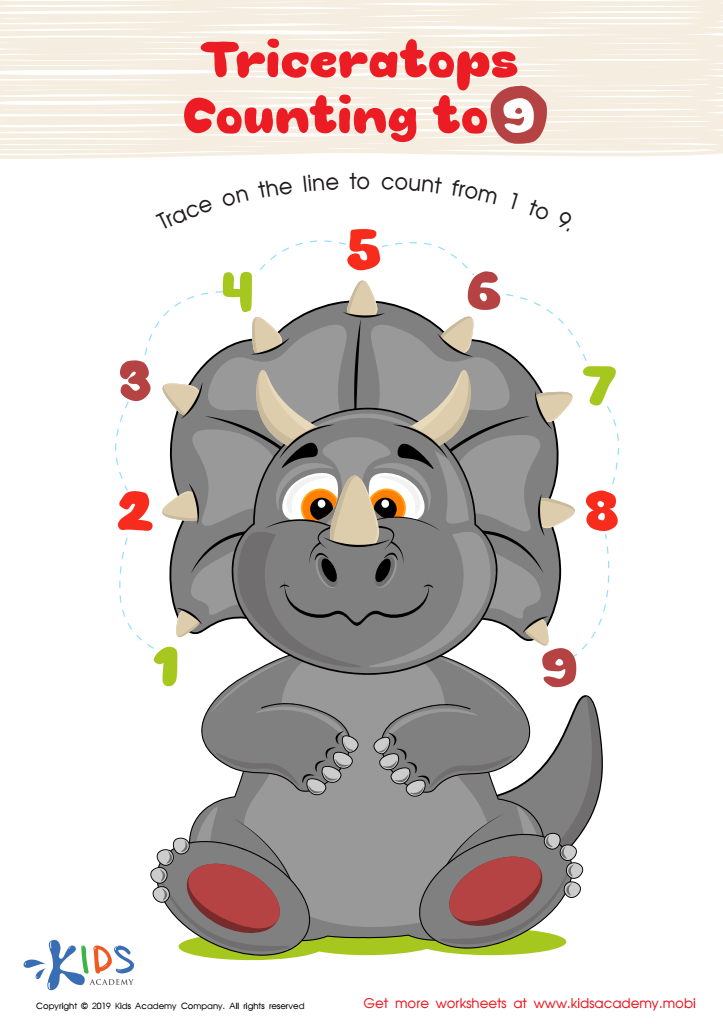
Triceratops Counting to 9 Worksheet

Triceratops Counting to 9 Worksheet

This little triceratops is here to help kids learn to count! Dinosaurs lived long before us and we've never seen one alive, but through research, we know a lot about them. Let the dinosaur help trace on the line from 1 to 9 for a fun counting practice.
Triceratops Counting to 9 Worksheet
Worksheet
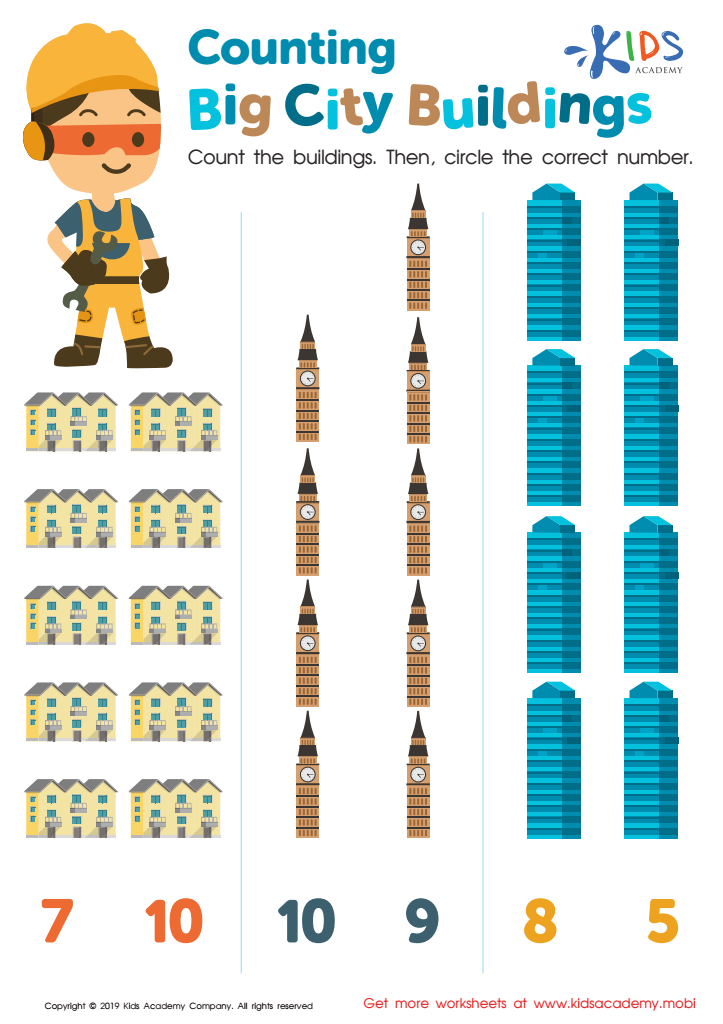
Counting Big City Buildings Worksheet

Counting Big City Buildings Worksheet

Test your child's counting skills! Ask them to count as high as they can and use the worksheet to brush up on any areas that need improvement. There are 3 sets of buildings in the picture; help your kids count them and circle the correct number. Mastering the art of counting is essential for advancing in math and solving equations, so take this opportunity to ensure your kids are ready!
Counting Big City Buildings Worksheet
Worksheet
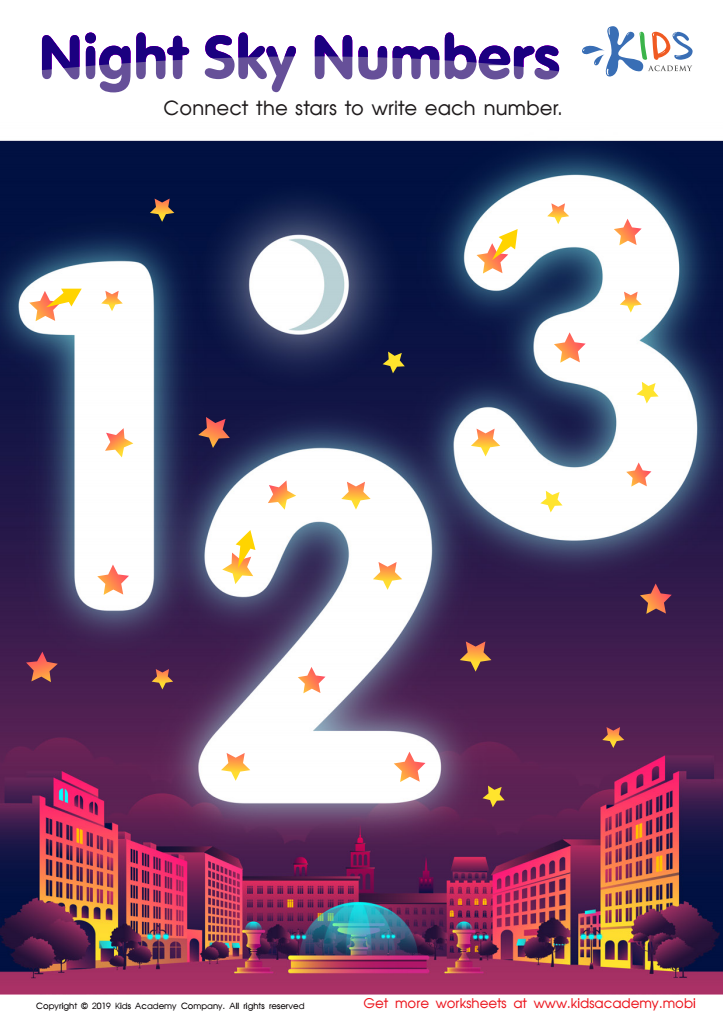
Night Sky Numbers Worksheet


Night Sky Numbers Worksheet

Help your child develop their writing skills with this fun PDF worksheet! Using guiding stars, it teaches them the correct patterns for numbers 1, 2 and 3. They'll have a great time tracing their way from the top and will feel a sense of achievement when they finish.
Night Sky Numbers Worksheet
Worksheet


... 2 3

Understanding and nurturing counting skills in children aged 3-5 is crucial because these foundational skills pave the way for future mathematical learning and cognitive development. At this early stage, children are highly receptive to new information and experiences, which makes it the perfect time to introduce basic numerical concepts. Counting helps children develop number sense, which is an understanding of what numbers represent and how they relate to each other. This is fundamental not just for simple math tasks, but for solving more complex problems as they grow older.

Counting also enhances language skills as children begin to use numbers in context, which helps with sequencing and pattern recognition. These skills are transferable to other areas of learning, such as reading and writing. Furthermore, early success in counting and math concepts can boost a child’s confidence and encourage a positive attitude towards learning in general.

For parents and teachers, engaging children in counting exercises is relatively easy and can be both fun and informal. Activities like counting toys, steps, or even fruits can turn daily routines into learning opportunities. Early intervention in developing these skills ensures that children do not fall behind, giving them a head start in academic readiness and making future learning experiences less daunting.