Fine Motor Skills Easy Numbers Worksheets for Ages 3-5 - Page 2
26 filtered results
-
From - To
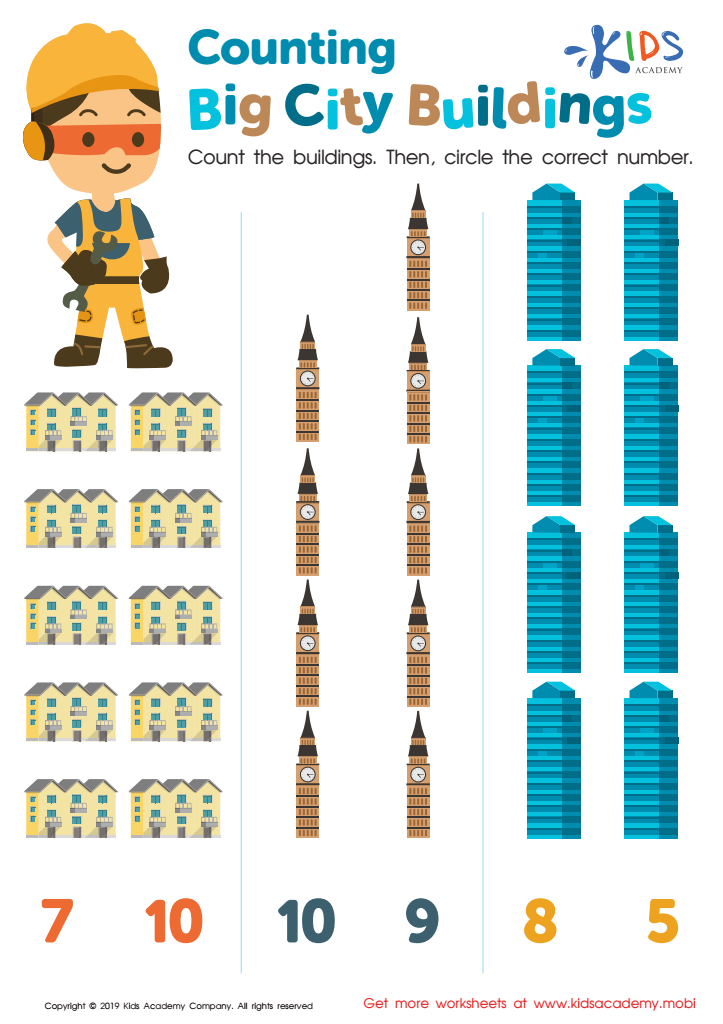
Counting Big City Buildings Worksheet
 Assign to My Students

Night Sky Numbers Worksheet








Fine motor skills are crucial for children's overall development, especially for those aged 3-5. These skills involve the coordination of small muscles in the hands and fingers, enabling children to perform essential tasks like gripping crayons, buttoning shirts, or holding a spoon. Focusing on fine motor skills not only aids in improving hand-eye coordination but also enhances cognitive abilities as children learn to control movements and make decisions based on visual feedback.
Parents and teachers should care about developing these skills because they lay the foundation for academic success and everyday activities. For instance, children with strong fine motor skills can more easily learn to write, which is fundamental for conveying ideas and participating in school activities. Activities like tracing, cutting with scissors, and playing with building blocks are engaging ways to develop these abilities.
Additionally, fostering fine motor skills boosts children's confidence and independence. Celebrating their progress encourages a love for learning and exploration. Given the digital age's impact, many children are missing out on hands-on experiences, which makes it more important for caregivers to provide opportunities that strengthen these skills. In short, nurturing fine motor skills is vital for a child's growth, preparing them for both academic and life challenges ahead.








