Capitalization rules Easy Capitalization Worksheets for Ages 3-5
4 filtered results
Difficulty Level
Grade
Age
-
From - To
Subject
Activity
Standards
Discover our engaging "Easy Capitalization Worksheets" designed specifically for children ages 3-5! These fun and interactive resources teach young learners the essential rules of capitalization in a playful manner. With vibrant illustrations and age-appropriate activities, children will grasp the importance of capital letters in sentences, proper nouns, and the beginnings of sentences. Perfect for parents and educators, these worksheets feature various exercises that reinforce learning and improve writing skills. Help your child build a strong foundation for literacy with our easy-to-use worksheets, making the rules of capitalization simple and enjoyable! Start their writing journey today!
Favorites
With answer key
Interactive
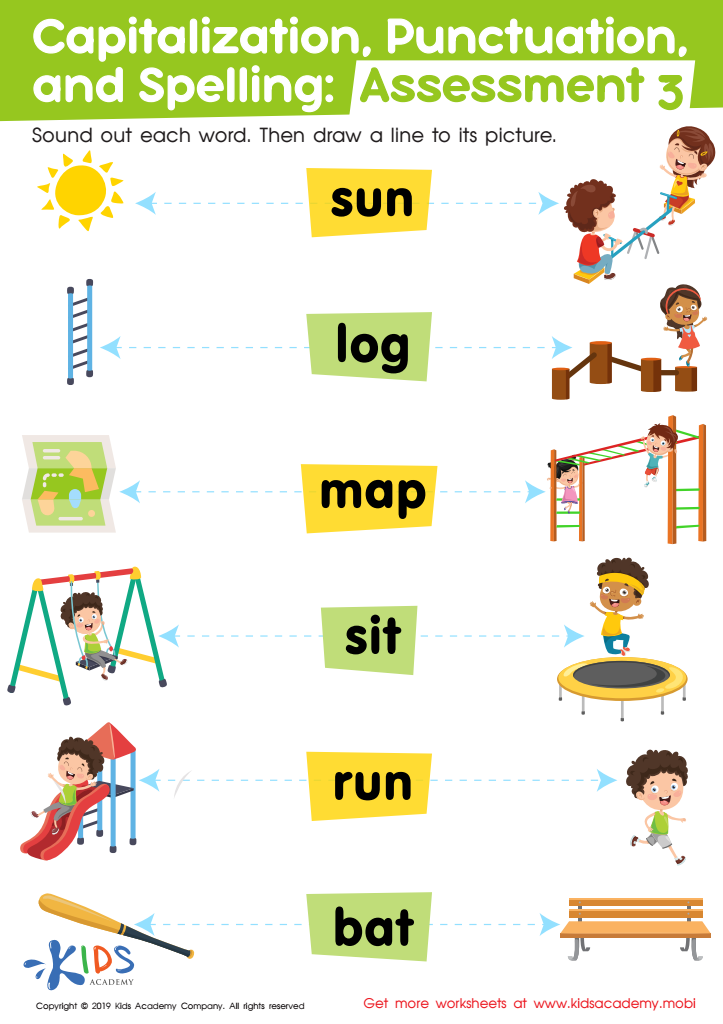
Capitalization. Punctuation. Spelling. Assessment 3 Worksheet
Before starting this worksheet, have your kids spell some simple words. Correct if wrong and show the right spellings. Then, ask them to link the pictures to the words you read out. Spelling is key for a good writer, and kids need to know how to spell to read texts easily.
 Assign to My Students
Capitalization. Punctuation. Spelling. Assessment 3 Worksheet
Worksheet
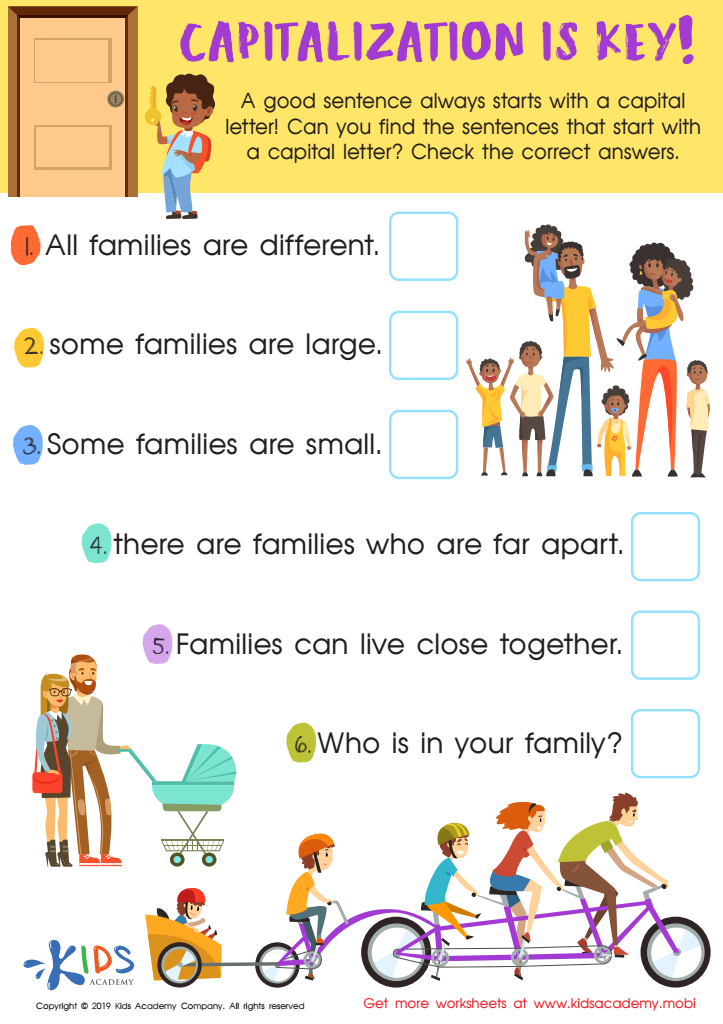
Capitalization Key Worksheet
Help your kids learn the importance of capitalizing at the start of sentences with this fun PDF! It features 6 family-themed sentences, with pictures, that your students have to find the correctly capitalized versions of. Perfect for young learners, this worksheet adds a fun twist to learning.
Capitalization Key Worksheet
Worksheet
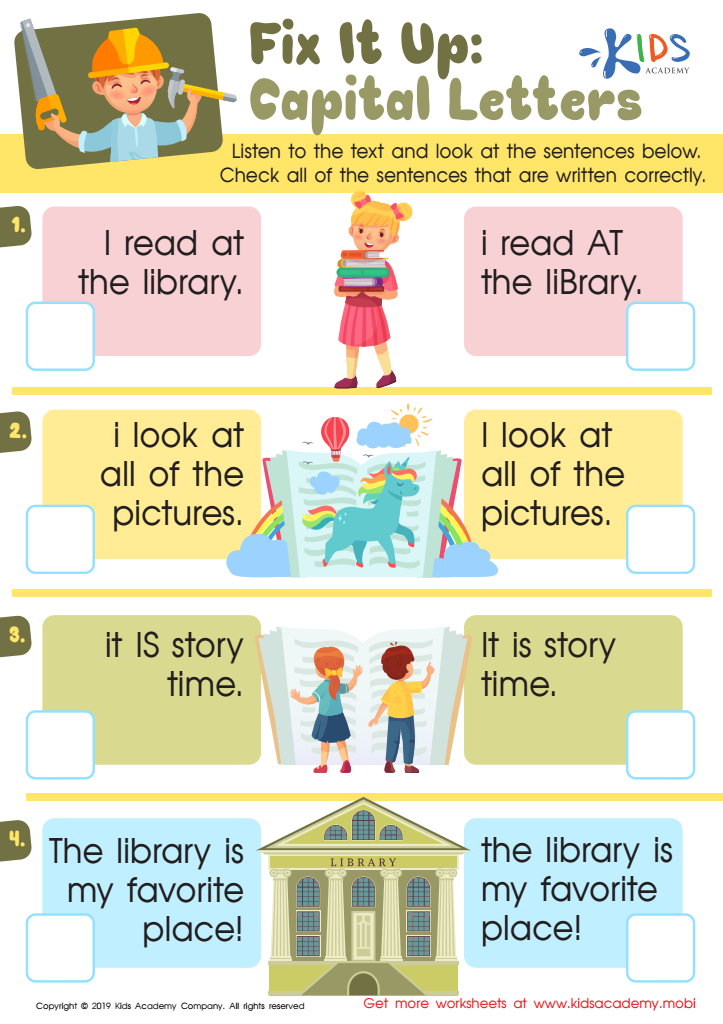
Fix Capital Letters Worksheet
Put on your hardhats and get out the tools - it's time to do some repair work! Have your child identify sentences written with proper capitalization on this fun and colorful worksheet. Ask more advanced students to rewrite incorrect sentences correctly - it'll help them understand letter case better.
Fix Capital Letters Worksheet
Worksheet
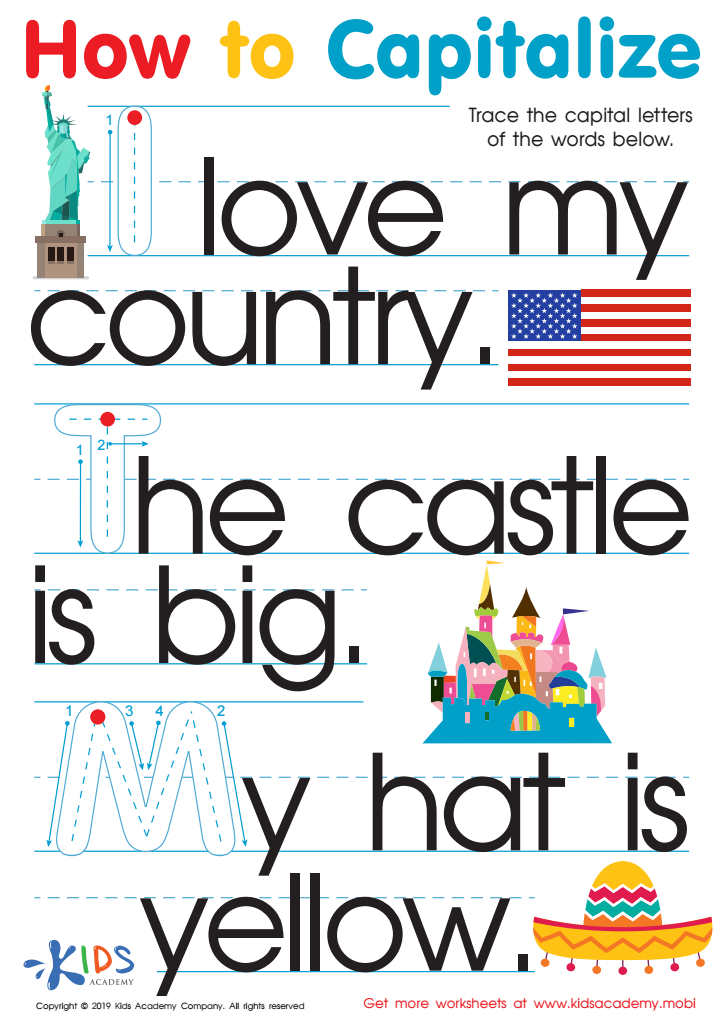
How to Capitalize Worksheet
Capitalizing letters is important in English. This worksheet will help your child learn how to write them. Words such as "the" and "I" will be covered, with visuals such as the Statue of Liberty, the American Flag, a castle, and a sombrero. The "How to Capitalize" PDF is a great way to sharpen your child's writing and aid their success!
How to Capitalize Worksheet
Worksheet
Join Kids Academy for Free
Who is primarily going to use this learning content?



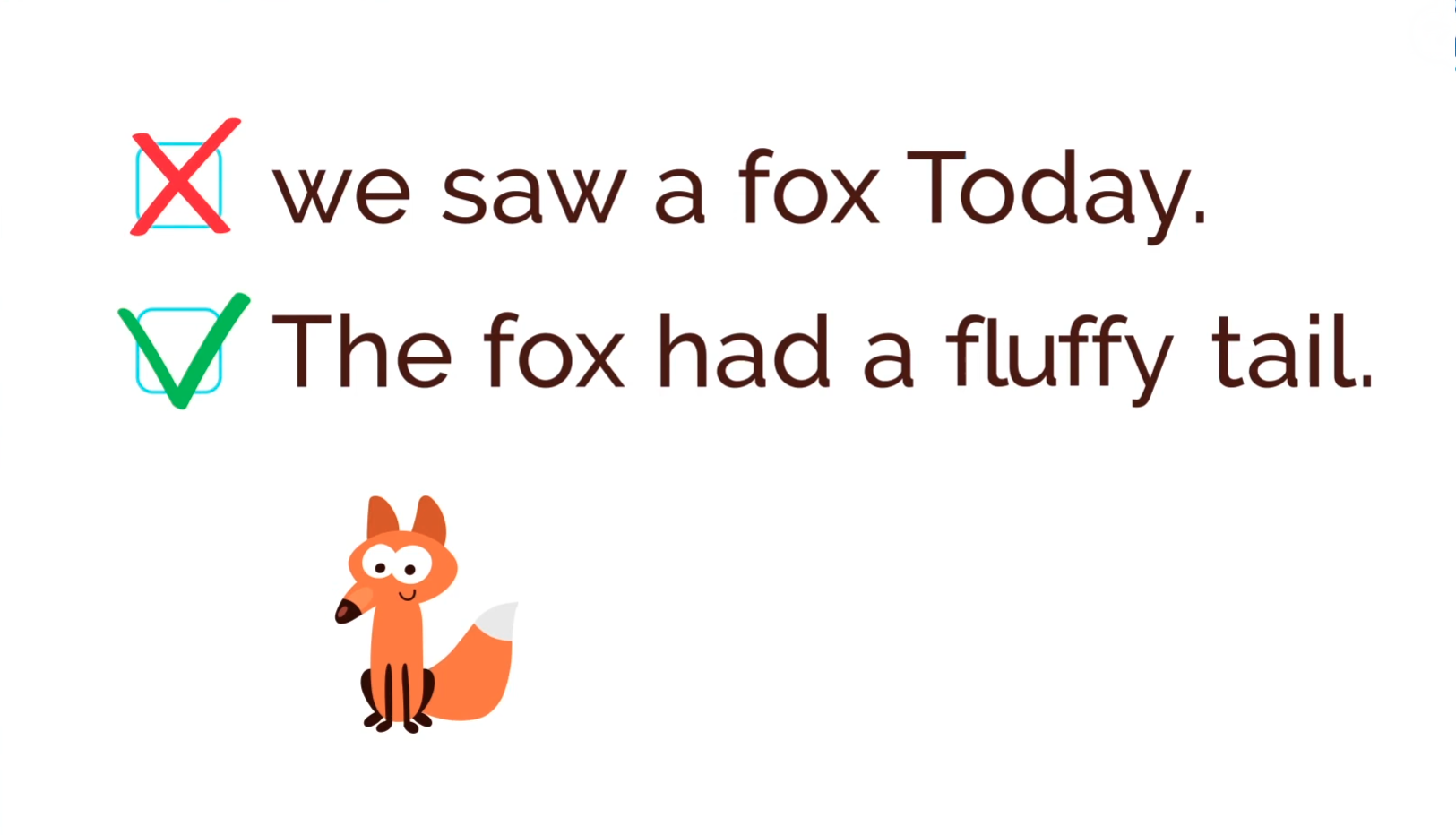

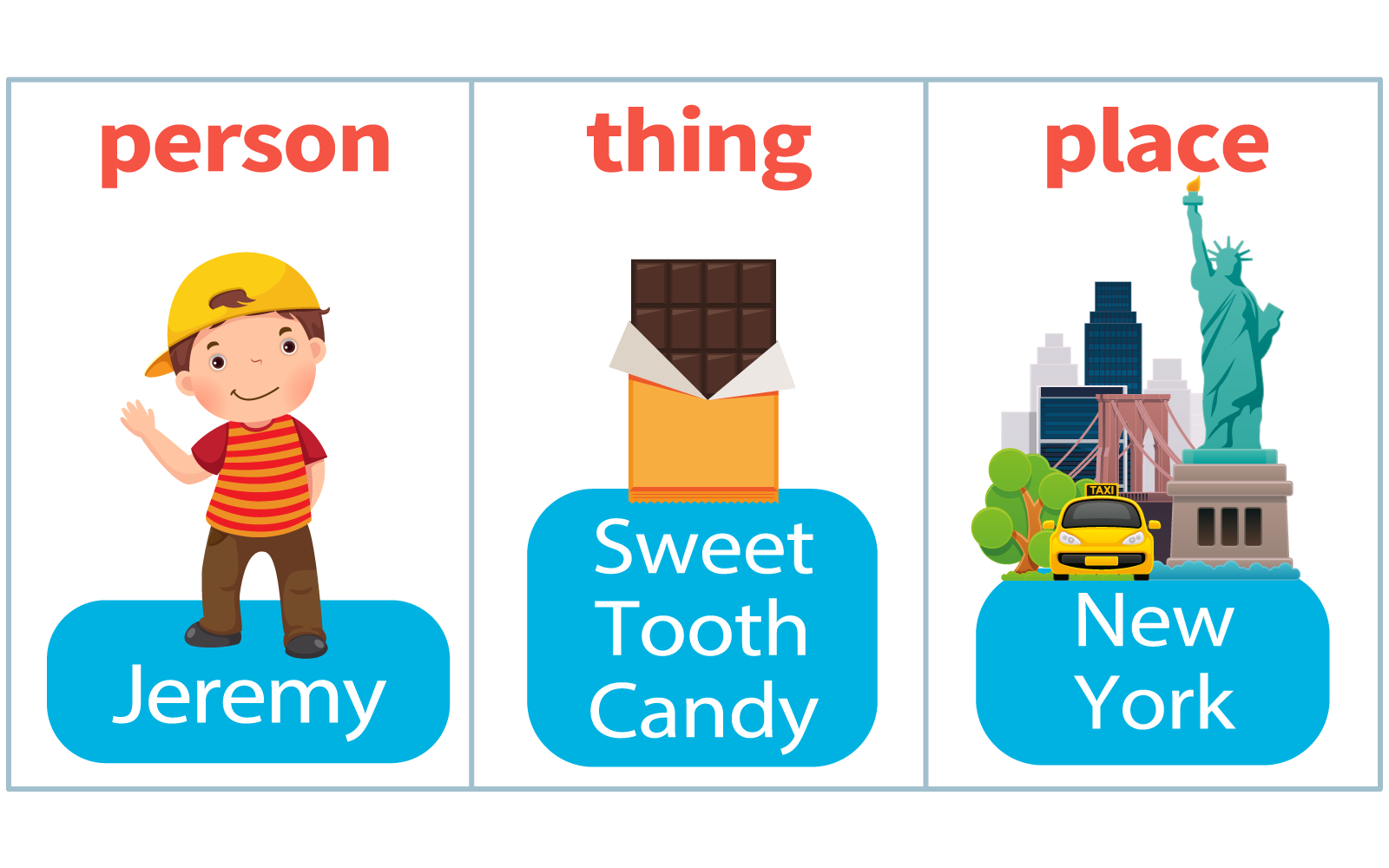

Understanding capitalization rules is essential for young children, typically ages 3-5, as it serves as a foundational skill for literacy development. Parents and teachers should care about easy capitalization for several reasons. Firstly, proper capitalization enhances reading comprehension. When children recognize the difference between uppercase and lowercase letters, they can identify proper nouns, beginnings of sentences, and titles, which helps in understanding context and meaning.
Moreover, mastering capitalization fosters early writing skills. Children who grasp these rules are more likely to produce clearer and more organized writing. This skill is particularly critical as they begin to write stories or express thoughts, ensuring that their messages are easily decipherable.
In addition, teaching capitalization rules promotes a sense of pride and professionalism in a child's work. When students see their writing adhere to these conventions, it boosts their confidence and encourages continued engagement with written language.
Finally, incorporating capitalization lessons into fun activities makes the learning process enjoyable. By building these skills through play, rhyme, and songs, parents and teachers create a positive atmosphere for literacy development that can greatly benefit children as they progress in their educational journey.