Easy Patterns Worksheets for Ages 3-6
15 filtered results
-
From - To
Discover our engaging Easy Patterns Worksheets tailored specifically for children ages 3-6! These delightful worksheets are designed to enhance young learners' understanding of basic patterns, fostering critical thinking and early math skills. Featuring bright colors, fun shapes, and simple sequences that captivate young minds, our printables make learning enjoyable and interactive. Perfect for preschoolers and kindergarteners, they’re an excellent resource for parents and educators to support children's developmental milestones. Join Kids Academy to provide your little ones with the foundational tools they need for a successful learning journey. Download now and start your pattern discovery.
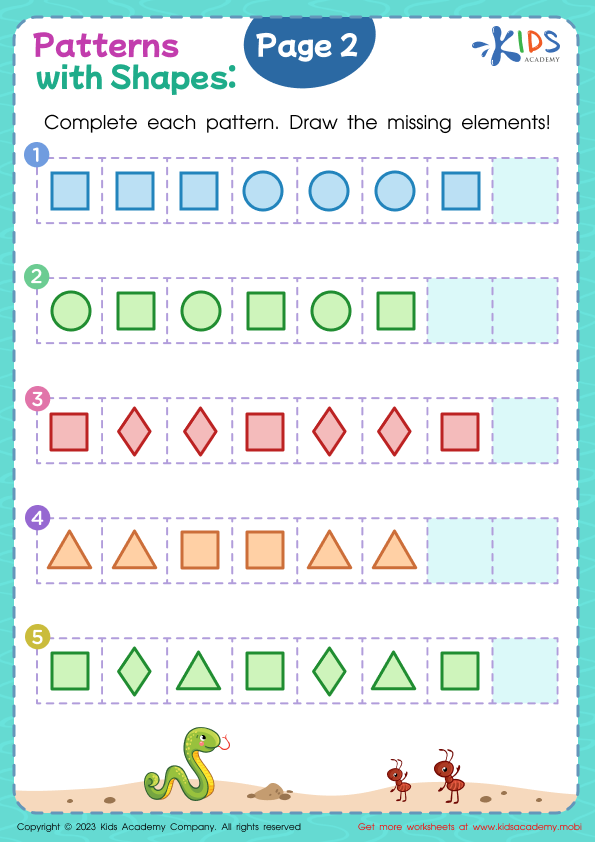
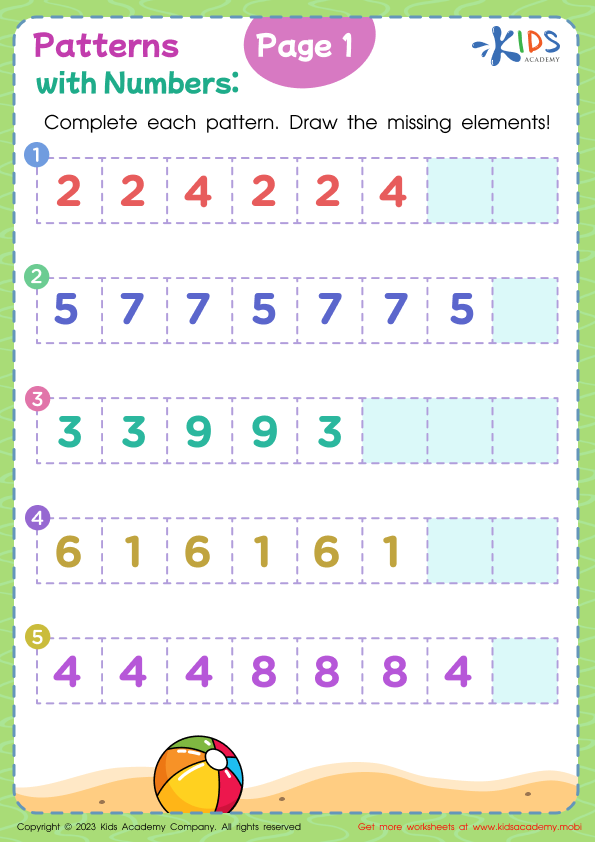
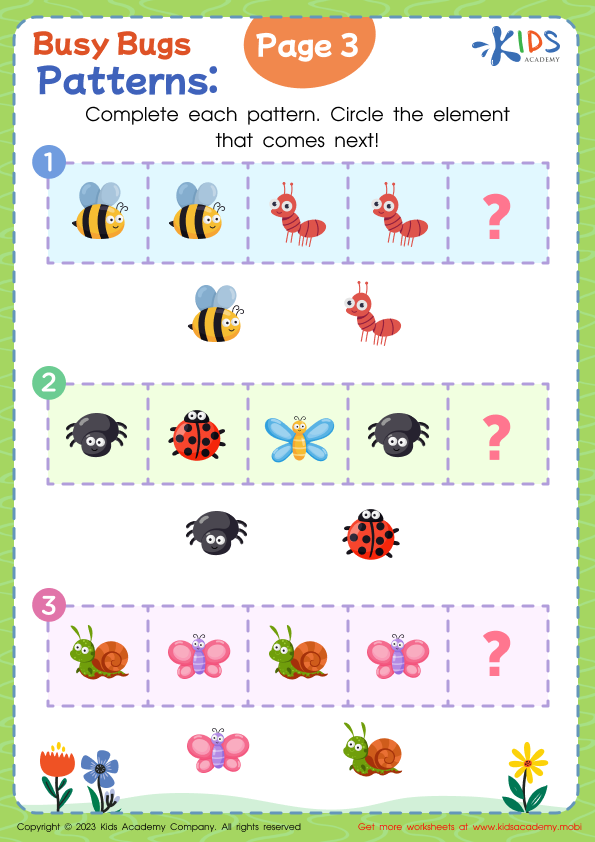
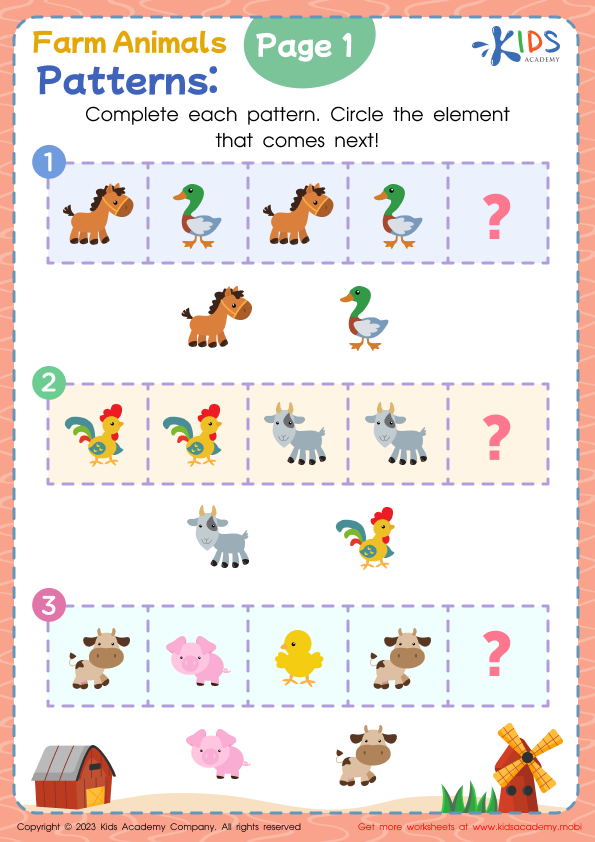
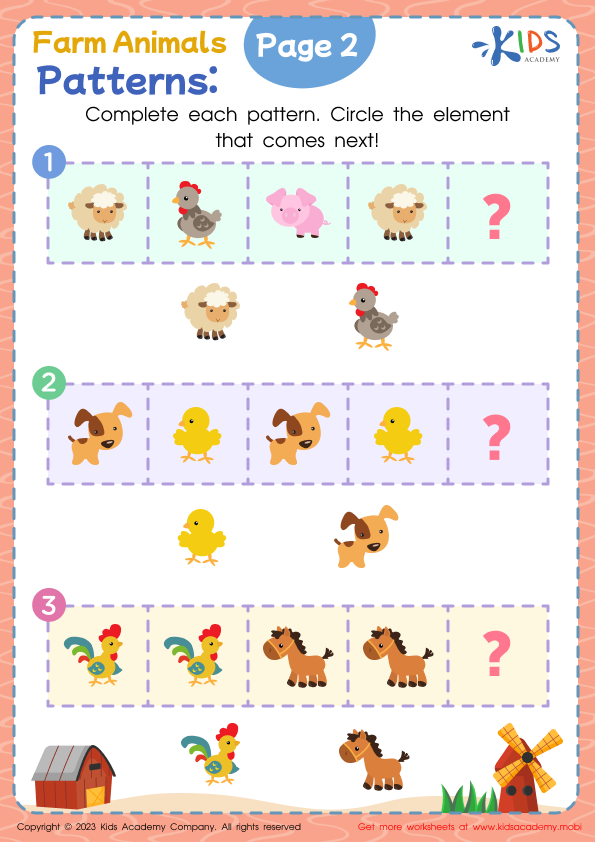
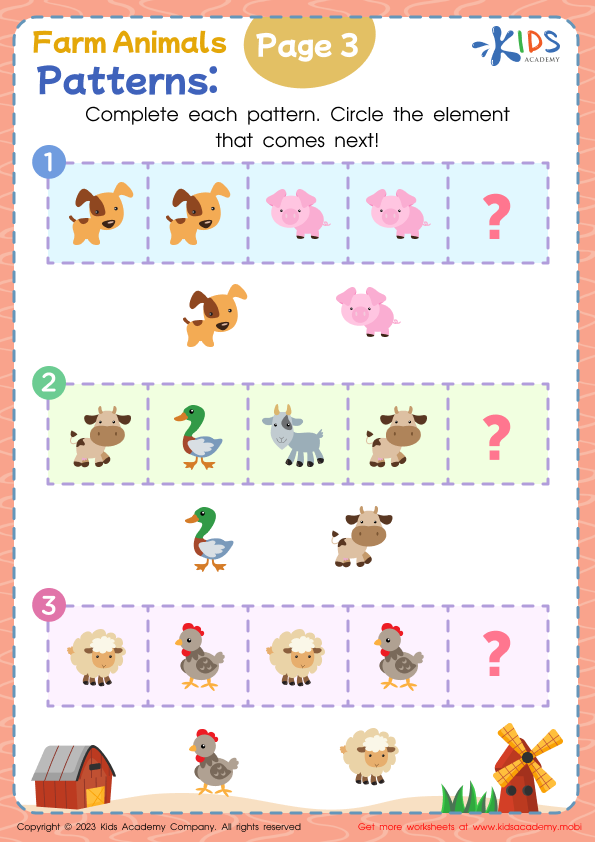
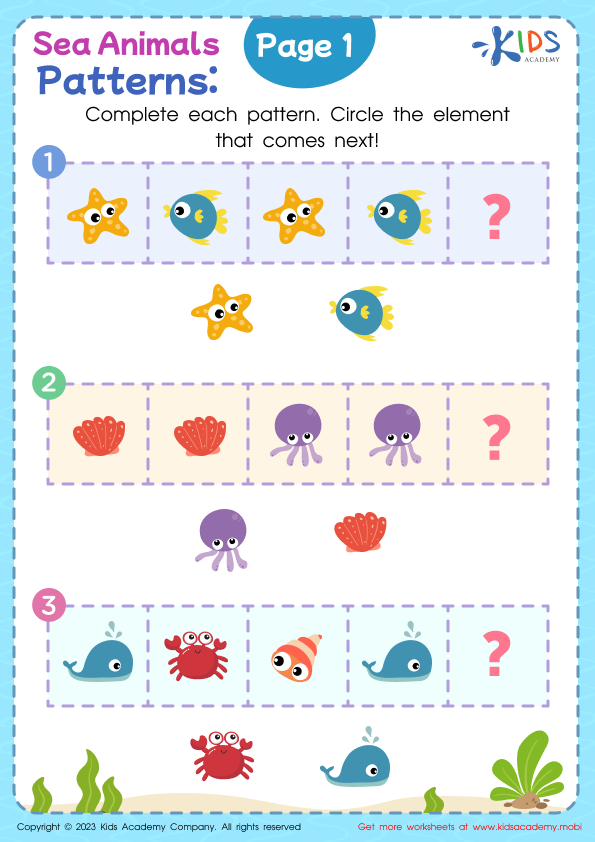
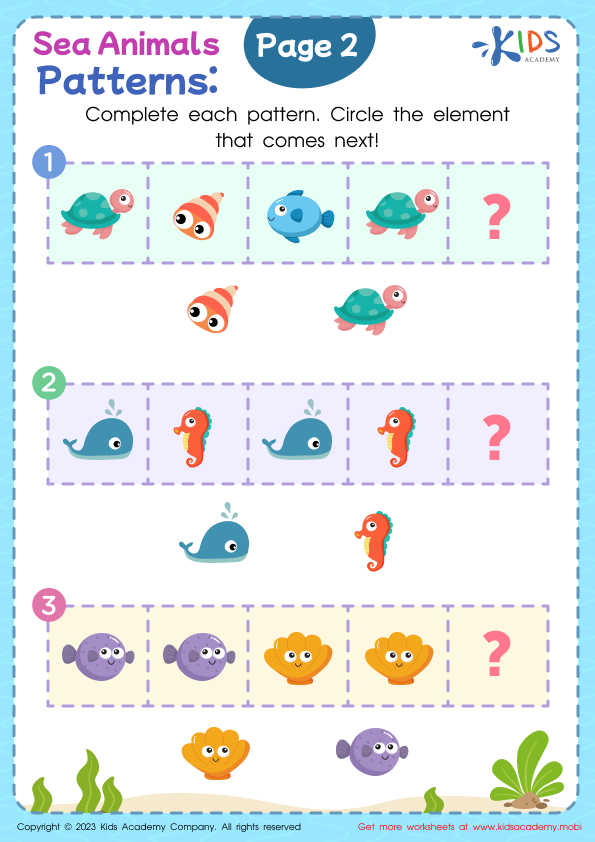
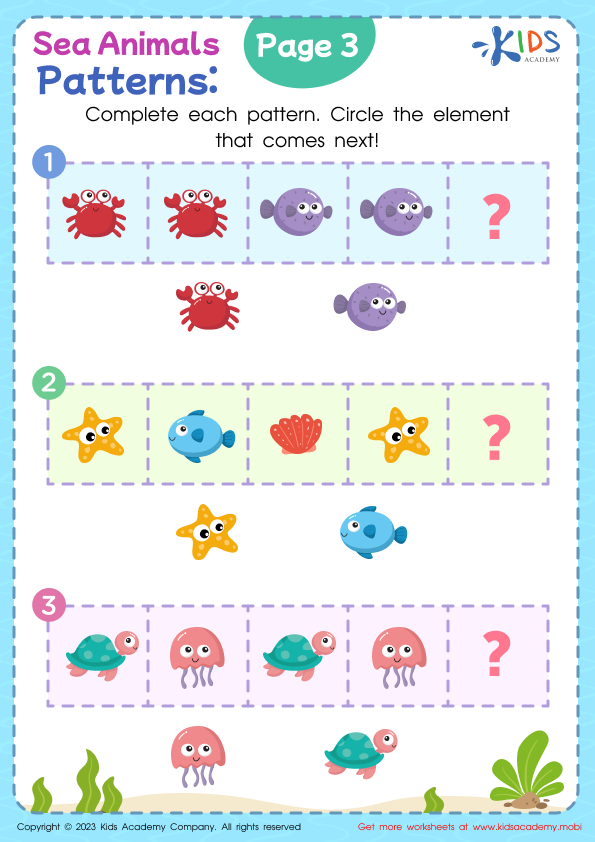
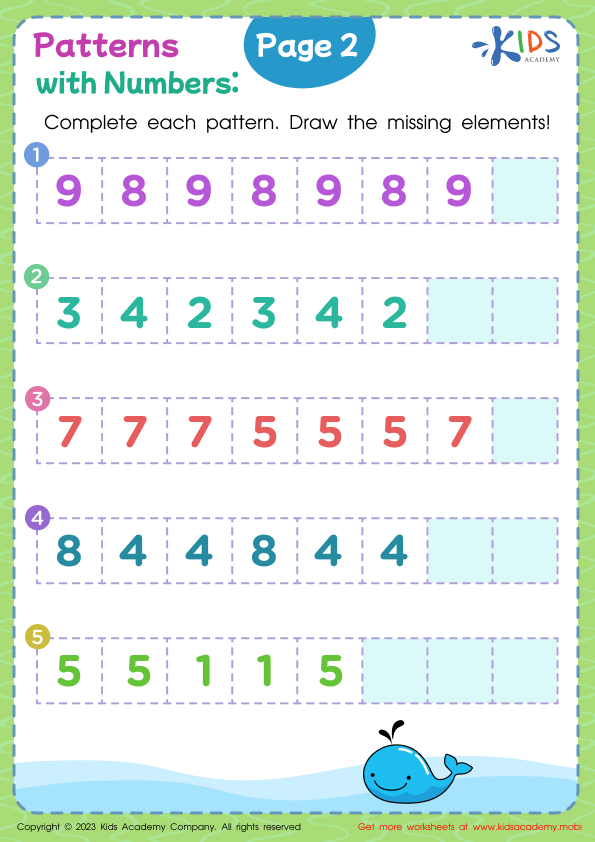
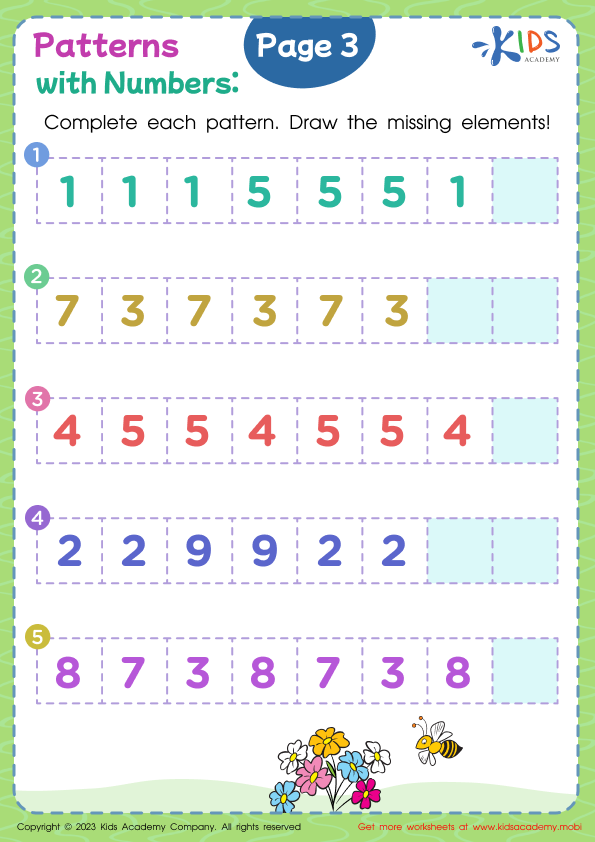
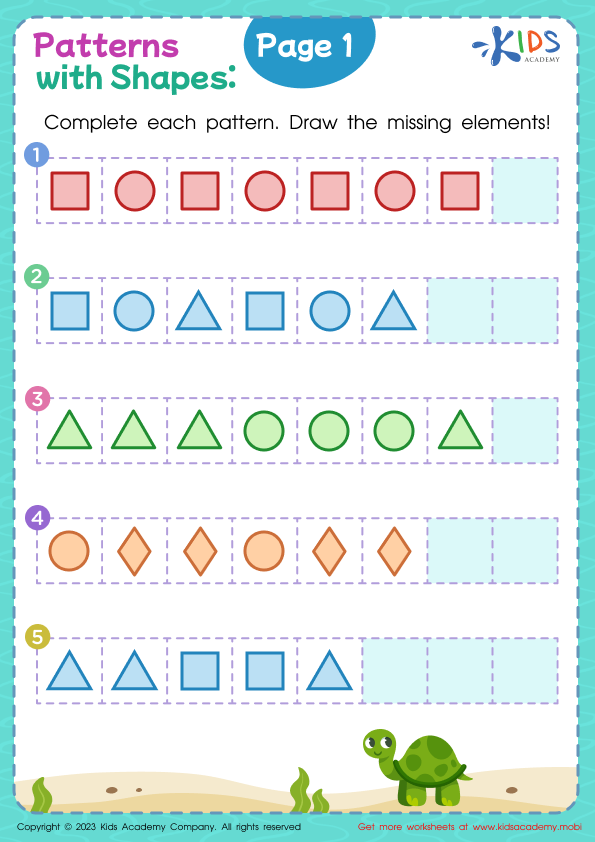
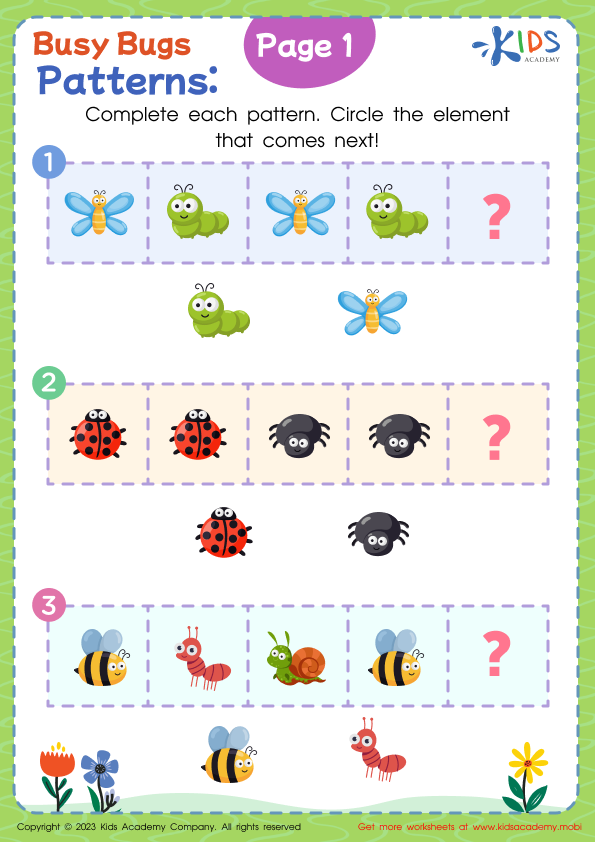
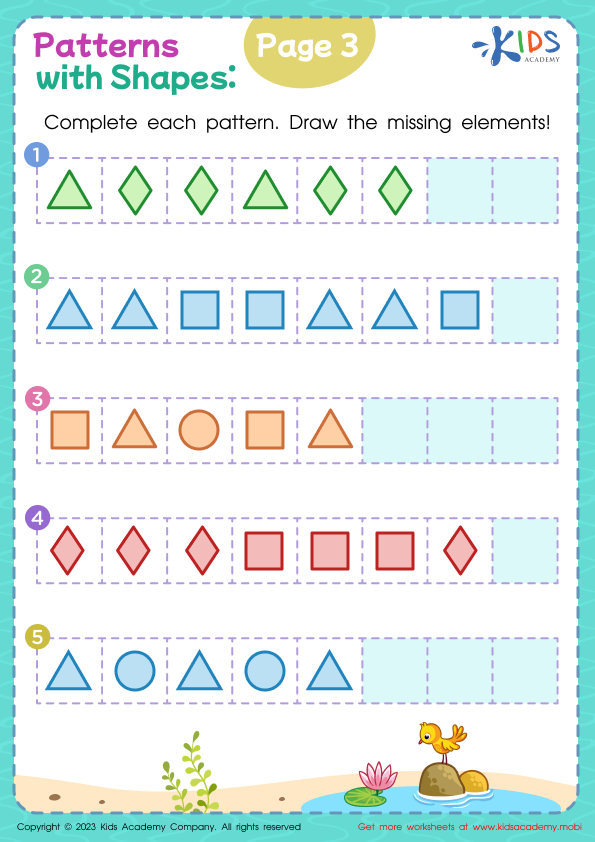
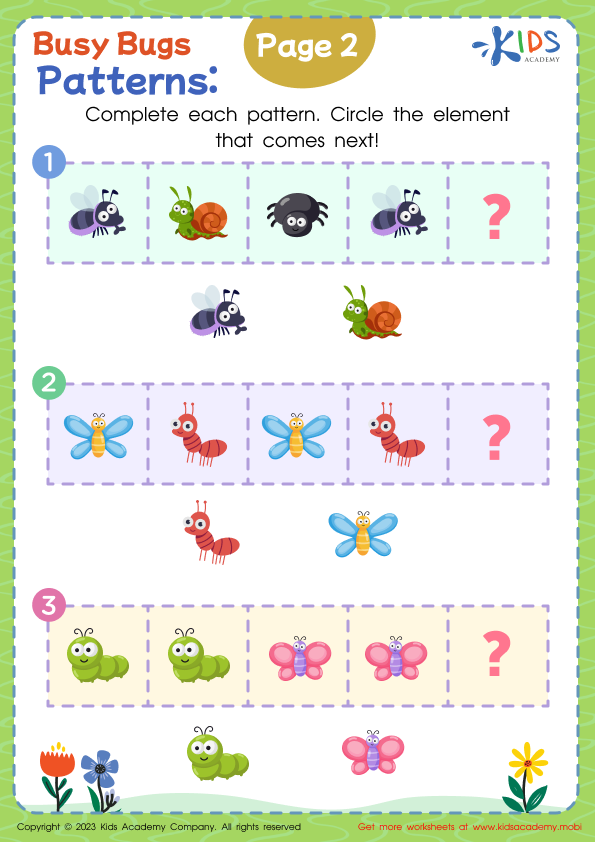








Easy patterns are foundational tools for the developmental stages of children aged 3-6, and here's why parents and teachers should prioritize them:
-
Cognitive Development: Easy patterns help young children develop essential cognitive skills, including memory, differentiation, and problem-solving. Identifying and predicting sequences trains their minds to process and retain information more efficiently.
-
Math Skills: Understanding patterns is a precursor to grasping more complex mathematical concepts. It teaches basic arithmetic, counting, recognizing shapes and colors, and introduces early algebraic thinking.
-
Language Skills: Creating and identifying patterns reinforce vocabulary by introducing sequences in storytelling, rhyming words, and syntax. This aids in language development and communication skills.
-
Critical Thinking: Patterns encourage logical reasoning by emphasizing the importance of order and prediction. This cultivates an analytical mindset that benefits various life skills and educational areas.
-
Creativity and Art: Exposure to patterns inspires creativity. Children learn to recognize and create visual patterns in artwork, improving their aesthetic sense and fine motor skills.
-
Routine and Stability: Patterns introduce consistency and predictability in daily routines. This provides a sense of security for young children, helping them manage expectations and fostering emotional stability.
By emphasizing easy patterns, parents and teachers lay a robust foundation for a child’s overall intellectual and emotional growth, equipping them with skills essential for future academic and life success.








