Basic counting skills Easy Worksheets for Ages 3-7
6 filtered results
-
From - To
Discover an engaging and effective way to teach your child basic counting skills with our Easy Worksheets designed for ages 3-7. At Kids Academy, we offer a variety of fun and interactive activities that help young learners grasp fundamental counting concepts. Our worksheets are perfect for building number recognition, improving counting accuracy, and developing fine motor skills. From colorful illustrations to creative exercises, each worksheet is crafted to make learning enjoyable and effective. Watch your child's confidence grow as they master counting from 1 to 20 and beyond. Start their mathematical journey with Kids Academy today!
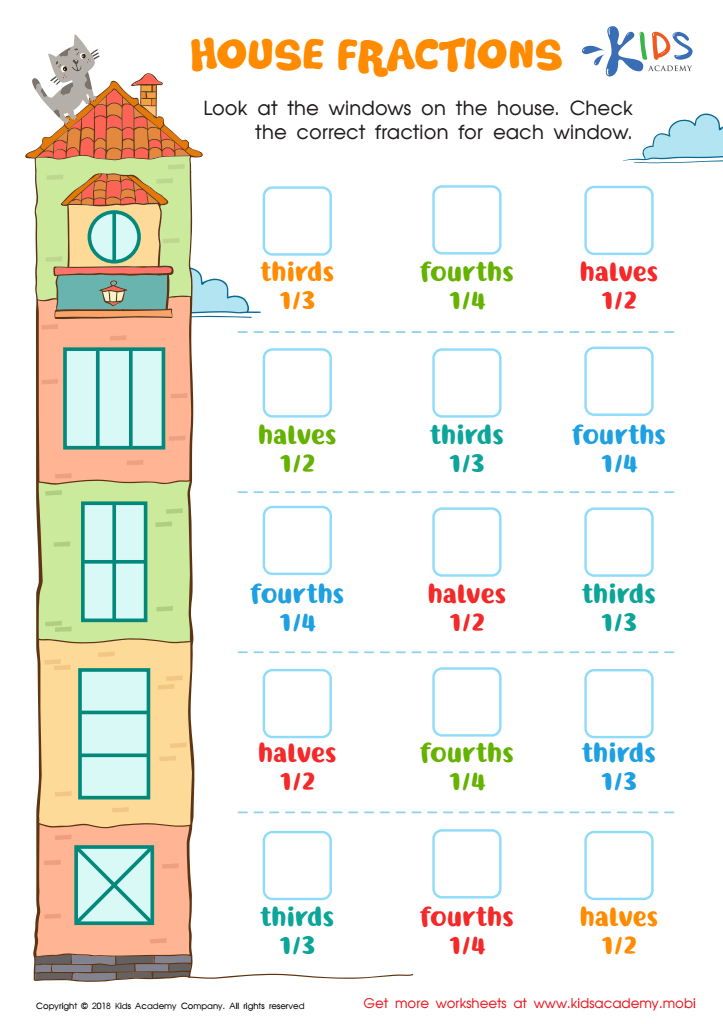
House Fractions Worksheet
 Assign to My Students

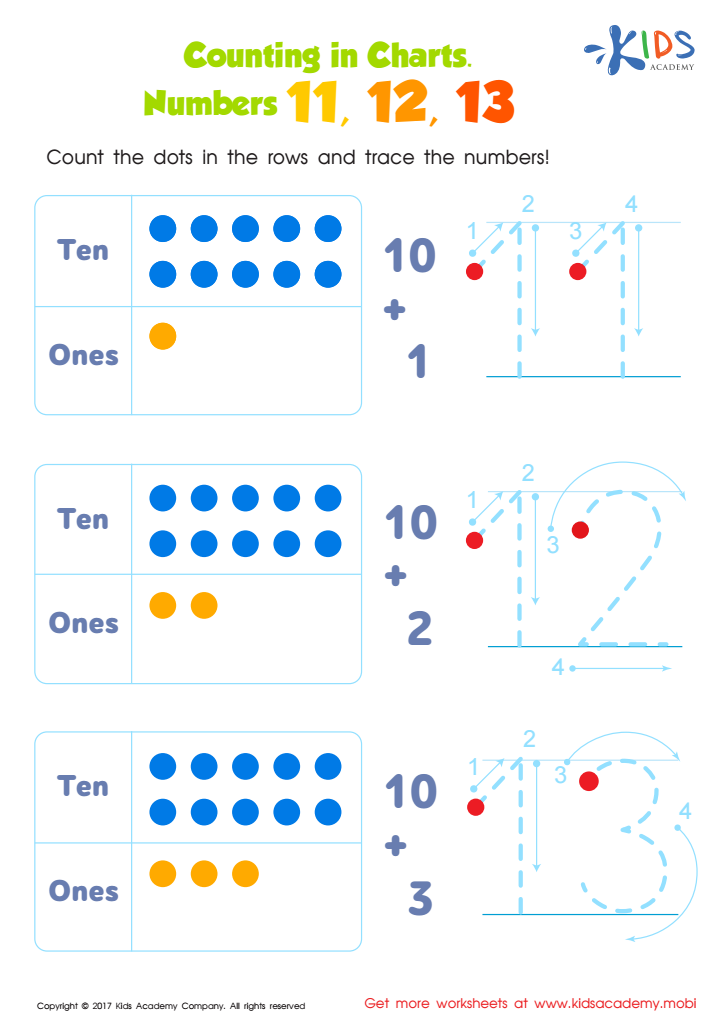
Number Tracing Worksheet For Kindergarten
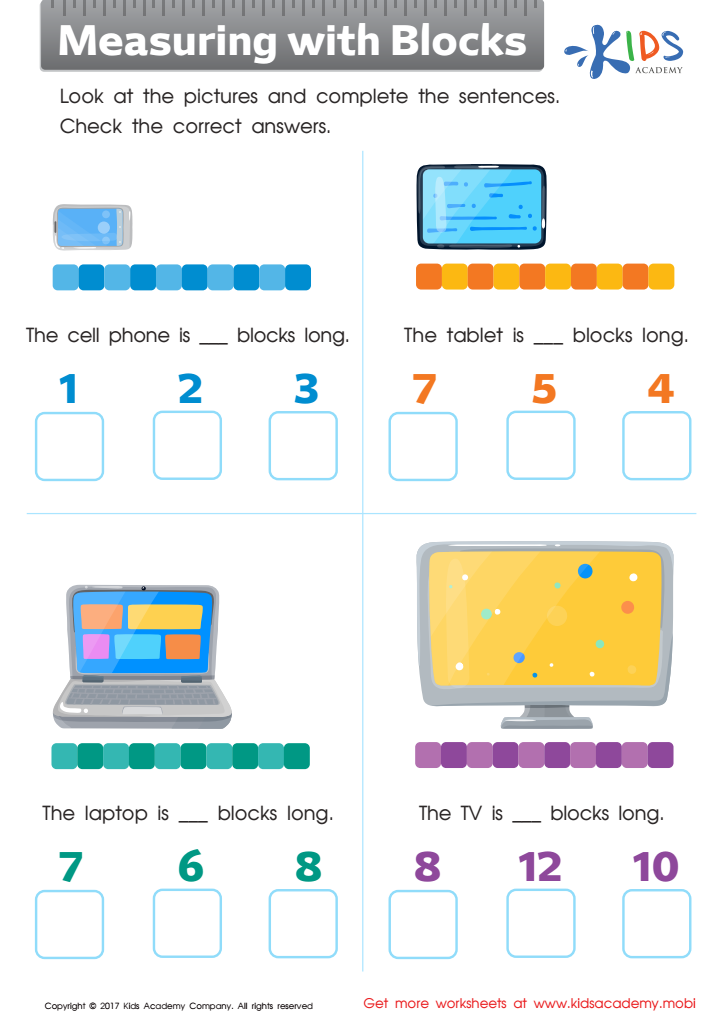
Measuring with Blocks Worksheet
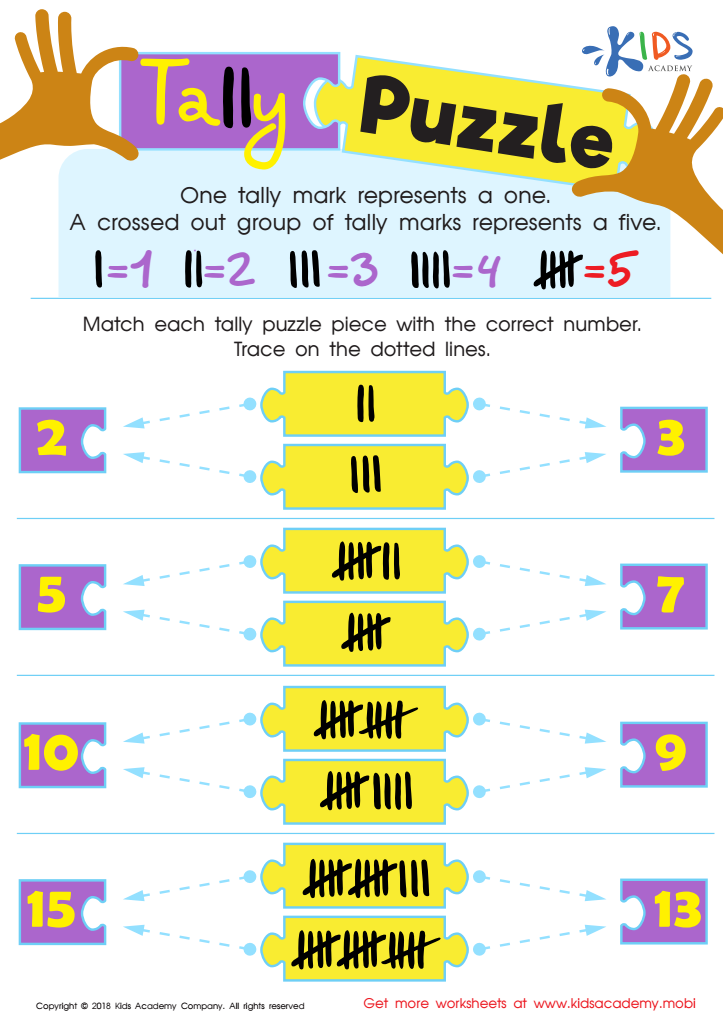
Tally Puzzle Worksheet
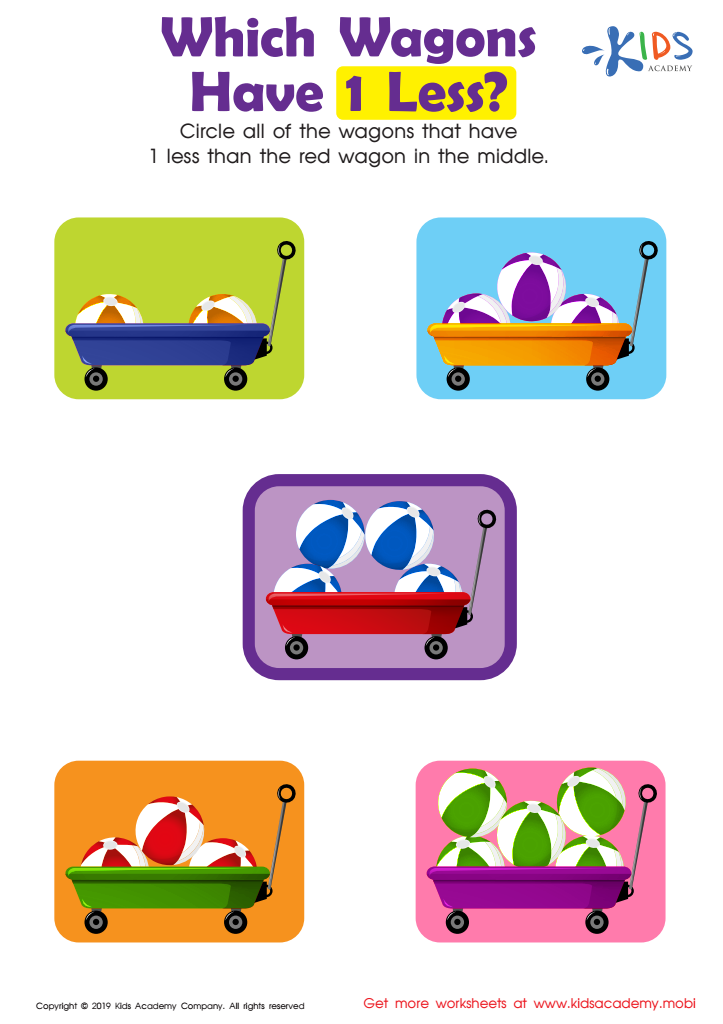
Which Wagons Have 1 Less? Worksheet






.jpg)

Basic counting skills are a foundational component of early math education, which parents and teachers should prioritize for children ages 3-7. At this developmental stage, kids are naturally curious and absorb information rapidly, making it an optimal time to introduce fundamental math concepts. Basic counting not only facilitates numerical literacy but also supports cognitive development in areas such as memory, concentration, and problem-solving.
By mastering counting, children develop a solid base for understanding more complex mathematical concepts later. For example, recognizing that numbers represent quantities, or understanding the order and value of numbers, leads to proficiency in addition, subtraction, and eventually multiplication and division.
Moreover, basic counting nurtures a child’s confidence in their ability to learn, fostering a positive attitude toward education. When children feel competent in math, they are more likely to engage actively and participate in lessons, creating a virtuous cycle of learning and success.
Parents and teachers who invest time in developing these skills through games, songs, and everyday activities also enhance their relationship with the child. This shared interaction not only makes learning enjoyable but also establishes a collaborative environment where the child feels supported, laying the groundwork for lifelong educational engagement and curiosity.








