Understanding measurements Easy Worksheets for Ages 3-7
10 filtered results
-
From - To
Welcome to our "Understanding Measurements Easy Worksheets" page, designed specifically for children ages 3-7! Here, young learners can explore fundamental measurement concepts through fun and engaging activities. Our worksheets introduce key topics such as length, weight, and volume, using colorful visuals and simple instructions to enhance comprehension. Crafts, interactive exercises, and real-life examples allow kids to practice measuring objects, reinforcing their understanding in an enjoyable way. Ideal for parents and educators, these resources aim to build essential math skills while inspiring curiosity. Explore our collection of worksheets today to make learning measurements an exciting adventure for your little ones!
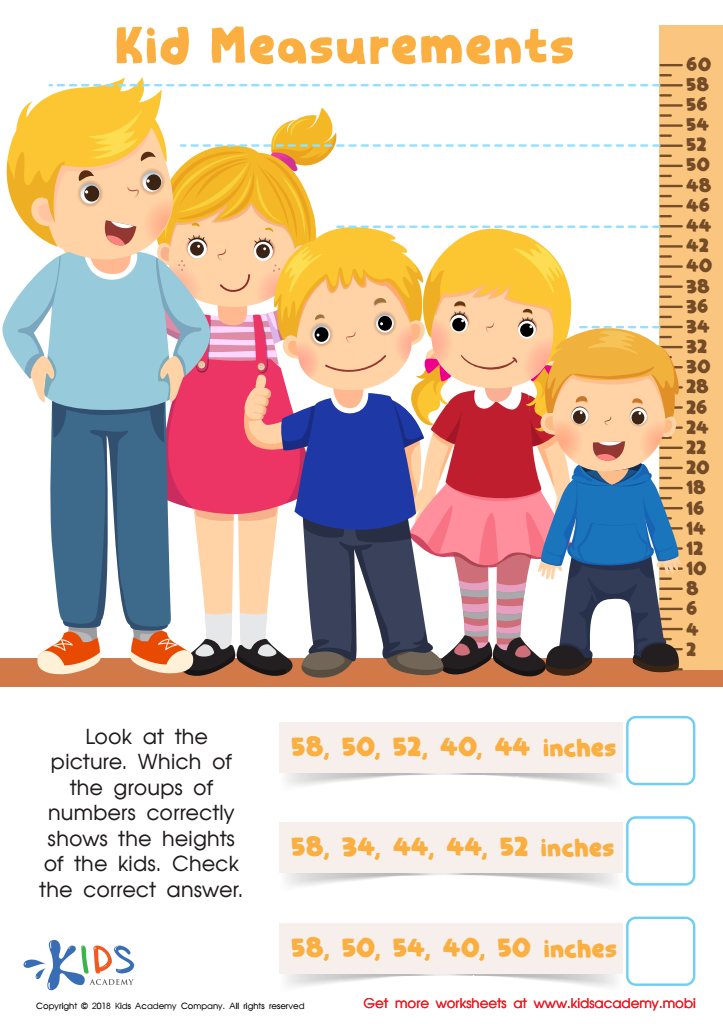
Kids Measurements Worksheet
 Assign to My Students
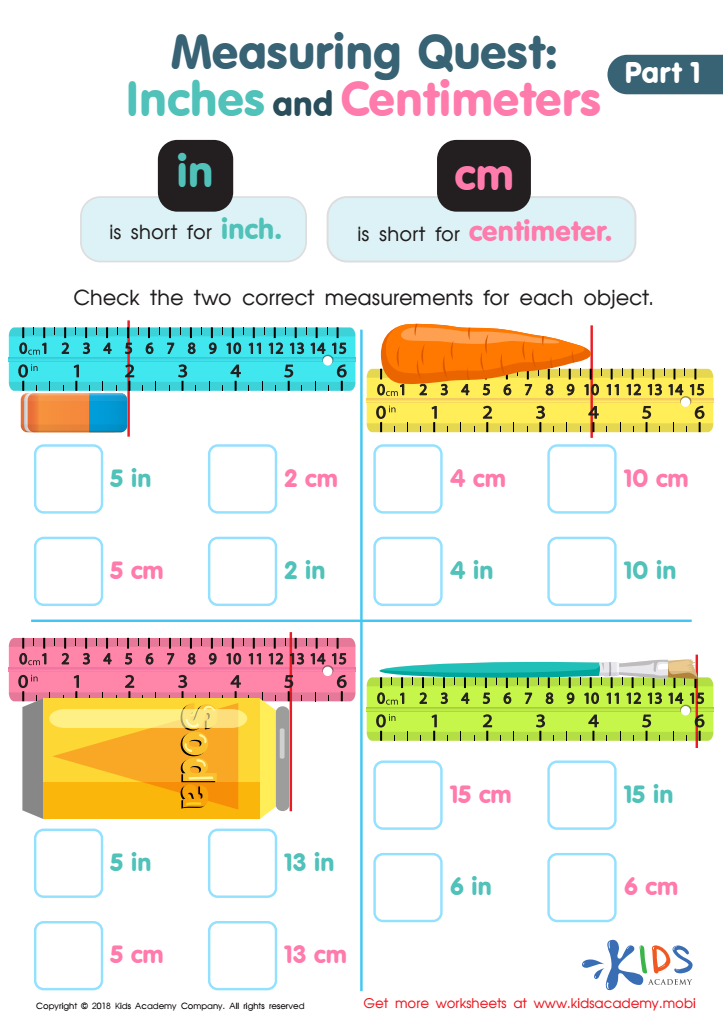
Measuring Quest: Inches and Centimeters Worksheet
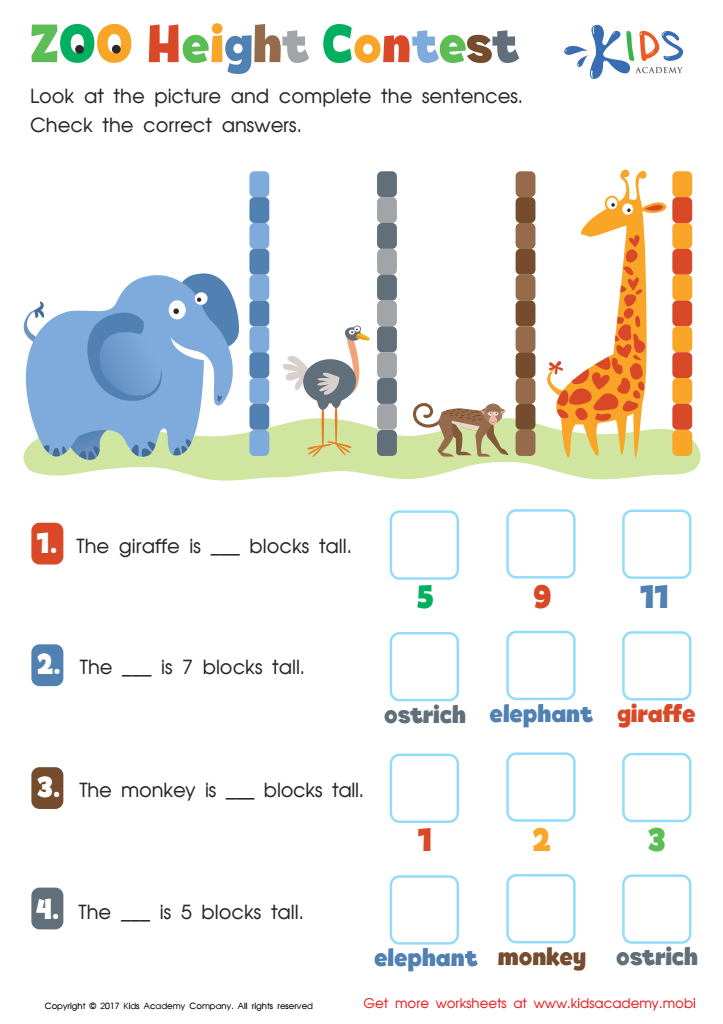
Zoo Height Contest Worksheet
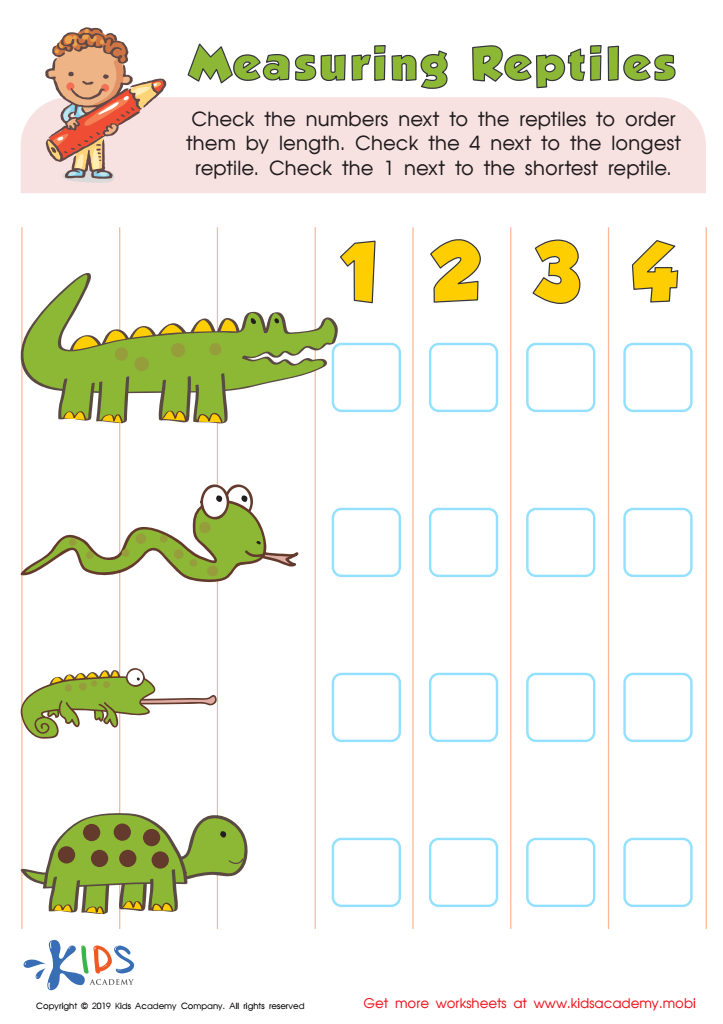
Measuring Reptiles Worksheet
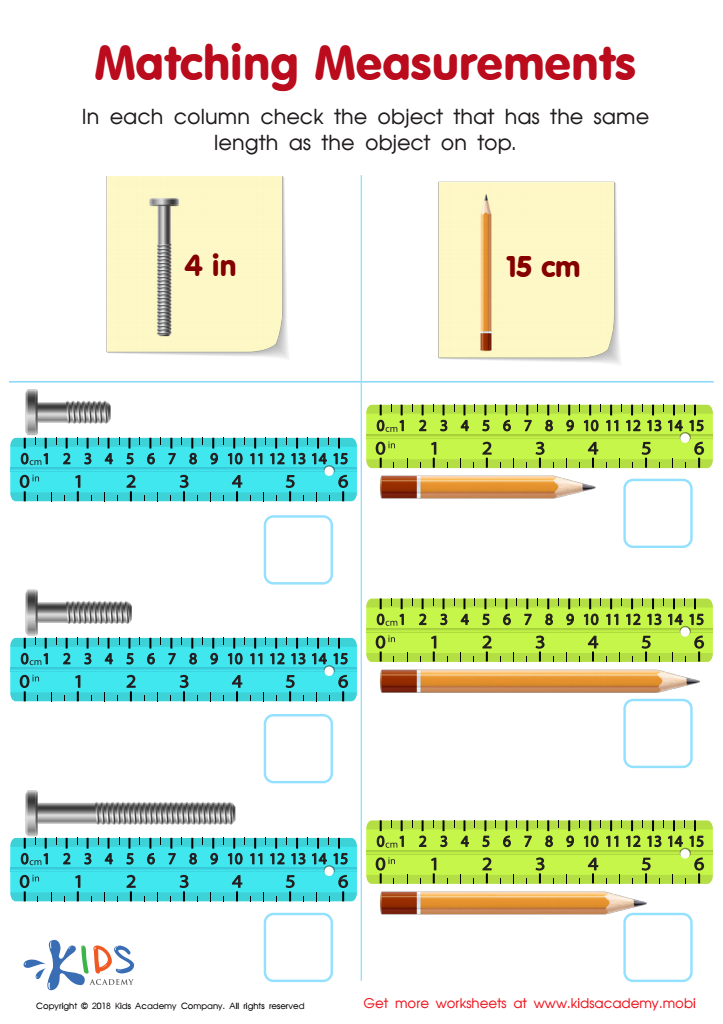
Matching Measurements Worksheet
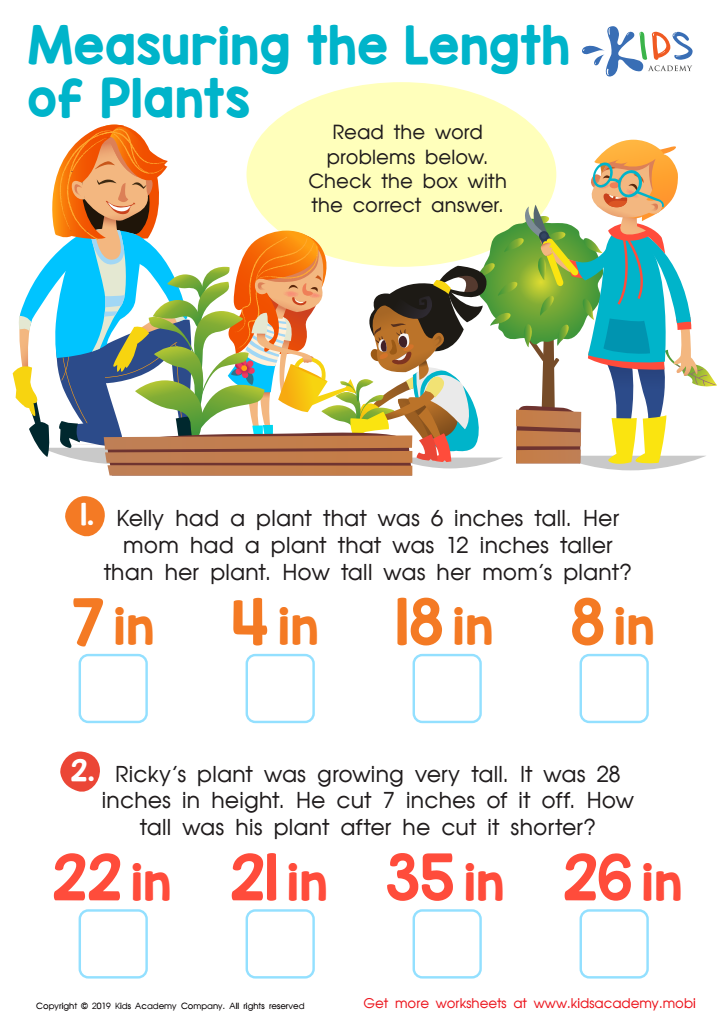
Measuring the Length of Plants Worksheet
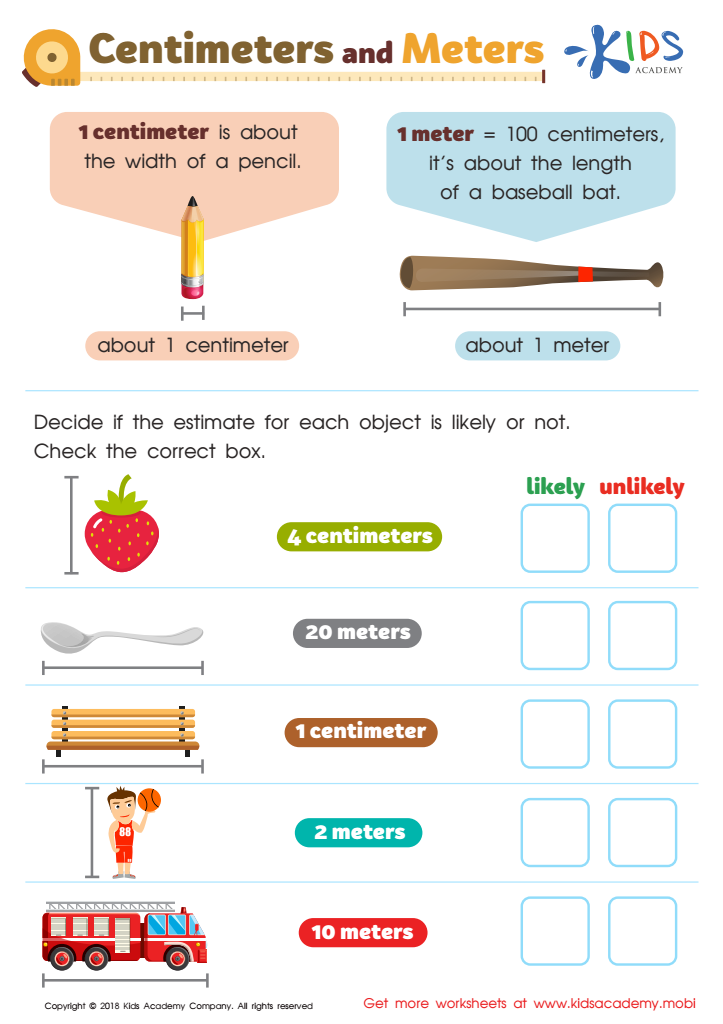
Centimeters and Meters Worksheet
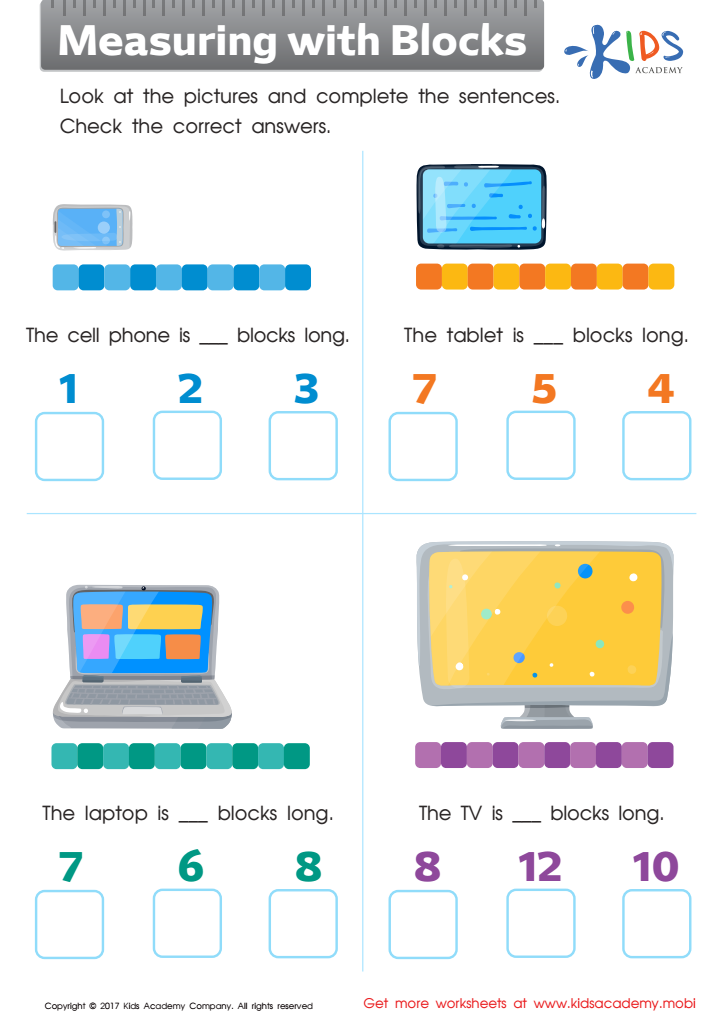
Measuring with Blocks Worksheet
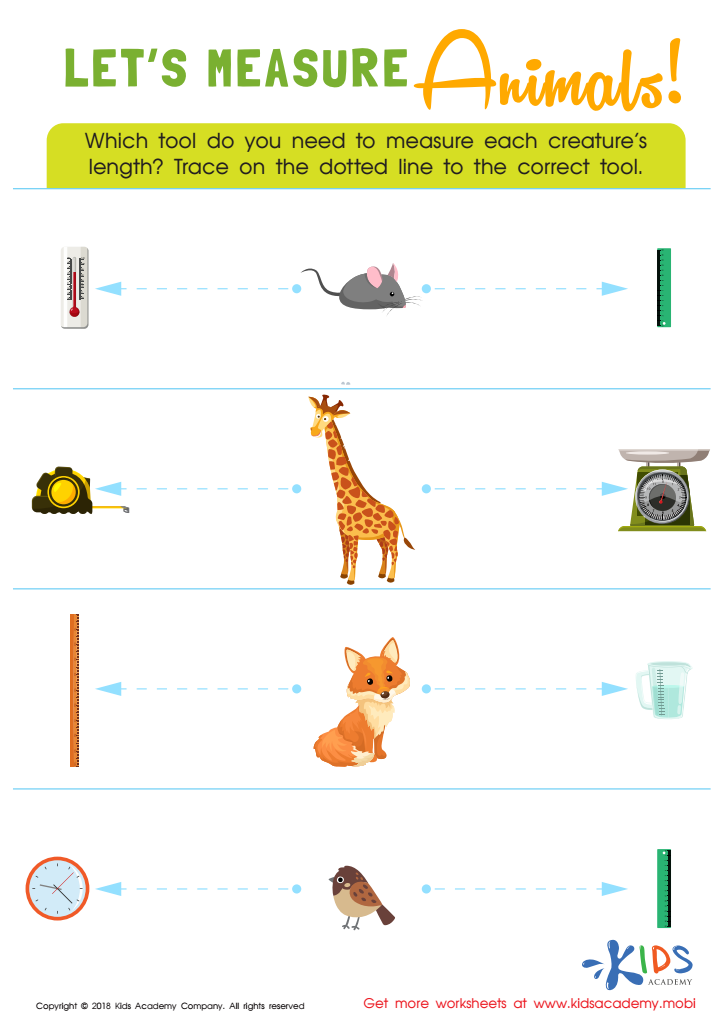
Let's Measure Animals! Worksheet
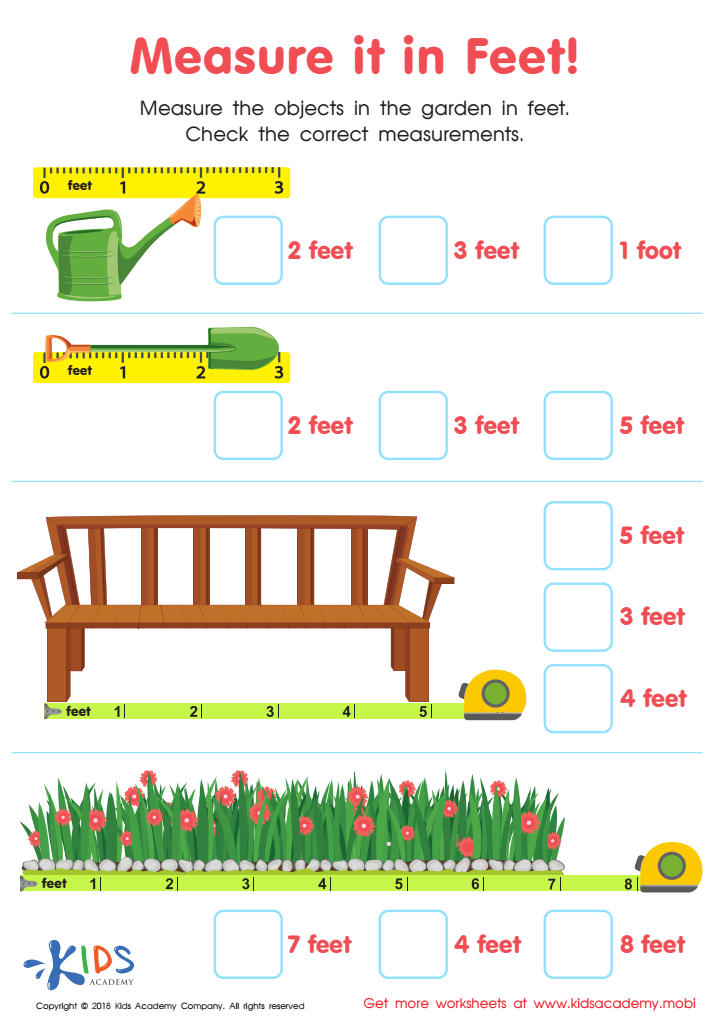
Measure it in Feet Worksheet



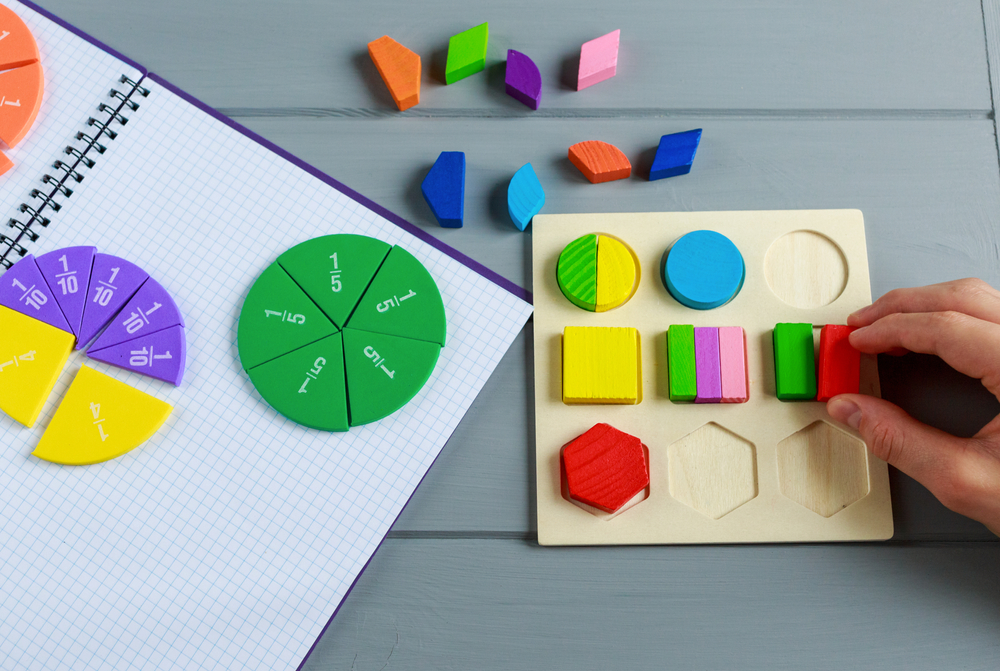


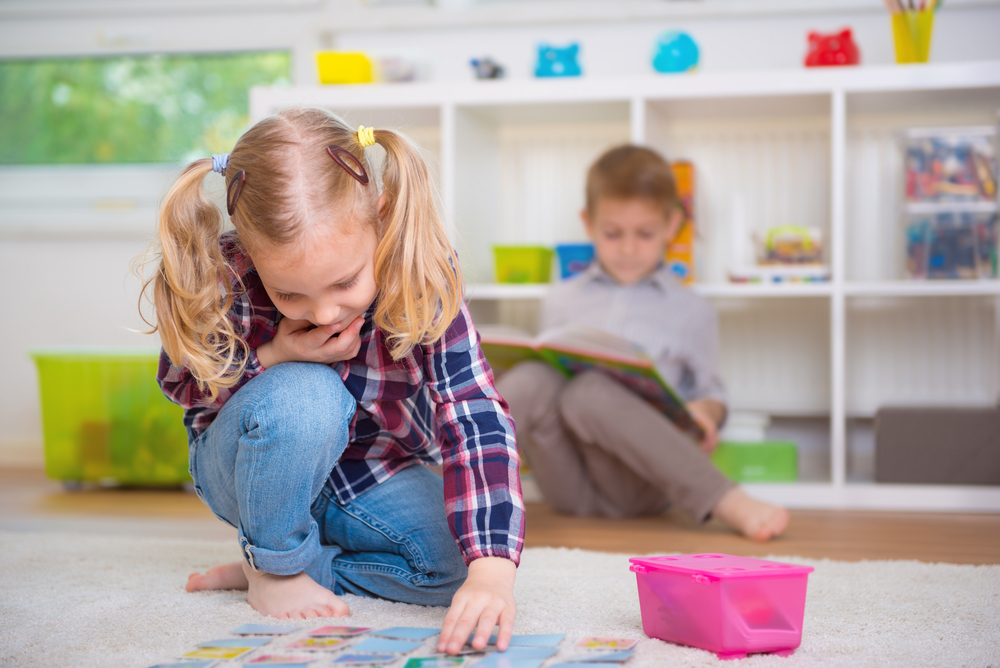
Understanding measurements is crucial for children aged 3-7 as it lays the foundation for several key skills that will benefit them throughout their lives. At this early age, children are naturally curious about the world around them, and introducing concepts like length, weight, and volume can enrich their understanding and foster critical thinking.
Measurements help children make sense of their experiences, from comparing sizes of objects during playtime to understanding the concept of time while waiting for their turn. Learning about measurements can enhance their vocabulary and improve their ability to communicate effectively. By introducing practical, hands-on activities that involve measuring, parents and teachers can promote an engaging learning environment that transforms abstract concepts into relatable, tangible experiences.
Furthermore, early exposure to measurements is essential for developing mathematical skills, which are necessary for future academic success. It lays the groundwork for problem-solving abilities and logical thinking. Parents and teachers should care because measuring activities build confidence, encourage curiosity, and ignite a love for learning in young children, preparing them for a wide range of life skills, academic pursuits, and future STEM (Science, Technology, Engineering, Mathematics) opportunities. Ultimately, fostering an early understanding of measurements supports lifelong learning and discovery.








