Understanding patterns Easy Worksheets for Ages 3-7
3 filtered results
-
From - To
Discover fun and engaging worksheets designed to help children ages 3-7 master understanding patterns! Our "Understanding Patterns Easy Worksheets" provide colorful, interactive activities that promote early math skills through enjoyable learning experiences. Each worksheet encourages critical thinking and creativity as children identify, create, and extend patterns using various shapes, colors, and objects. Perfect for classrooms or at-home learning, these worksheets cater to different learning styles while fostering a love for patterns and math concepts. Download your worksheets today and watch your child enhance their cognitive development and problem-solving skills while having fun! Explore the endless possibilities of pattern learning!
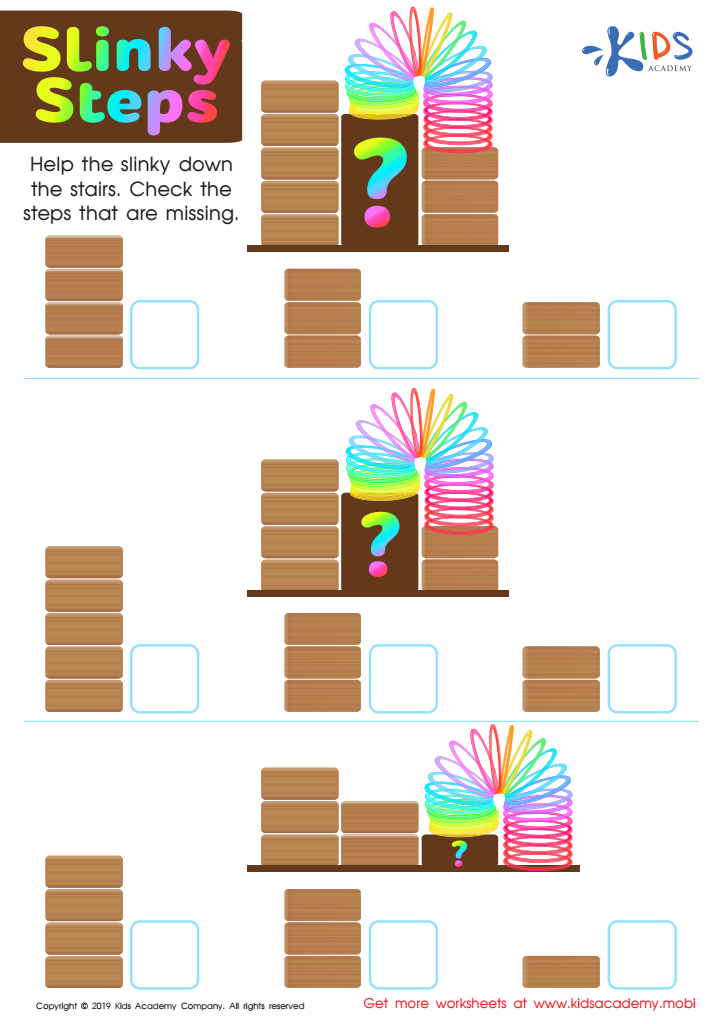
Slinky Steps Worksheet
 Assign to My Students
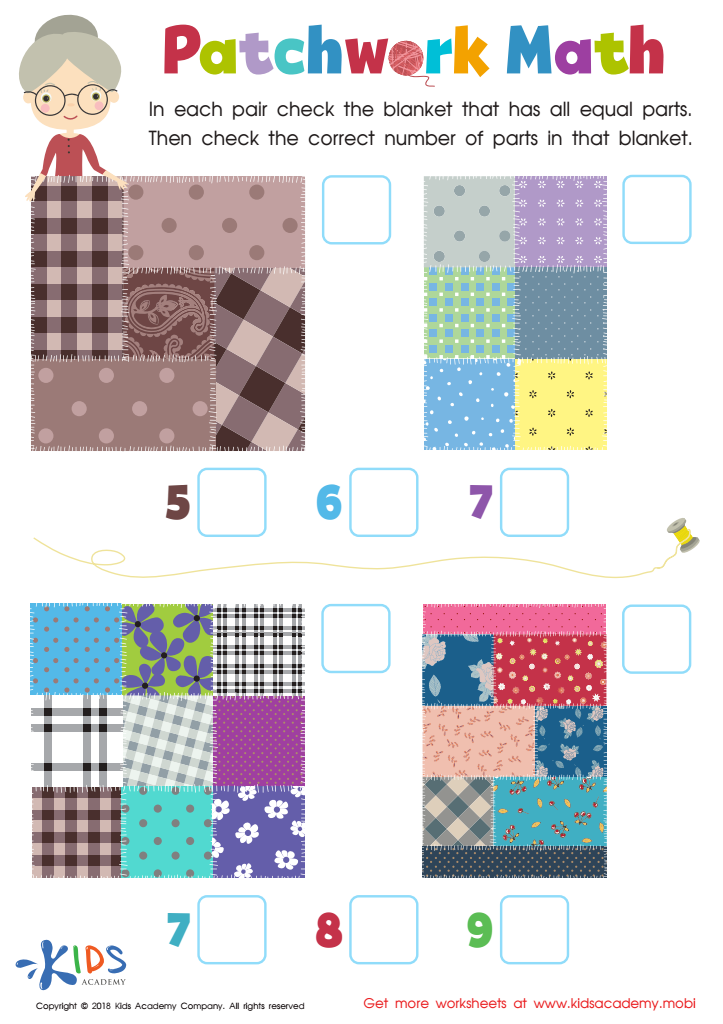
Patchwork Math Worksheet







Understanding patterns is a fundamental building block for young learners aged 3-7, serving as a gateway to critical thinking and problem-solving skills. Parents and teachers should prioritize teaching patterns because they underpin many essential concepts in mathematics and science. Recognizing and creating patterns help children develop logical reasoning, which is crucial as they progress to more complex subjects.
Patterns are everywhere in our daily lives, from the colors of a rainbow to the arrangements of leaves on a tree. By engaging with patterns, children enhance their observational skills, which can lead to greater curiosity about the world around them. For instance, recognizing a pattern can help children predict what comes next, fostering a sense of confidence in their abilities and encouraging independence in learning.
Additionally, pattern recognition is closely linked to literacy. Children learn to identify sequences in stories and songs, enhancing their understanding and retention of information. Instruction in patterns can also support emotional development, as children learn to anticipate familiar routines.
Incorporating pattern activities into everyday life—such as sorting objects, creating simple sequences, or clapping rhythms—provides joyful, hands-on learning experiences that reinforce these essential skills, making understanding patterns a vital focus for parents and teachers alike.








