Understanding time Easy Worksheets for Ages 3-7
3 filtered results
-
From - To
Explore our "Understanding Time Easy Worksheets" designed specifically for children aged 3 to 7! These worksheets provide a fun and engaging way for young learners to grasp the concept of time, helping them learn to read clocks, differentiate between morning and afternoon, and understand daily routines. With colorful illustrations and age-appropriate activities, these resources foster a solid foundation in time-telling skills. Parents and teachers can easily download and print these worksheets for at-home or classroom use, making learning about time enjoyable and interactive. Start your child's journey to understanding time today with our expertly crafted worksheets!
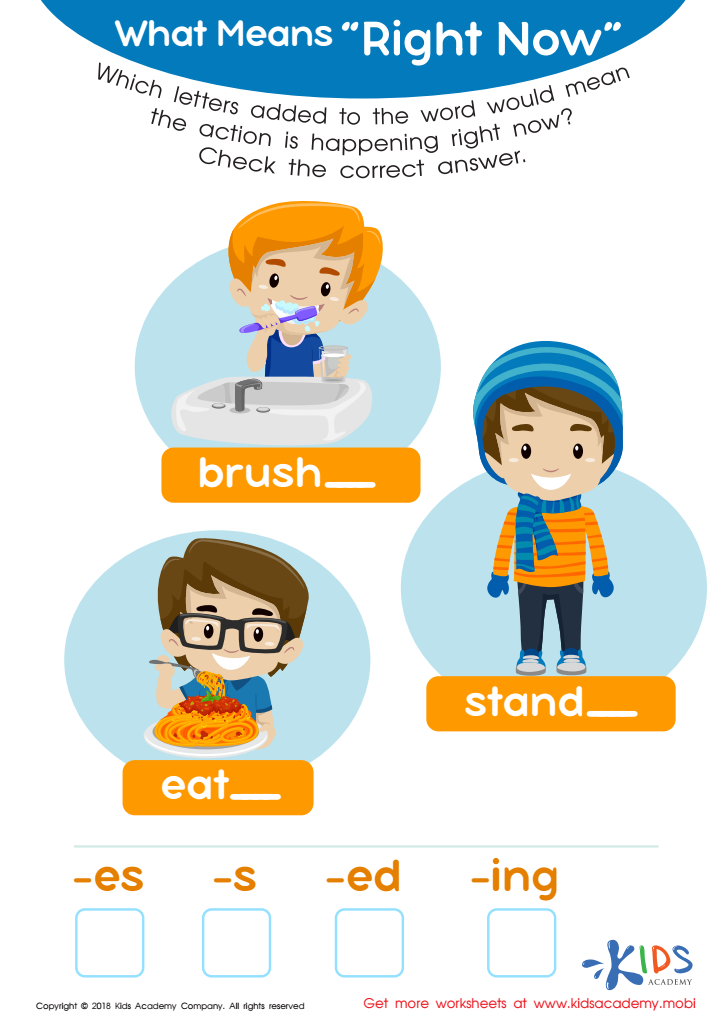
What Means "Right Now" Worksheet
 Assign to My Students
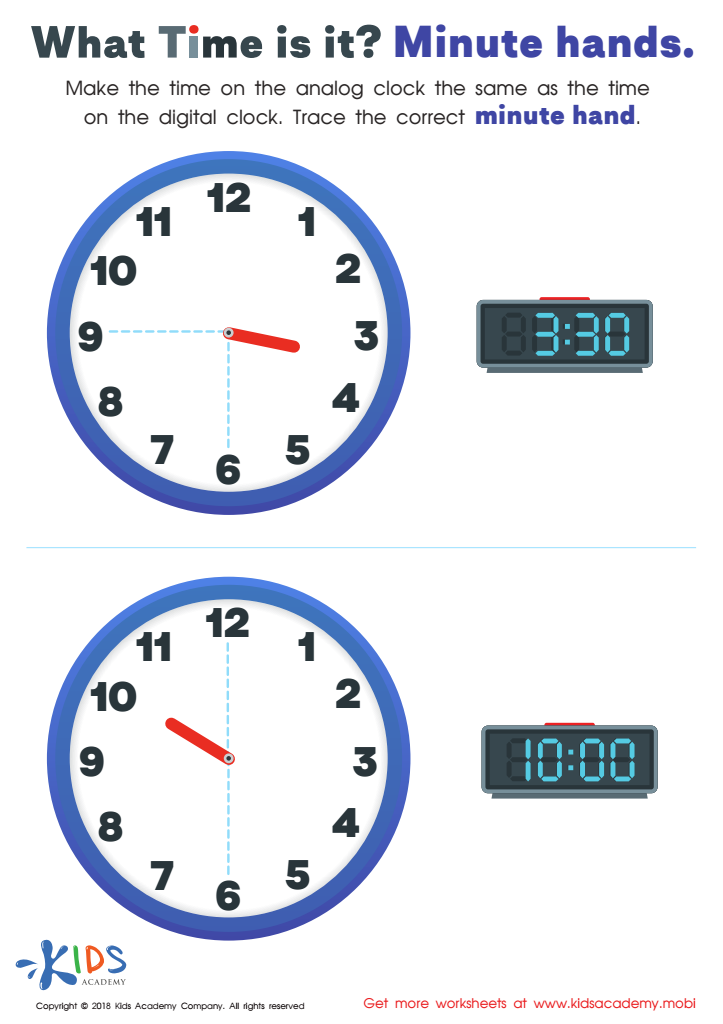
What Time Is it? Minute Hands Worksheet
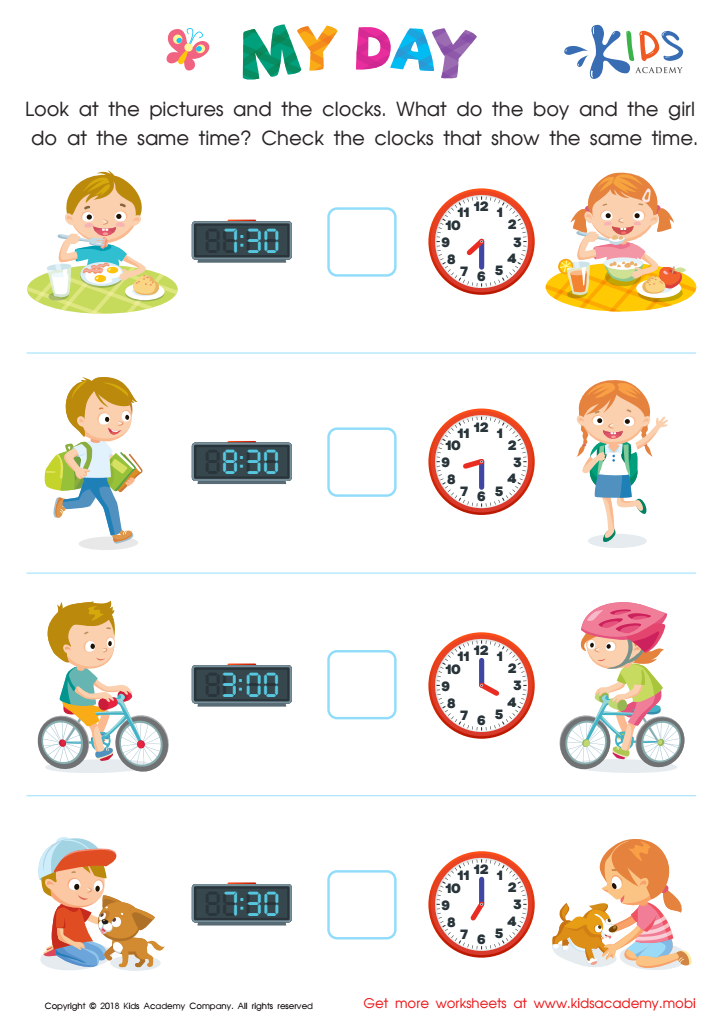
My Day Worksheet







Understanding time is crucial for children aged 3-7 as it lays the foundation for their daily routines, social interactions, and future learning. At this age, children begin to grasp the concepts of daily schedules and seasonal changes, which help establish a sense of security and predictability in their lives. This understanding enhances their ability to manage time effectively, fostering independence as they progress in their education.
Moreover, time literacy encourages the development of critical thinking and problem-solving skills. As children learn to connect activities with specific times—like meal times or playtimes—they begin to understand order, sequence, and cause-and-effect relationships. This contributes to their cognitive development and prepares them for more complex subjects in later years.
For teachers and parents, engaging children in time-related activities promotes a collaborative learning environment. Utilizing fun, hands-on methods, such as story time or interactive games, makes the learning process enjoyable and memorable. Additionally, these experiences foster communication skills, as children learn to express themselves around shared timelines and routines. Overall, prioritizing time comprehension in early childhood education not only supports long-term academic success but also nurtures essential life skills that children will carry well into adulthood.








