Filters

346 filtered results

Clear all filters
Favorites
With answer key
Interactive

346 filtered results

Difficulty Level

Grade


Subject

    Check out this FREE Trial Lesson on Math for age 3-7!

    Match Exactly the Same

    Favorites
    With answer key
    Interactive
    • 3-7
    • Math
    • Easy
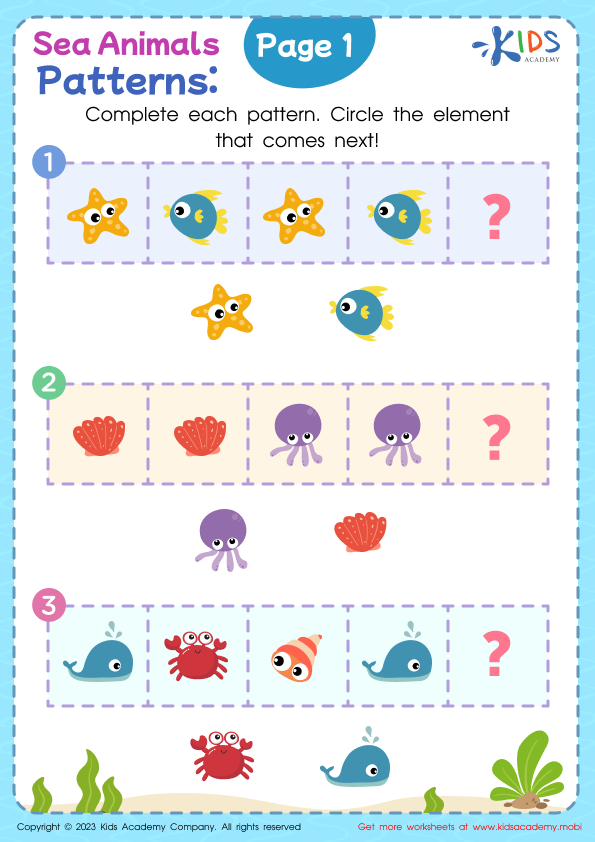
    Sea Animals Patterns: Page 1
    Sea Animals Patterns: Page 1

    Sea Animals Patterns: Page 1

    Sea Animals Patterns: Page 1
    Worksheet
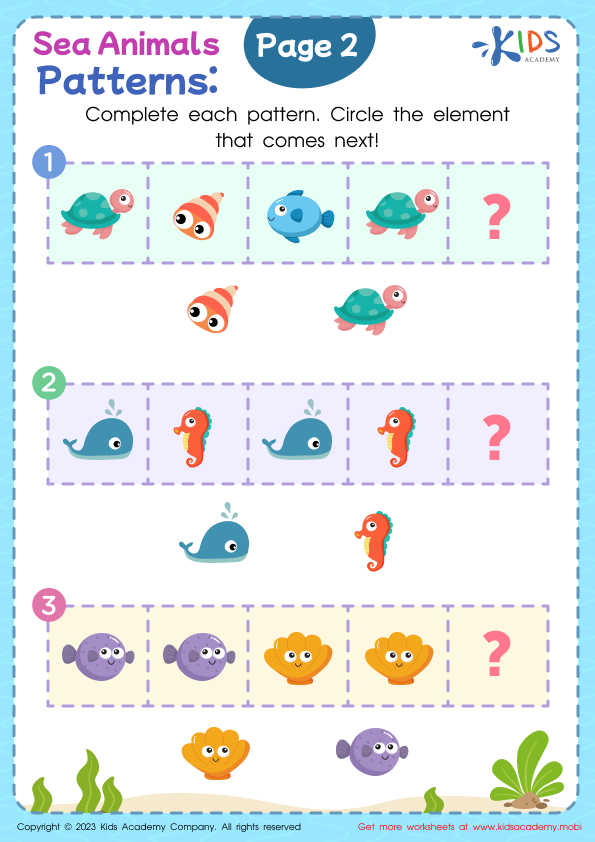
    Sea Animals Patterns: Page 2
    Sea Animals Patterns: Page 2

    Sea Animals Patterns: Page 2

    Sea Animals Patterns: Page 2
    Worksheet
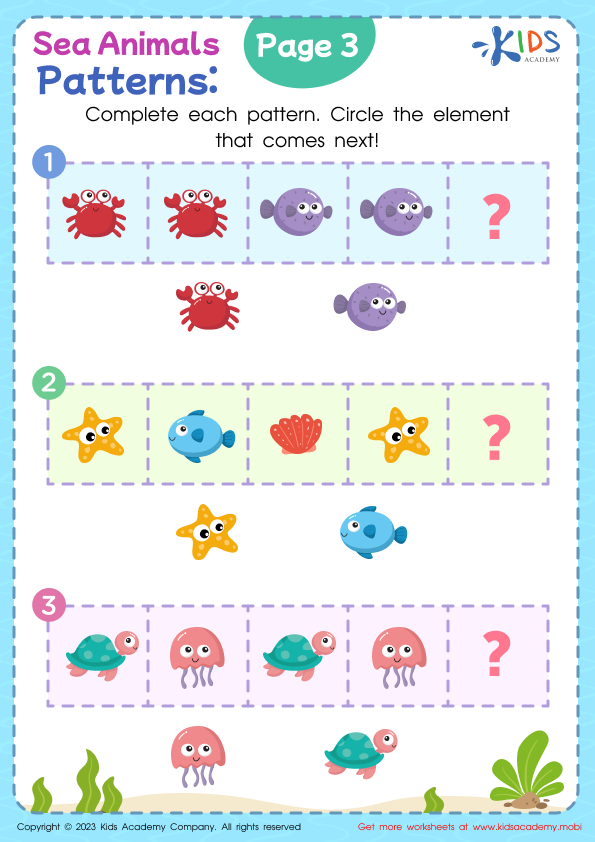
    Sea Animals Patterns: Page 3
    Sea Animals Patterns: Page 3

    Sea Animals Patterns: Page 3

    Sea Animals Patterns: Page 3
    Worksheet
    Patterns with Numbers: Page 1
    Patterns with Numbers: Page 1

    Patterns with Numbers: Page 1

    Patterns with Numbers: Page 1
    Worksheet
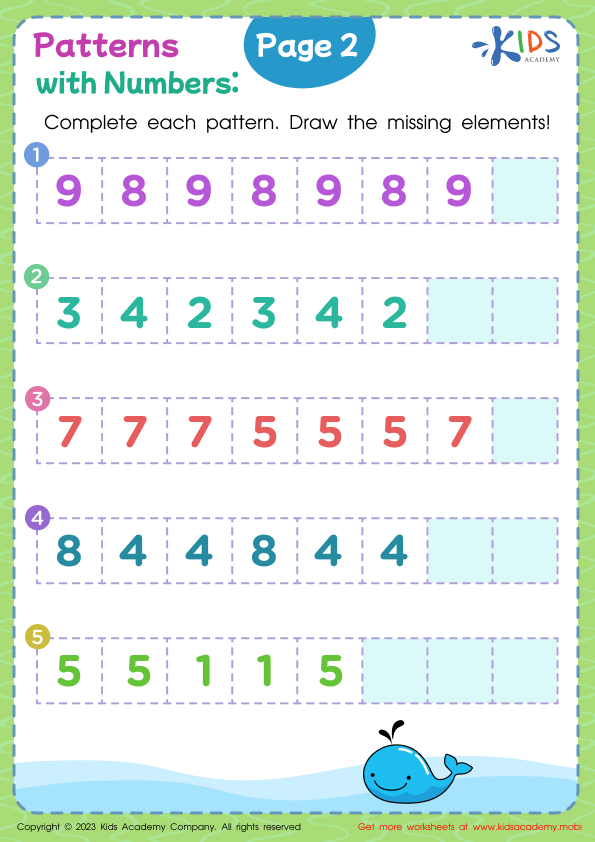
    Patterns with Numbers: Page 2
    Patterns with Numbers: Page 2

    Patterns with Numbers: Page 2

    Patterns with Numbers: Page 2
    Worksheet
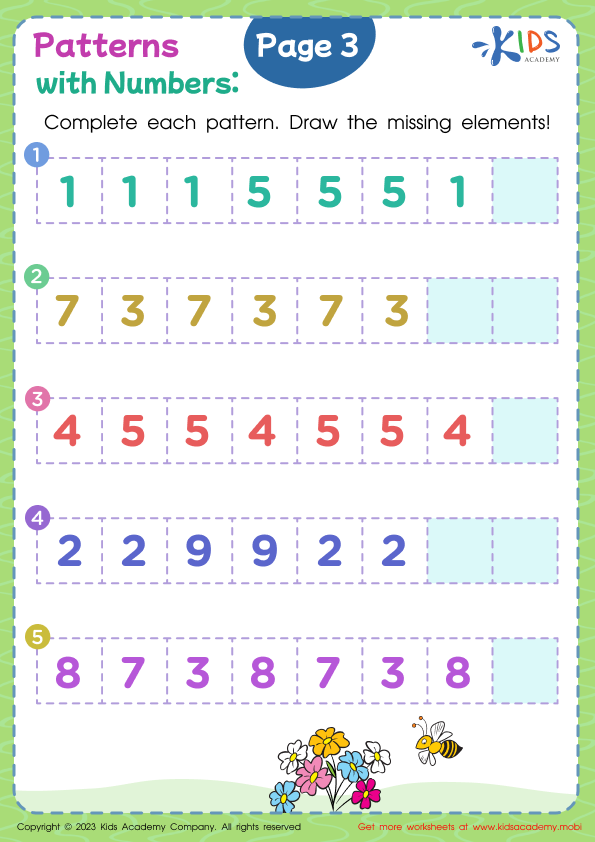
    Patterns with Numbers: Page 3
    Patterns with Numbers: Page 3

    Patterns with Numbers: Page 3

    Patterns with Numbers: Page 3
    Worksheet
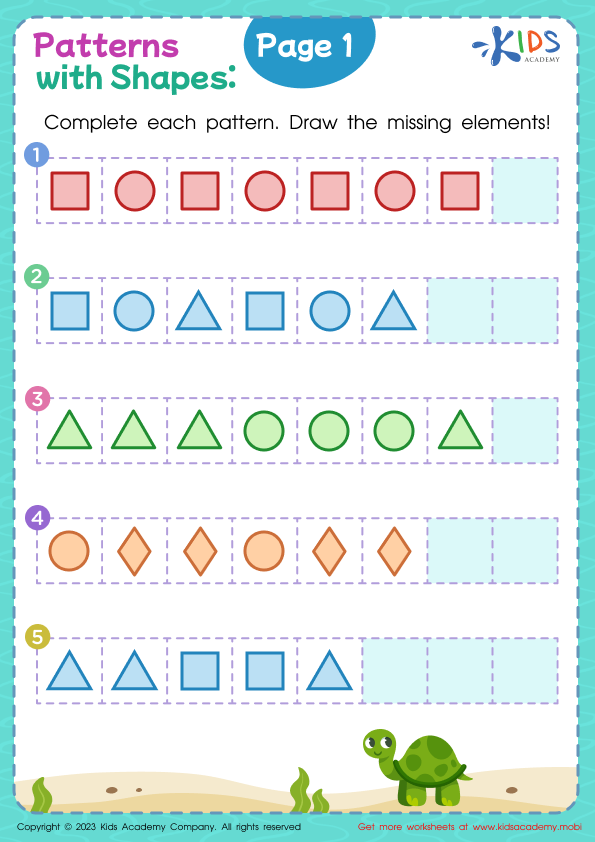
    Patterns with Shapes: Page 1
    Patterns with Shapes: Page 1

    Patterns with Shapes: Page 1

    Patterns with Shapes: Page 1
    Worksheet
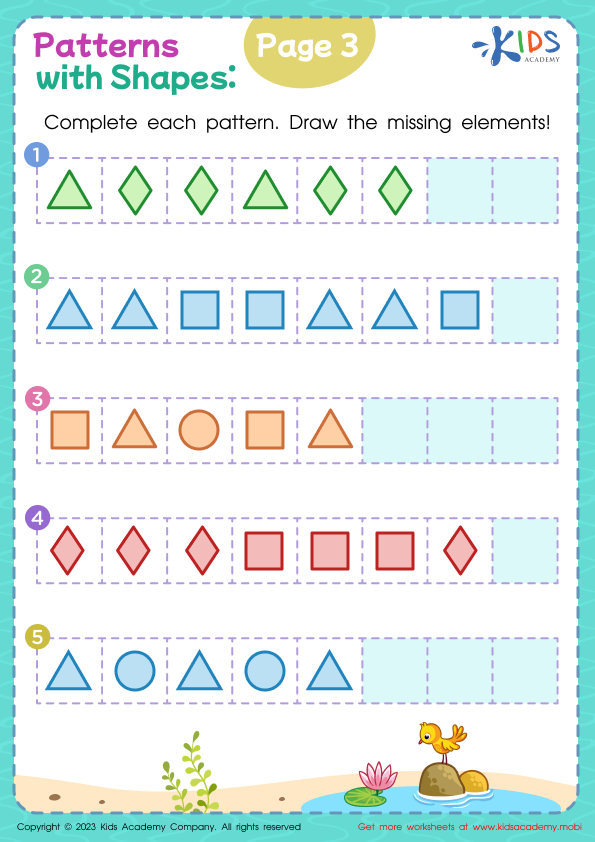
    Patterns with Shapes: Page 3
    Patterns with Shapes: Page 3

    Patterns with Shapes: Page 3

    Patterns with Shapes: Page 3
    Worksheet
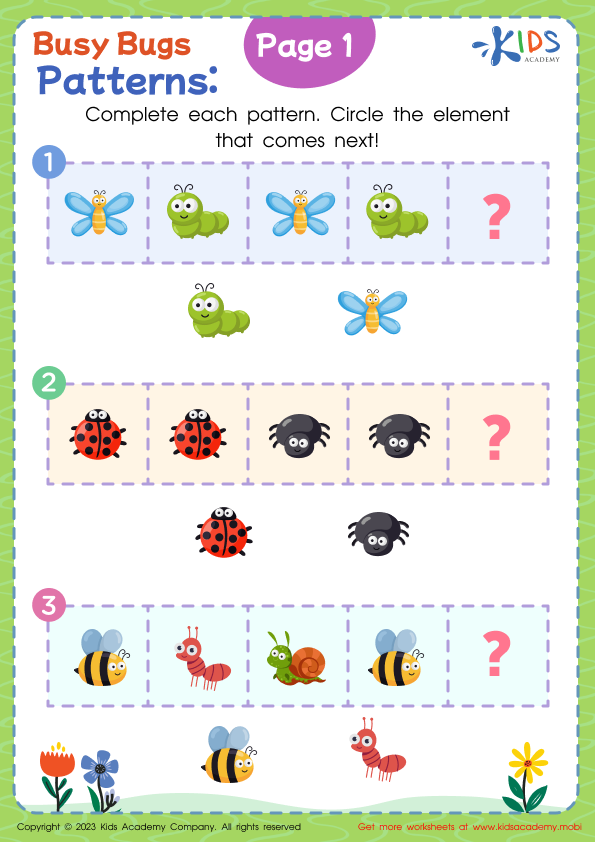
    Busy Bugs Patterns: Page 1
    Busy Bugs Patterns: Page 1

    Busy Bugs Patterns: Page 1

    Busy Bugs Patterns: Page 1
    Worksheet
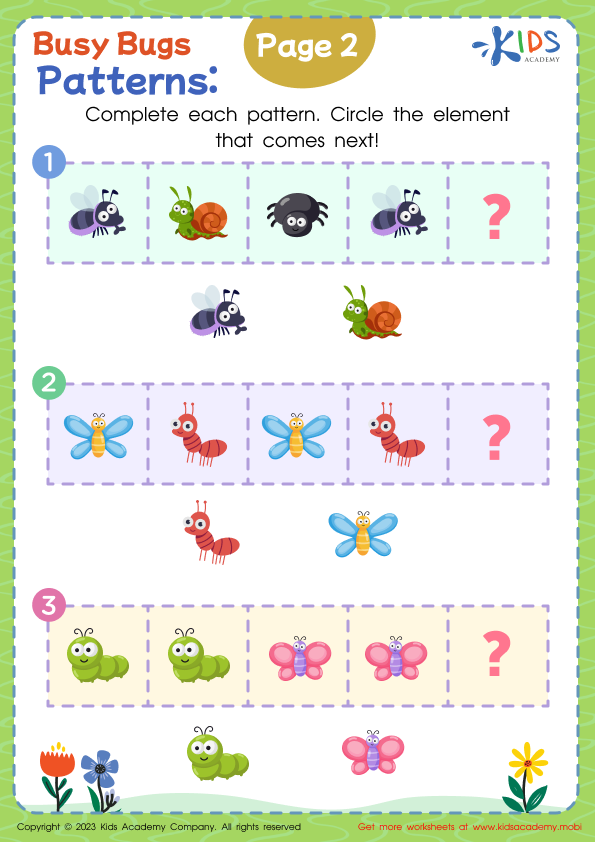
    Busy Bugs Patterns: Page 2
    Busy Bugs Patterns: Page 2

    Busy Bugs Patterns: Page 2

    Busy Bugs Patterns: Page 2
    Worksheet


    ... 14 15

    Early math skills are incredibly crucial for children ages 3-7, as this foundational stage sets the groundwork for future academic success. Parents and teachers should be attentive to developing these skills because of the essential role they play in cognitive development. Engaging young children in basic math activities stimulates logical reasoning and problem-solving abilities, skills that are not only pertinent in math but across all learning disciplines.

    Introducing math at an early age – think counting objects, learning shapes, or recognizing patterns – enhances a child's understanding of the world around them. These activities help develop fine motor skills, spatial awareness, and attention to detail. Consistently practicing math also nurtures perseverance and builds confidence through achievable goals, as children enjoy the satisfaction of solving problems.

    Moreover, early exposure to math mitigates future anxieties associated with the subject. Establishing a positive and fun relationship with math challenges, lessons adaptability to new information and happens to make eventual school transitions smoother. This early preparation equips children with the competence needed in a progressively STEM-focused society, ensuring they are not just prepared but excited for more complex mathematical concepts down the line. Essentially, prioritizing easy math activities for ages 3-7 fosters a healthy, well-rounded intellectual foundation for lifelong learning.