Counting skills Easy Counting Worksheets for Ages 3-7
5 filtered results
-
From - To
Discover our "Counting Skills Easy Counting Worksheets for Ages 3-7" designed to make learning numbers fun and engaging! Perfect for early learners, our worksheets help kids develop essential counting skills through playful activities and visually appealing exercises. Each worksheet encourages children to count, recognize, and write numbers with ease, ensuring a solid mathematical foundation. Ideal for home or classroom settings, these resources align with early education standards, stimulating critical thinking and problem-solving abilities. Foster your child's love of math and watch their confidence soar as they master counting skills in an enjoyable and effective way!
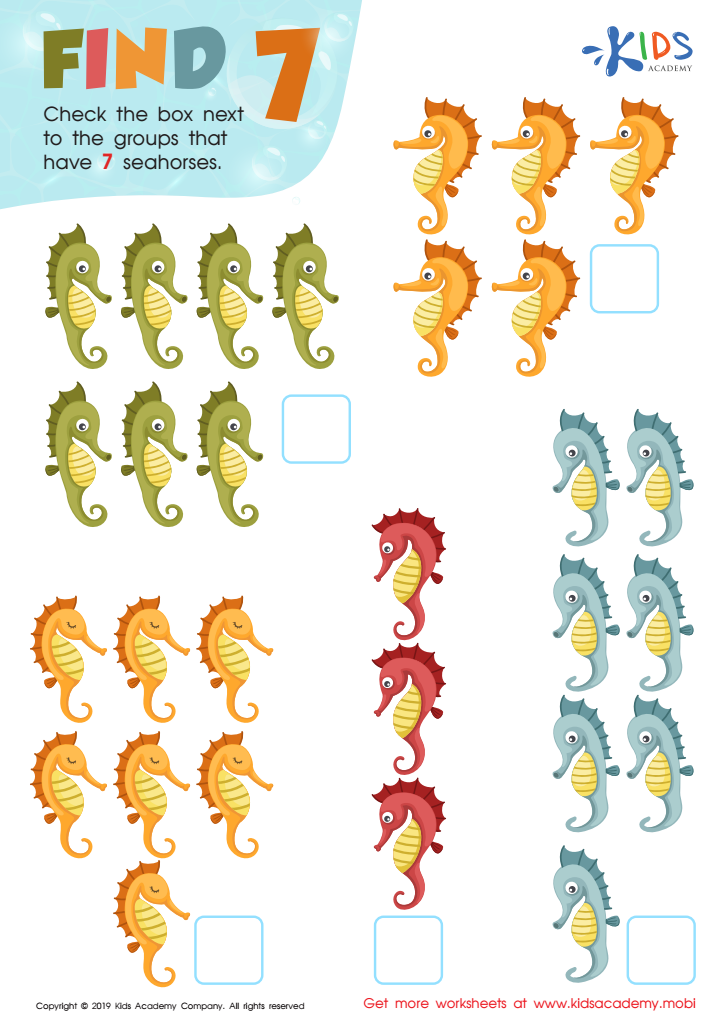
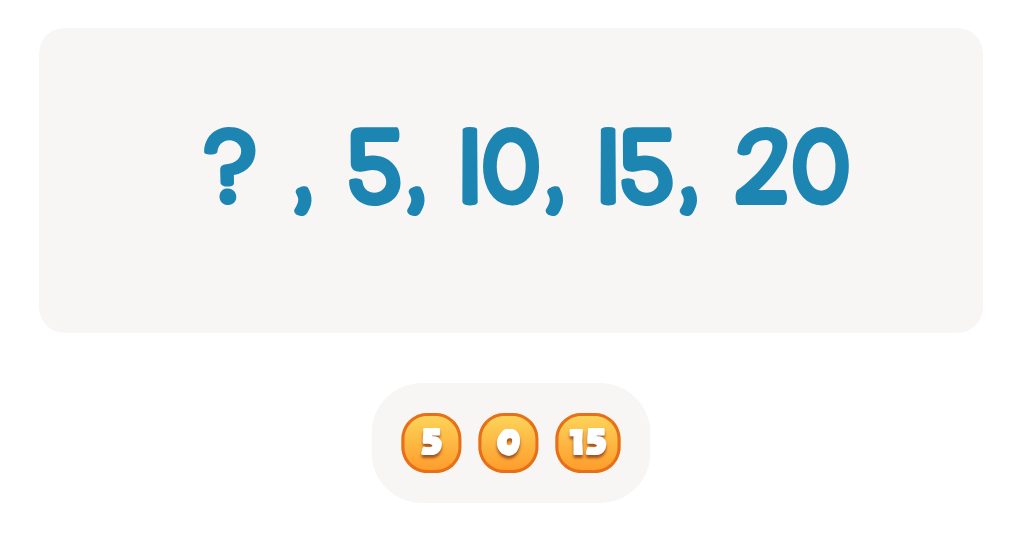
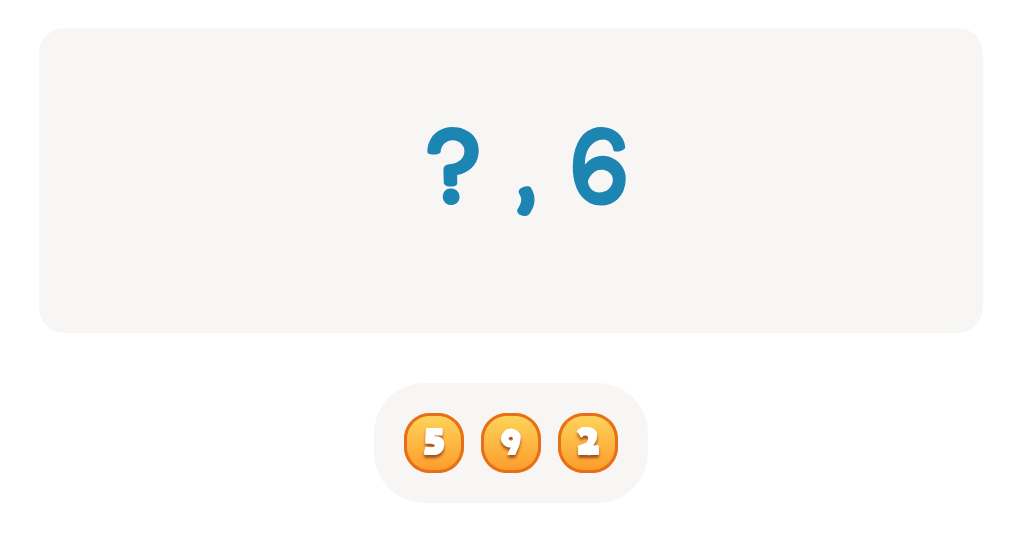
Find 7 Worksheet
 Assign to My Students


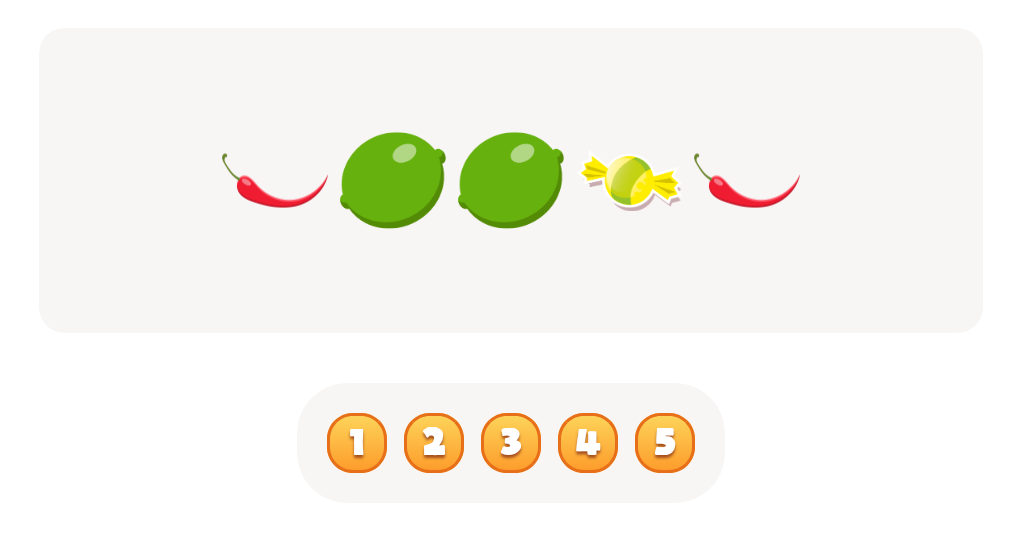
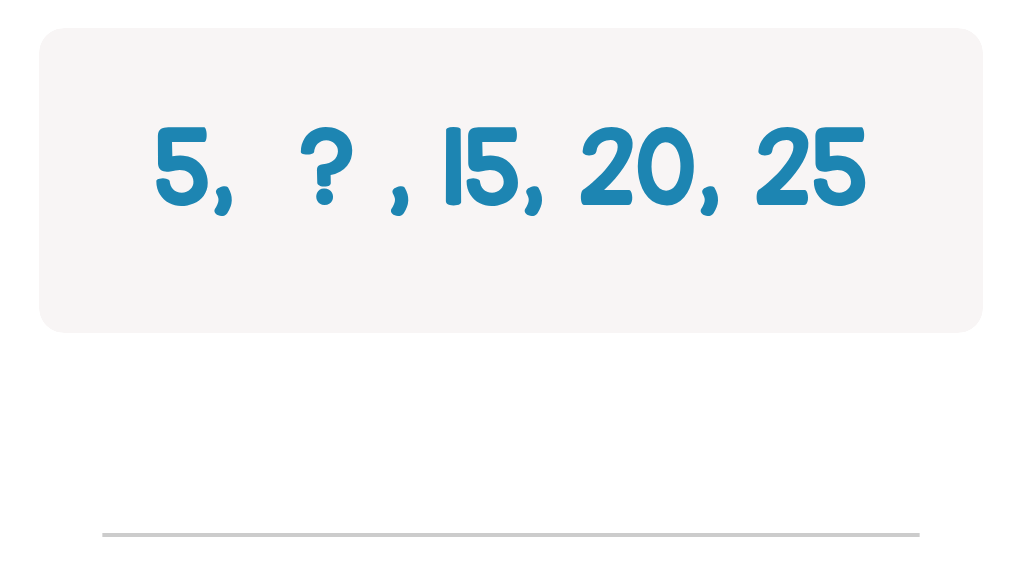
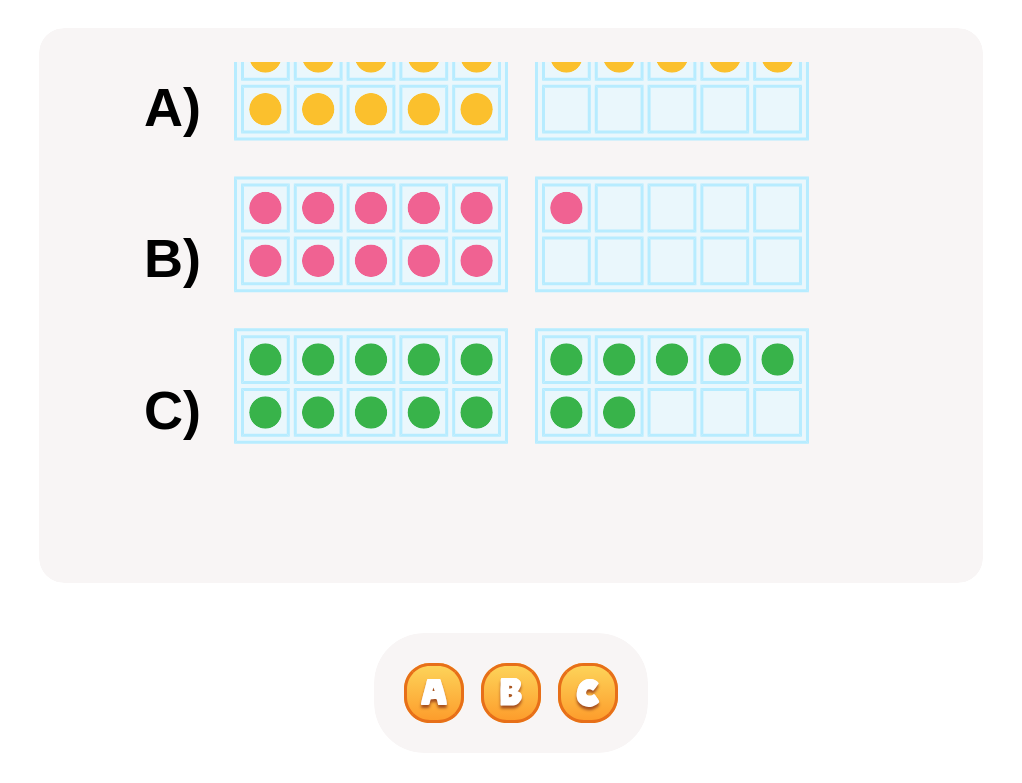
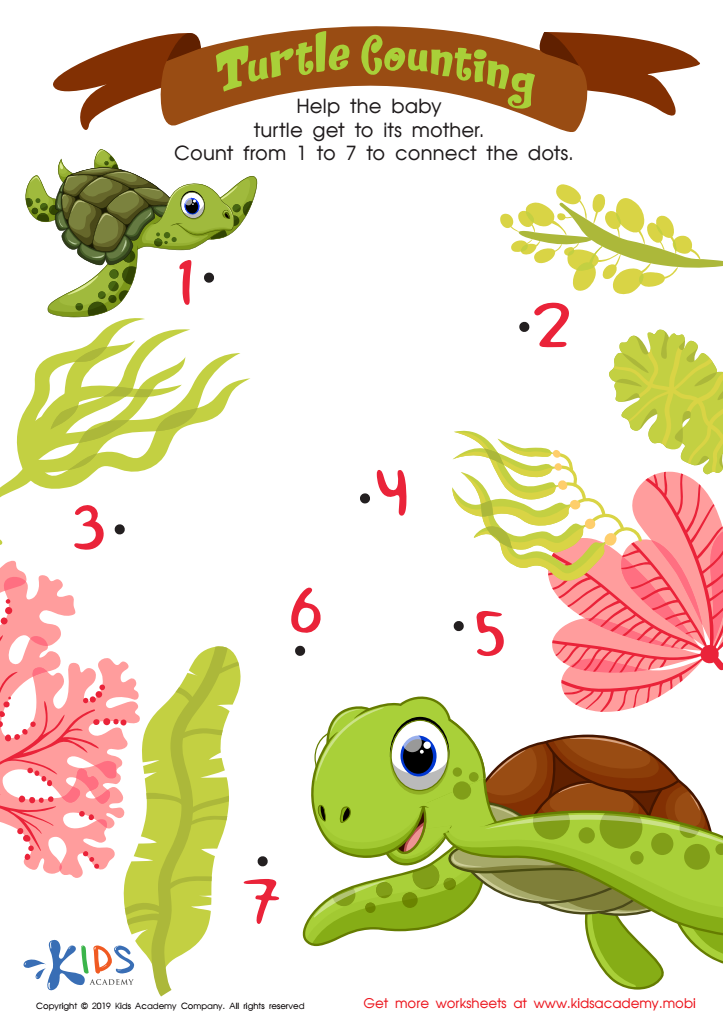
Turtle Counting Worksheet
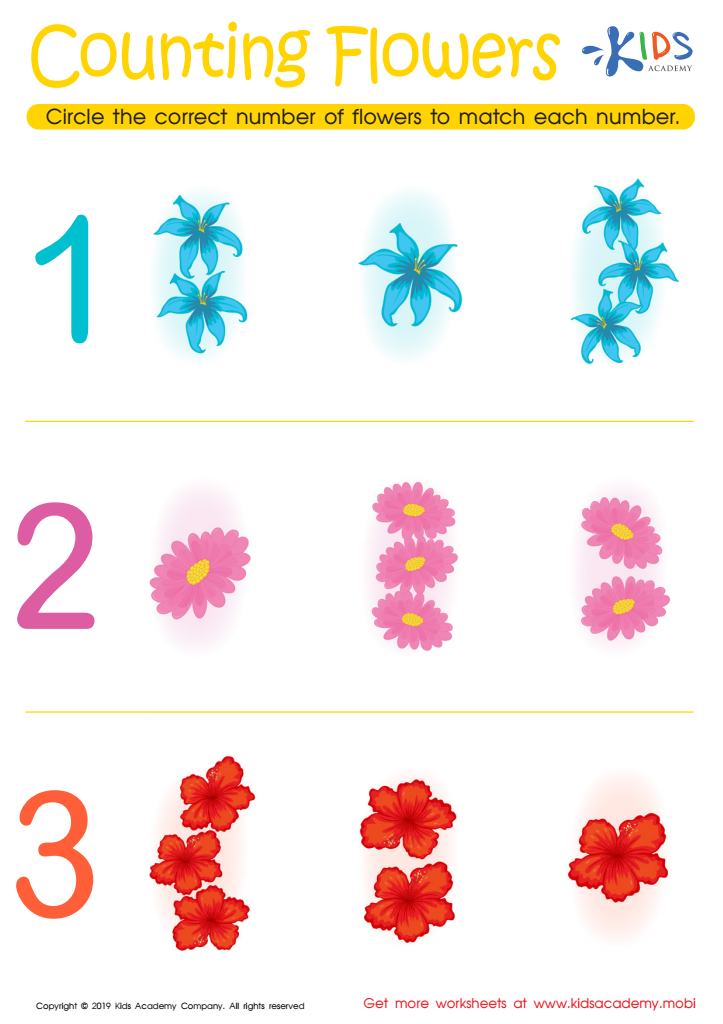
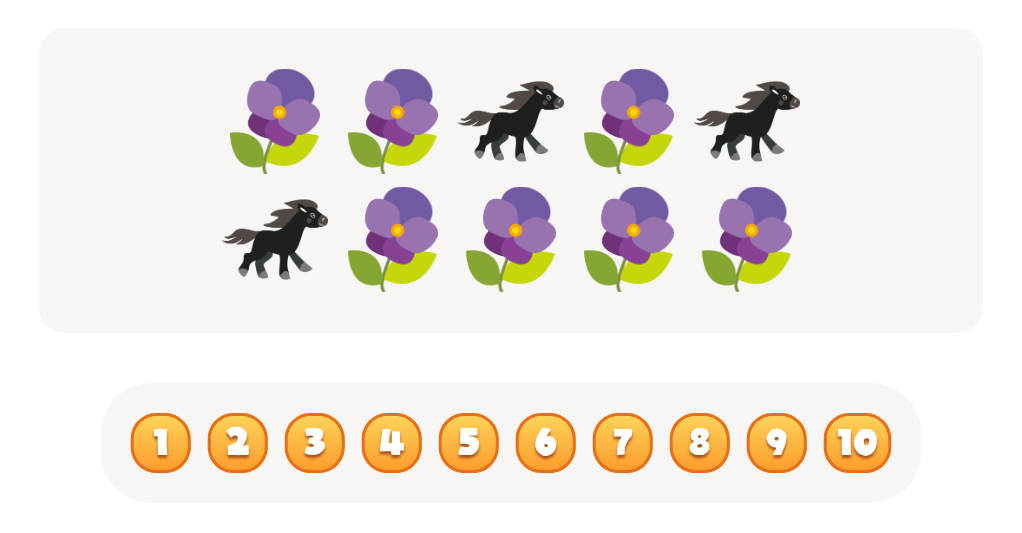
Counting Flowers Worksheet
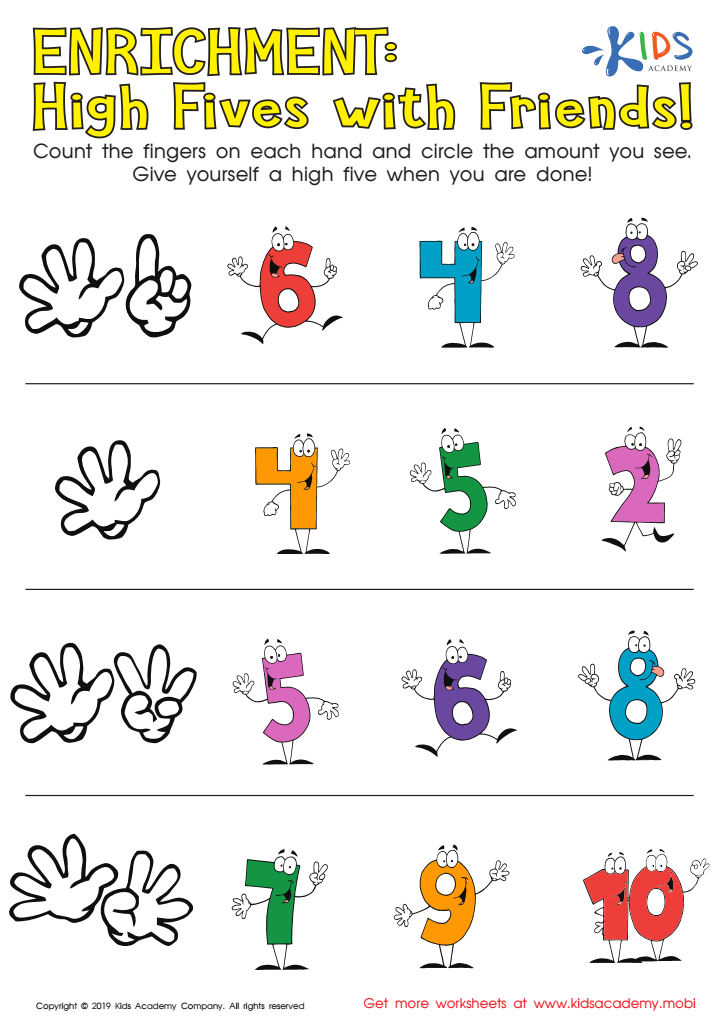
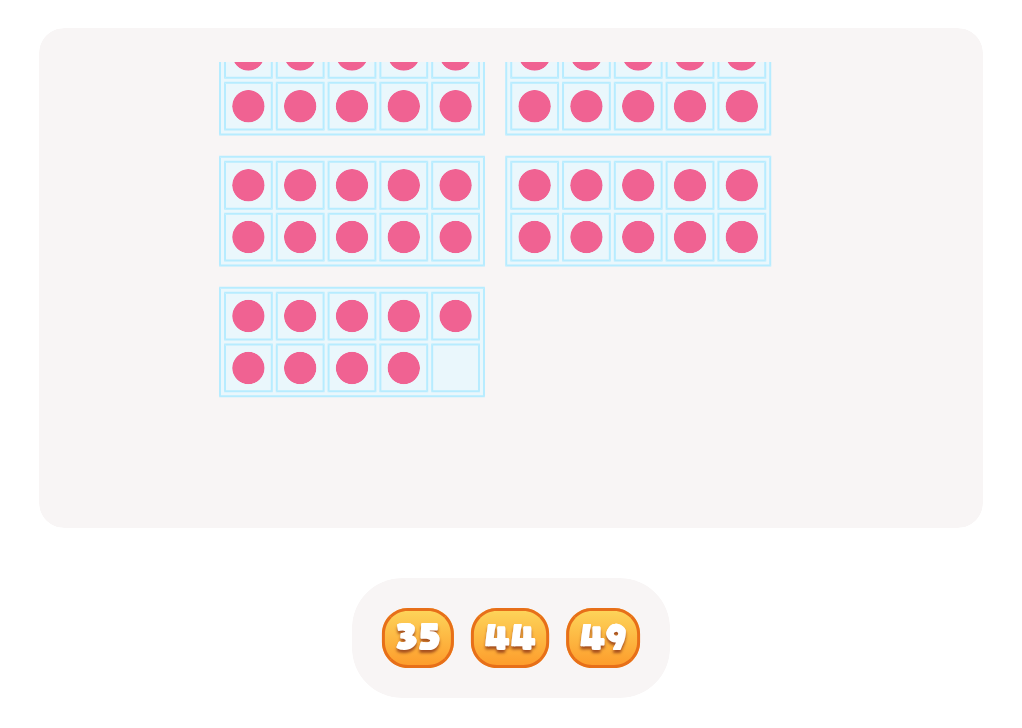
Enrichment: High Fives with Friends! Worksheet
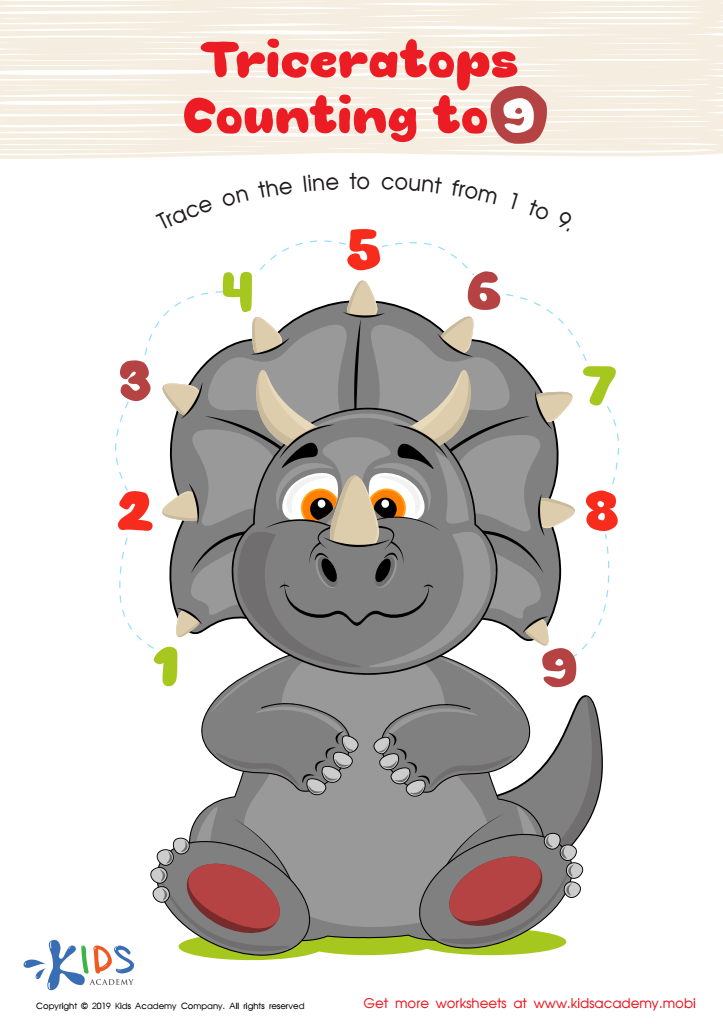
Triceratops Counting to 9 Worksheet








Counting skills are foundational for early childhood development and set the stage for future academic success. For ages 3-7, learning to count is more than just reciting numbers—it helps children grasp basic concepts of quantity, order, and categorization. Parents and teachers should prioritize easy counting exercises for several critical reasons.
First, counting enhances cognitive development. It builds children's number sense, an essential skill for understanding more complex mathematical operations later. This foundational knowledge helps children confidently progress to addition, subtraction, and eventually more complicated math concepts.
Second, counting exercises develop fine motor and language skills. As children count objects, they practice hand-eye coordination, particularly when they physically touch or move items to keep track. They also expand their vocabulary and improve linguistic skills by consistently hearing and repeating number words.
Third, early counting fosters problem-solving abilities and logical thinking. When children encounter everyday tasks like sharing snacks or arranging toys, they unconsciously apply counting principles. This practice cultivates their analytical thinking skills.
Lastly, counting teaches patience and attention to detail, encouraging young children to focus on tasks and follow through until completion. By integrating easy counting activities into daily routines, parents and teachers create a supportive learning environment that nurtures these vital skills.








