Understanding fractions Easy Fractions of Shapes Worksheets for Ages 3-7
13 filtered results
-
From - To
Explore our "Understanding Fractions: Easy Fractions of Shapes Worksheets" designed specifically for children ages 3-7! These engaging, interactive worksheets introduce young learners to the concept of fractions through fun and relatable shapes. With colorful visuals and straightforward exercises, kids will easily grasp the basics of dividing shapes into equal parts. Our resources promote early math skills, helping children develop their ability to recognize and express fractions. Perfect for at-home practice or classroom activities, these worksheets encourage hands-on learning and creativity. Join us in making fractions enjoyable and accessible for your little ones as they embark on their mathematical journey!
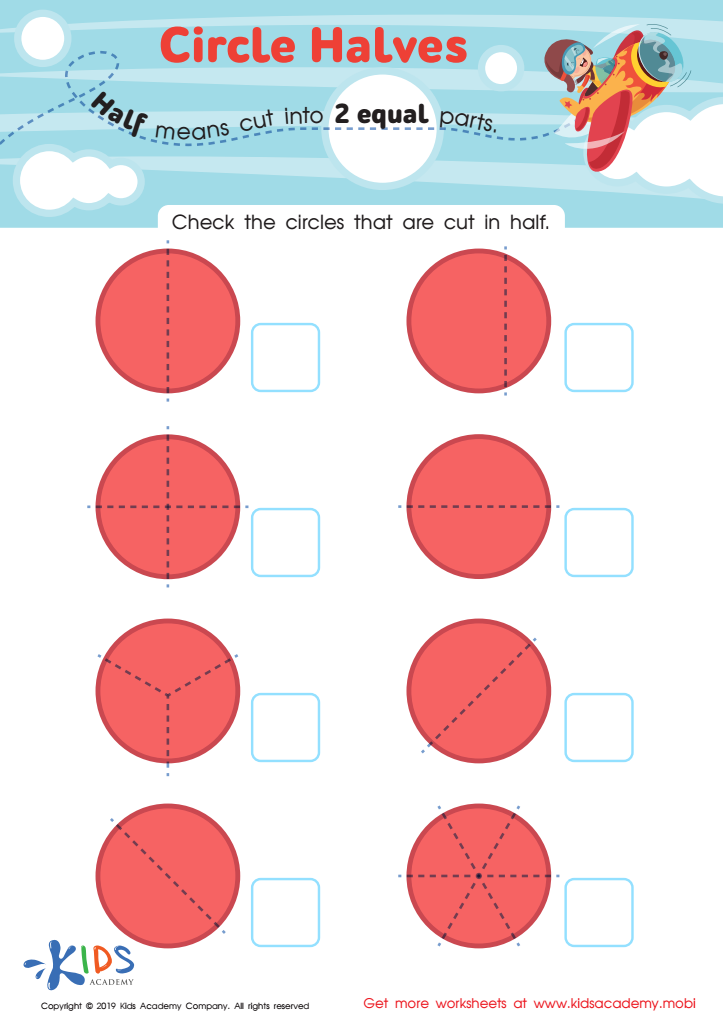
Circle Halves Worksheet
 Assign to My Students
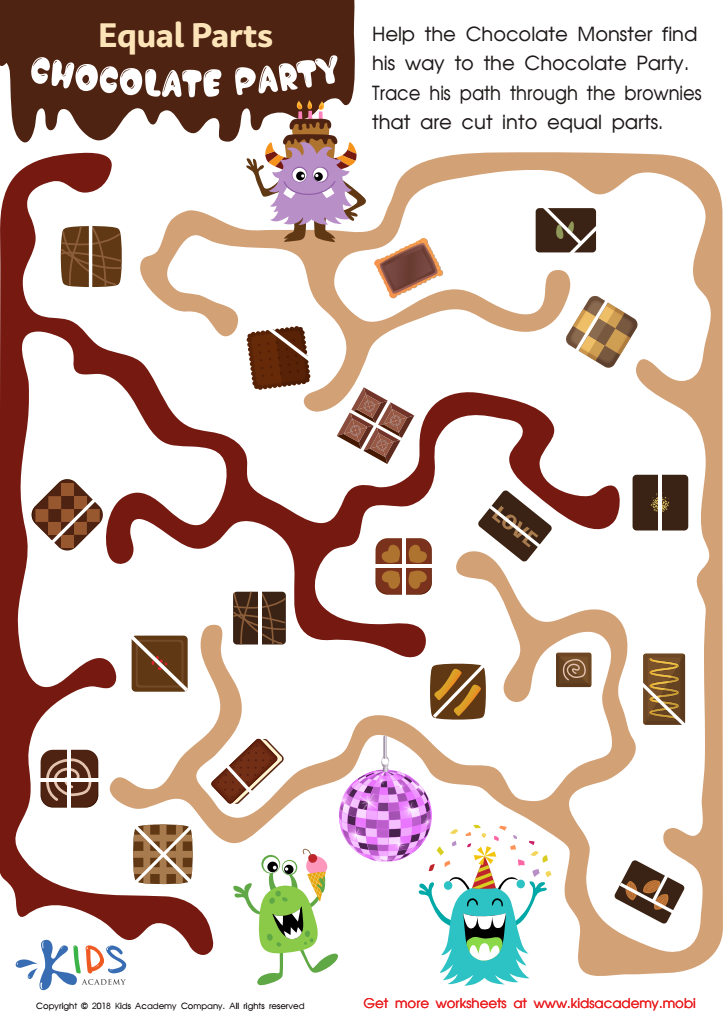
Equal Parts: Chocolate Party Worksheet
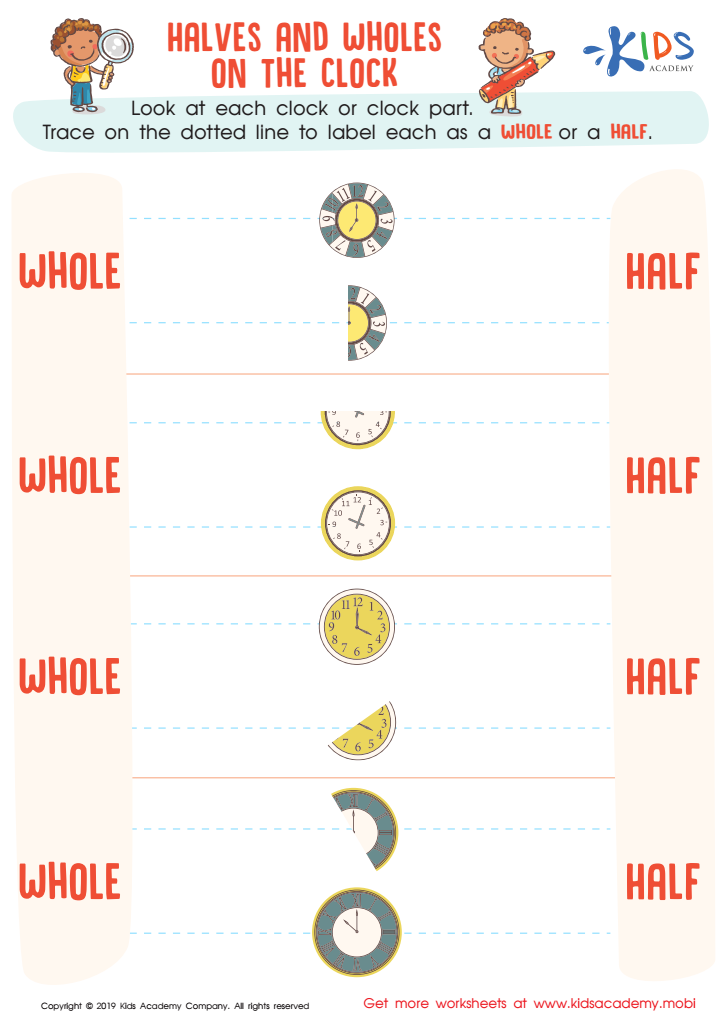
Halves and Wholes on the Clock Worksheet
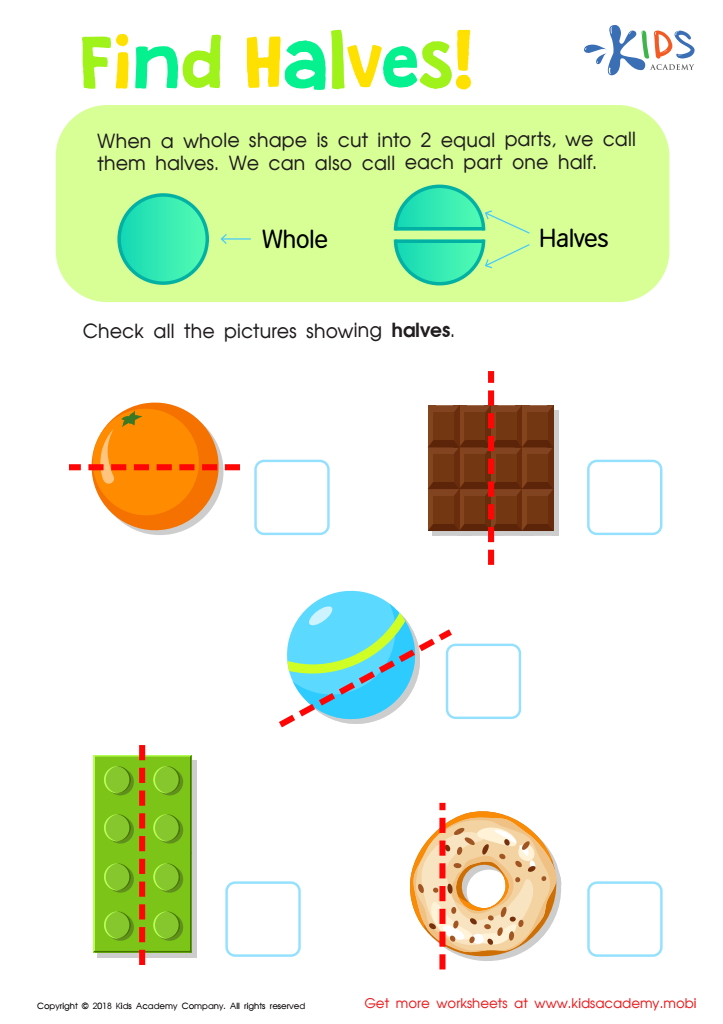
Find Halves Worksheet
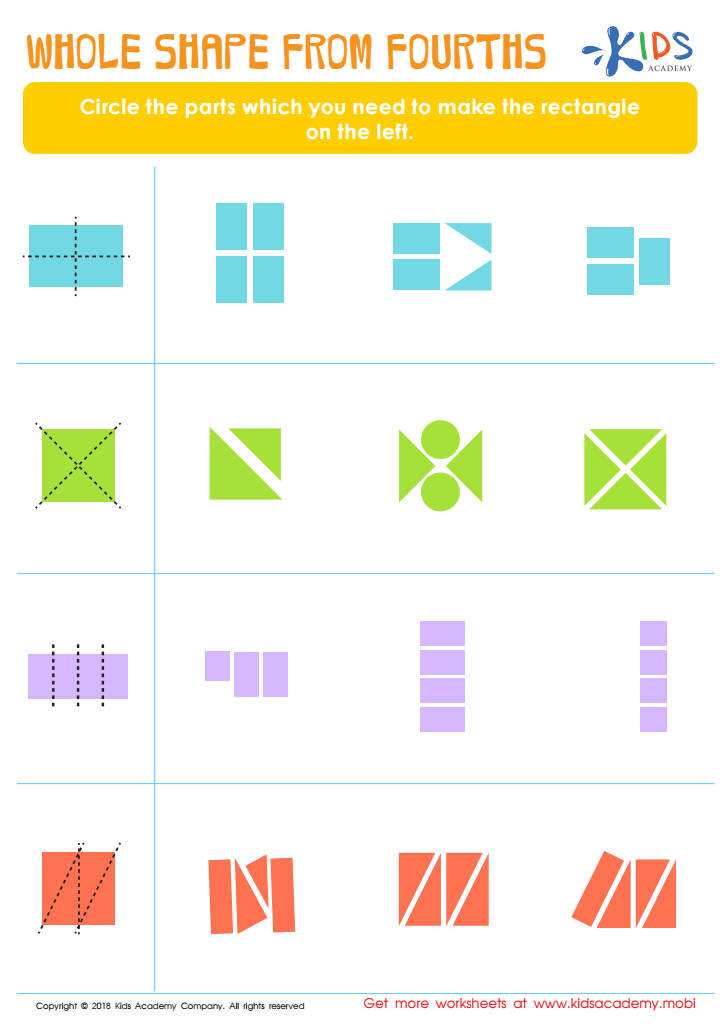
Whole Shape from Fourths Worksheet
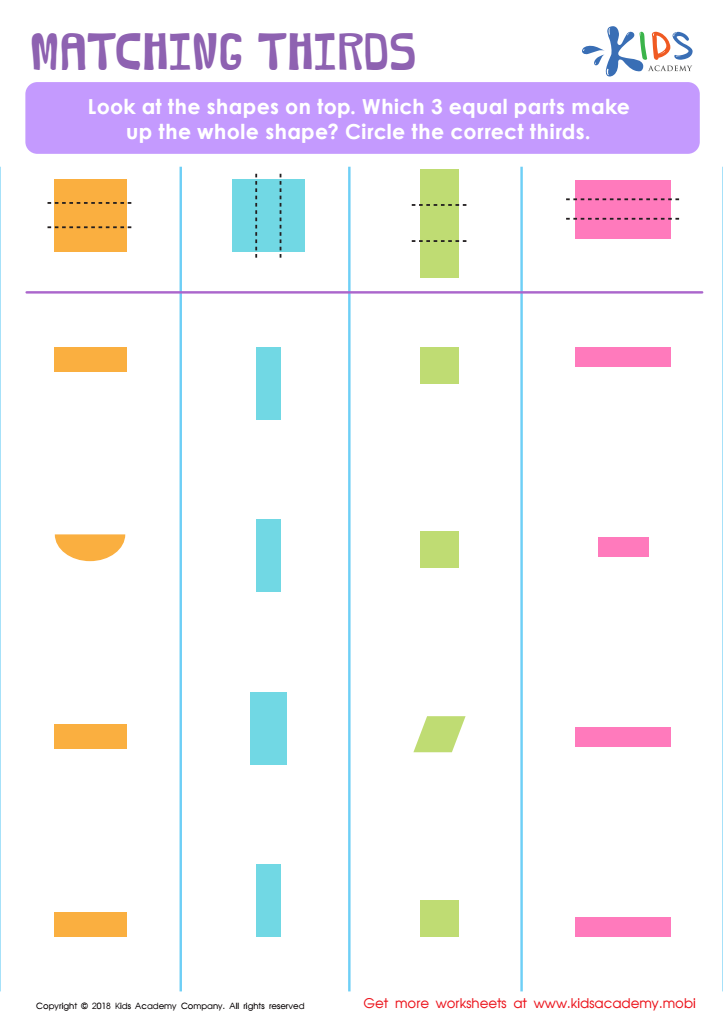
Matching Thirds Worksheet
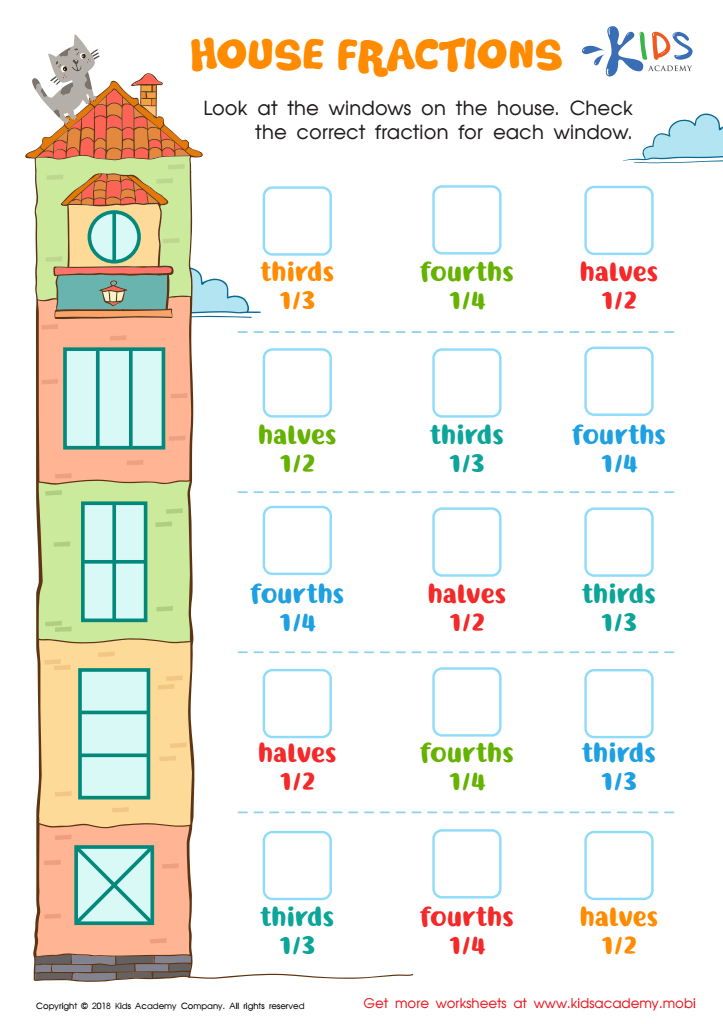
House Fractions Worksheet
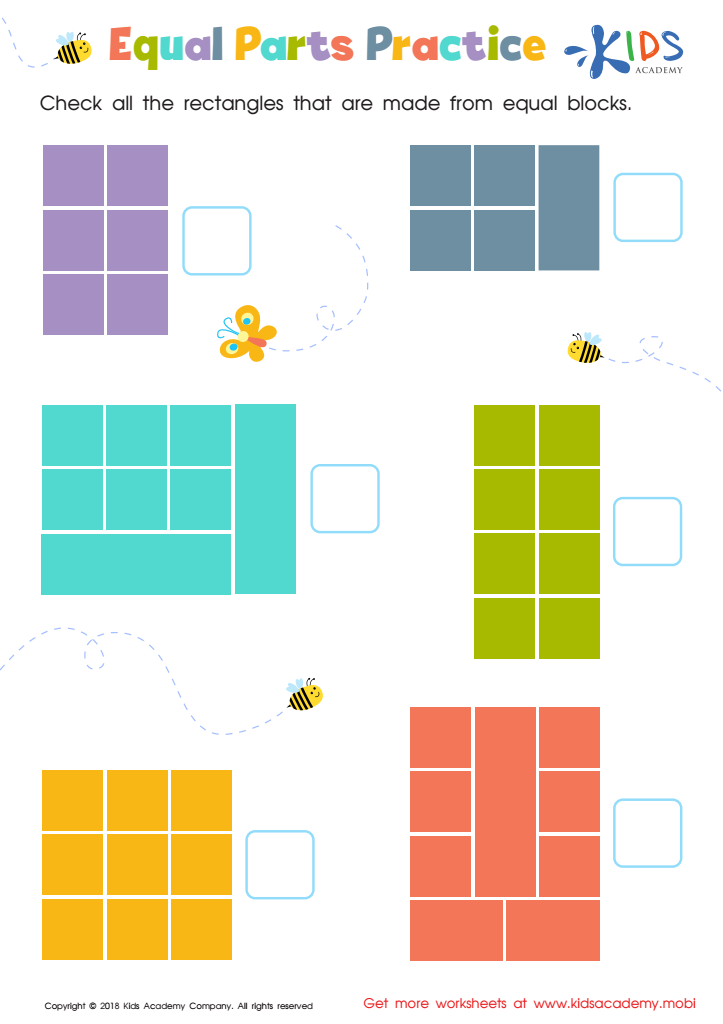
Equal Parts Practice Worksheet
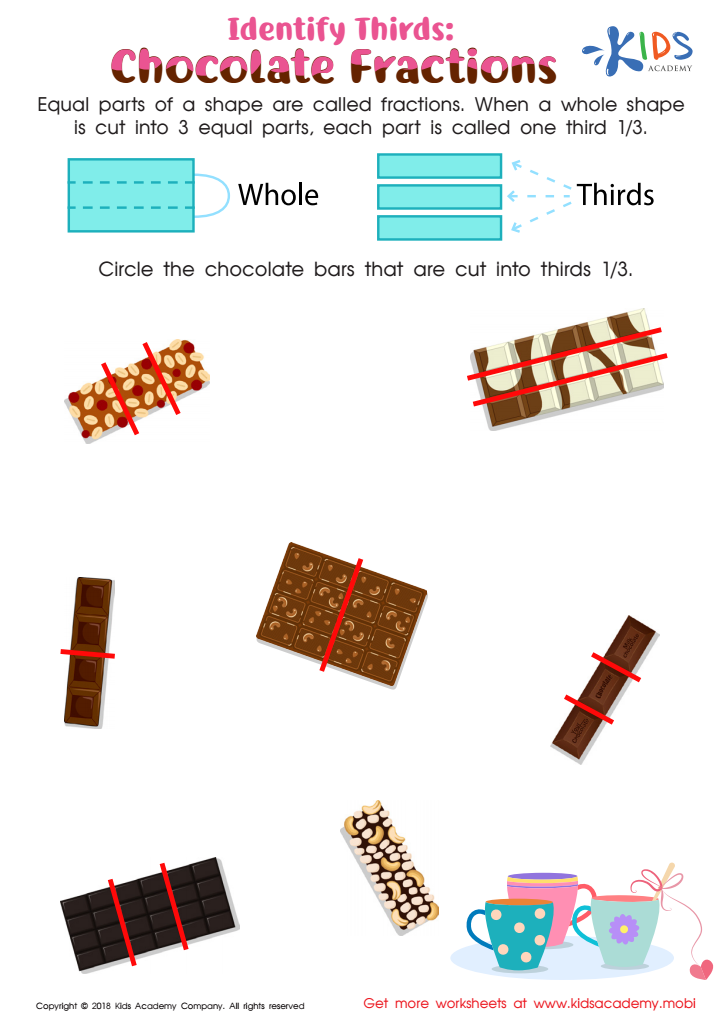
Identify Thirds: Chocolate Fractions Worksheet
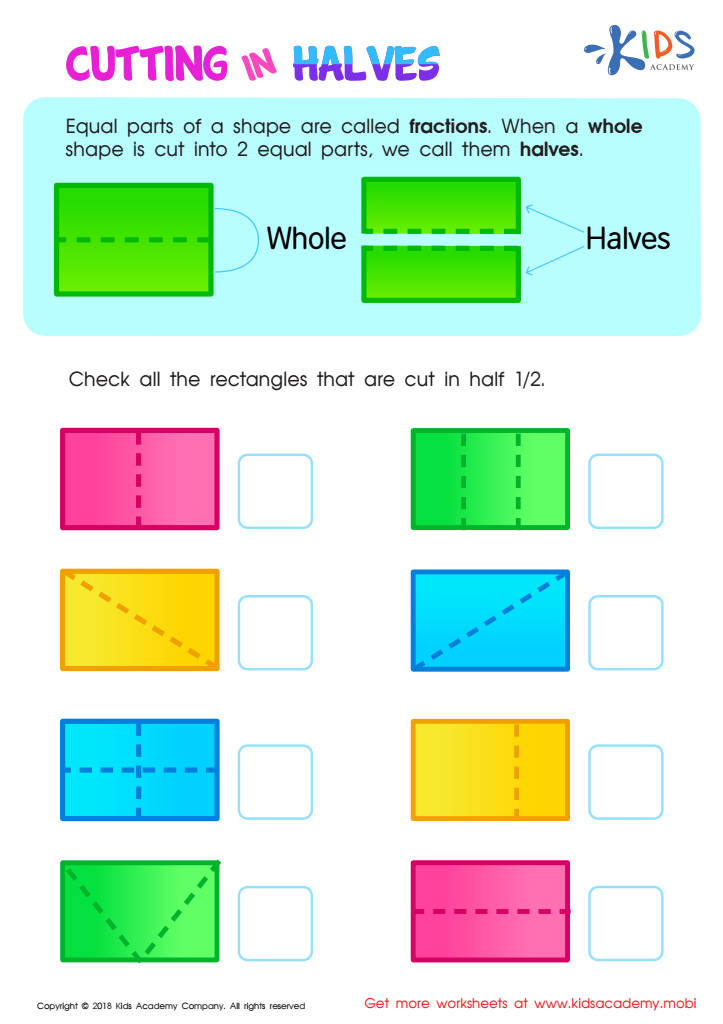
Cutting in Halves Worksheet
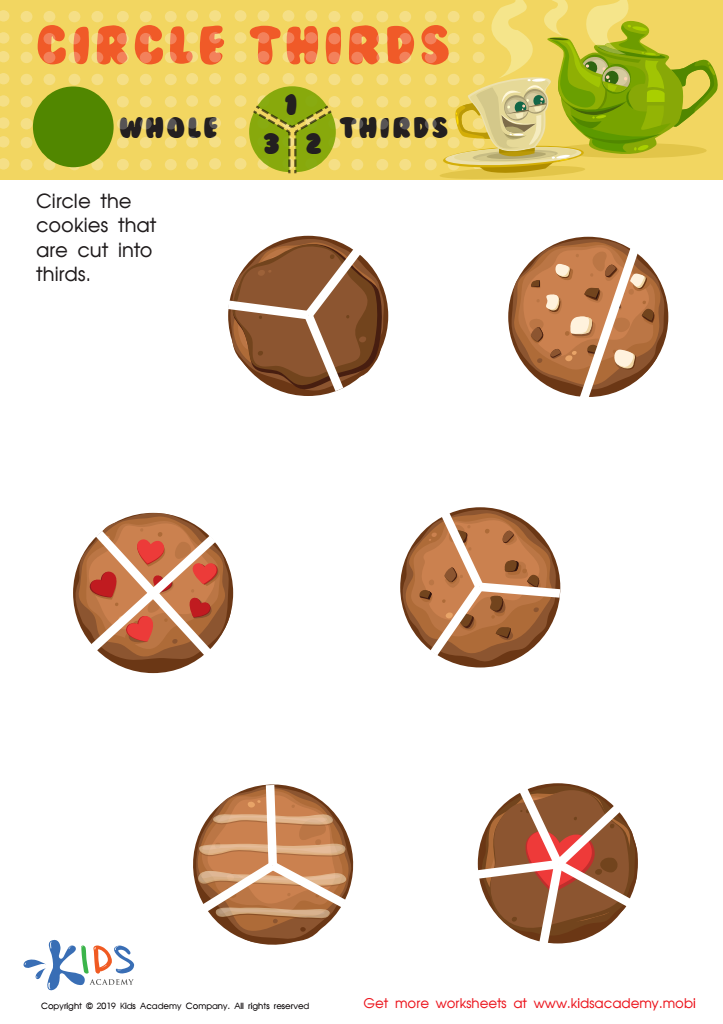
Circle Thirds Worksheet
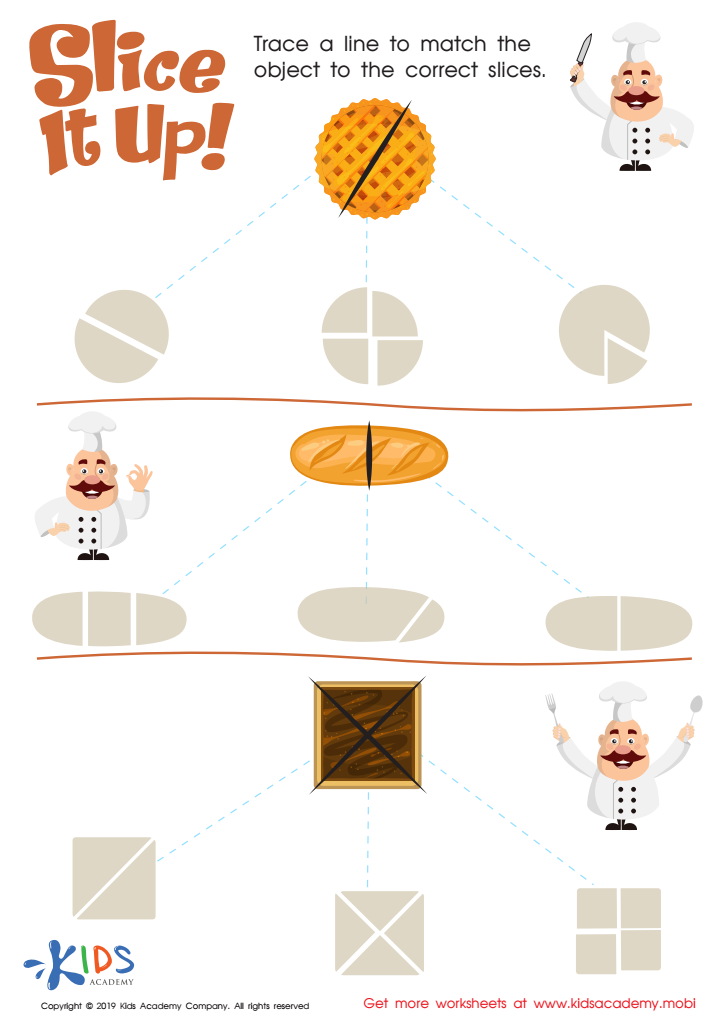
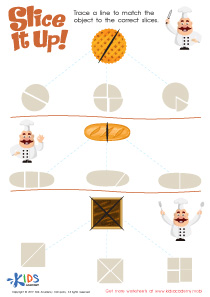
Slice It Up Worksheet
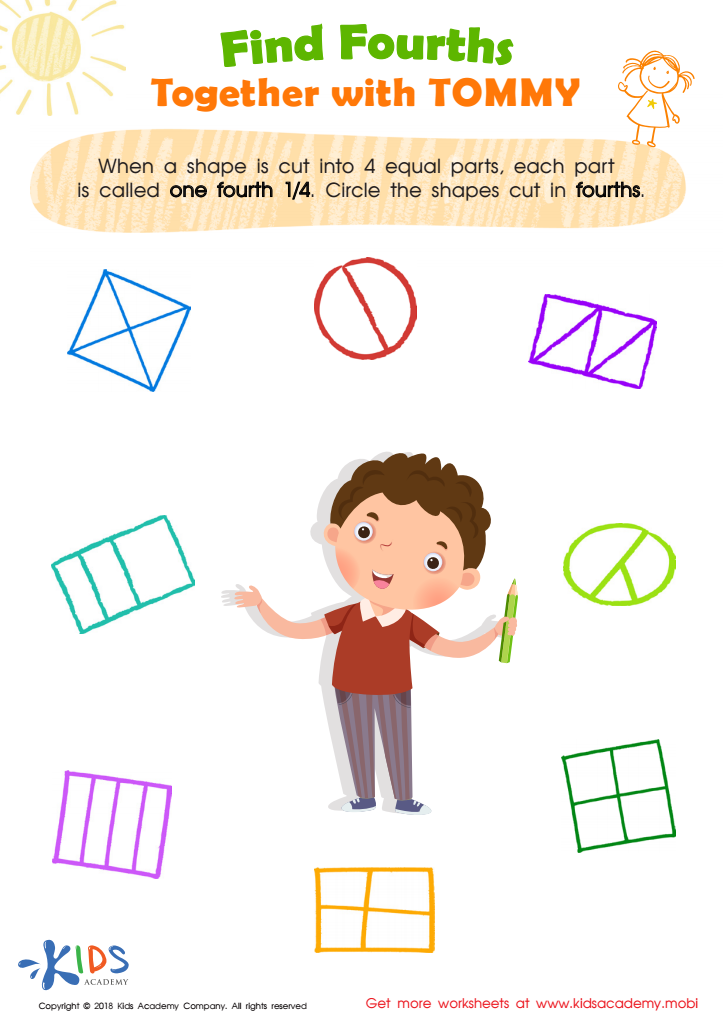
Find Fourths Together with Tommy Worksheet








Understanding fractions, particularly easy fractions of shapes, is a fundamental building block for children's mathematical development, especially for students aged 3-7. During these formative years, children are developing their spatial awareness and cognitive skills, making it the ideal time to introduce concepts like fractions through visual and tangible experiences. Learning about fractions enhances their understanding of parts and wholes, foundational skills they will use in more complex mathematics later on.
By teaching young learners about fractions through shapes—such as circles, squares, and triangles—parents and teachers can help children visualize the relationship between whole objects and their parts. This hands-on approach makes abstract concepts more concrete and relatable, fostering critical thinking and problem-solving abilities.
Additionally, grasping these foundational concepts early contributes to greater confidence in math skills, setting a positive tone for later academic success. It encourages collaborative learning through activities, enhancing social skills as children work together to explore and understand fractions. Ultimately, investing time and resources in teaching easy fractions of shapes is a stepping stone to help young learners navigate not just math, but also everyday situations in which fractional knowledge is applicable, making it fundamental for comprehensive development.