Easy Two-step Word Problems Worksheets for Ages 3-7
5 filtered results
Difficulty Level
Grade
Age
-
From - To
Subject
Activity
Standards
Our "Easy Two-step Word Problems Worksheets for Ages 3-7" provide an enjoyable and educational way to strengthen critical math skills in young learners. Specially designed for children aged 3-7, these engaging exercises guide students through simple two-step problems that bolster addition, subtraction, comprehension, and logical thinking. Featuring colorful visuals and relatable scenarios, our worksheets make learning math fun and accessible. Perfect for both classroom and at-home practice, they are an excellent resource for solidifying foundational math concepts and encouraging confident problem-solving. Help your child build a strong math foundation with our thoughtfully crafted worksheets.
Favorites
With answer key
Interactive
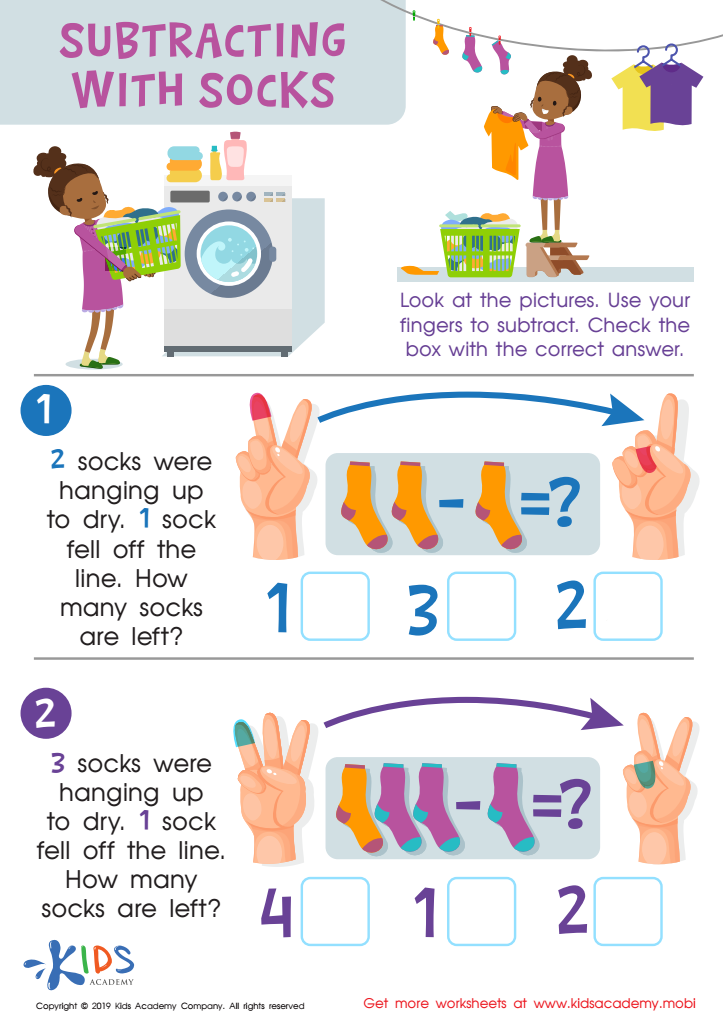
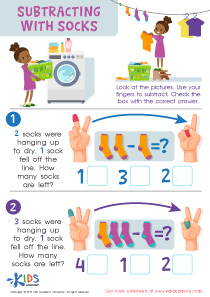
Subtracting Socks Worksheet
Before beginning this exercise with your children, warm them up with a counting game. If math is not their favorite subject, use this worksheet. Help them read the two word problems, then use their fingers to count and subtract. Ask them to select the correct answer and check the box.
 Assign to My Students
Subtracting Socks Worksheet
Worksheet
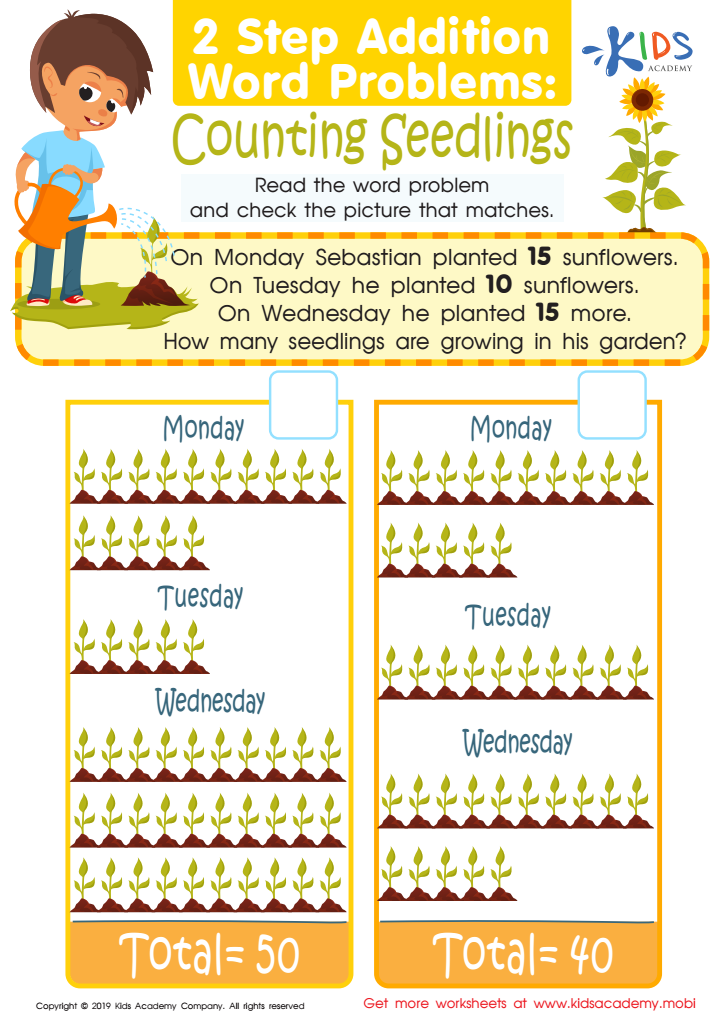
Counting Seedlings Worksheet
Understanding math word problems is key. Multiple steps can prove challenging - this free worksheet provides one-to-one picture representation to help kids solve multi-step addition word problems. Strengthen addition skills by choosing the matching picture to the answer.
Counting Seedlings Worksheet
Worksheet
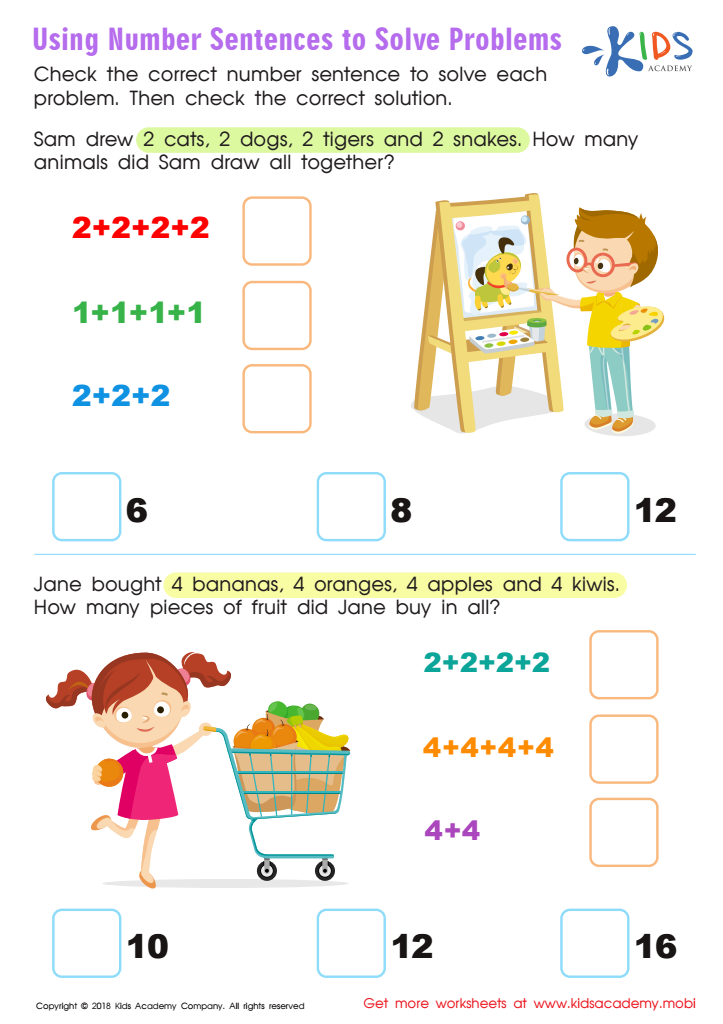
Using Number Sentences to Solve Problems Worksheet
Solving math problems requires an efficient strategy. Picture representation can help young mathematicians with basic addition problems, especially when it involves repeated addends. As they gain confidence, they'll be able to apply their number sentence solving abilities to more complex equations.
Using Number Sentences to Solve Problems Worksheet
Worksheet
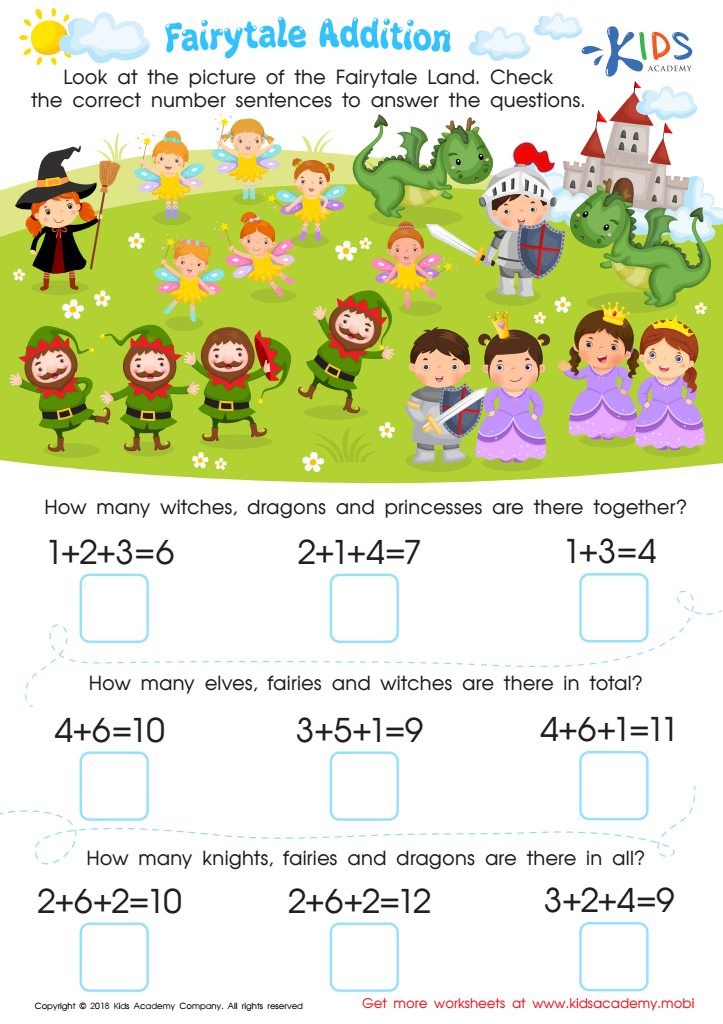
Fairytale Addition Worksheet
Take your kids to Fairytale Land! They'll meet witches, dragons, fairies, elves, knights, and princesses. This free worksheet adds up the fun, letting kids use three addends to solve addition equations and find the right answers. With friends like these, math won't even seem like math!
Fairytale Addition Worksheet
Worksheet
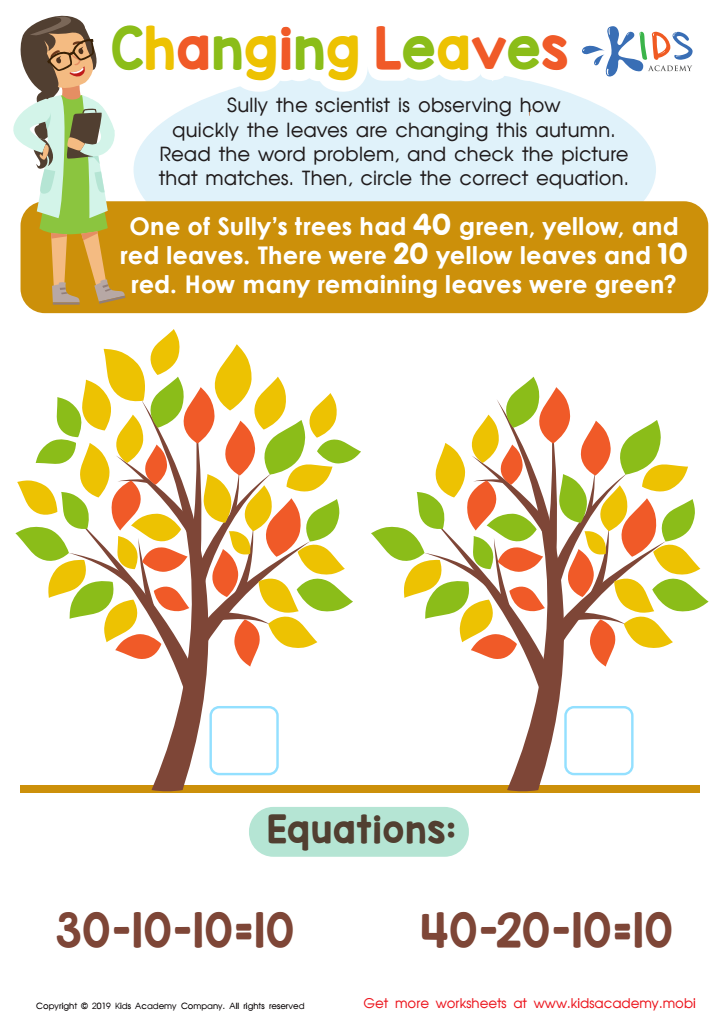
Changing Leaves Worksheet
Fall is the perfect time for kids to help Sully the scientist observe the changing leaves! Download the free worksheet with a subtraction word problem and bolded info to find the matching equation and picture. It's a fun way for your tots to learn while they admire the reddening, yellowing, and orange leaves.
Changing Leaves Worksheet
Worksheet
Join Kids Academy for Free
Who is primarily going to use this learning content?



Easy two-step word problems for ages 3-7 are an essential educational tool that offers numerous benefits for young children. At this formative stage, children’s brains are highly receptive and adaptable. Engaging them with word problems fosters critical thinking and strengthens problem-solving abilities at an early age. By understanding and solving these problems, children learn to break down complex tasks into smaller, manageable steps, a skill that is valuable across various subjects and real-life situations.
Additionally, two-step word problems help young learners develop their reading comprehension skills. They must read and understand the problem statement, identify relevant information, and use logical reasoning to arrive at a solution. This process inherently reinforces their ability to absorb and process written information, which is pivotal as they advance in their education.
Moreover, engaging with word problems enhances mathematical skills. Young children gain familiarity with basic arithmetic operations such as addition, subtraction, multiplication, and division in a context that demonstrates their practical applications. This not only solidifies their mathematical foundation but also demonstrates the real-world relevance of math.
For parents and teachers, fostering these skills at an early age contributes to a child’s overall cognitive development, builds self-confidence in their abilities, and cultivates a positive attitude toward learning and tackling new challenges. Investing time and effort in these activities provides children with a strong, versatile academic foundation.