Addition Practice Easy Word Problems Worksheets for Ages 3-7
6 filtered results
-
From - To
Introduce young learners to the world of addition with our engaging and easy word problems worksheets crafted for ages 3-7. These printable activities are designed to build basic math skills through fun, relatable scenarios that capture children’s imagination. Perfect for both classroom and home use, each worksheet offers a balance of education and entertainment to keep young minds motivated. Start developing your child's confidence in math and problem-solving today with our user-friendly and visually appealing addition practice worksheets. Visit our page to download and print these essential learning tools and make math learning enjoyable and effective!
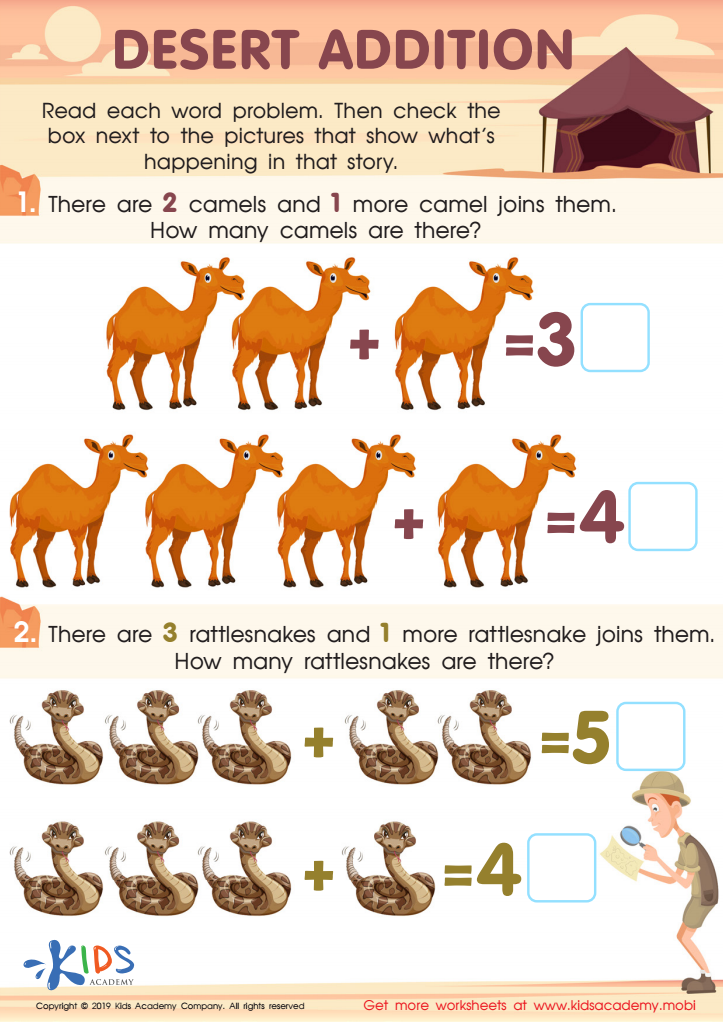
Desert Addition Worksheet
 Assign to My Students
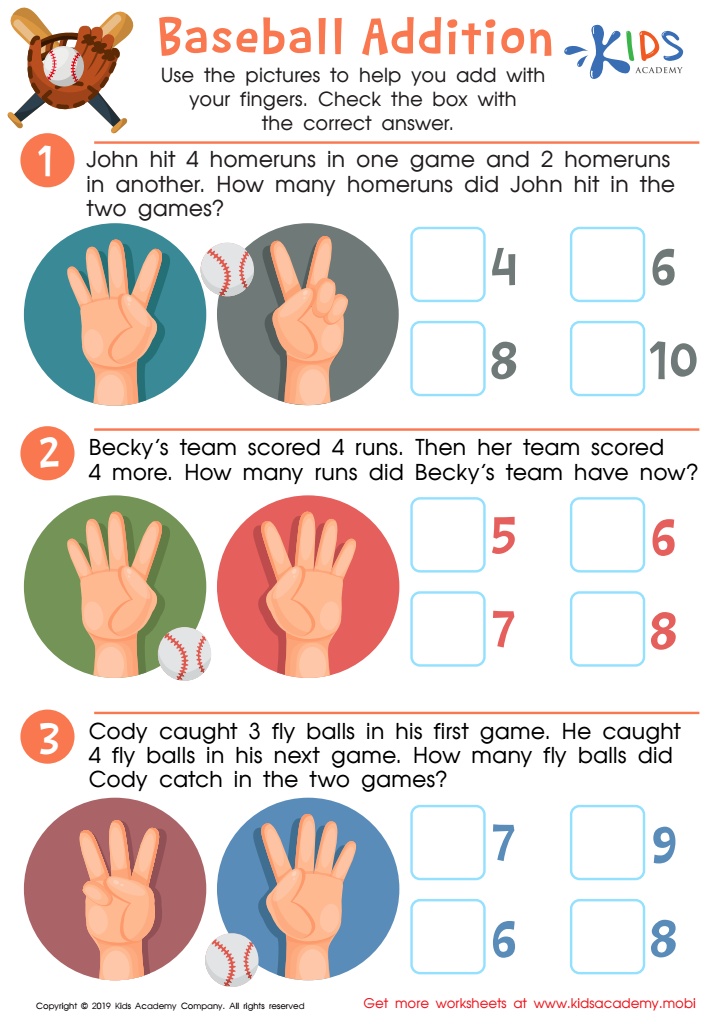
Baseball Addition Worksheet
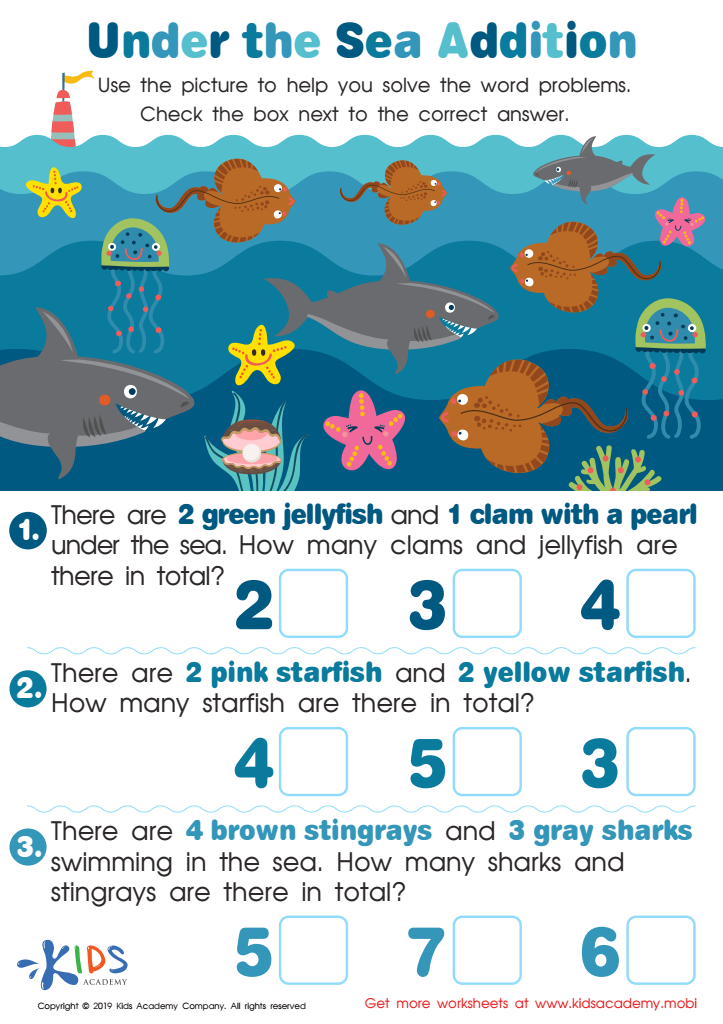
Under the Sea Addition Worksheet
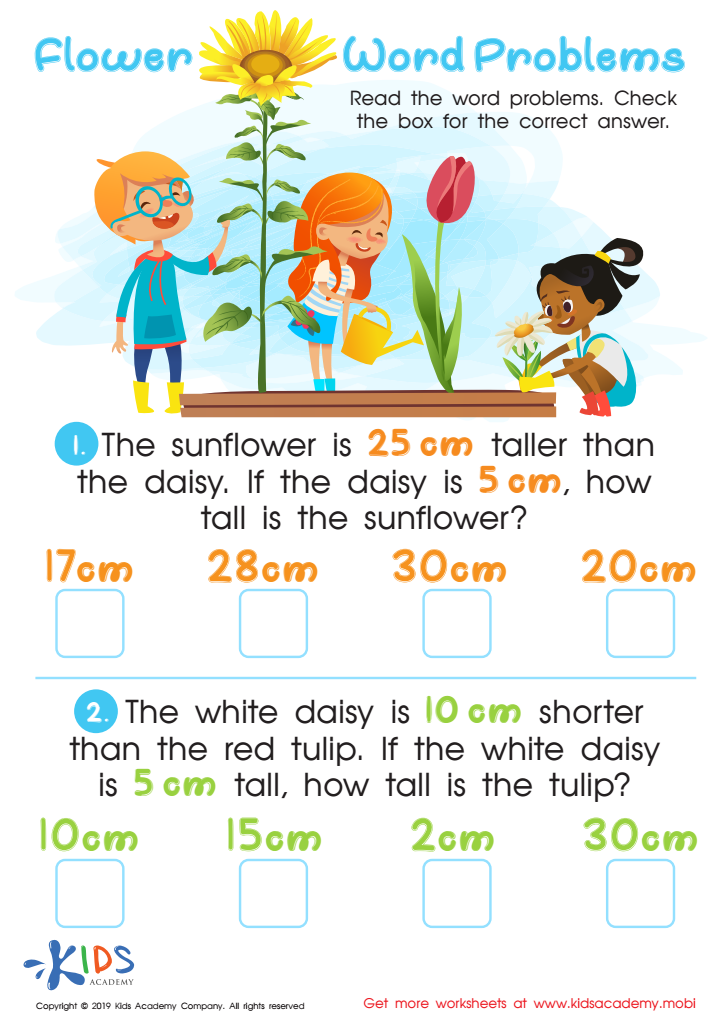
Flower Word Problems Worksheet
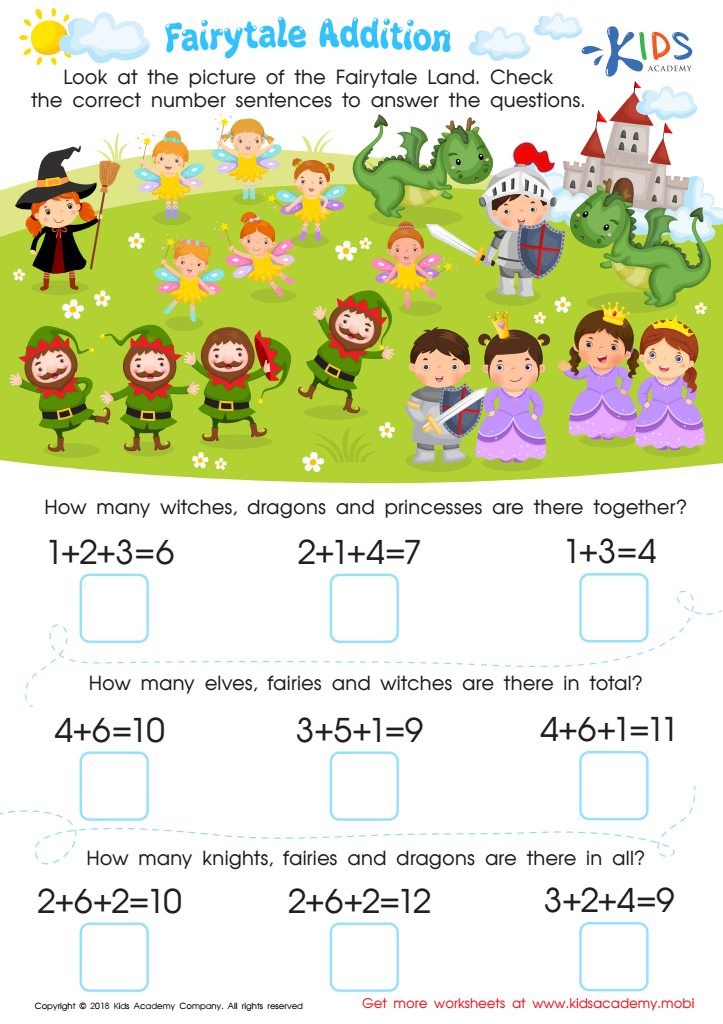
Fairytale Addition Worksheet
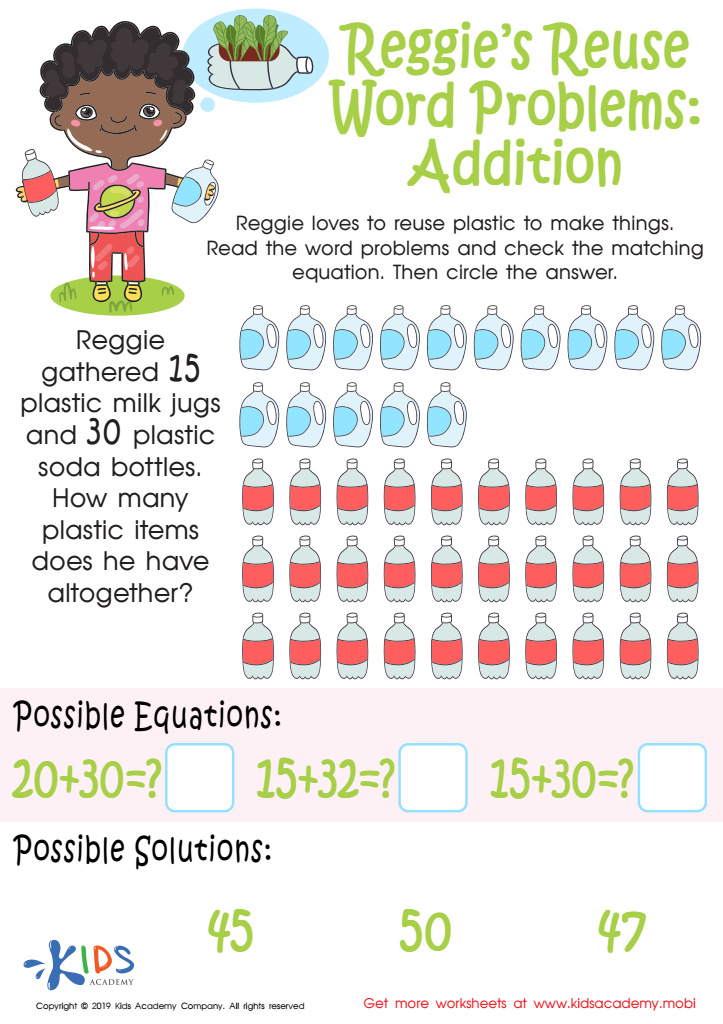
Reggie's Reuse Word Problems: Addition Worksheet








Addition Practice Easy Word Problems are essential for children aged 3-7 because they lay a crucial foundation for early math skills. At this young age, children are shaping their basic understanding of numbers and arithmetic, and engaging them in simple word problems helps make abstract concepts tangible.
Firstly, these problems enhance critical thinking and problem-solving abilities. When kids read a story that involves numbers, they learn to extract important information, consider relationships between quantities, and reach conclusions based on logical reasoning.
Secondly, word problems integrate language skills with mathematical concepts, promoting overall cognitive development. Children improve their reading comprehension while simultaneously grasping fundamental math principles. This dual exposure accelerates their learning and makes the subject more versatile and engaging.
Moreover, solving word problems fosters a positive attitude towards math. Early exposure to fun, relatable scenarios—like sharing apples or counting toys—encourages children to see math in everyday contexts. This demystifies the subject and builds confidence, paving the way for more complex mathematical instruction in later years.
Finally, these activities strengthen parent-child or teacher-student bonds. Working on problems together allows adults to support, encourage, and assess the child’s progress. By making math practice an enjoyable and interactive experience, adults contribute significantly to a child’s academic and emotional growth.








