
Animal identification Easy Worksheets for Ages 3-8
5 filtered results
Difficulty Level
Grade
Age
-
From - To
Subject
Activity
Standards
Introduce your little explorers to the animal kingdom with our easy Animal Identification Worksheets! Perfect for ages 3-8, these fun and educational activities are designed to enhance learning skills through engaging exercises. Each colorful worksheet promotes cognitive development, improves fine motor skills, and boosts curiosity about nature. With our thoughtfully crafted pages, kids will learn to recognize and identify various animals while enjoying the process. Ideal for parents and teachers alike, our printable worksheets make learning about animals an exciting adventure. Visit Kids Academy for a delightful journey into animal discovery with your young learners!
Favorites
With answer key
Interactive
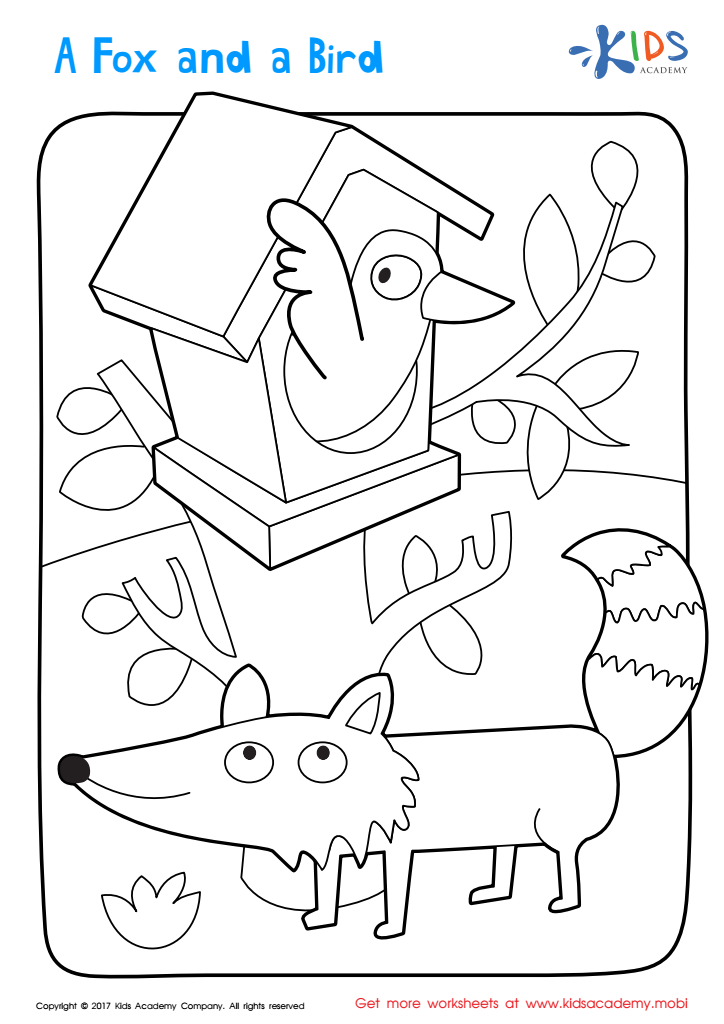
A Fox and Bird Coloring Page
Flex their creativity with this fun-filled coloring page: A Fox and Bird! Let kids express themselves through colors, allowing them to make each scene their own. This picture will bring joy to their art routine!
Download (PDF)
 Assign to My Students
Assign to My Students
A Fox and Bird Coloring Page
Worksheet
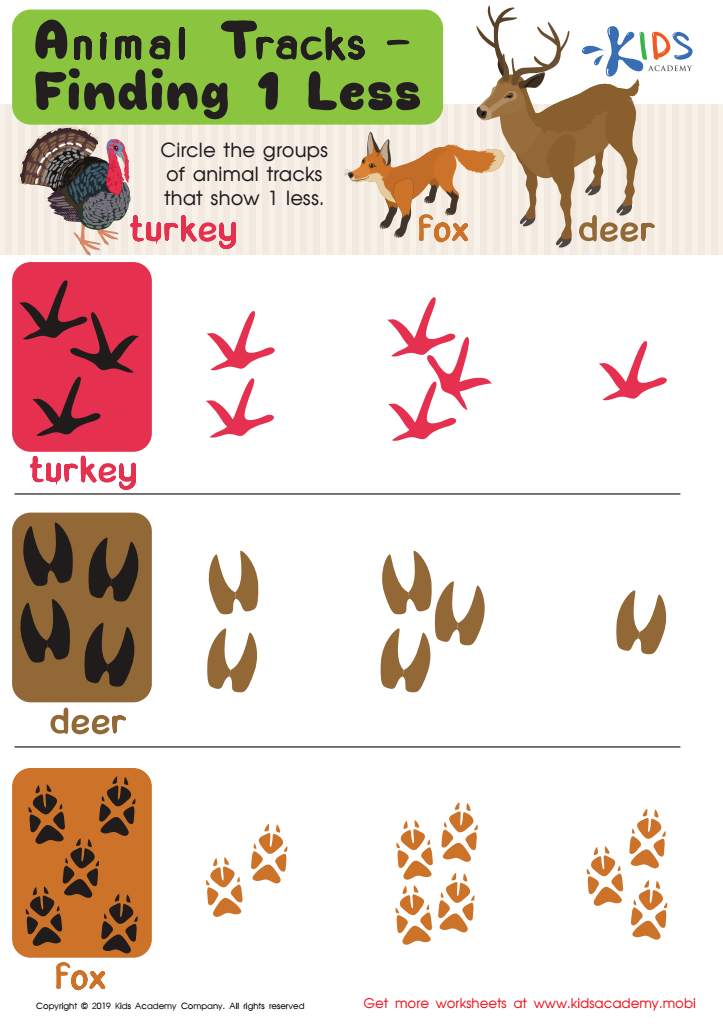
Animal Tracks: Find 1 Less Worksheet
Animals are all around us - wild and domestic. Ask your kids to name their favourites, then use this animal tracks worksheet to explore more. Help them circle the groups with 1 less animal track. It's a great way to learn about the creatures we share our world with!
Animal Tracks: Find 1 Less Worksheet
Worksheet
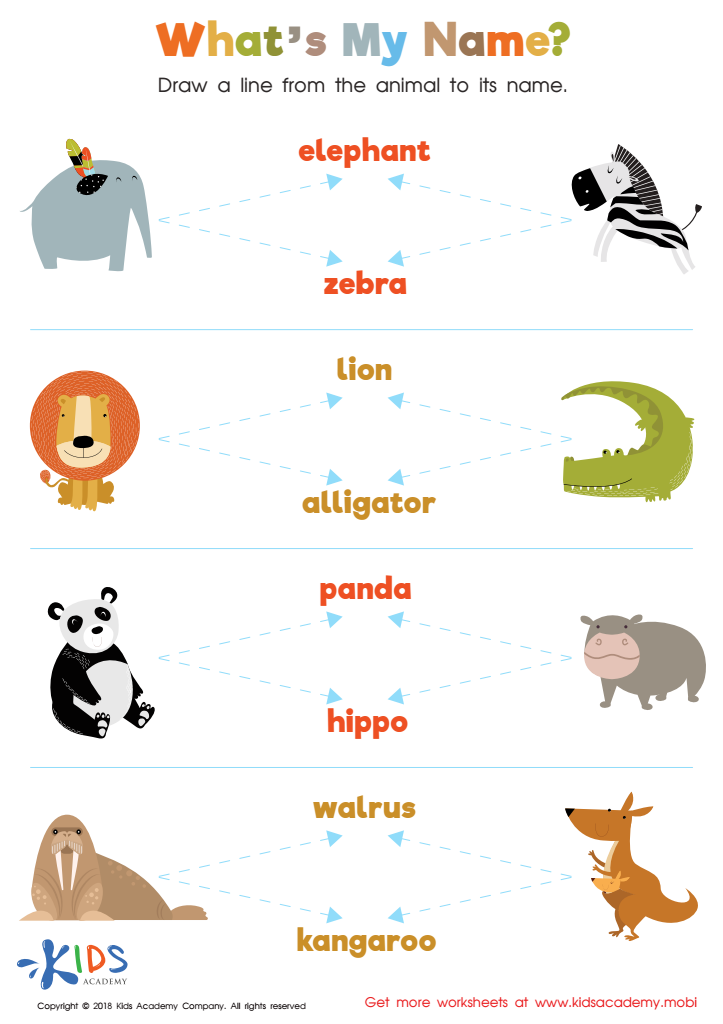
Animals and Their Names Worksheet
Match animals with their names with this worksheet! Draw a line from the word to its picture. Say the name of each animal. Later, search for these animals at the zoo - great for reinforcing learning!
Animals and Their Names Worksheet
Worksheet
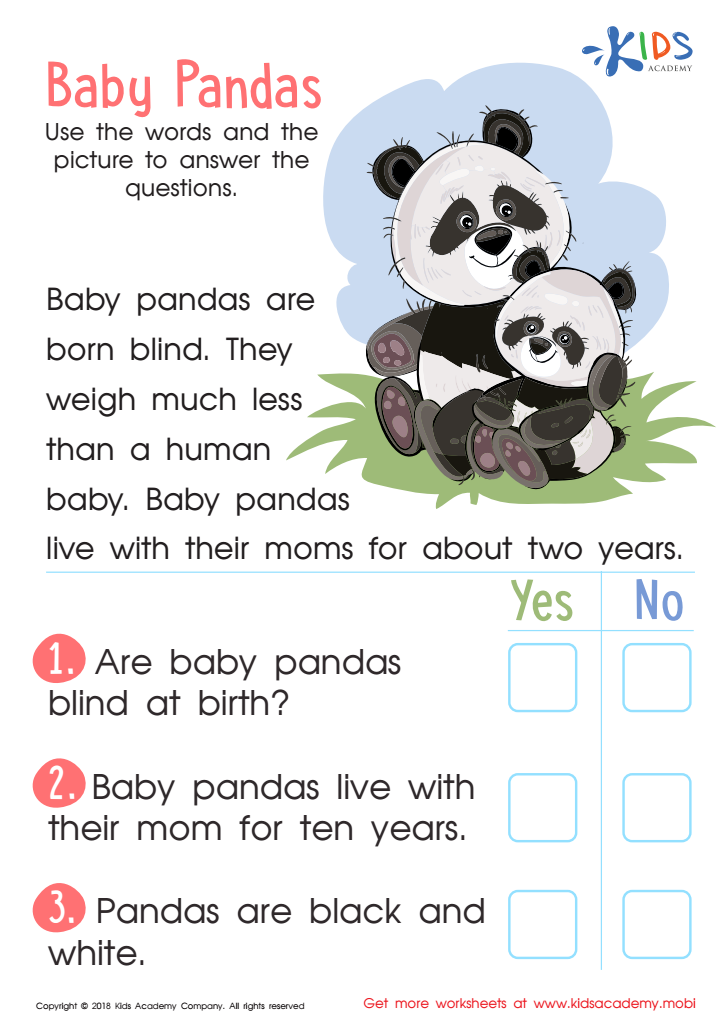
Baby Pandas Worksheet
Kids can't usually see pandas in person, but they can learn more about them with this fun worksheet! It includes a passage and picture, plus questions at the end to check kids' reading comprehension. Just ask them to read the text, check the "yes" and "no" boxes, and enjoy the fascinating facts about baby pandas!
Baby Pandas Worksheet
Worksheet
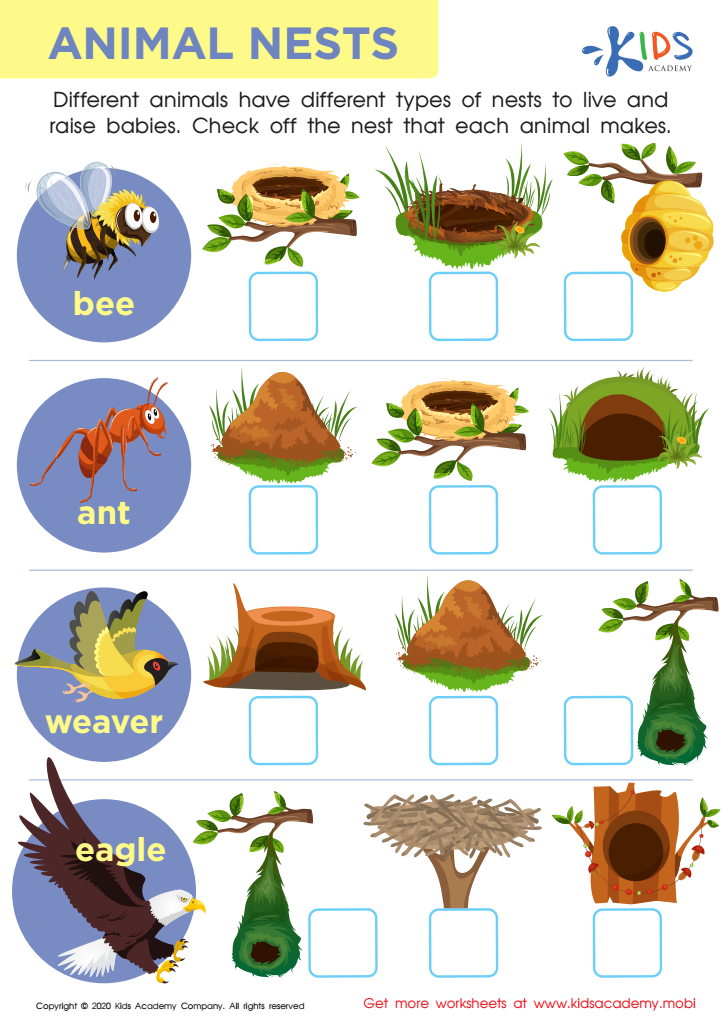
Animal Nests Worksheet
Animals need homes to sleep and stay safe. Look at the animal on the left and examine the nests and hives to the right. Check off the correct one for each animal to complete the worksheet! From birds to bees, it's a great way to show different types of homes animals make!
Animal Nests Worksheet
Worksheet
Join Kids Academy for Free
Who is primarily going to use this learning content?







Parents and teachers should prioritize animal identification for children aged 3 to 8 because it plays a crucial role in cognitive and emotional development. At this age, kids are naturally curious about the world around them. Learning to identify animals enhances vocabulary and language skills as they learn new names and characteristics. This aligns with early literacy goals and helps build a strong foundation for future academic success.
Recognizing various animals also fosters observational skills and attention to detail. As children discern differences and similarities between animals, they develop critical thinking and categorization abilities. Such activities can be integrated into fun, interactive games and story-based learning, keeping young minds engaged and entertained.
Additionally, animal identification promotes empathy and compassion. Learning about different species and their habitats instills a sense of wonder and respect for nature, fostering environmental stewardship from an early age. This emotional connection to the natural world can lead to more responsible behaviors and social development as children grow.
Involving parents and teachers in this learning process ensures that children receive consistent, supportive guidance. Whether through books, educational apps, or outdoor explorations, adults can nurture a child's curiosity and encourage a lifelong love of learning and nature. This holistic approach benefits their cognitive, emotional, and social growth.








