Counting proficiency Easy Worksheets for Ages 3-8
3 filtered results
-
From - To
Welcome to our "Counting Proficiency Easy Worksheets" page, designed for children ages 3-8! These worksheets provide a fun and engaging way for young learners to develop essential counting skills through colorful activities and interactive exercises. Tailored to different age groups, our worksheets encourage number recognition, one-to-one correspondence, and simple addition and subtraction. With various themes and supportive visuals, children will enjoy working at their own pace while building confidence in their math abilities. Perfect for homeschoolers, teachers, or parents, these resources make learning counting a joyful experience. Explore our collection today and help your child flourish in foundational math skills!
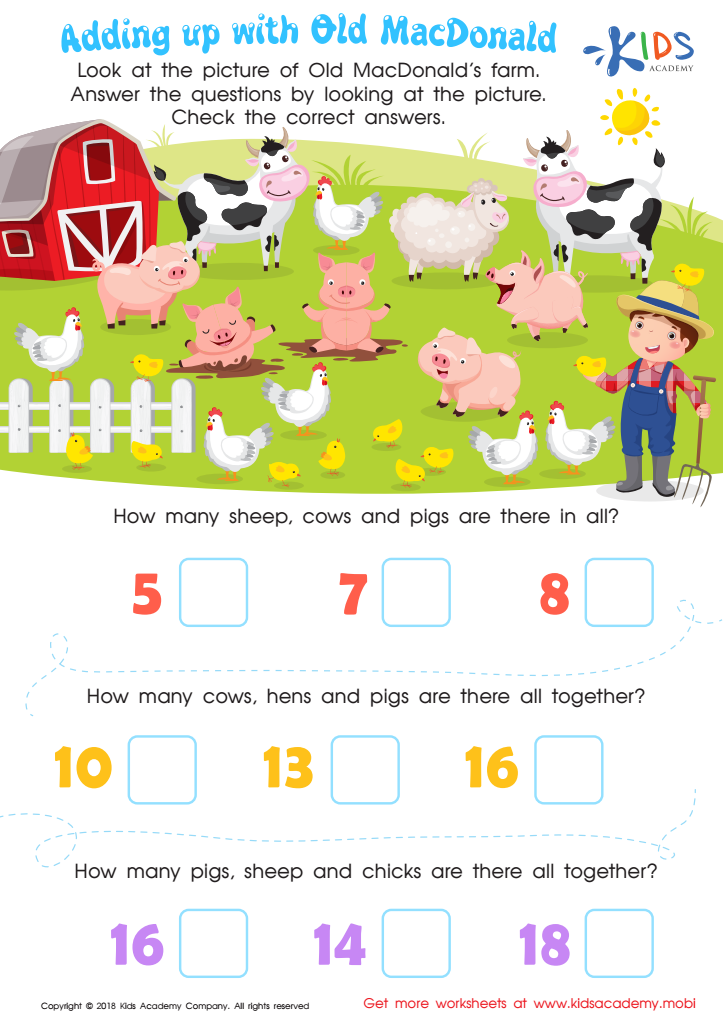
Adding Up with Old MacDonald Worksheet
 Assign to My Students
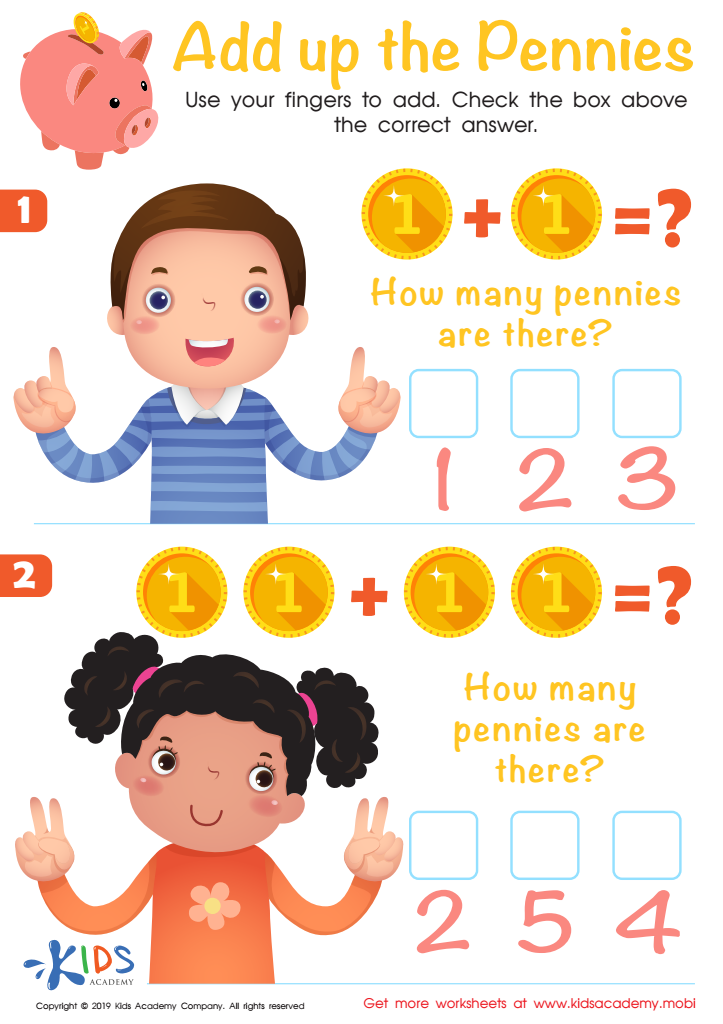
Add up the Pennies Worksheet
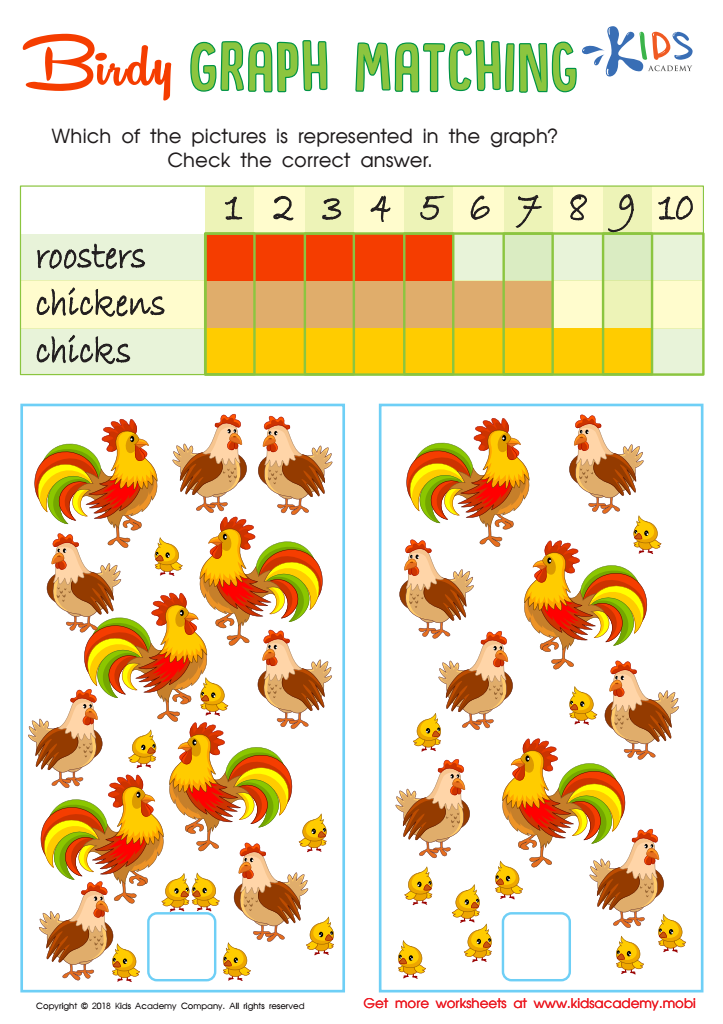
Birdy Graph Matching Worksheet








Counting proficiency is a foundational skill that significantly impacts a child's overall cognitive development and future academic success. For children aged 3-8, this ability goes beyond merely reciting numbers; it lays the groundwork for understanding mathematical concepts such as addition, subtraction, and problem-solving.
For teachers and parents, fostering counting skills helps in several essential ways. Firstly, it enhances a child's numerical awareness, promoting better understanding of patterns, sequences, and relationships in numbers. This comprehension builds confidence and curiosity in mathematics when they encounter more complex concepts later on. Engaging children in counting activities also supports fine motor skills and language development, as they articulate numbers and count objects.
Additionally, encouraging counting proficiency in early childhood contributes to a love for learning and exploration. Children who grasp these concepts are more likely to approach mathematics with enthusiasm rather than fear, fostering resilient learning attitudes. Thus, prioritizing counting skills in educational or home settings creates a supportive environment that nurtures young learners, laying a strong foundation for future academic challenges. Ultimately, counting proficiency shapes not only mathematical competence but also overall cognitive readiness and self-confidence in young children.








