
Fruit identification Easy Worksheets for Ages 3-8
3 filtered results
Difficulty Level
Grade
Age
-
From - To
Subject
Activity
Standards
Discover the joy of learning with our "Fruit Identification Easy Worksheets" designed specifically for children ages 3-8! These engaging and interactive worksheets help young learners develop essential skills while exploring the colorful world of fruits. Each activity encourages observation, recognition, and classification, making learning fun and effective. From matching fruits to their names to coloring and drawing, these worksheets cater to various learning styles and keep kids excited about fruits and healthy eating. Perfect for both classroom and home use, our resources support early childhood education and promote cognitive development. Start exploring today and watch your little ones grow!
Favorites
With answer key
Interactive
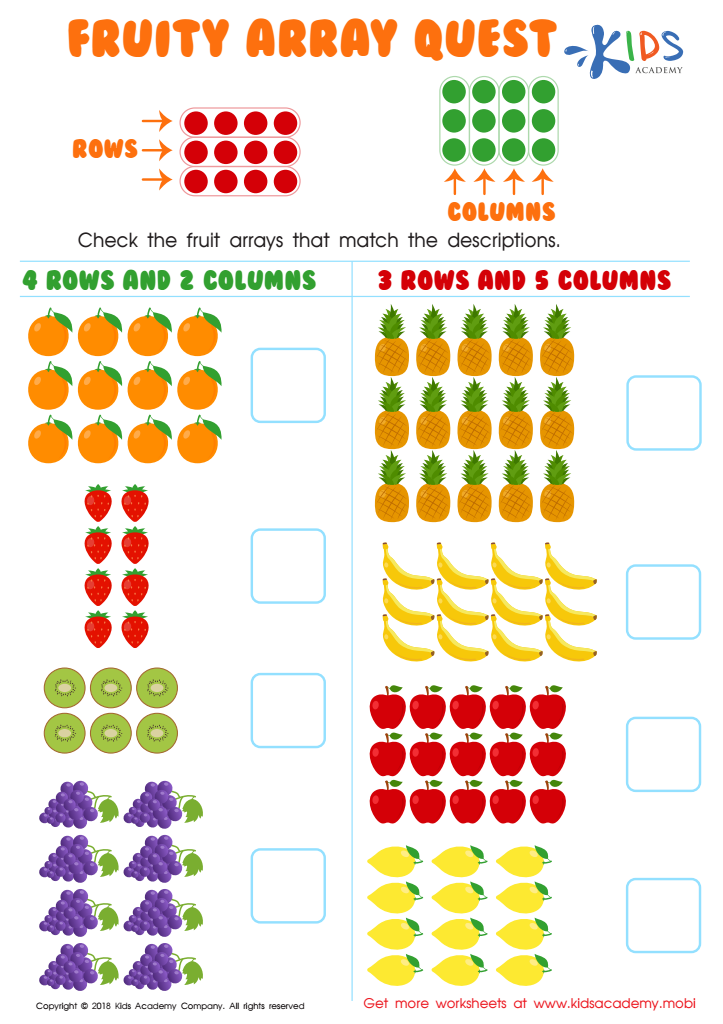
Fruity Array Quest Worksheet
Explain rows (horizontal) and columns (vertical) to your child before starting the worksheet. Show them the picture and the arrows indicating direction. Your child should be able to answer the questions easily after that. Help them match the fruit arrays that match the descriptions.
 Assign to My Students
Fruity Array Quest Worksheet
Worksheet
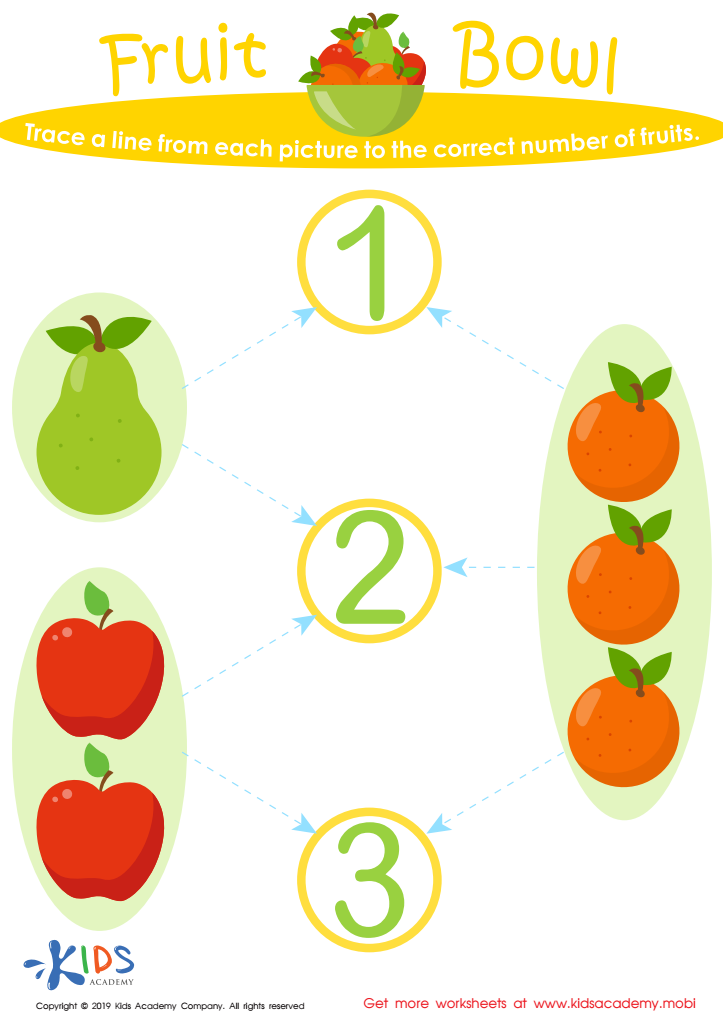
Fruit Bowl Worksheet
Kids love counting fruit! This fun math worksheet lets them count the number of fruit in each group and use the traceable lines to connect the correct number. It's a great way to learn one-to-one number representation, plus it's yummy and delicious!
Fruit Bowl Worksheet
Worksheet
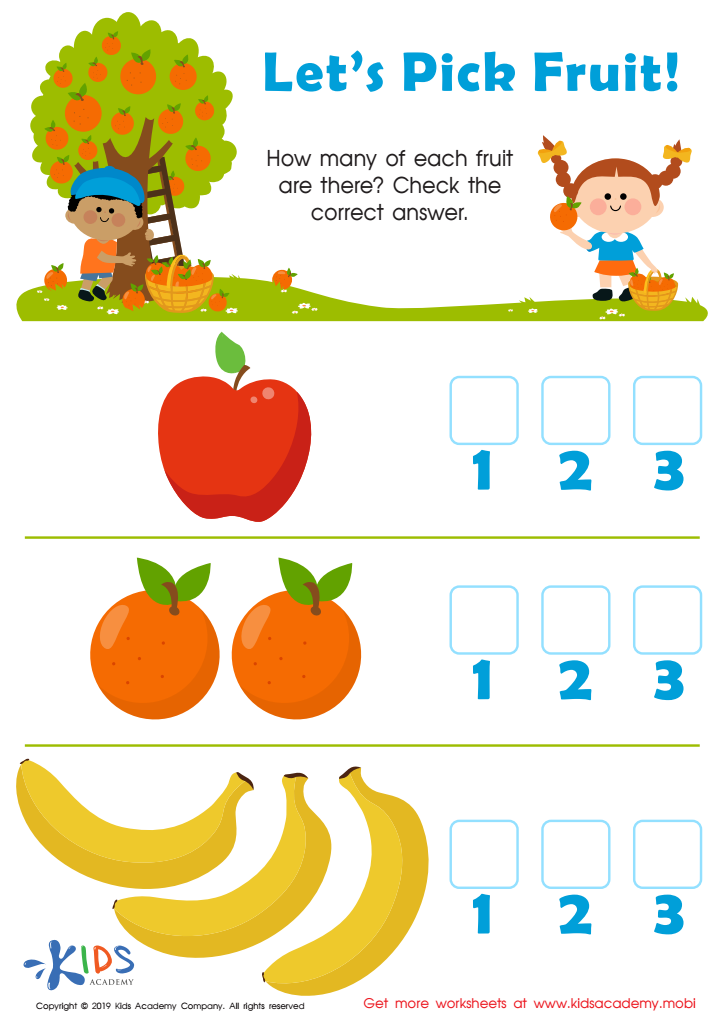
Let's Pick Fruit Worksheet
Picking fruit is fun - and counting it is even better! This free worksheet is perfect for young math learners. They'll use picture representation to count the fruit in each problem and then select the correct answer from the multiple-choice boxes. It's a great way to teach number sense in an easy, fun way!
Let's Pick Fruit Worksheet
Worksheet
Join Kids Academy for Free
Who is primarily going to use this learning content?






Fruit identification is an essential skill for young children between the ages of 3-8, and parents or teachers should prioritize this learning for several reasons. Firstly, identifying fruits helps children develop a vocabulary related to healthy foods, fostering better communication and understanding of nutrition. It lays a foundation for healthier eating habits as children learn to recognize and select fruits over less nutritious options.
Additionally, this activity supports cognitive development. It encourages observation skills, critical thinking, and memory as children learn to differentiate between various fruits based on color, shape, and size. Engaging with fruits can also be an interactive and hands-on learning experience, making it fun for kids which enhances their willingness to participate and explore.
Moreover, fruit identification can be tied into broader educational concepts such as science (learning about plants and ecosystems) and even math (counting and sorting). By introducing fruits in creative ways through games, stories, or art activities, parents and teachers can foster a love for nature and healthy food, cultivating lifelong habits of wellness.
In summarizing, promoting fruit identification not only enriches children's language and cognitive development but also encourages healthy lifestyle choices, making it an important focus for parents and educators alike.








