Spatial awareness Easy Worksheets for Ages 3-8
4 filtered results
-
From - To
Boost your child's spatial skills with our "Spatial Awareness Easy Worksheets for Ages 3-8." Our expertly designed printables help young learners grasp critical spatial concepts like shape recognition, direction, and patterns through fun, engaging activities. Perfect for homeschooling or supplementation, these worksheets make learning enjoyable and effective. They improve kids' ability to understand their environment, aiding in tasks such as navigation, organization, and problem-solving. With our worksheets, your child will develop a strong foundation in spatial awareness, setting the stage for academic success and everyday competency. Unlock their potential with easy, printable resources tailored for young minds.
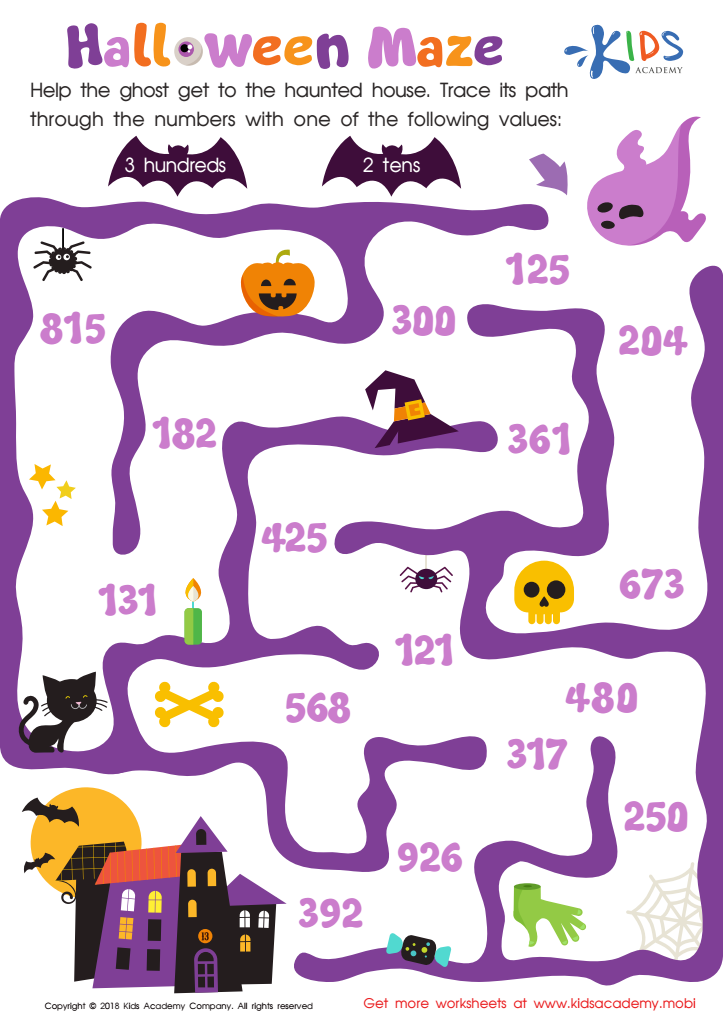
Place Value: Halloween Maze Worksheet
 Assign to My Students
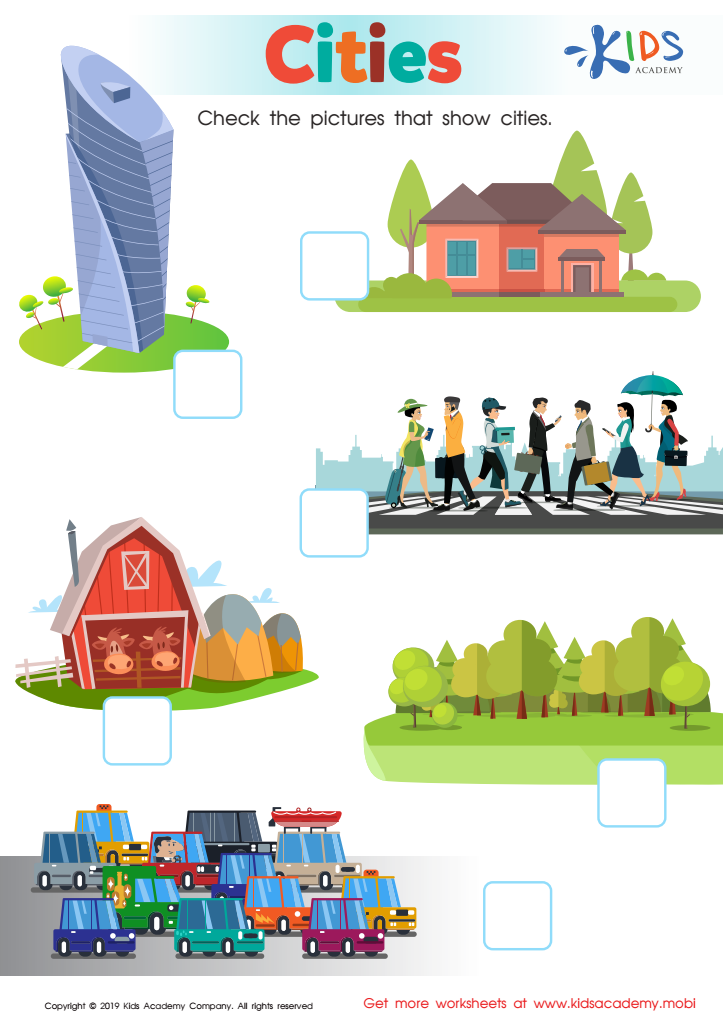
Cities Worksheet
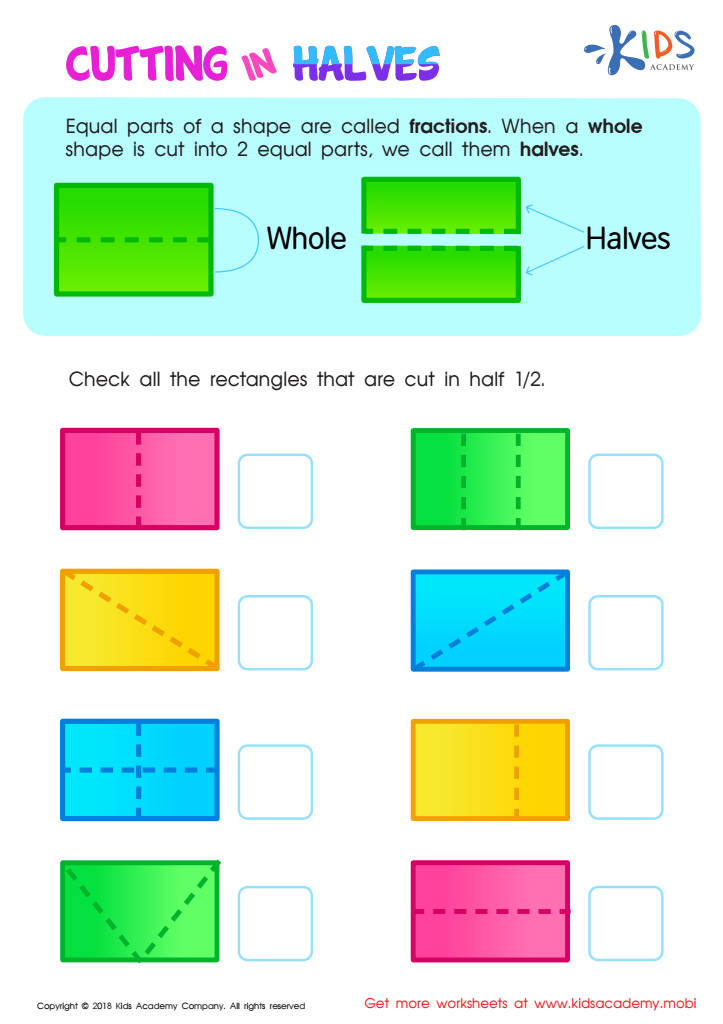
Cutting in Halves Worksheet
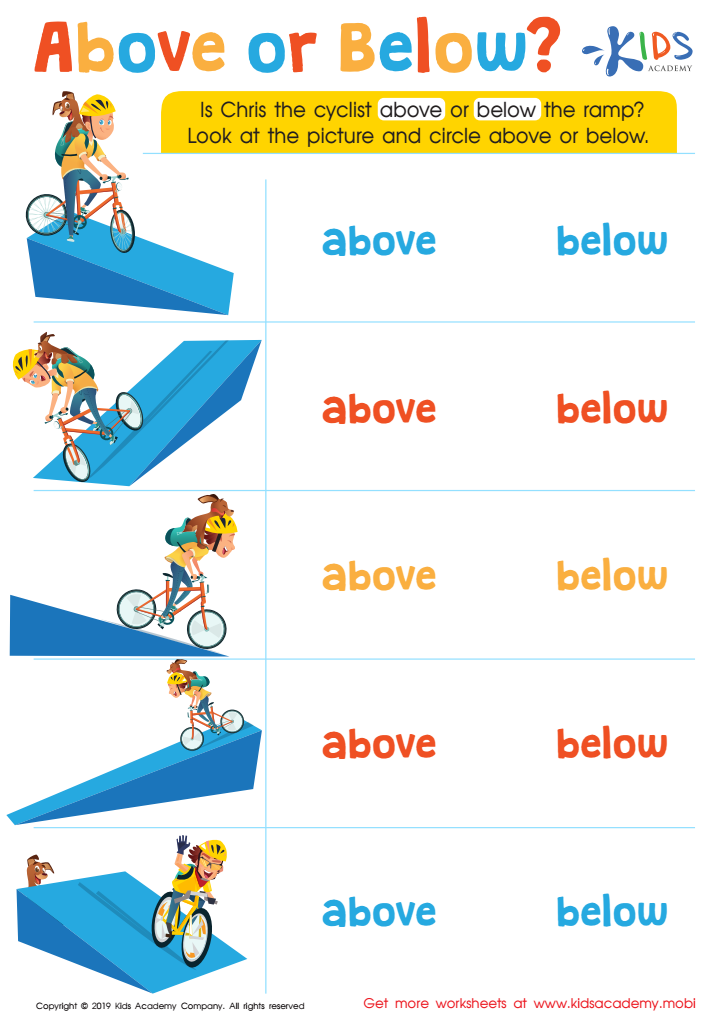
Above or Below? Worksheet






Spatial awareness is an essential skill for young children, laying the foundation for numerous aspects of their development. Parents and teachers should care about cultivating this ability because it significantly impacts a child's everyday life and learning opportunities. For children ages 3-8, spatial awareness helps in understanding their bodies in relation to their surroundings, which is crucial for physical activities. This includes navigating through spaces, improving coordination in sports, and even simple actions like catching a ball or riding a bike.
Academically, spatial awareness is key in subjects like math and science. It underpins concepts such as geometry, measurement, and visualizing object relationships. For instance, activities like sorting shapes, playing with puzzles, and building with blocks enhance a child's ability to comprehend spatial relationships and structures. These skills translate directly into better problem-solving and critical thinking abilities.
Moreover, spatial awareness aids in social interactions, as it helps children understand personal space and navigate classrooms and playgrounds effortlessly. Games that involve directions or following a map can make learning more interactive, fun, and deeply engaging.
By fostering spatial awareness from a young age, parents and teachers support children's holistic development, prepare them for future academic challenges, and equip them with life skills that will serve them well throughout their lives.








