
Spatial reasoning Easy Worksheets for Ages 3-8
3 filtered results
Difficulty Level
Grade
Age
-
From - To
Subject
Activity
Standards
Unlock your child's potential with our "Spatial Reasoning Easy Worksheets for Ages 3-8." These expertly crafted worksheets are designed to develop essential spatial skills through fun and engaging activities. Perfect for young learners, they promote critical thinking, problem-solving, and creativity. Each worksheet is tailored to be age-appropriate, ensuring continuous challenges that keep kids motivated and excited to learn. Whether at home or in the classroom, these resources support cognitive development and prepare children for future academic success. Give your child the tools to excel in math, science, and everyday life with our fun, educational worksheets.
Favorites
With answer key
Interactive
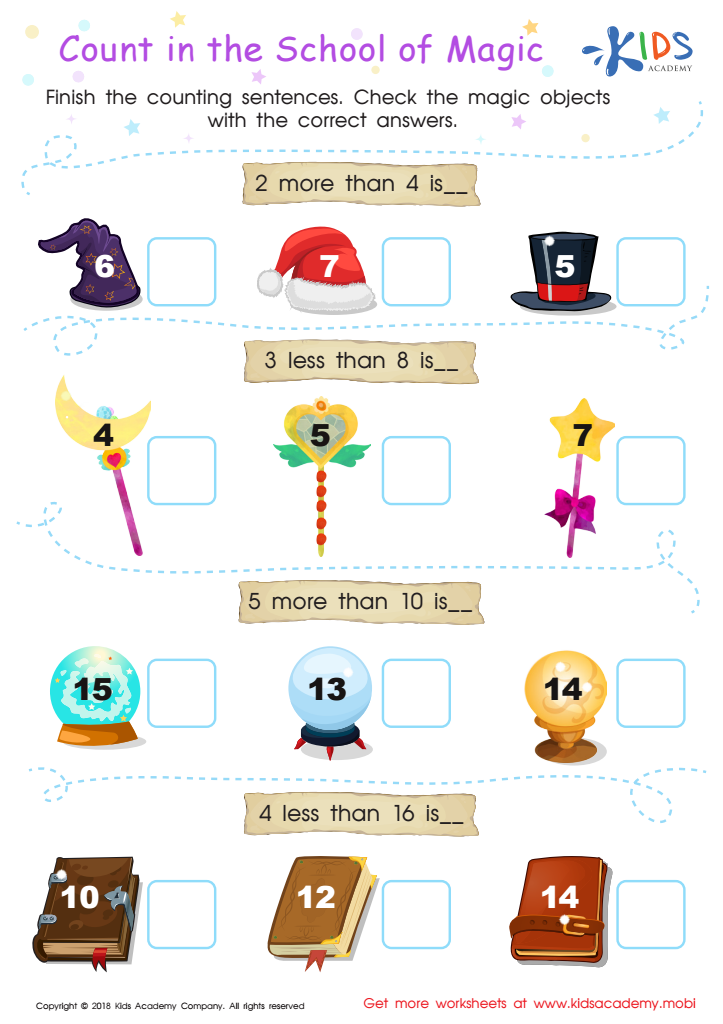
Count in the School of Magic Worksheet
Your math learners can explore the School of Magic with this worksheet. They'll read equations with addition and subtraction numbers under 20, count back and forth to find the answer, then complete the counting sentences. Fun pictures and easy accuracy make it an enjoyable and successful learning experience.
 Assign to My Students
Count in the School of Magic Worksheet
Worksheet
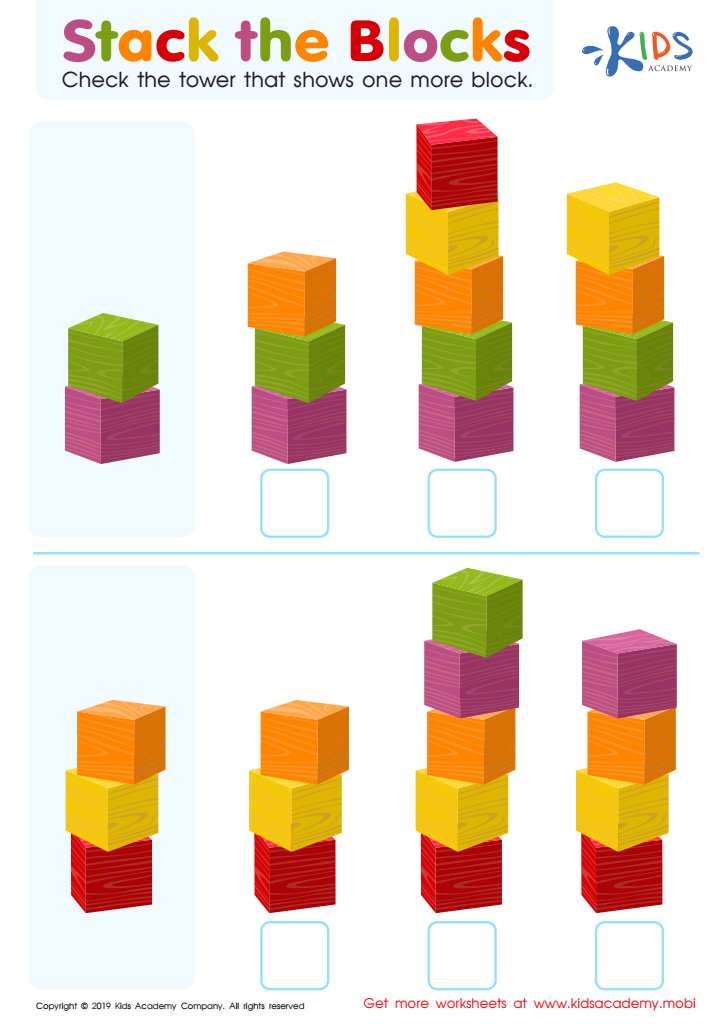
Stack the Blocks Worksheet
Playing with blocks is a great way for kids to learn! They can create patterns, shapes, and even count. In this worksheet, ask them to identify the colors and count each stack of blocks. If they can spot one extra block in the tower, even better! Encourage learning through play with these fun blocks.
Stack the Blocks Worksheet
Worksheet
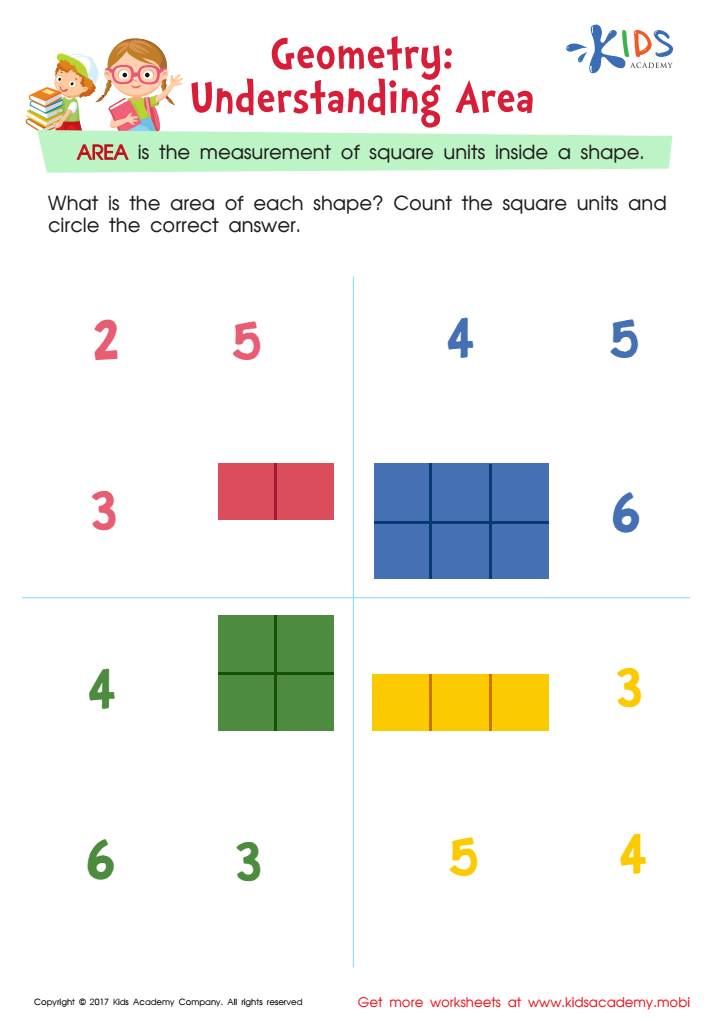
Understanding Area Worksheet
This helps them develop a better understanding and an easier way to learn instead of memorizing a formula.
Understanding Area Worksheet
Worksheet
Join Kids Academy for Free
Who is primarily going to use this learning content?






Spatial reasoning is the ability to understand and remember the spatial relations among objects. For children ages 3-8, developing strong spatial reasoning is crucial as it forms the foundational skills needed for success in various subjects and daily activities.
Spatial reasoning skills are deeply intertwined with early mathematics and science learning, helping children understand concepts such as shape, size, distance, and location. For instance, grasping the idea of geometry, which is an integral part of math, becomes significantly easier for children with well-developed spatial skills. These skills make it simpler for children to visualize problems in their minds and solve them, enhancing their problem-solving and critical-thinking abilities.
Moreover, spatial reasoning is essential for reading and writing. Understanding how letters are formed, how they fit together to create words, and how words are spaced in a sentence involves spatial skills. For activities like handwriting, crafting, and organizing tasks, spatial awareness is key.
Besides academic benefits, strong spatial reasoning improves daily life activities, from playing with building blocks, navigating new environments, to understanding maps and engaging in sports. Encouraging spatial play, like puzzles, drawing, and construction toys, can make this development process natural and enjoyable. Therefore, teachers and parents should prioritize activities that enhance spatial reasoning to support well-rounded cognitive development in children.








