Subtraction skills Easy Worksheets for Ages 3-8
3 filtered results
-
From - To
Discover our "Subtraction Skills Easy Worksheets" designed specifically for children aged 3-8! These engaging worksheets provide a fun and interactive way for young learners to grasp the fundamentals of subtraction. With colorful illustrations and age-appropriate exercises, kids can practice combining counting and problem-solving skills while building confidence. Our printable resources cater to various skill levels, ensuring every child finds the right match for their learning pace. Whether at home or in the classroom, these worksheets make mastering subtraction simple and enjoyable. Explore effective subtraction practice today and help your child develop a solid foundation in mathematics!
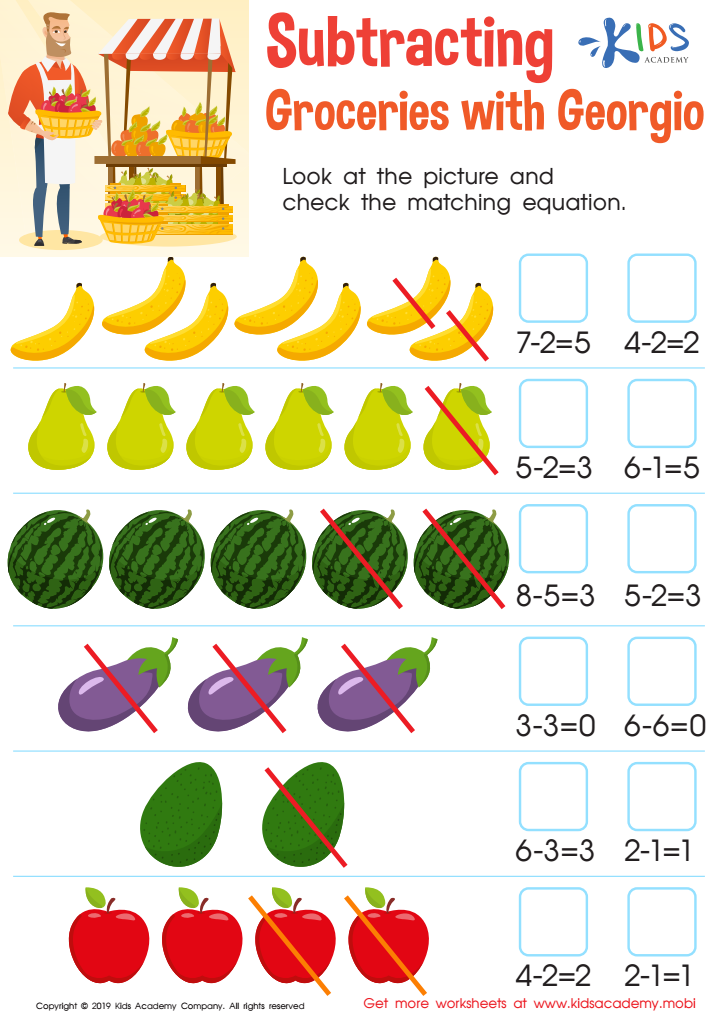
Subtracting: Groceries with Georgio Worksheet
 Assign to My Students
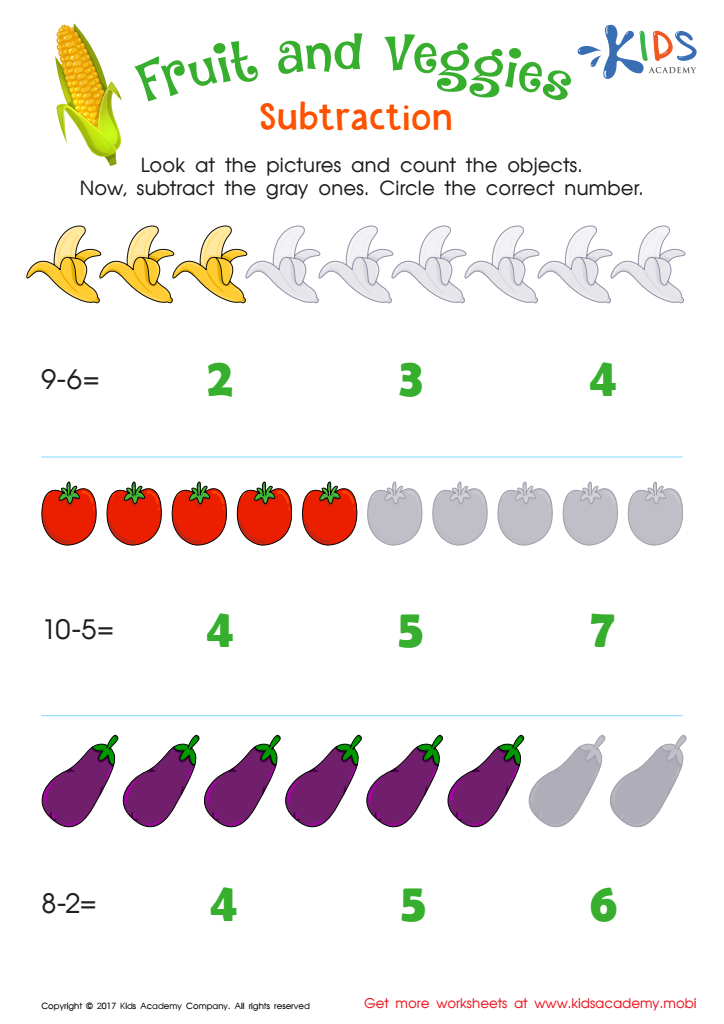
Fruit and Veggies Subtraction Worksheet
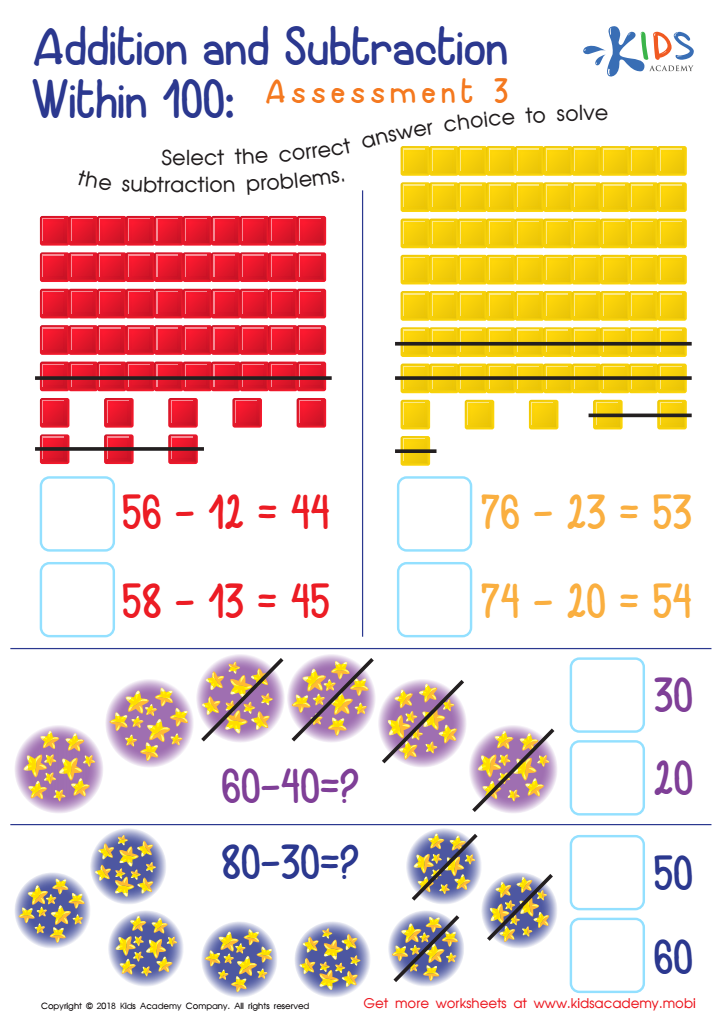
Addition and Subtraction Within 1: Assessment 3 Worksheet




.jpg)


Subtraction skills are fundamental in early childhood education, especially for children aged 3-8. Understanding subtraction lays the groundwork for more complex mathematical concepts they will encounter later. Parents and teachers should prioritize these skills for several reasons.
Firstly, subtraction fosters critical thinking and problem-solving abilities. By learning to take away objects or numbers, children develop the ability to analyze situations, leading to enhanced cognitive skills. Secondly, these foundational skills build confidence. Mastery in subtraction empowers children to tackle challenges in math with greater assurance, reducing anxiety about numbers.
Moreover, subtraction is often interconnected with everyday activities. For example, when children share snacks or toys, they intuitively use subtraction, making learning relevant and practical. Engaging in these activities helps solidify their understanding in a fun, natural context.
Additionally, strong subtraction skills contribute to improved academic performance. Math proficiency is linked to overall academic success, as it is applied in various subjects. By focusing on subtraction, parents and teachers equip children with the abilities needed for future learning.
In conclusion, cultivating subtraction skills in young learners is crucial. It nurtures cognitive development, builds confidence, and prepares children for broader academic challenges, making it a vital focus for parents and educators alike.








