Visual discrimination Easy Worksheets for Ages 3-8
5 filtered results
-
From - To
Enhance your child's cognitive development with our "Visual Discrimination Easy Worksheets for Ages 3-8." Designed specifically for young learners, these engaging worksheets help improve crucial visual discrimination skills. Children practice identifying differences and similarities in shapes, patterns, and objects, fostering their attention to detail and observation abilities. Perfect for both home and classroom environments, these worksheets make learning fun and interactive. Download now to unlock an array of educational activities that promote critical thinking and visual processing. Give your child the tools they need for academic success with Kids Academy's expertly crafted resources.
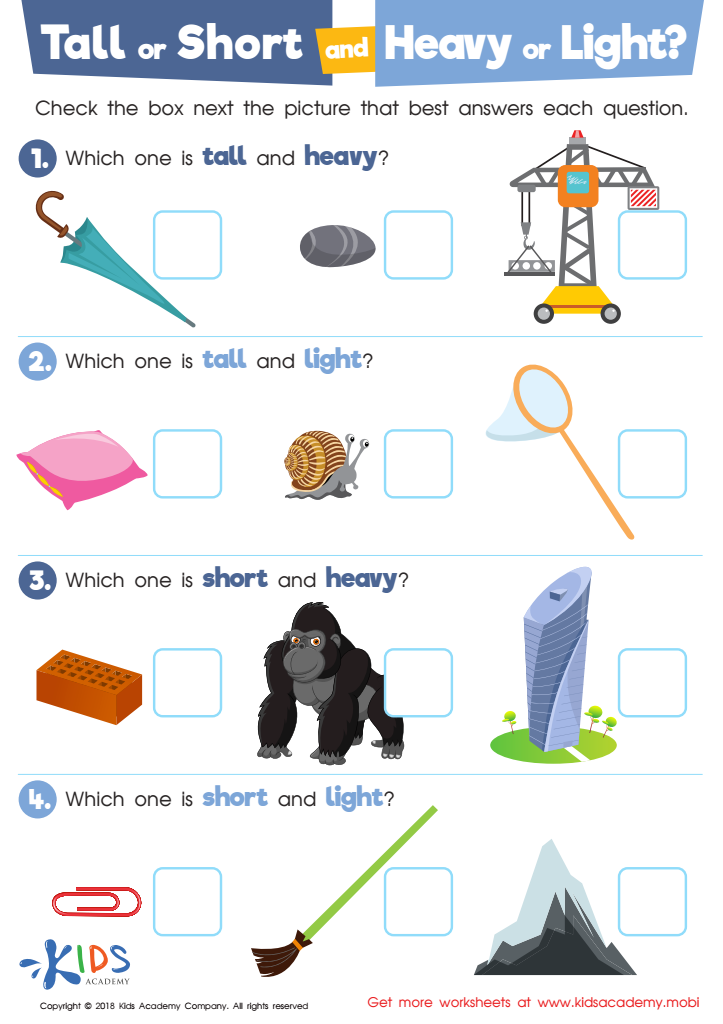
Tall or Short and Heavy or Light? Worksheet
 Assign to My Students
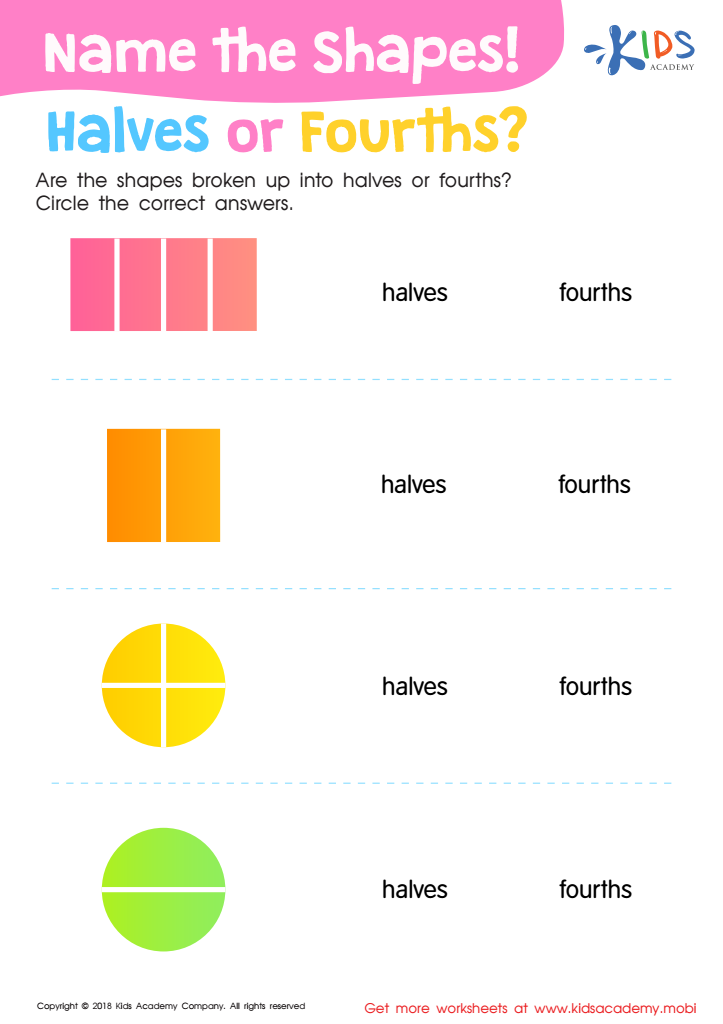
Name the Shapes Halves or Fourths? Worksheet
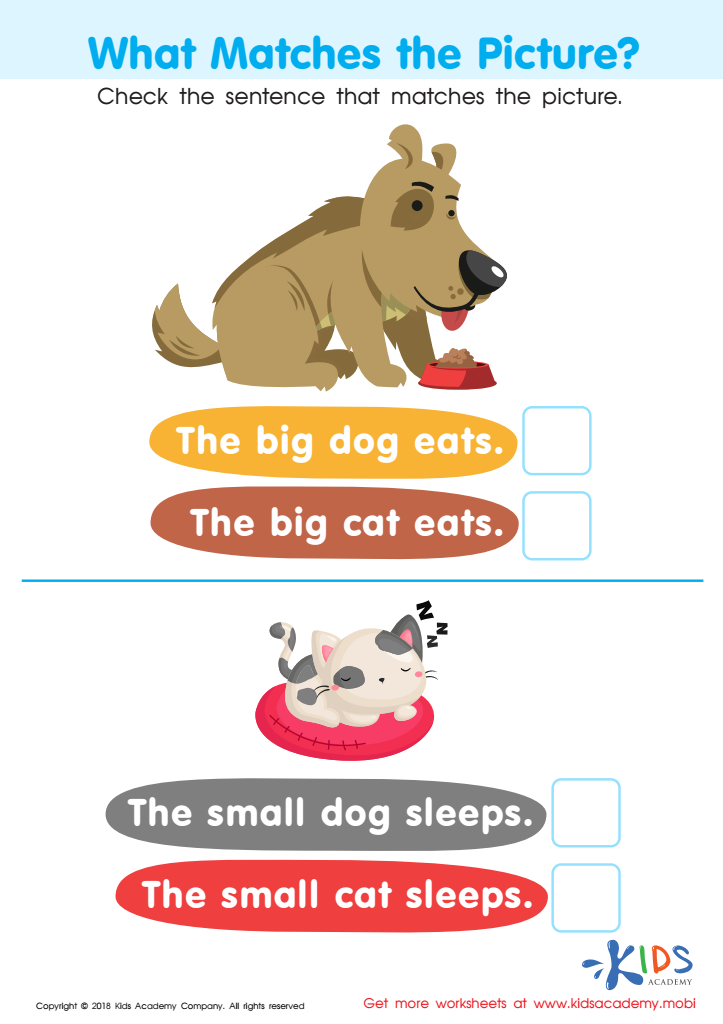
What Matches the Picture? Worksheet
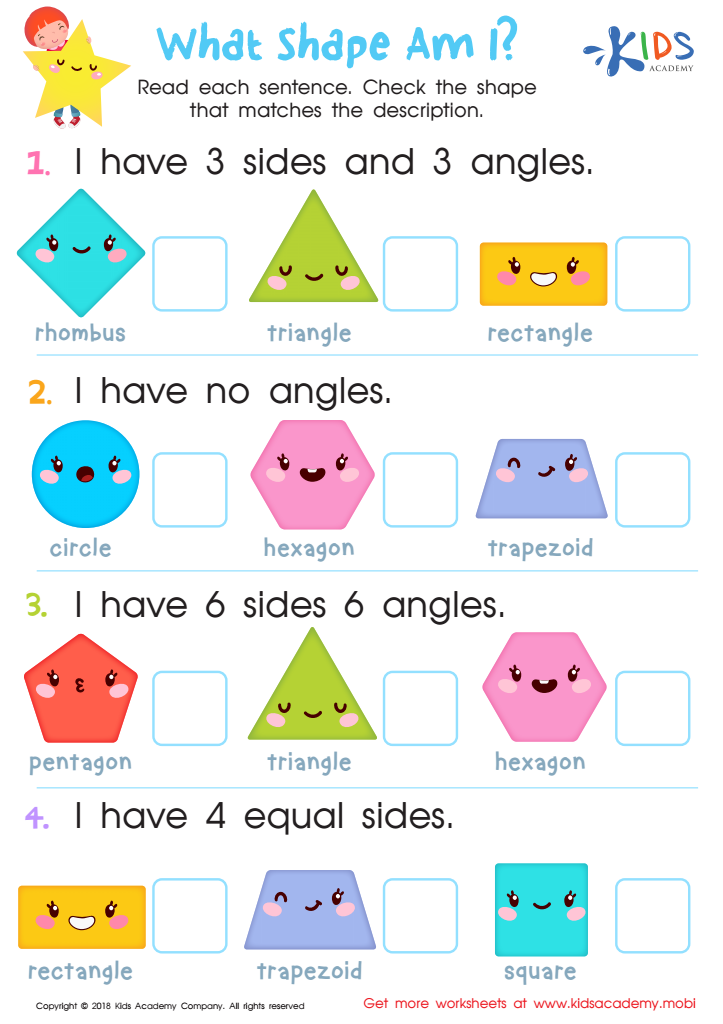
What Shape Am I? Worksheet
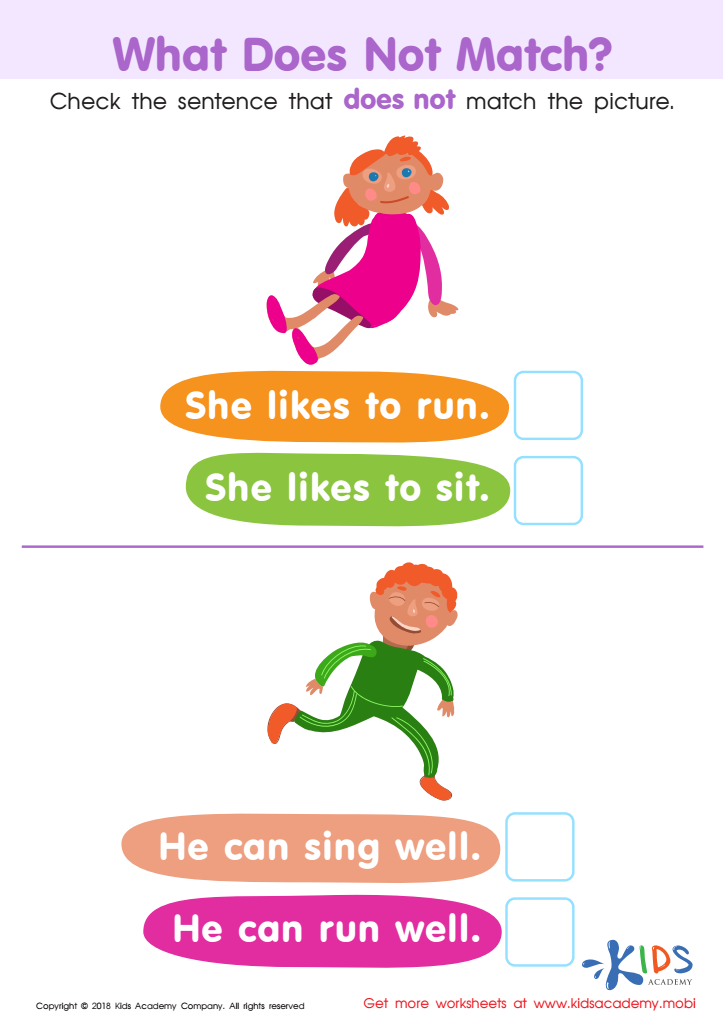
What Does Not Match? Worksheet






Visual discrimination is a critical skill that forms the foundation for a child's early learning and development. For children ages 3 to 8, this ability to discern differences and similarities in shapes, colors, letters, and objects plays a pivotal role in various learning activities. Here are a few reasons why parents and teachers should prioritize this skill:
-
Enhances Reading Readiness: Children need to recognize and differentiate letters and numbers to succeed in reading and mathematics. Visual discrimination is crucial for distinguishing between 'b' and 'd,' 'p' and 'q,' and comprehending visual cues in text.
-
Boosts Academic Performance: Good visual discrimination facilitates success not only in reading but also in other subjects like math and science where interpreting graphs, charts, and patterns are essential.
-
Improves Daily Functioning: Beyond academics, it helps children in everyday tasks like finding their belongings, understanding boundaries, and following visual instructions.
-
Supports Motor Development: Fine motor skills benefit from visual discrimination as children need to understand shape and form to refine their handwriting and drawing abilities.
-
Enhances Attention to Detail: Cultivating this skill helps children pay attention to smaller details, building a sense of precision and care in their activities.
-
Encourages Confidence: Mastery of visual discrimination can enhance children’s confidence, making them more willing to engage and persist in challenging tasks.
Recognizing the value of visual discrimination equips children with the foundational tools they need for learning and adapting to their environment effectively.








