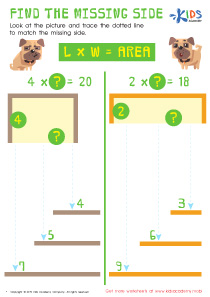
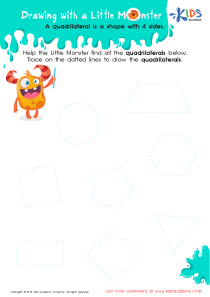
Shape Recognition Easy 2D Shapes Worksheets for Ages 3-8
9 filtered results
-
From - To
Discover the perfect introduction to geometry with our Shape Recognition Easy 2D Shapes Worksheets tailored for ages 3-8. Our engaging worksheets help young learners effortlessly identify and categorize basic 2D shapes like circles, squares, triangles, and more. Designed in alignment with early childhood curriculum standards, these printables foster critical thinking, fine motor skills, and spatial awareness in a fun, interactive way. Ideal for classroom or home use, these age-appropriate worksheets ensure children build a strong foundation in basic math skills, preparing them for future academic success. Get started and watch your child's confidence and proficiency in shape recognition soar!
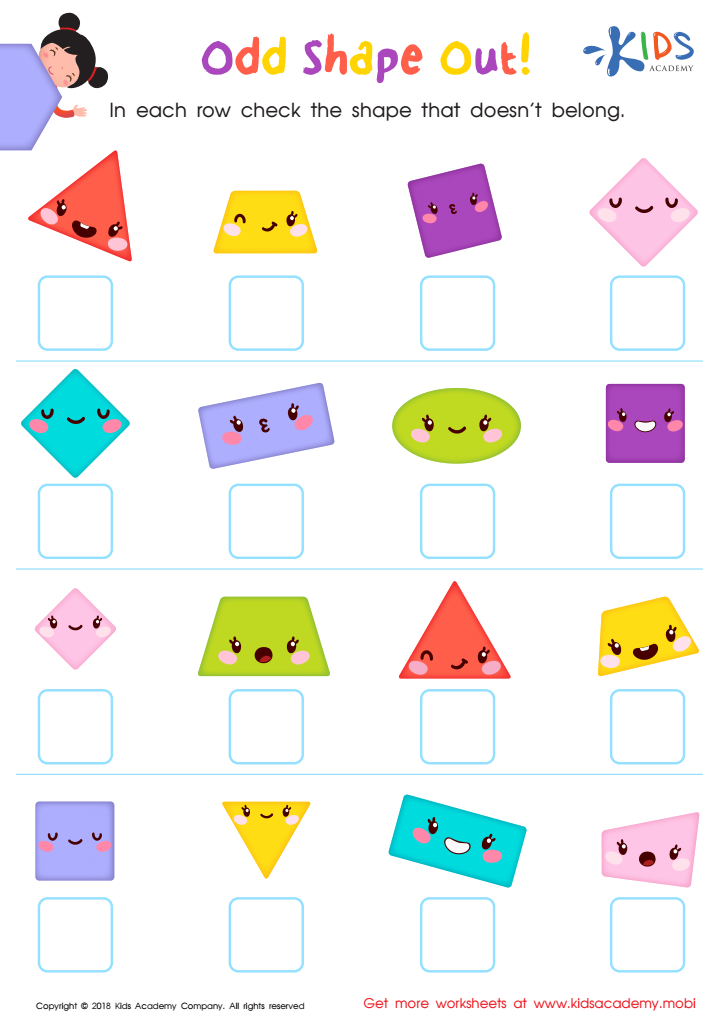
Odd Shape Out Worksheet for Grade 3
 Assign to My Students











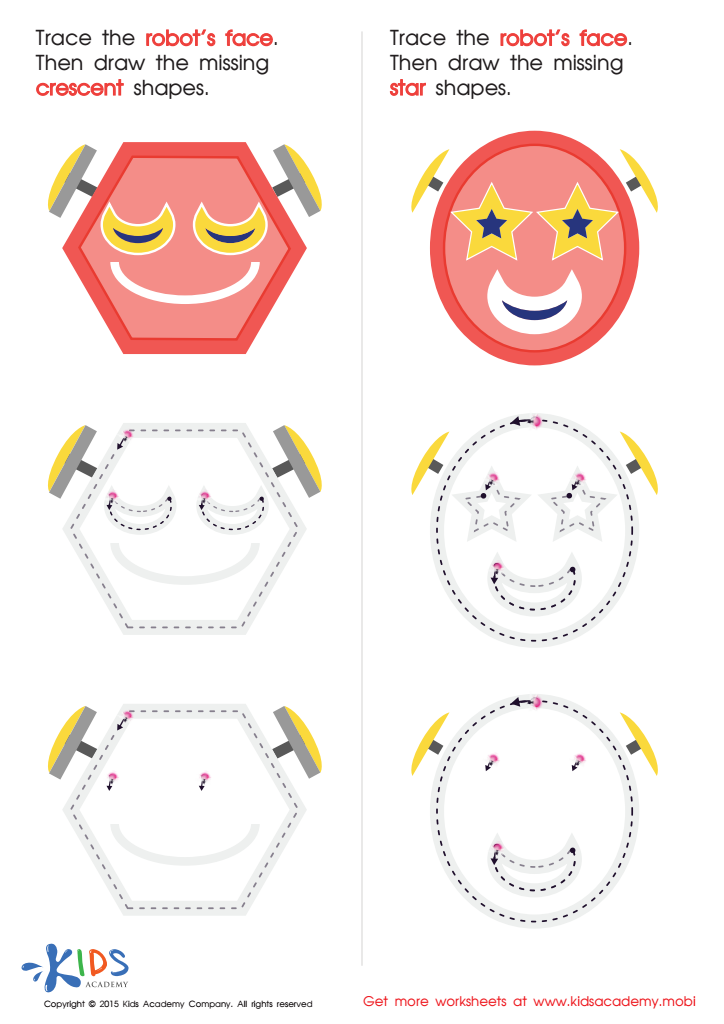
Composing a Robot's Face of Crescents And Stars Worksheet
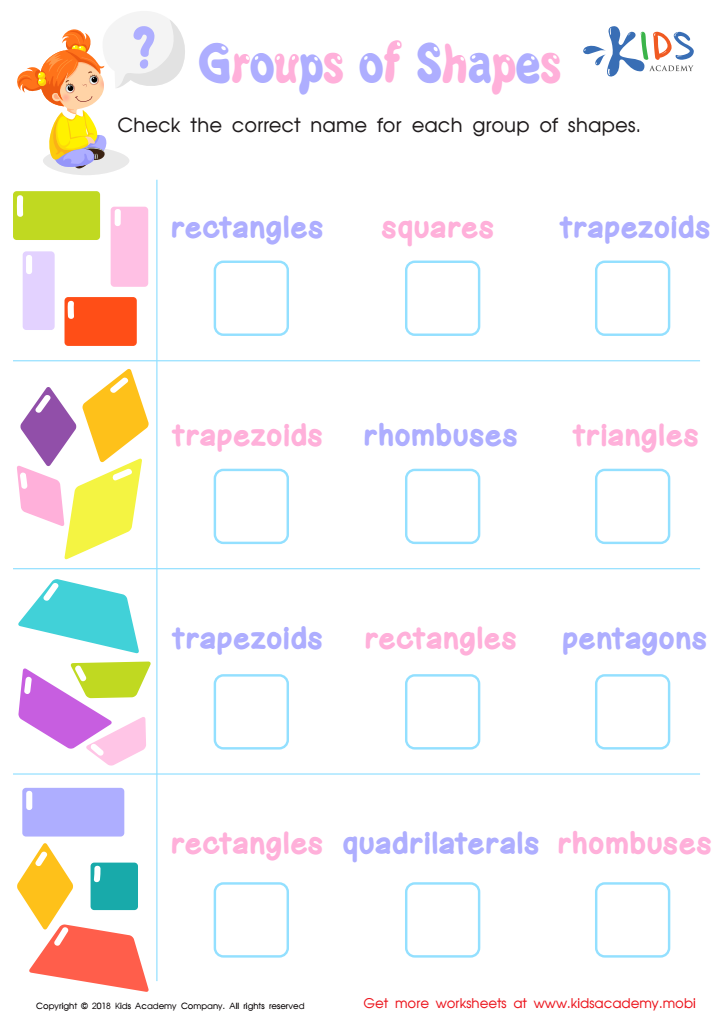
Groups of Shapes Worksheet
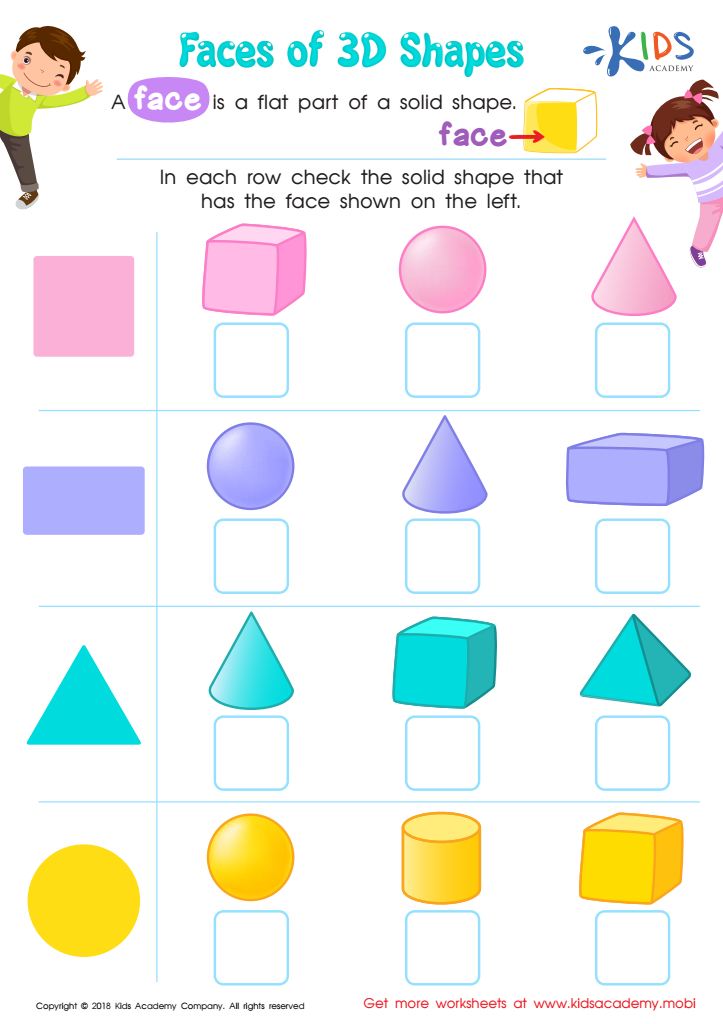
Faces of 3D Shapes Worksheet
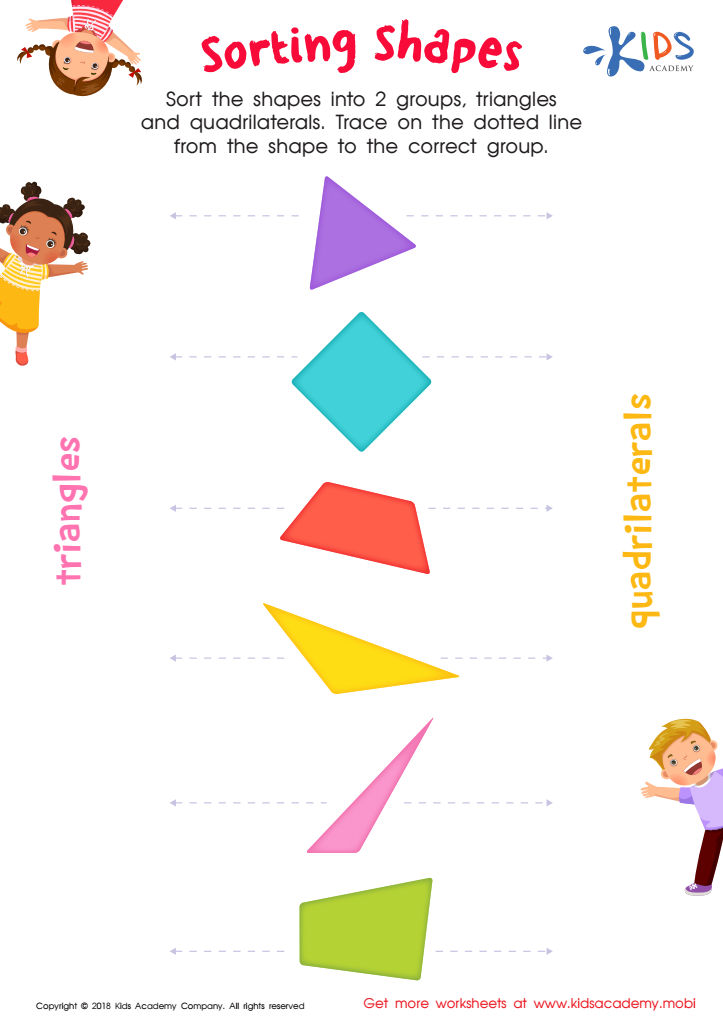
Sorting Shapes Worksheet
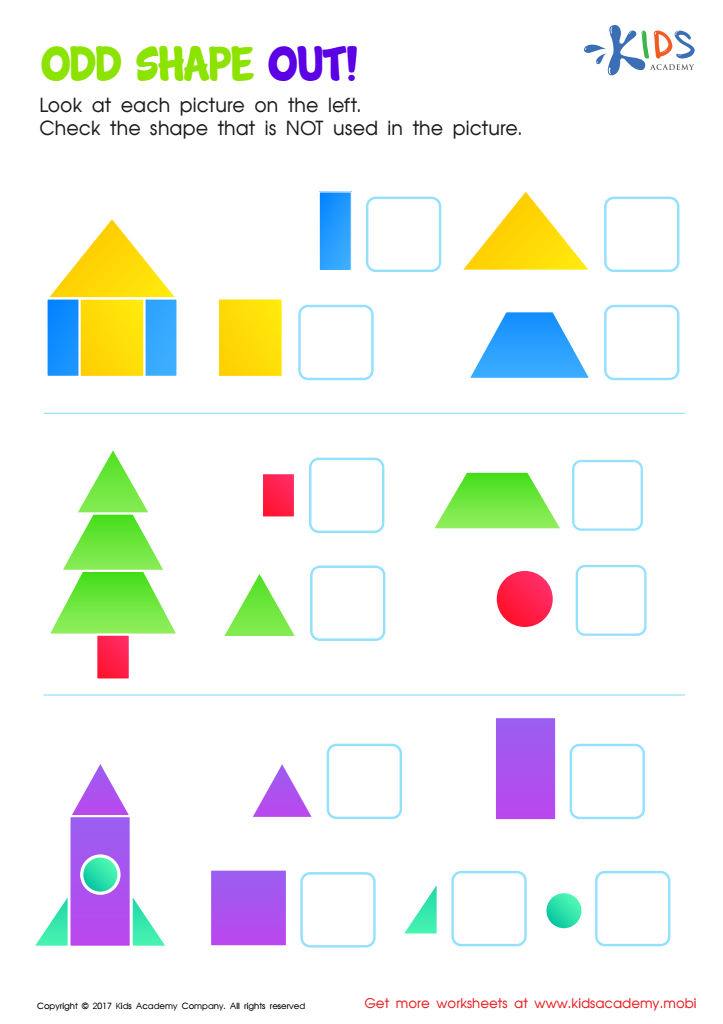
Odd Shape Out Worksheet for Grade 1
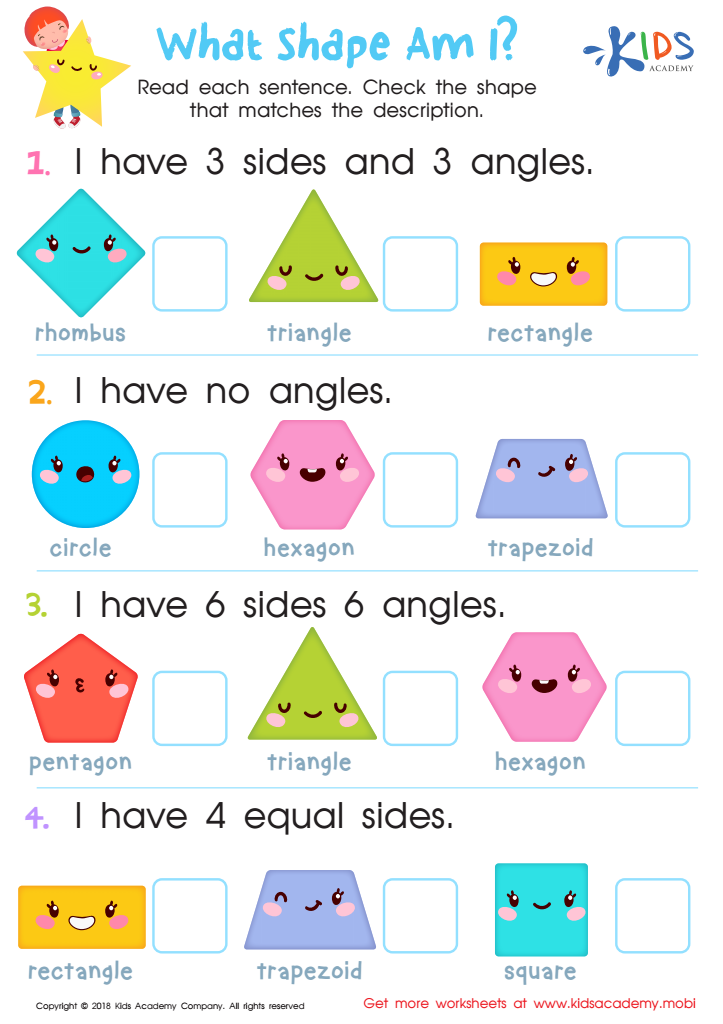
What Shape Am I? Worksheet
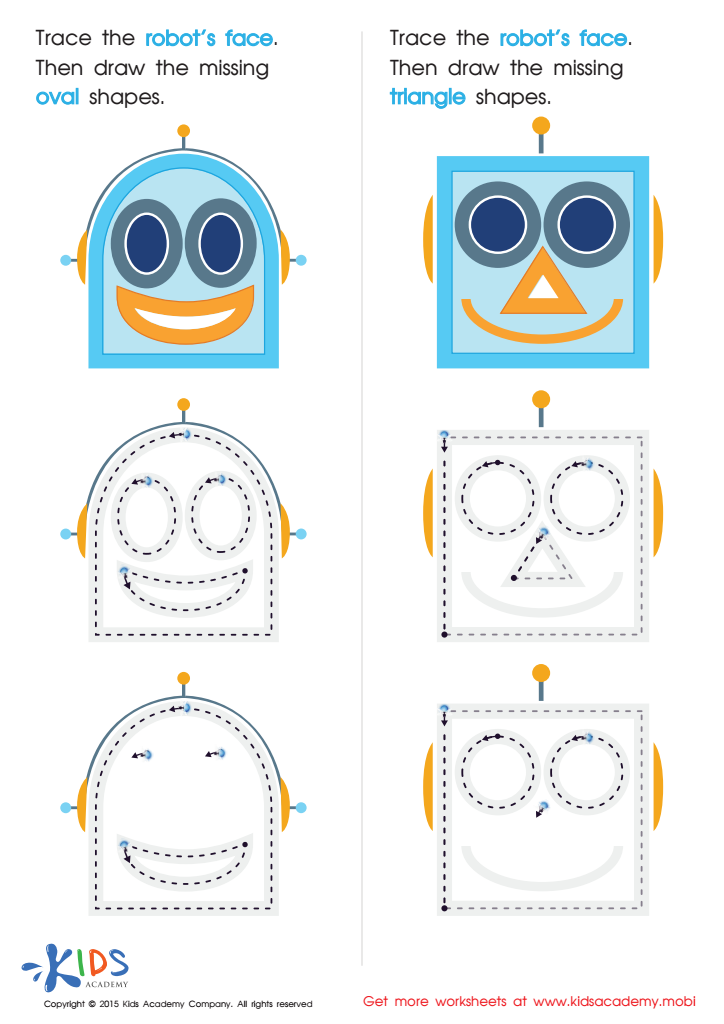
Drawing Ovals And Triangles with Fun Printable
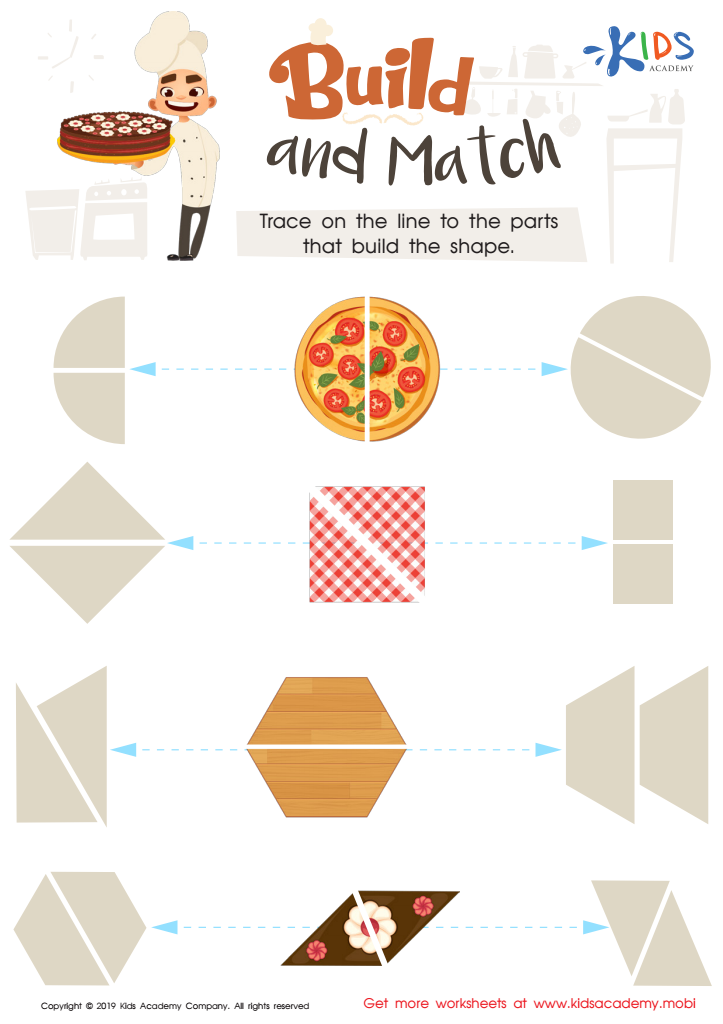
Build and Match Worksheet








Shape Recognition is an essential foundational skill that sets the stage for young children's cognitive and academic development. For preschool and early-grade students (ages 3-8), learning to identify and differentiate between various two-dimensional shapes is more than just a math skill—it influences multiple areas of growth.
Firstly, shape recognition aids in visual perception and spatial awareness. Understanding shapes enhances a child's ability to comprehend their environment, improving navigation and the ability to follow directions.
Secondly, it promotes critical thinking and problem-solving. When children sort shapes, they learn to categorize based on attributes (e.g., number of sides), fostering logical thought processes essential for mathematics and science.
Shape recognition supports literacy skills, too. Recognizing and remembering the letters of the alphabet involve understanding different shapes and forms. Early competencies with shapes translate into better letter recognition, which is critical for reading and writing.
Moreover, learning shapes strengthens fine motor skills through activities like drawing, tracing, and assembling puzzles. These activities develop hand-eye coordination, necessary for writing and other daily tasks.
Finally, early shape recognition forms the basis for more complex geometric concepts encountered in higher-level math. Thus, focusing on shape learning in the ages 3-8 lays a robust foundation for a multitude of future learning opportunities across various subjects.