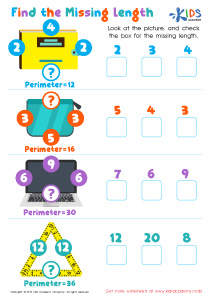
Reading comprehension Easy Subtraction Worksheets for Ages 3-8
3 filtered results
-
From - To
Discover engaging Reading Comprehension Easy Subtraction Worksheets designed for children aged 3-8! Our worksheets seamlessly blend math and literacy, helping young learners master subtraction concepts while enhancing their reading skills. Featuring colorful illustrations and age-appropriate exercises, these worksheets provide an interactive way for children to practice comprehension and problem-solving within a fun context. Parents and educators will find them valuable for reinforcing essential skills at home or in the classroom. Tailored to suit various learning styles, our resources ensure that children build a strong mathematical foundation while enjoying the joys of reading. Start their learning journey today!
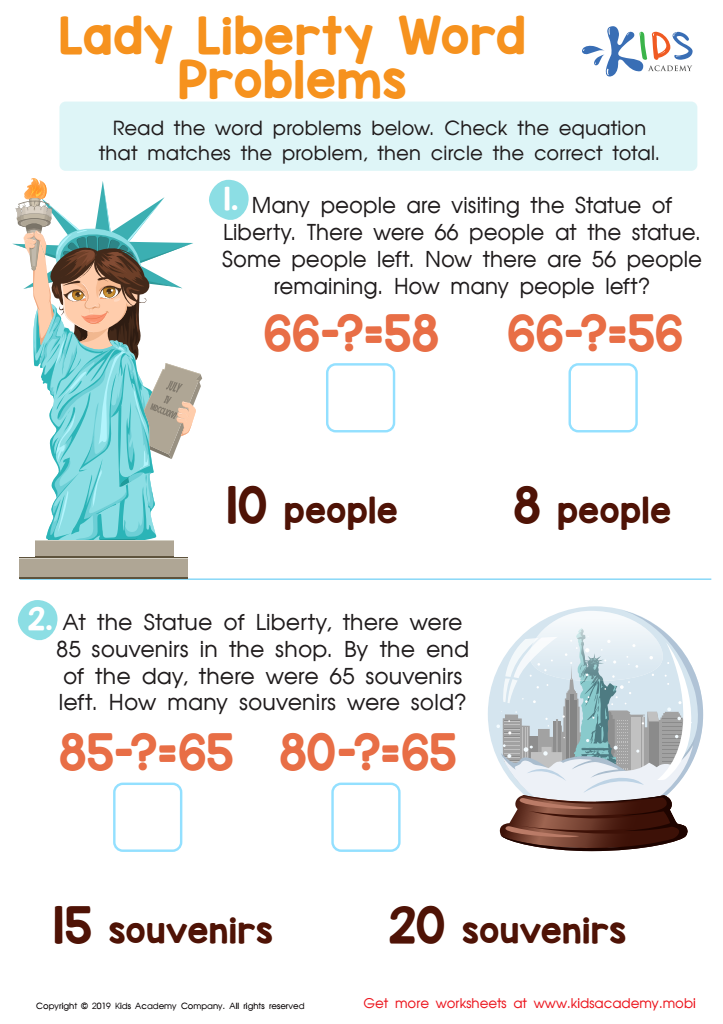
Lady Liberty Worksheet
 Assign to My Students
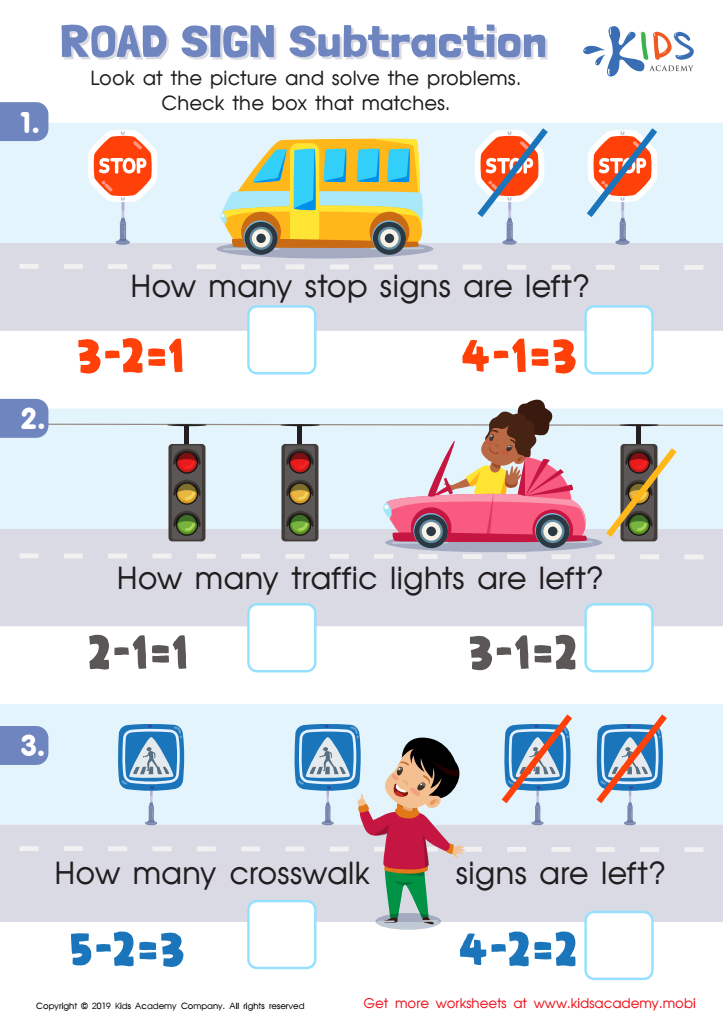
Road Sign Subtraction Worksheet
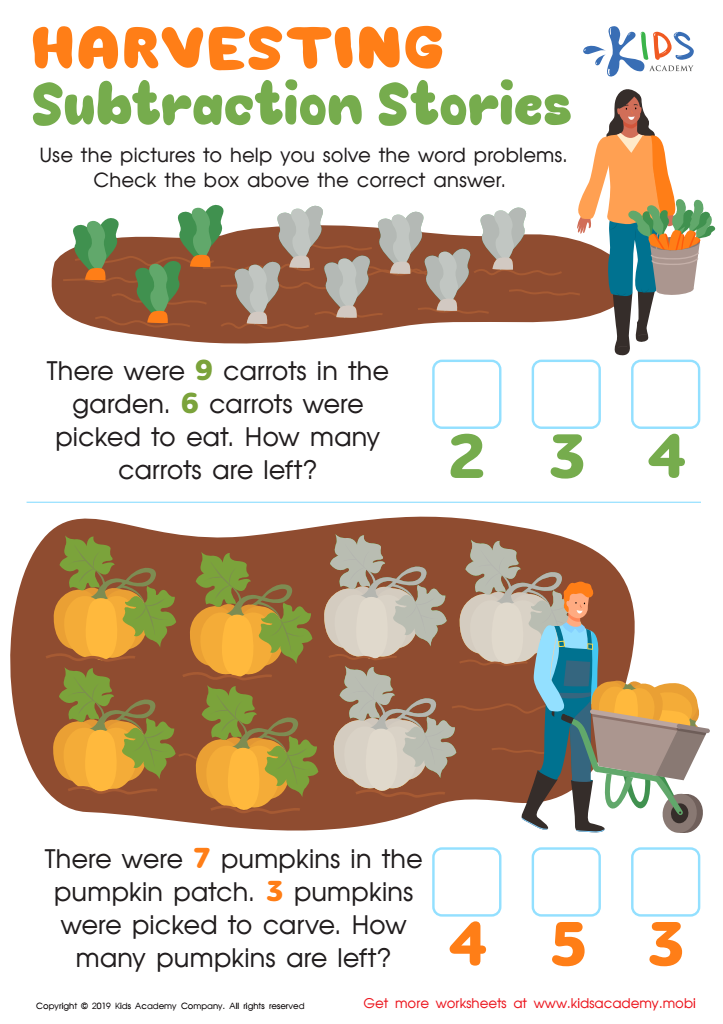
Harvesting Subtraction Stories Worksheet








Reading comprehension and easy subtraction are foundational skills that significantly contribute to a child's overall academic development. For parents and teachers, nurturing these skills in children aged 3-8 is crucial for several reasons.
Firstly, reading comprehension enables children to understand and retain information, fostering a love for reading and learning. This skill enhances their ability to navigate through educational materials in school, which is vital as they progress to higher grades. As they interpret stories and instructions, they develop critical thinking, empathy, and creativity.
On the other hand, easy subtraction lays the groundwork for mathematical skills. Understanding basic operations helps children make sense of the world around them, facilitating everyday tasks and decision-making. Early exposure to subtraction creates a strong number sense and boosts confidence in handling math, which is essential for future learning.
Moreover, when children master these skills early, they are more likely to experience school success and positive feelings about learning, reducing anxiety related to academic challenges. Parents and teachers play a crucial role in creating engaging and supportive environments where children are encouraged to practice reading and math, ensuring they have the tools they need for lifelong learning. Investing in these skills benefits not only the individual child but also society as a whole.