Contextual understanding Easy Worksheets for Ages 3-9
5 filtered results
-
From - To
Discover a world of engaging and educational activities tailored specifically for children ages 3-9. Our "Contextual Understanding Easy Worksheets" are designed to enhance learning through fun exercises that build essential skills such as reading comprehension, critical thinking, and problem-solving. These printable worksheets incorporate vivid illustrations and relatable scenarios to help young learners grasp concepts effortlessly. Perfect for parents and teachers, our resources make learning enjoyable and effective, laying a strong educational foundation for your child's future. Visit Kids Academy to explore our extensive collection and watch your child's understanding soar.
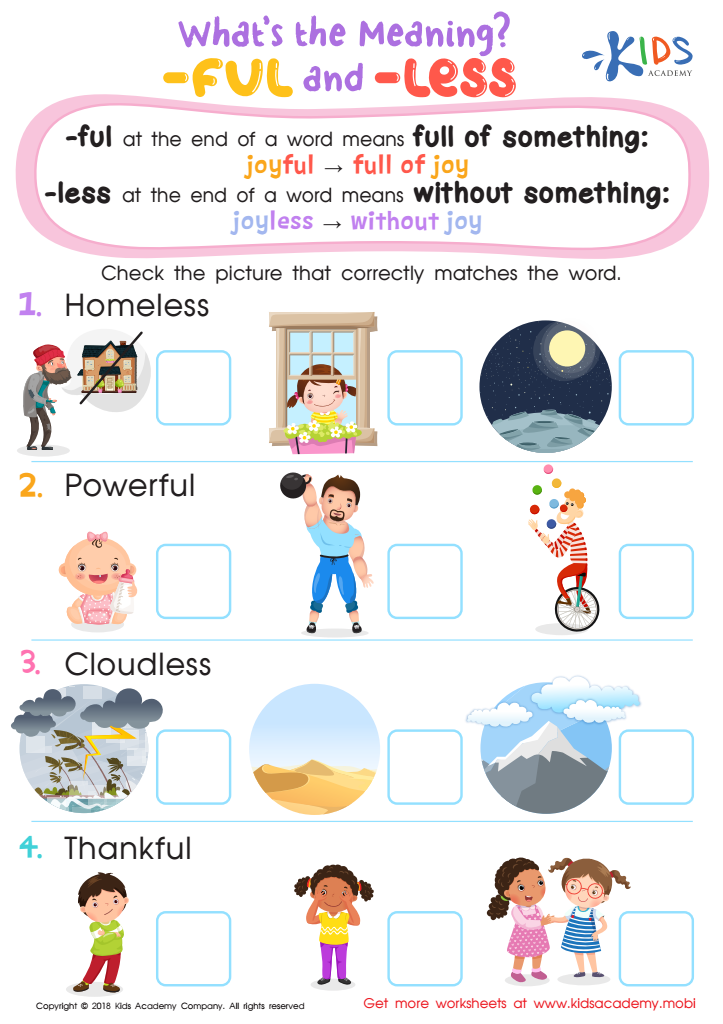
What's the Meaning? Worksheet
 Assign to My Students
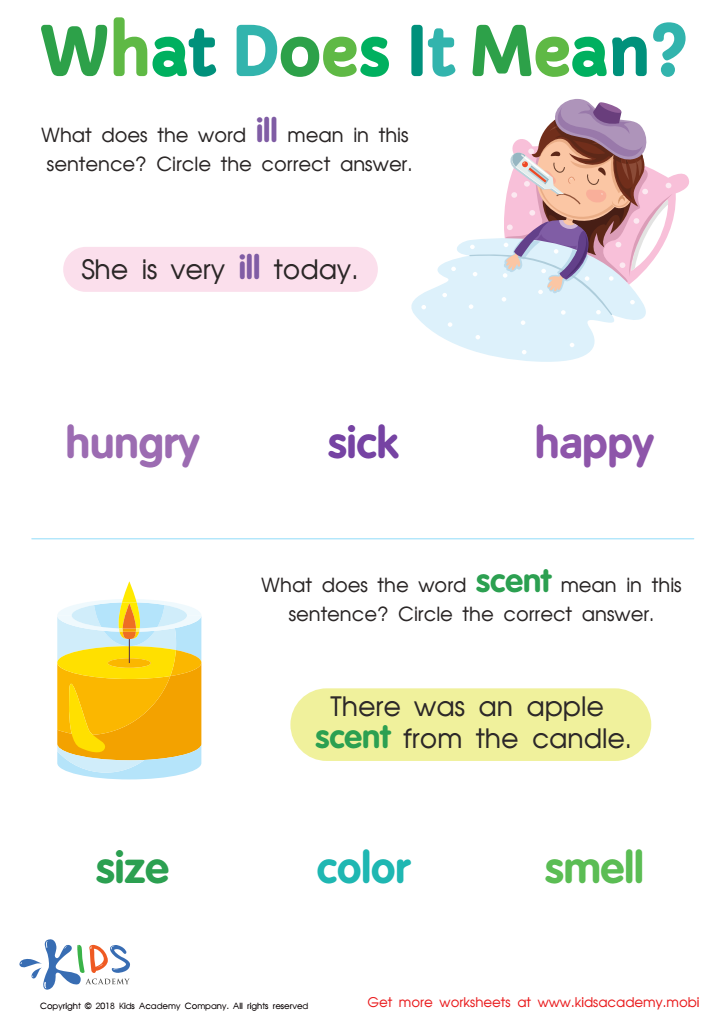
What Does It Mean? Worksheet
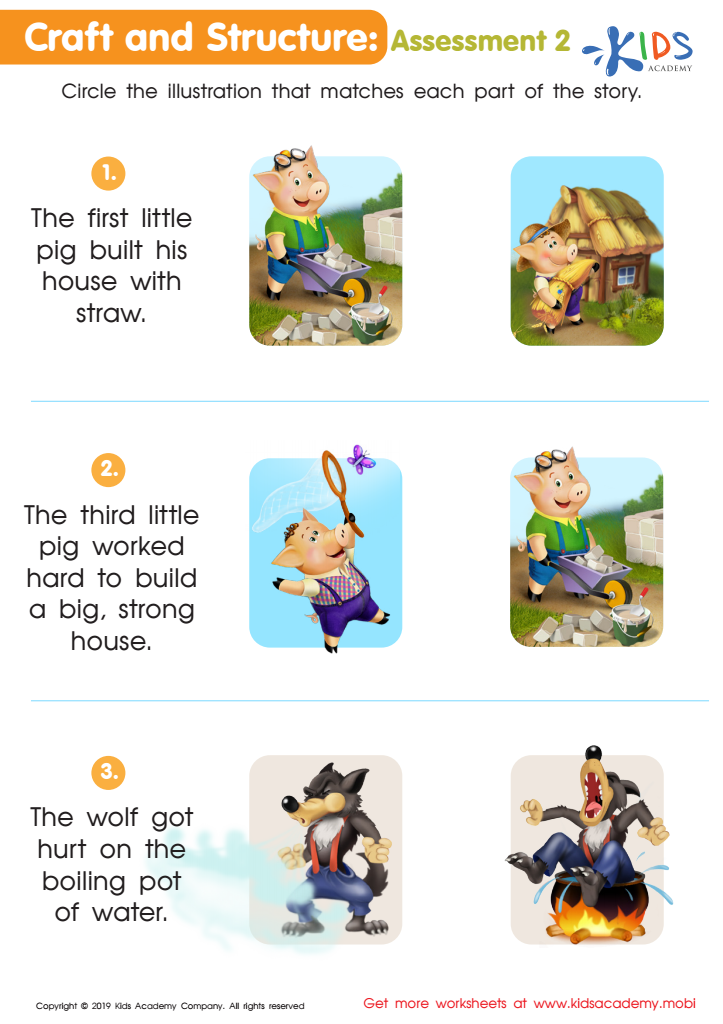
Craft and Structure: Assessment 2 Worksheet 2
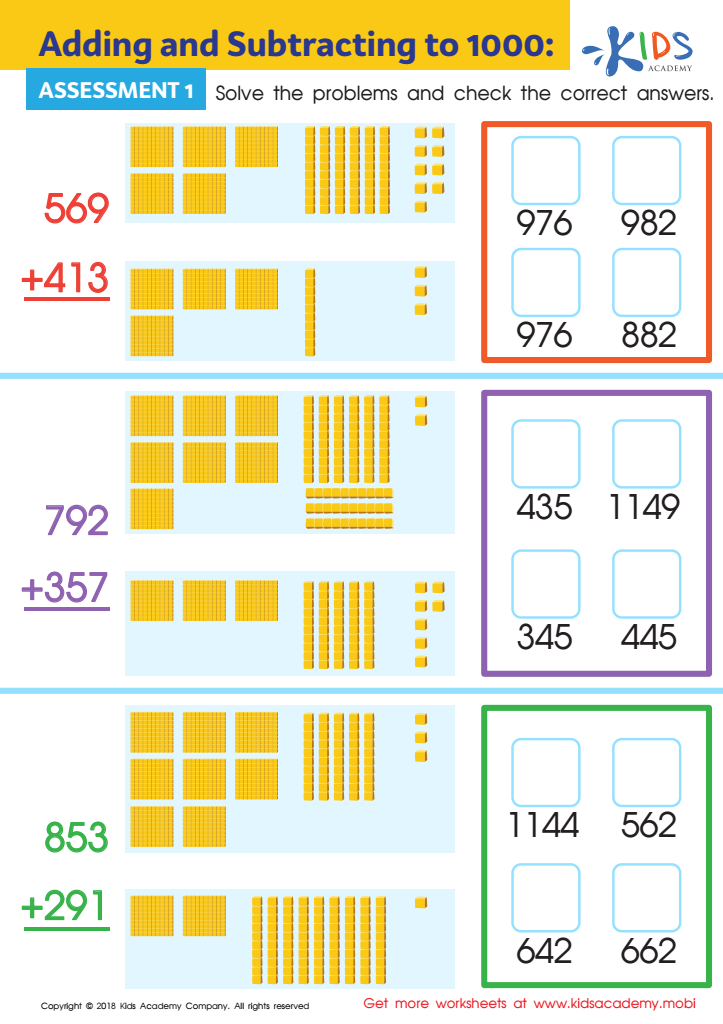
Adding and Subtracting to 1 Worksheet: Assessment 1
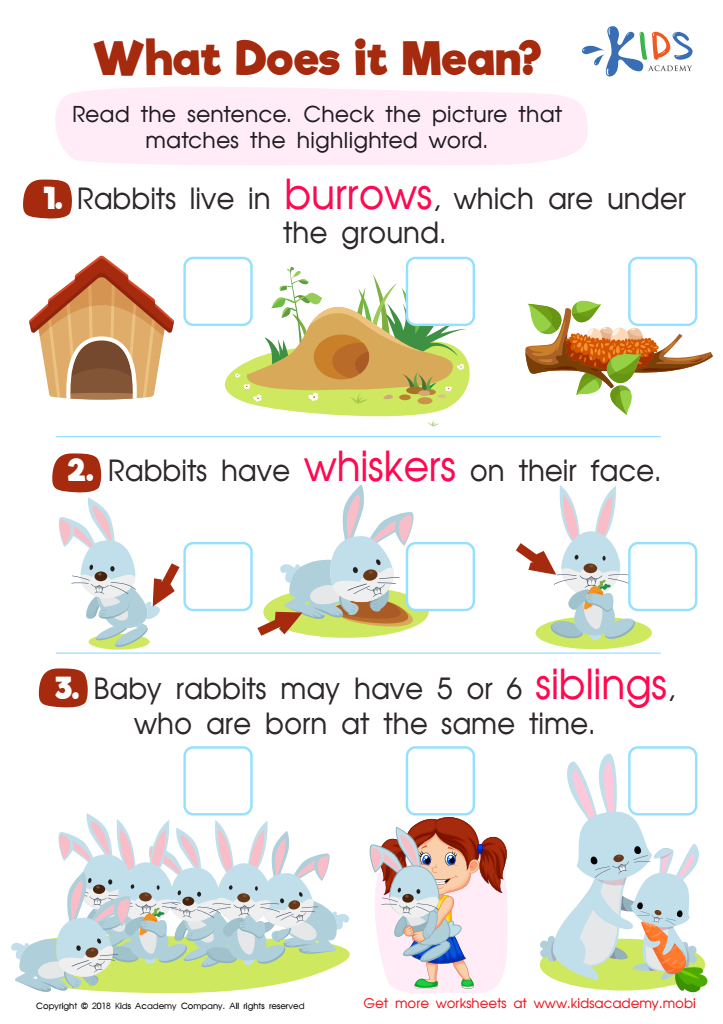
What Does It Mean? Worksheet








Contextual understanding is crucial for children aged 3-9 because it forms the foundation of their cognitive, social, and emotional development. When kids grasp the context of words, actions, and situations, they enhance their comprehension and problem-solving abilities. This deeper understanding helps them make sense of the world around them, making learning more relevant and engaging.
For example, in reading, children who understand the context are better at making predictions and drawing inferences, which are essential skills for literacy development. Context also aids vocabulary acquisition, as kids learn new words more effectively when they see how they fit into different situations.
On the social side, understanding context helps children navigate interactions more adeptly. They learn to interpret social cues, understand others' perspectives, and respond appropriately, fostering empathy and communication skills. Emotionally, children can better recognize and manage their own feelings and understand the emotions of others, which is key for healthy relationships.
For parents and teachers, focusing on contextual understanding means creating rich, meaningful learning experiences. It encourages curiosity and critical thinking, laying the groundwork for lifelong learning. By caring about context, we equip children with skills that go beyond rote memorization, preparing them for complex, real-world challenges.








