Enhancing math skills Easy Worksheets for Ages 3-9
4 filtered results
-
From - To
Discover easy and fun worksheets designed to enhance math skills for children ages 3-9! Kids Academy offers a variety of engaging, age-appropriate activities that make learning math enjoyable. Our printable resources cover essential math concepts, from basic counting and number recognition to more advanced topics like addition, subtraction, and simple geometry. Perfect for parents and teachers, these worksheets help build a strong math foundation, boost confidence, and foster a love for learning. With vibrant illustrations and interactive exercises, children will stay motivated and eager to learn. Start enhancing your child's math skills today!
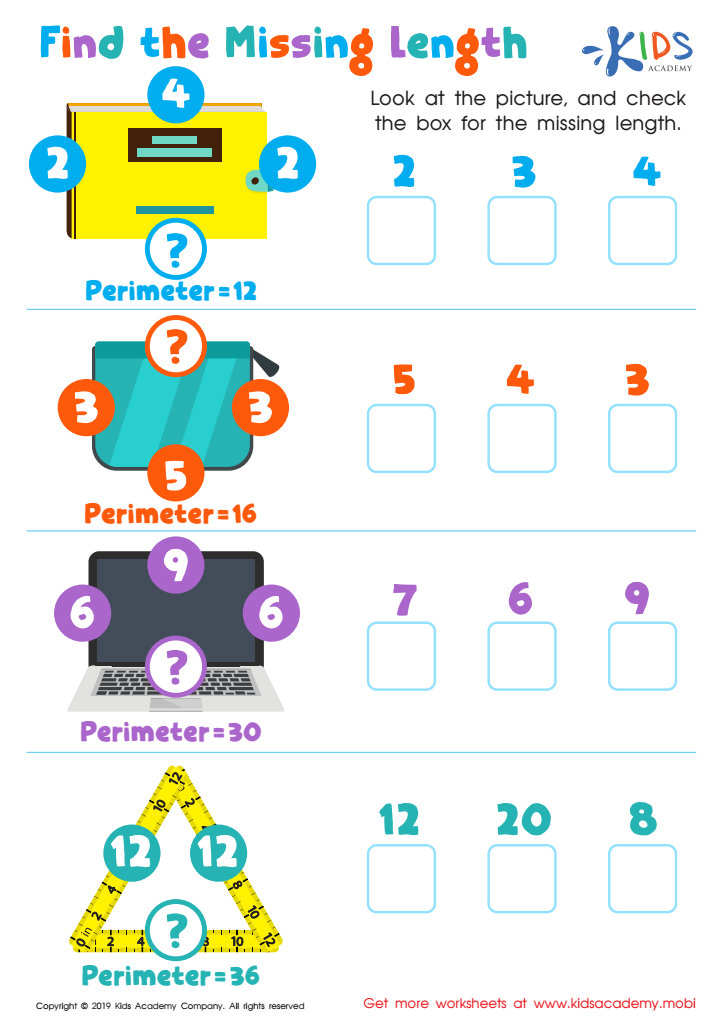
Find the Missing Length Worksheet
 Assign to My Students
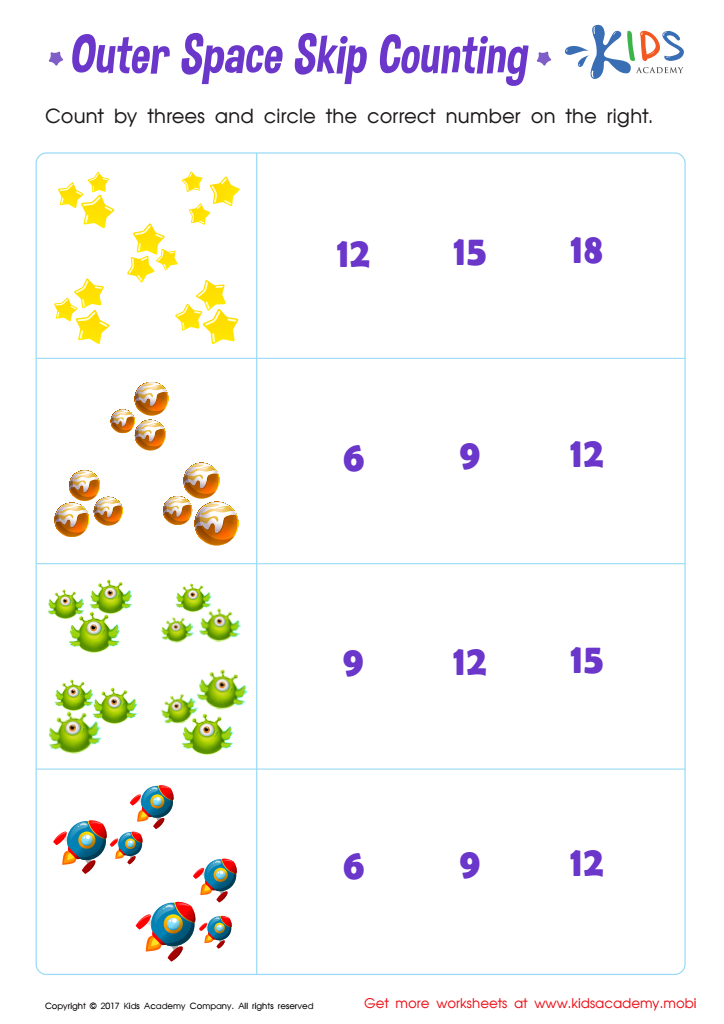
Skip Counting by 3s: Outer Space Skip Counting Printable
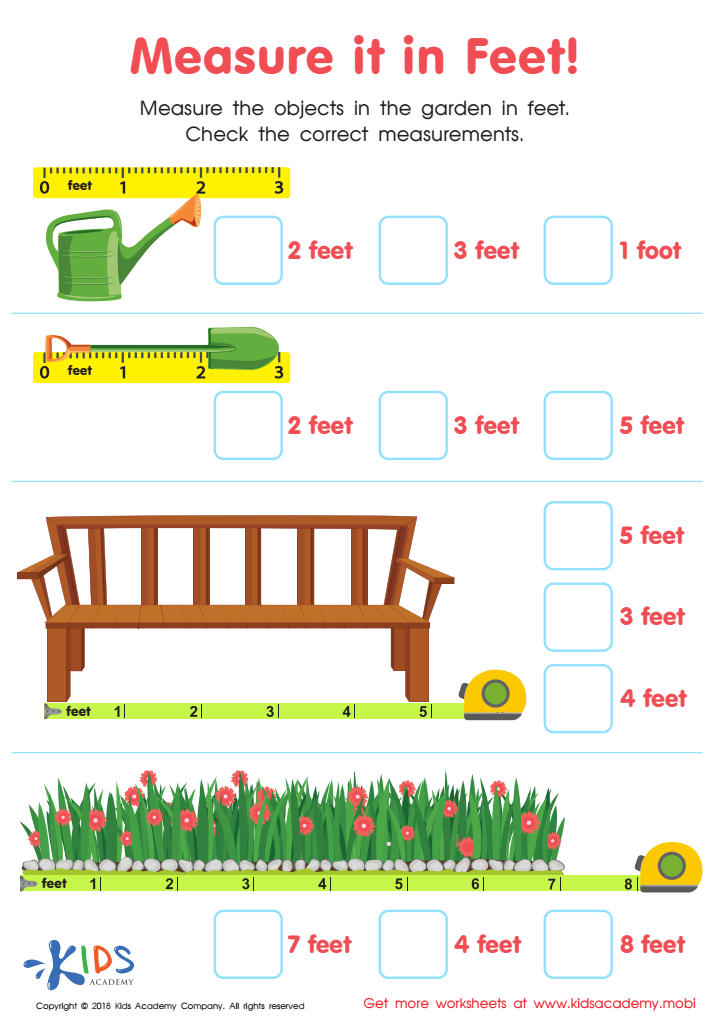
Measure it in Feet Worksheet







Parents and teachers should care deeply about enhancing math skills for children ages 3-9 because these foundational years set the stage for future academic success and cognitive development. During early childhood, the brain is particularly receptive to learning, and establishing strong math skills can have long-lasting benefits. Engaging young children in math fosters critical-thinking and problem-solving abilities, which are essential across all subjects and everyday life.
Introducing math in an easy, engaging manner encourages a positive attitude towards the subject, reducing the likelihood of math anxiety later on. Children who develop strong math skills early are more likely to feel confident in their abilities, fostering a growth mindset and a willingness to tackle challenging problems.
Additionally, math proficiency is linked to higher achievement not just in science and technology fields, but in reasoning and cognitive functions too. Incorporating simple, age-appropriate math activities at home or in the classroom—such as counting games, puzzles, and interactive apps—helps children grasp basic concepts effortlessly and encourages curiosity.
Moreover, with the growing importance of STEM (Science, Technology, Engineering, and Mathematics) in the global workforce, equipping children with strong basic math skills gives them a solid foundation from which to pursue future careers in these fields. By prioritizing early math education, parents and teachers can help children reach their full potential and support their lifelong learning journey.








