Basic Addition Skills Easy Addition Worksheets for Ages 3-9
5 filtered results
-
From - To
Discover essential Basic Addition Skills with our Easy Addition Worksheets, designed for children ages 3-9. Our engaging and interactive materials help young learners build a solid foundation in math, making addition fun and approachable. Each worksheet is crafted to reinforce concepts with bright visuals and simple exercises that cater to various learning styles. From counting objects to solving basic equations, these worksheets empower kids to develop confidence in their math abilities. Perfect for classroom use or at-home learning, our resources make mastering addition an enjoyable journey. Start your child's mathematical adventure today with our thoughtfully designed worksheets!
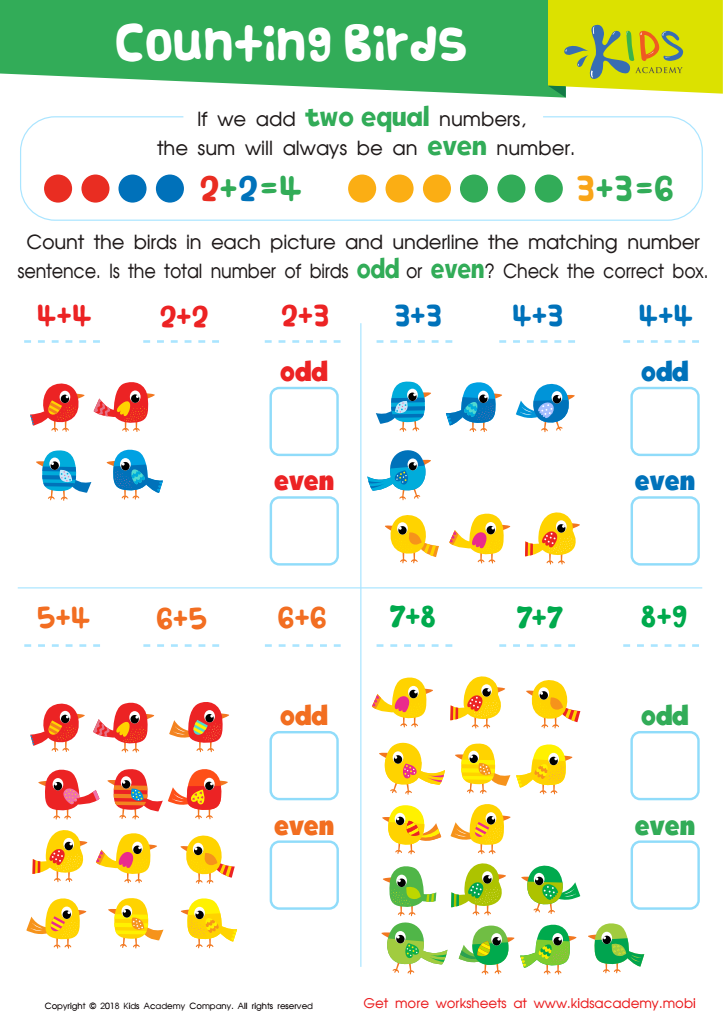
Counting Birds Worksheet
 Assign to My Students
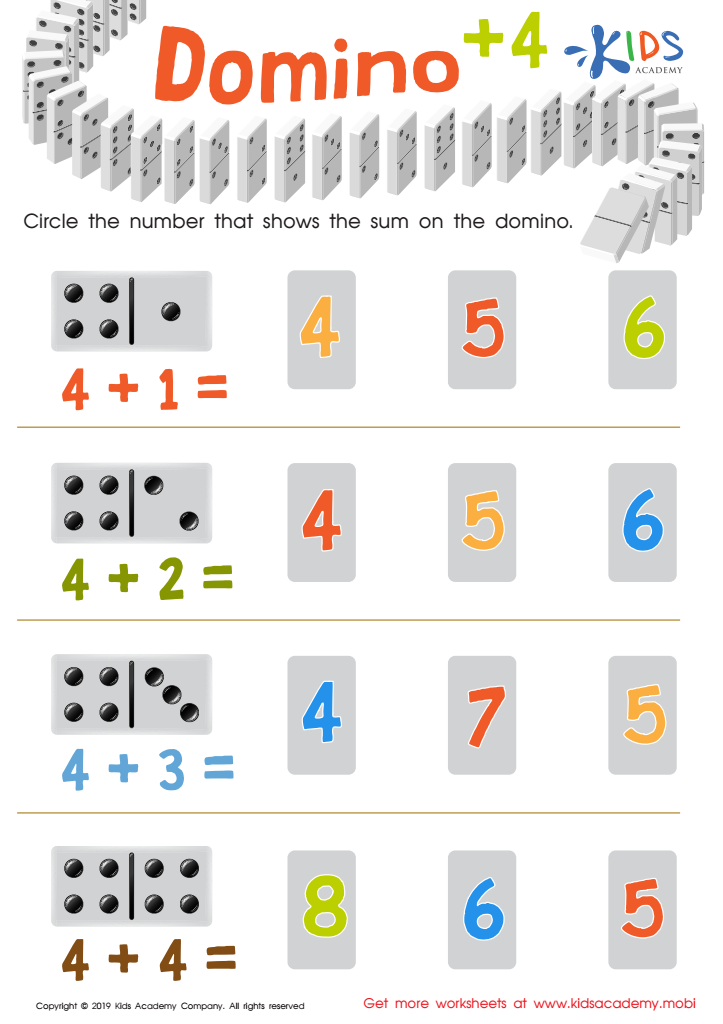
Domino +4 Worksheet
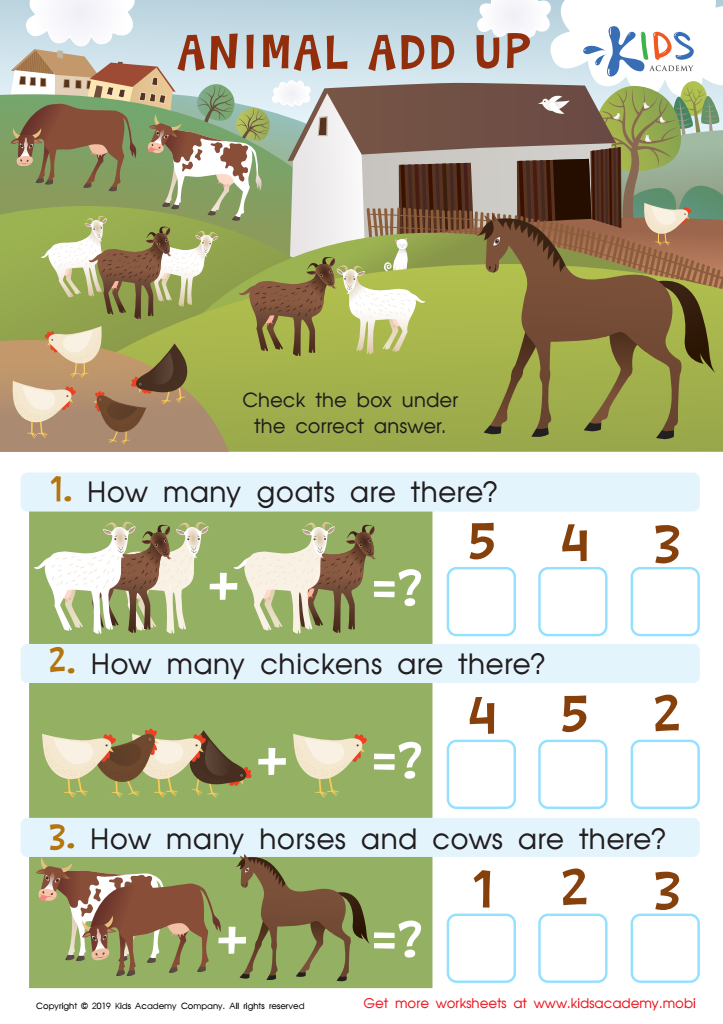
Animal Add Up Worksheet
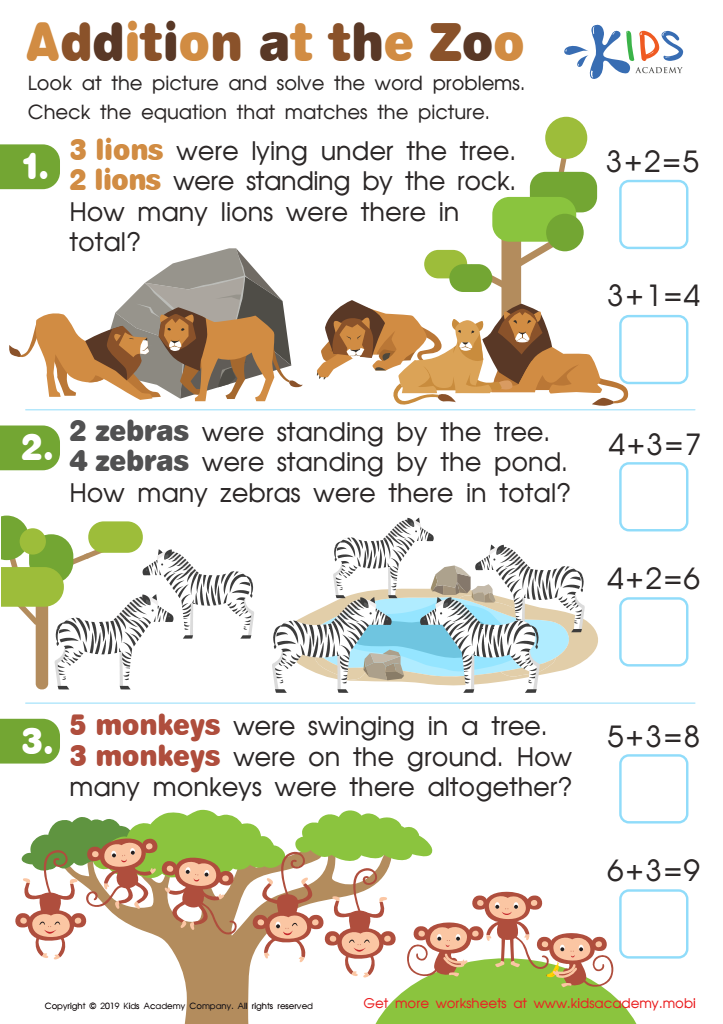
Addition at the Zoo Worksheet
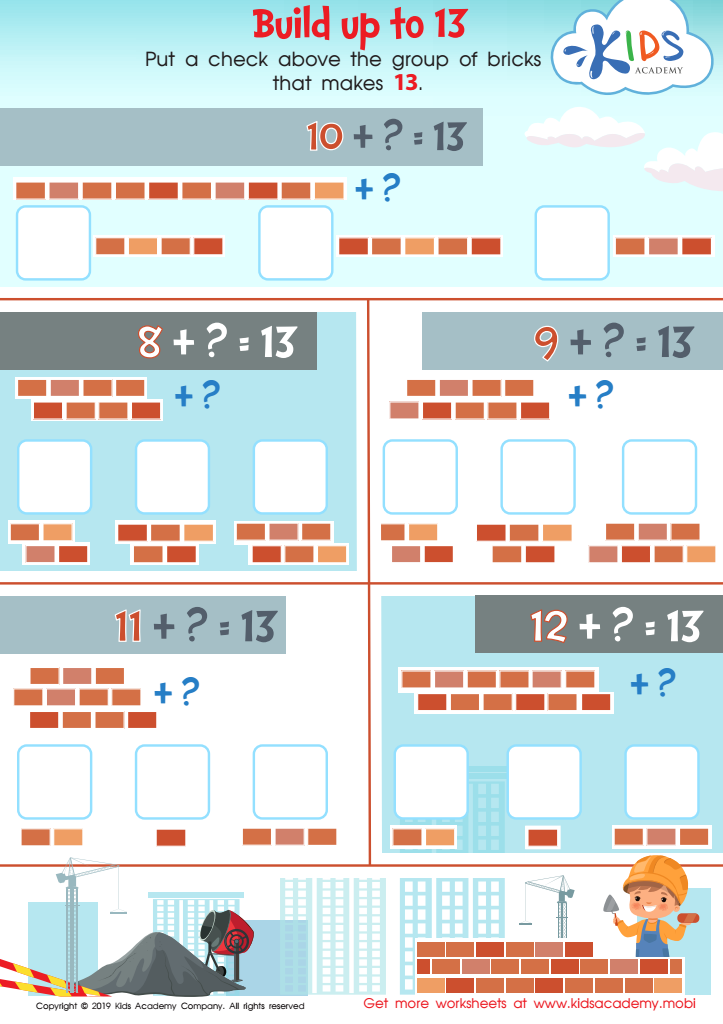
Build up to 13 Worksheet








Basic addition skills lay a crucial foundation for children's mathematical understanding and overall academic success. For parents and teachers, focusing on easy addition for ages 3-9 is vital for several reasons.
Firstly, early mastery of addition helps develop critical thinking and problem-solving skills. Children learn to recognize patterns, make connections, and understand quantities, which enhances their cognitive development.
Secondly, strong addition skills build confidence. When children grasp basic math concepts, they are more likely to embrace learning, engage in classroom activities, and take on new challenges without fear of failure.
Moreover, basic addition skills are essential for everyday life. Whether counting toys, sharing snacks, or navigating simpler financial literacy concepts as they grow, these skills will serve children well beyond the classroom.
Finally, establishing a solid mathematical foundation promotes future success in more advanced math topics, preventing learning gaps that can hinder progress in later grades. Investing time and effort in teaching addition during these formative years ensures that children not only excel in mathematics but also develop a positive attitude towards learning, setting the stage for a lifetime of academic achievement. Therefore, both parents and teachers should prioritize the development of basic addition skills.








