Easy Subtraction Worksheets for Ages 3-9 - Page 2
39 filtered results
-
From - To
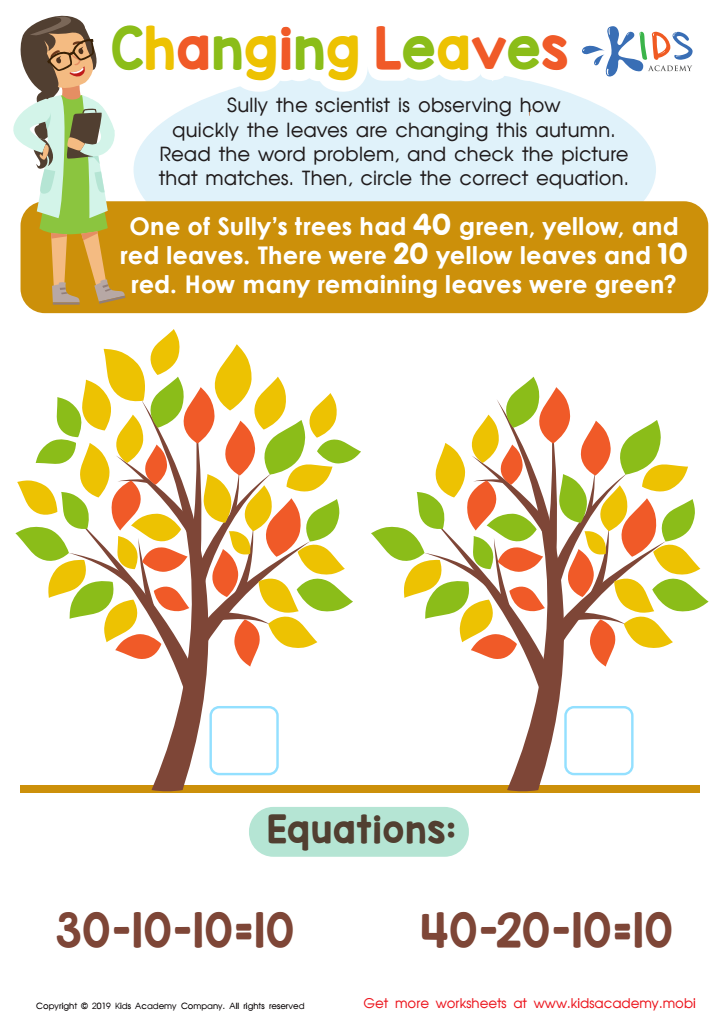
Changing Leaves Worksheet
 Assign to My Students
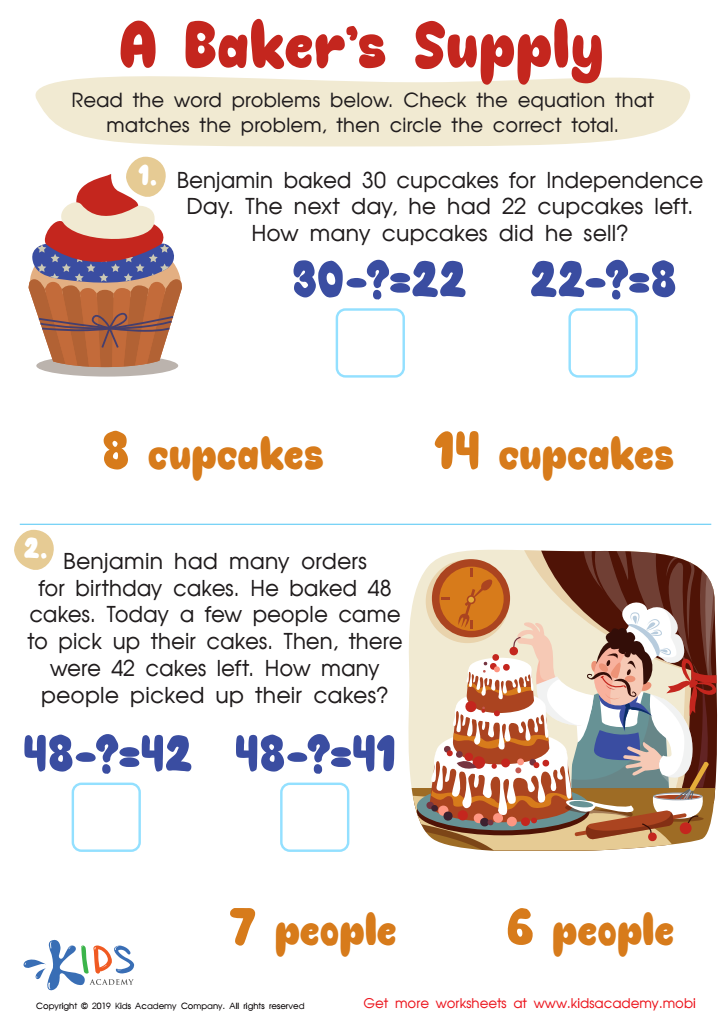
A Baker's Supply Worksheet
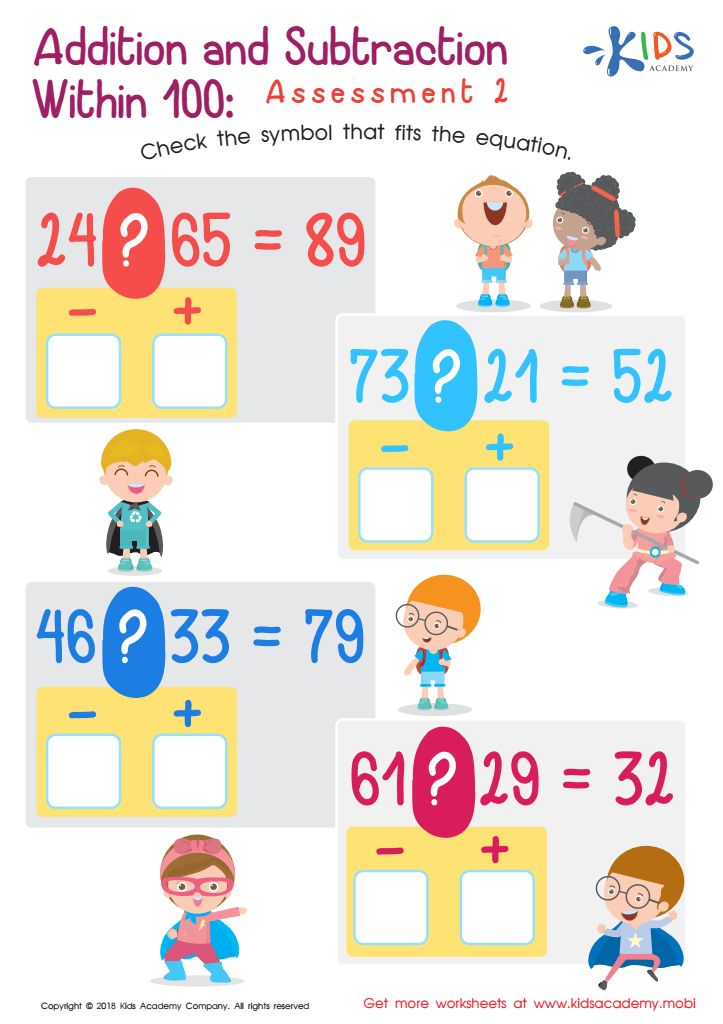
Addition and Subtraction Within 1: Assessment 2 Worksheet
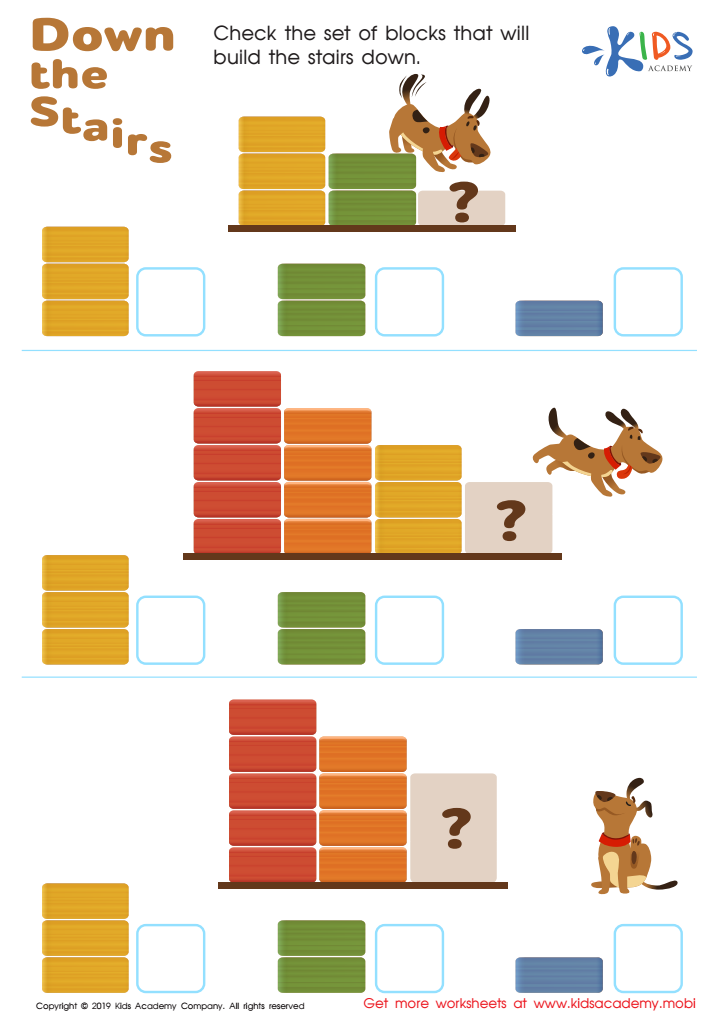
Down the Stairs Worksheet
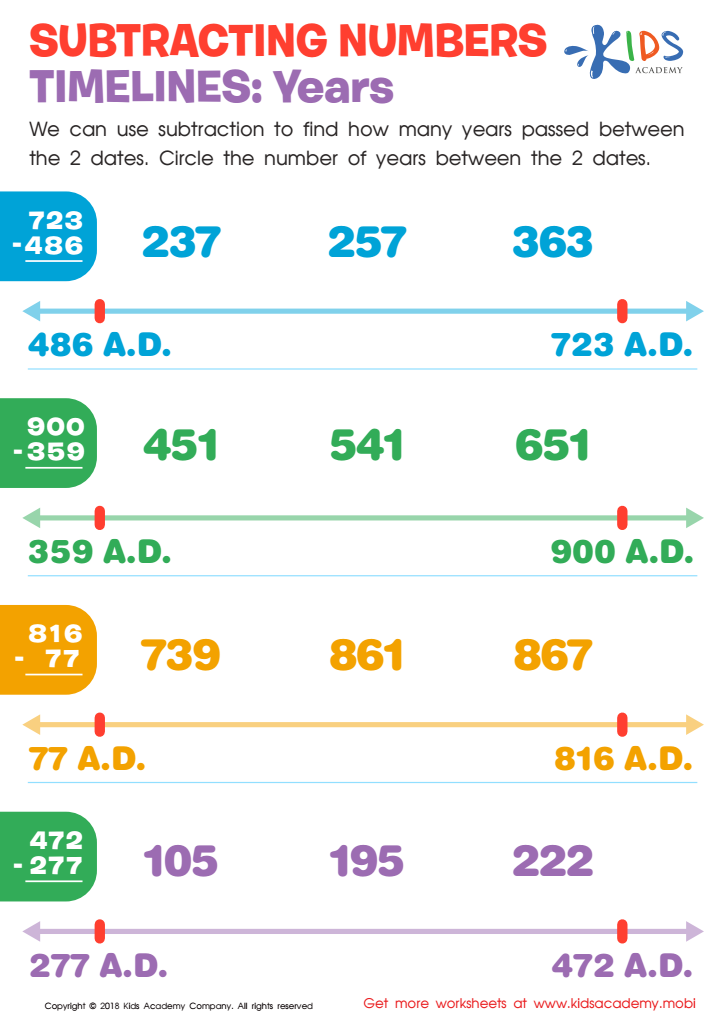
Subtracting Numbers Timelines: Years Worksheet
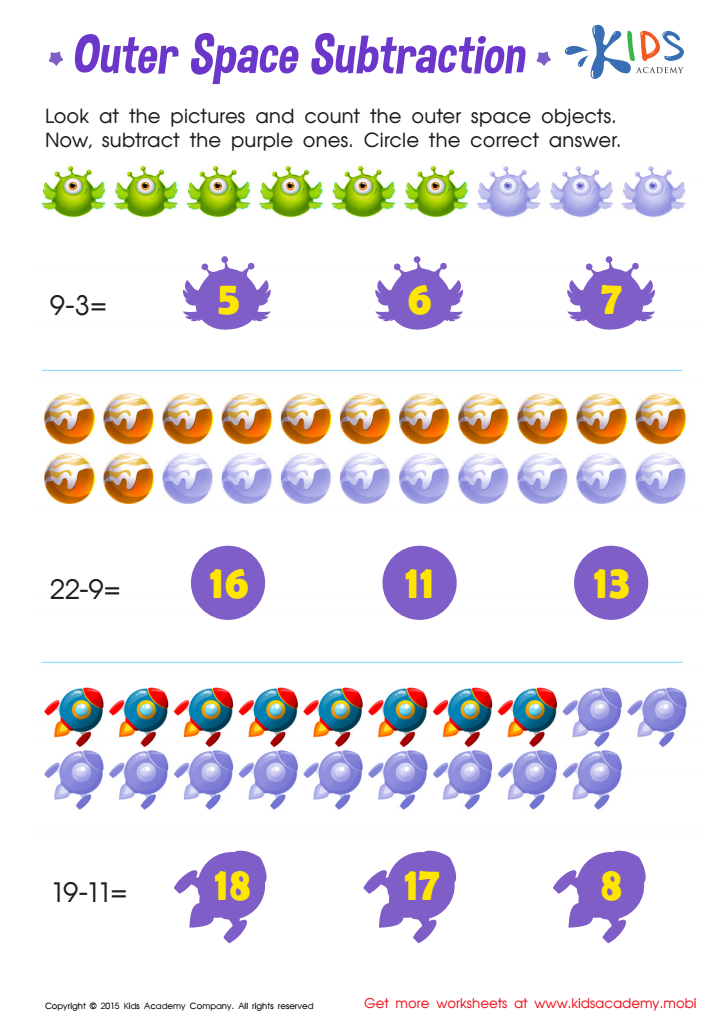
Outer Space Substraction Worksheet
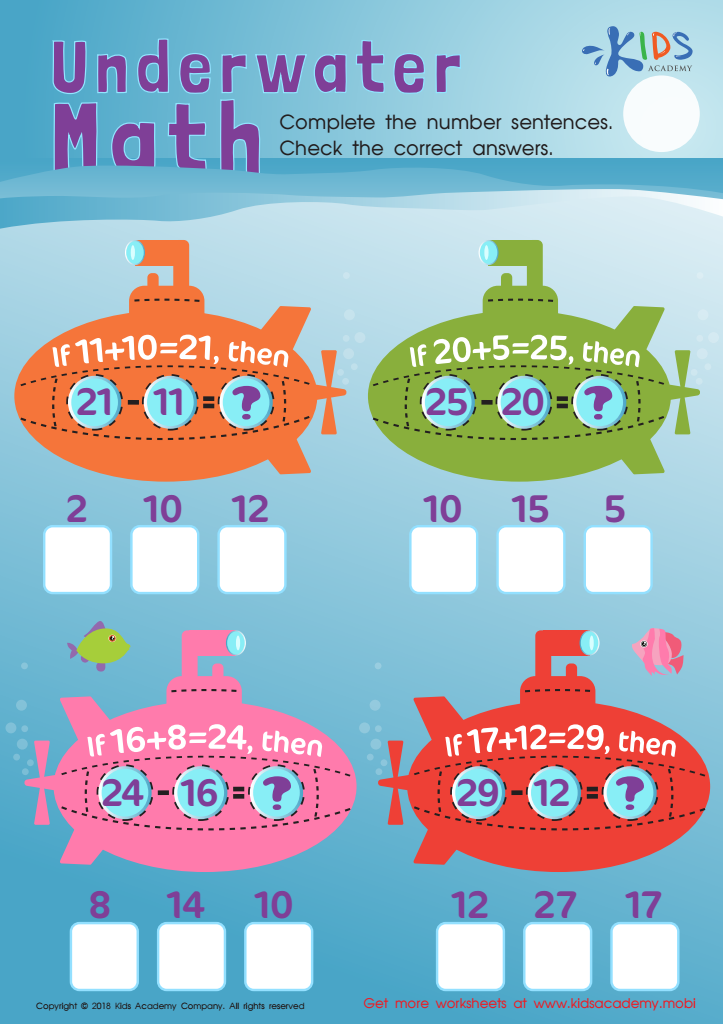
Addition and Subtraction: Underwater Math Worksheet
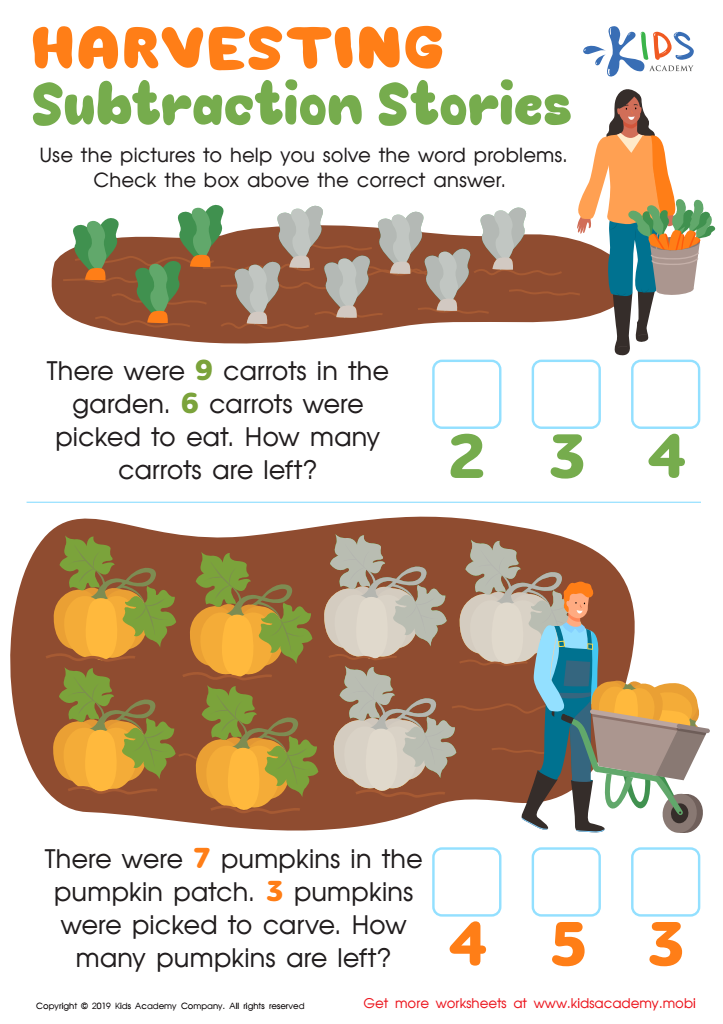
Harvesting Subtraction Stories Worksheet
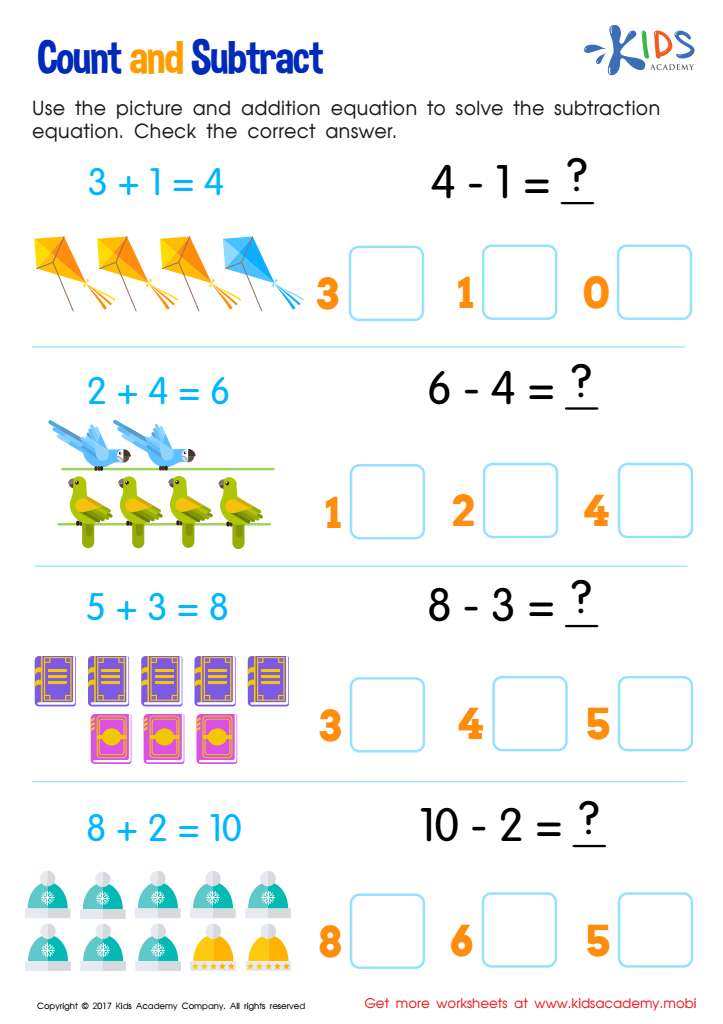
Count and Subtract Worksheet
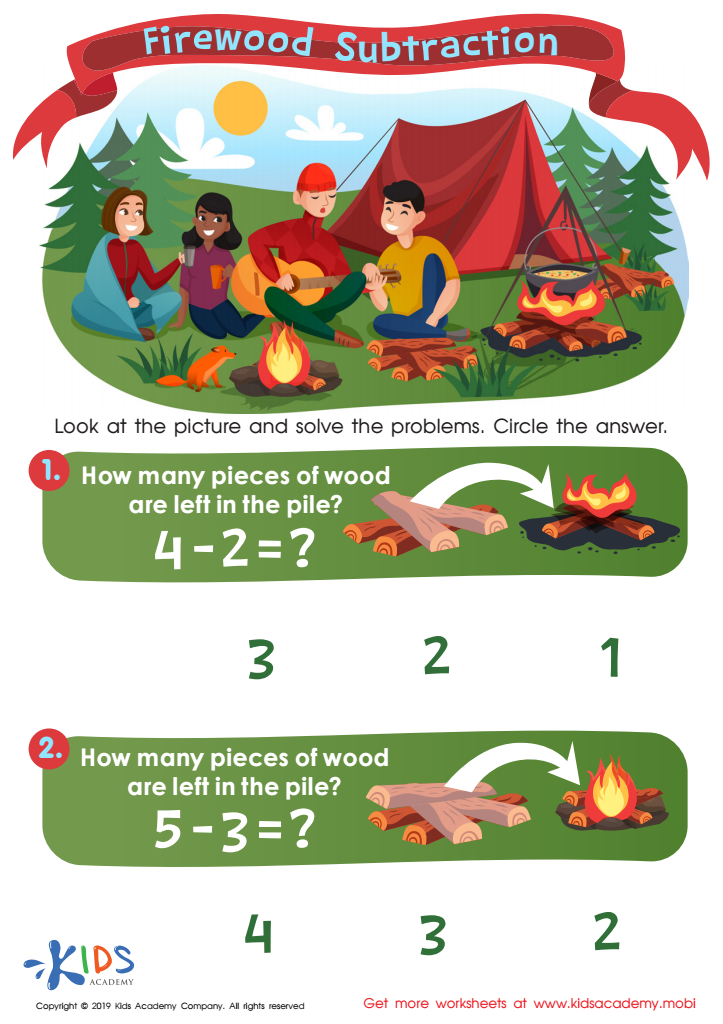
Firewood Subtraction Worksheet
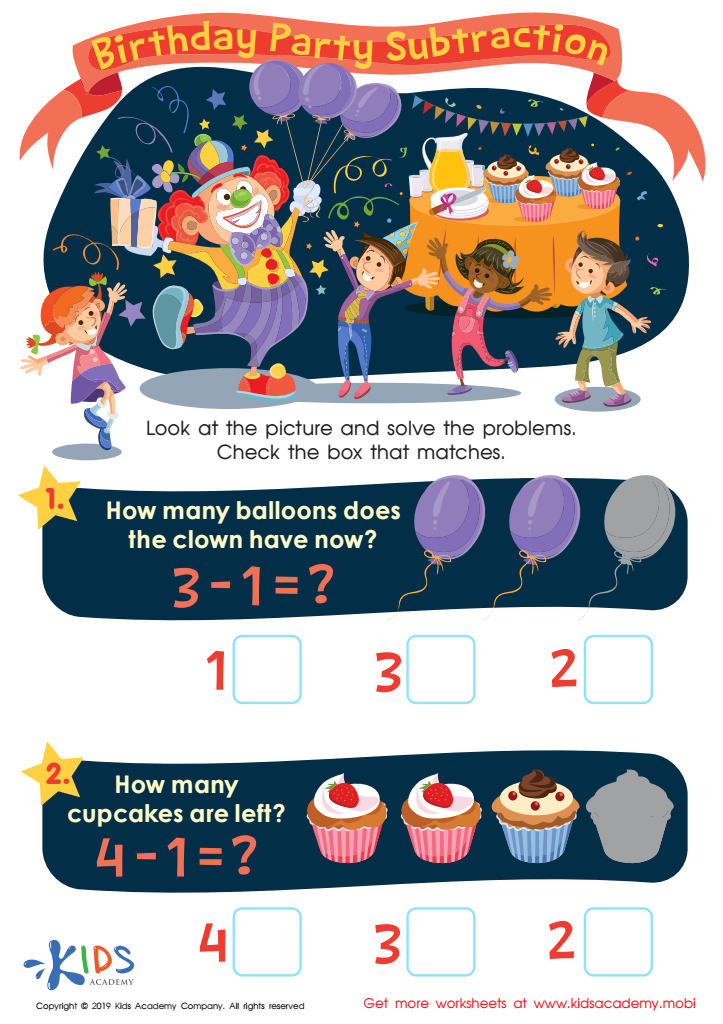
Birthday Party Subtraction Worksheet
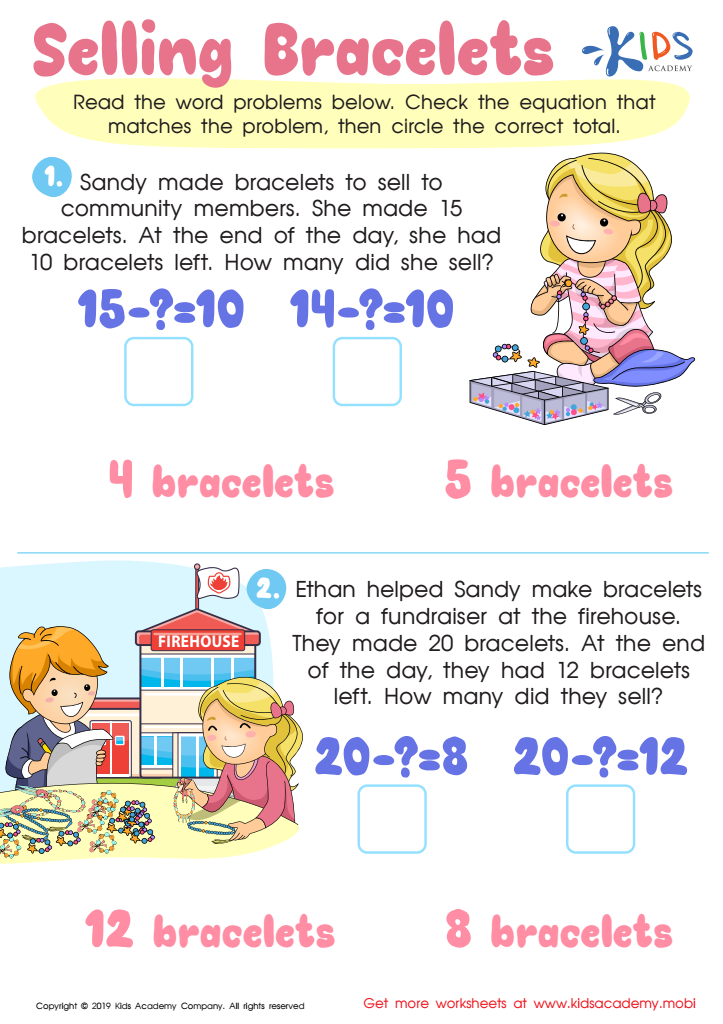
Selling the Bracelets Worksheet
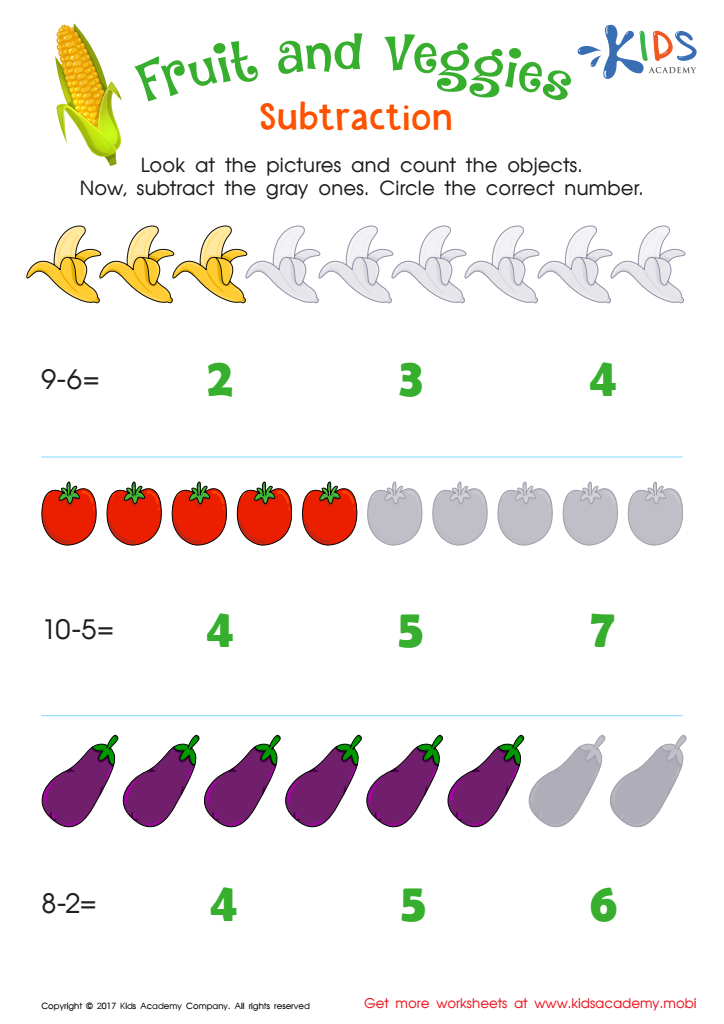
Fruit and Veggies Subtraction Worksheet
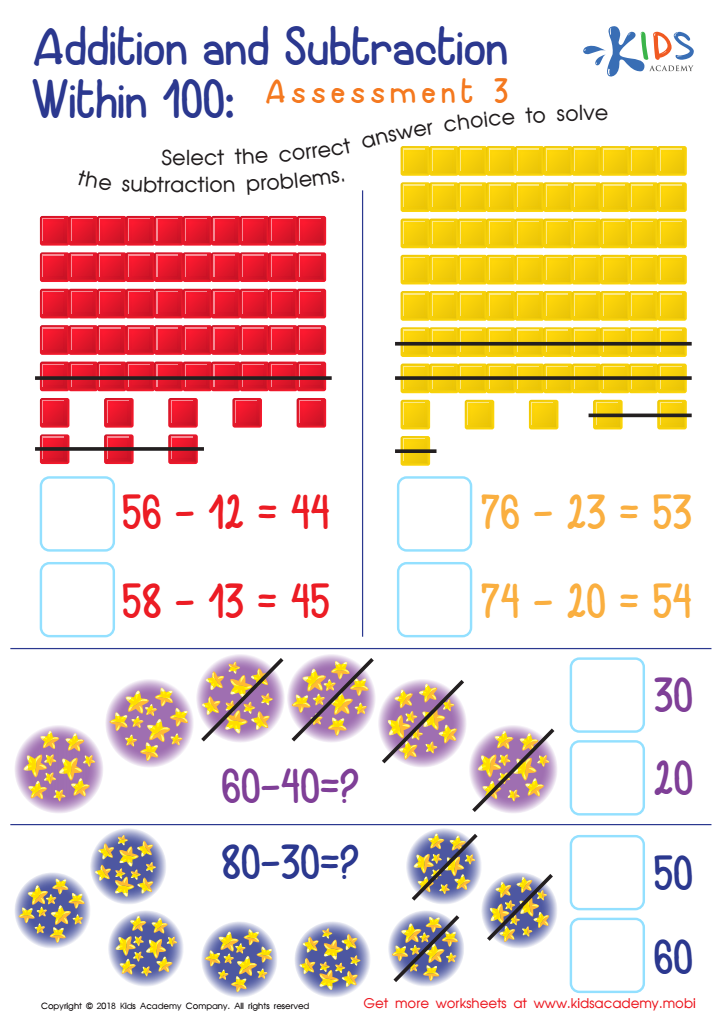
Addition and Subtraction Within 1: Assessment 3 Worksheet
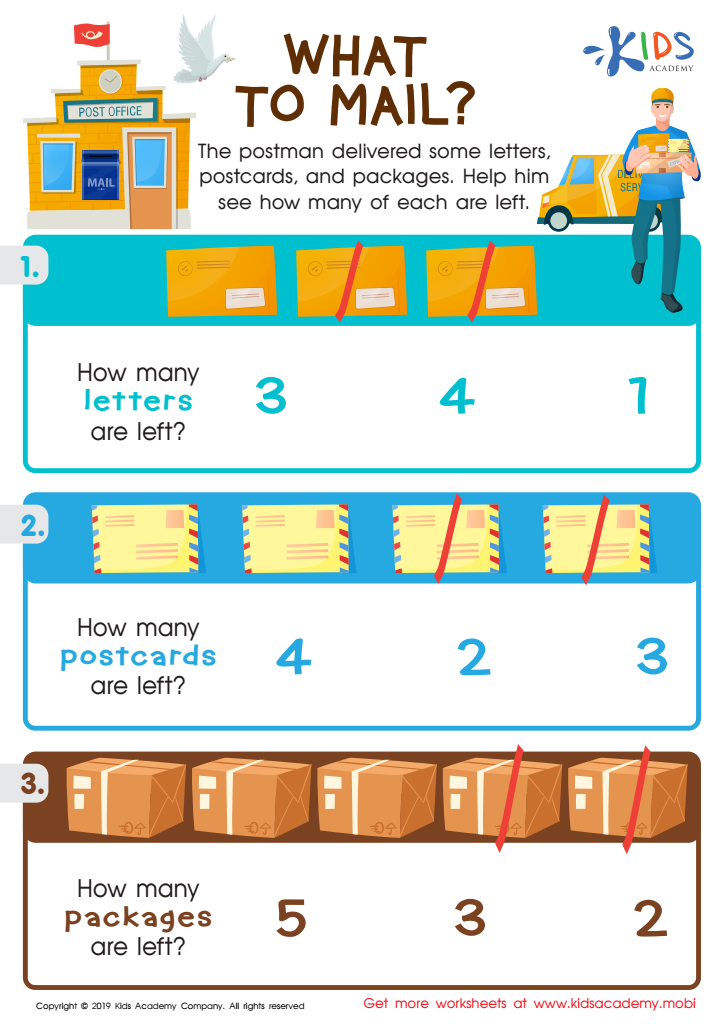
What to Mail? Worksheet








Ensuring that children ages 3-9 acquire solid subtraction skills is crucial because it lays the foundation for their future mathematical understanding and overall academic success. Easy subtraction introduces young learners to basic arithmetic, nurturing their ability to think critically and solve problems. This foundational skill is integral not just for more advanced math concepts like multiplication and division, but also for practical everyday tasks, such as sharing items, understanding time, and managing money.
When parents and teachers emphasize easy subtraction, they help children develop numerical fluency and confidence. This early competence reduces math anxiety, which can be a significant barrier to learning as children progress to higher grades. Engaging children in subtraction through games, visual aids, and hands-on activities makes learning enjoyable, sparking their interest and enhancing retention.
Subtraction also cultivates key cognitive skills—such as counting backward, recognizing patterns, and logical reasoning. By practicing subtraction regularly, children improve their focus, memory, and attention to detail. Moreover, early experiences with subtraction foster positive learning habits and a growth mindset, equipping children with the perseverance to tackle increasingly complex challenges.
Thus, prioritizing easy subtraction for young learners isn’t just about math; it’s about building a strong academic foundation, fostering a love for learning, and ensuring long-term educational and personal development.