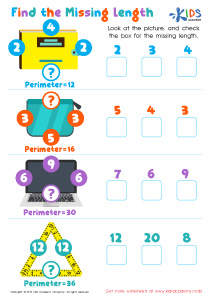
Problem-Solving Skills Easy Subtraction Worksheets for Ages 3-9
10 filtered results
-
From - To
Discover an exciting collection of easy subtraction worksheets designed to enhance problem-solving skills in children aged 3-9! Our carefully crafted activities make learning subtraction fun and engaging, tailored to suit young minds at varying stages of development. Fostering both critical thinking and arithmetic proficiency, these free, printable worksheets are perfect for parents and teachers aiming to create a strong mathematical foundation. Each worksheet combines colorful visuals and playful themes to capture children's interest, promoting a love for learning early on. Equip your child with the tools they need to succeed, while making math both accessible and enjoyable. Start building their confidence today!
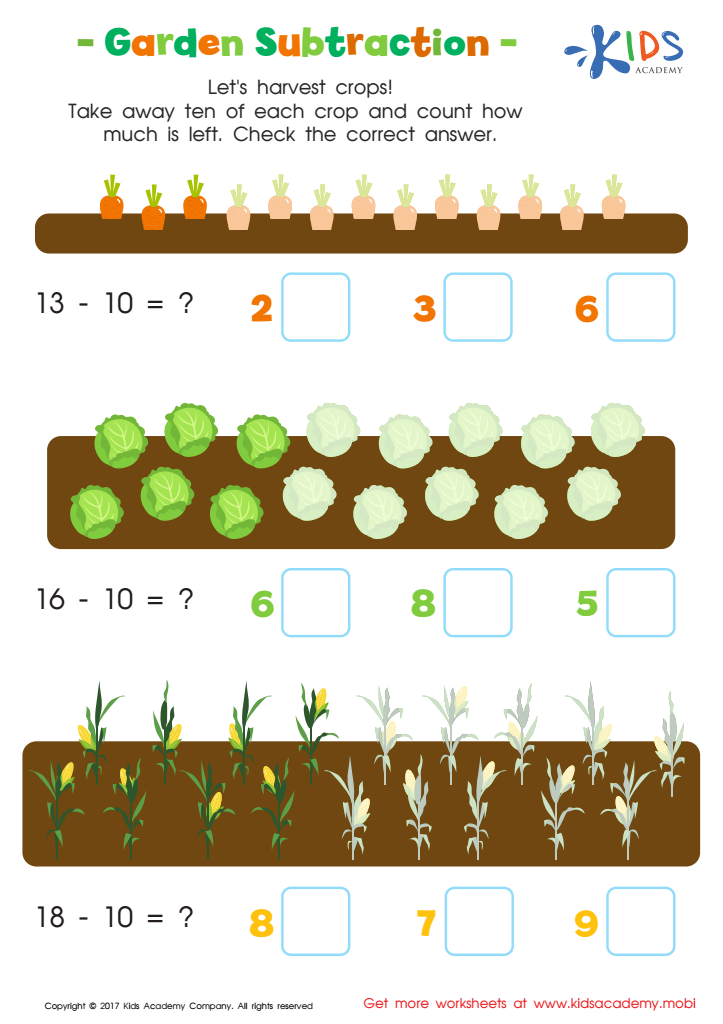
Garden Subtraction Worksheet
 Assign to My Students
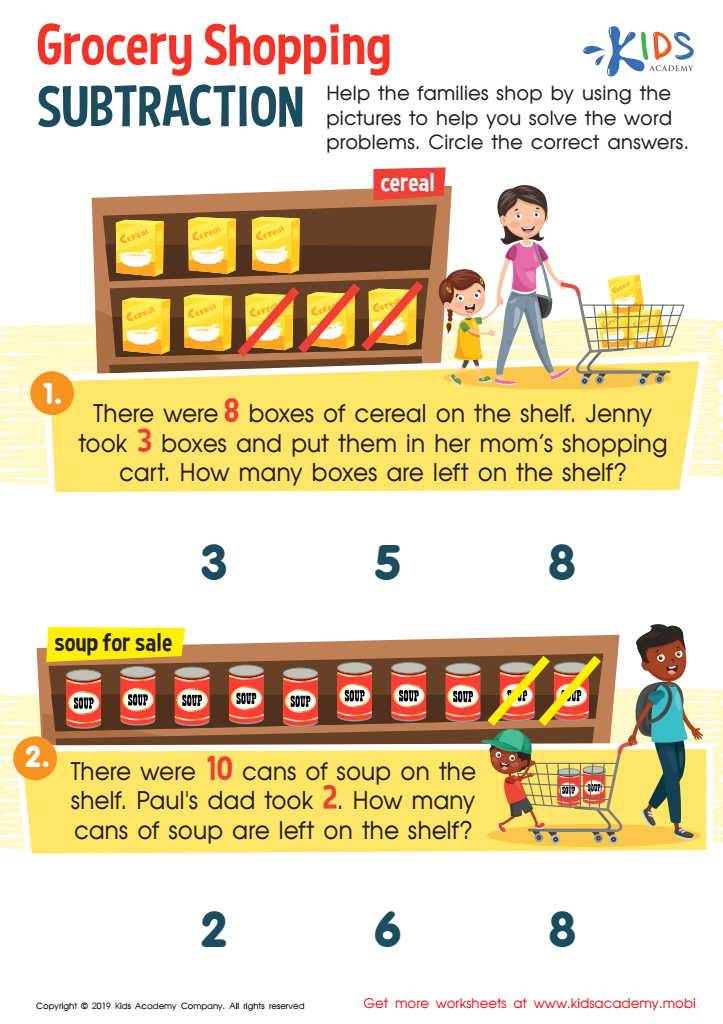
Grocery Shopping Subtraction Worksheet
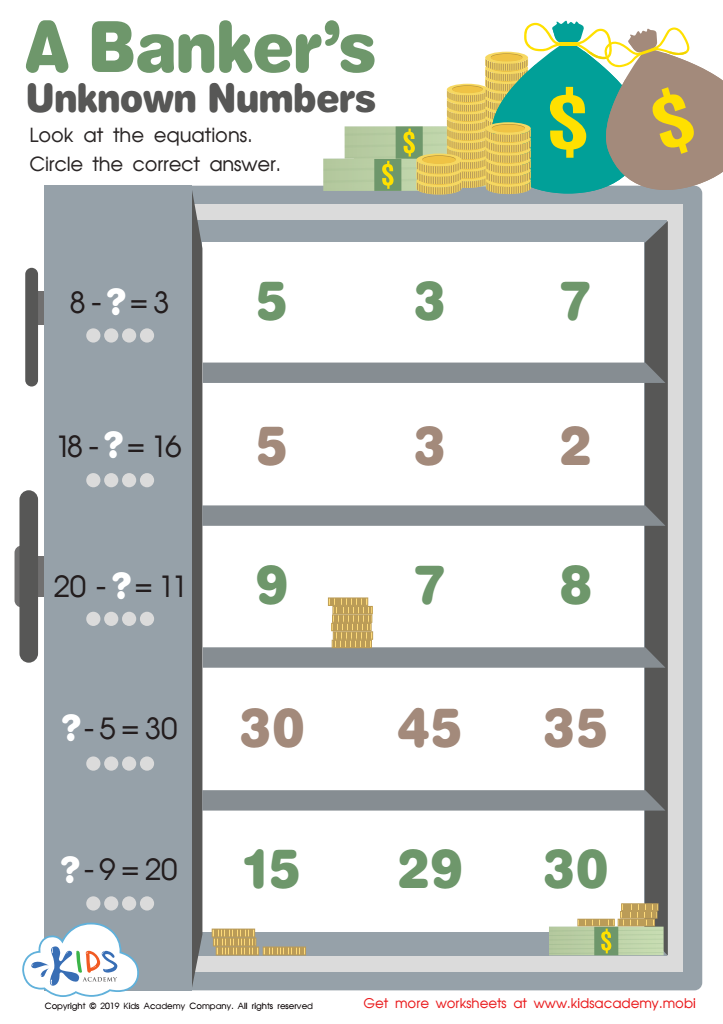
A Banker's Unknown Numbers Worksheet
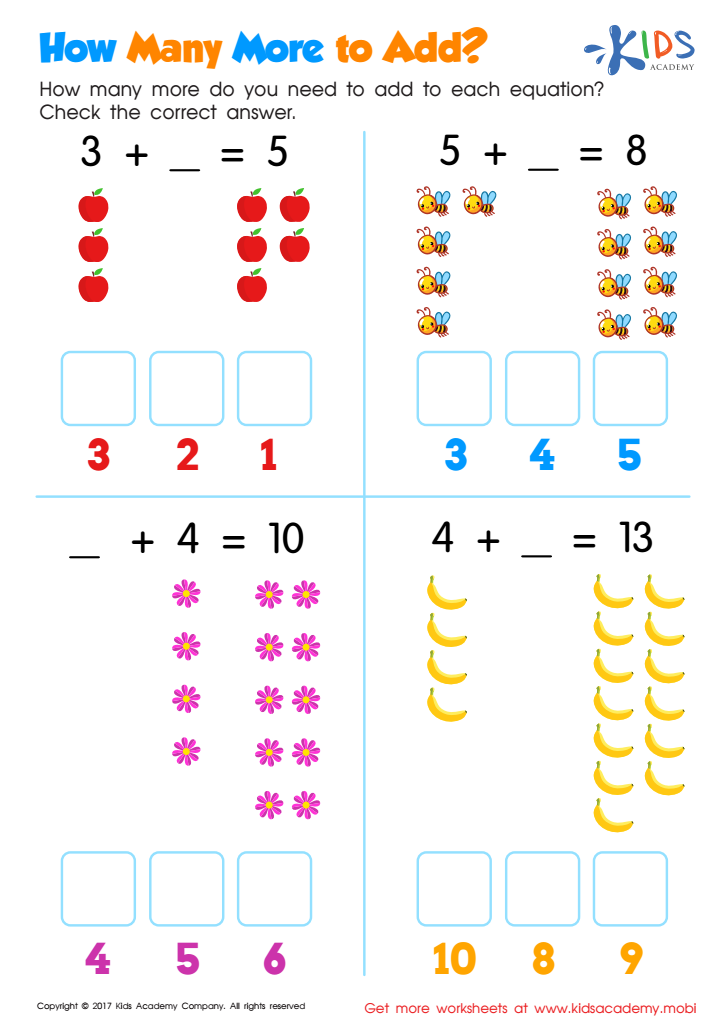
How Many More to Add Worksheet
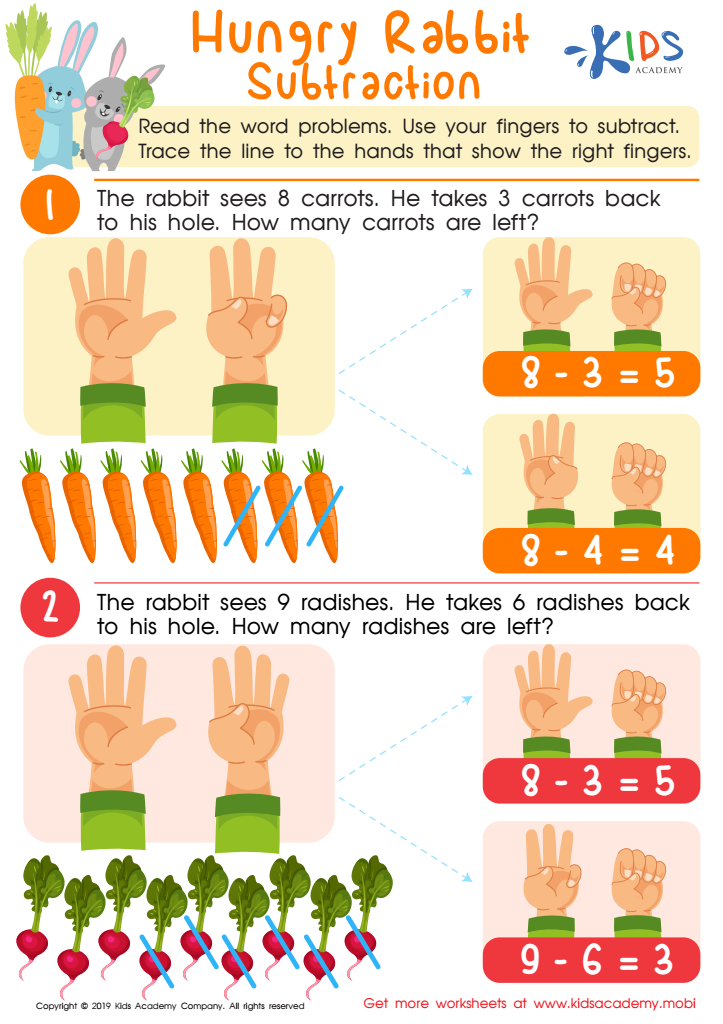
Hungry Rabbit Subtraction Worksheet
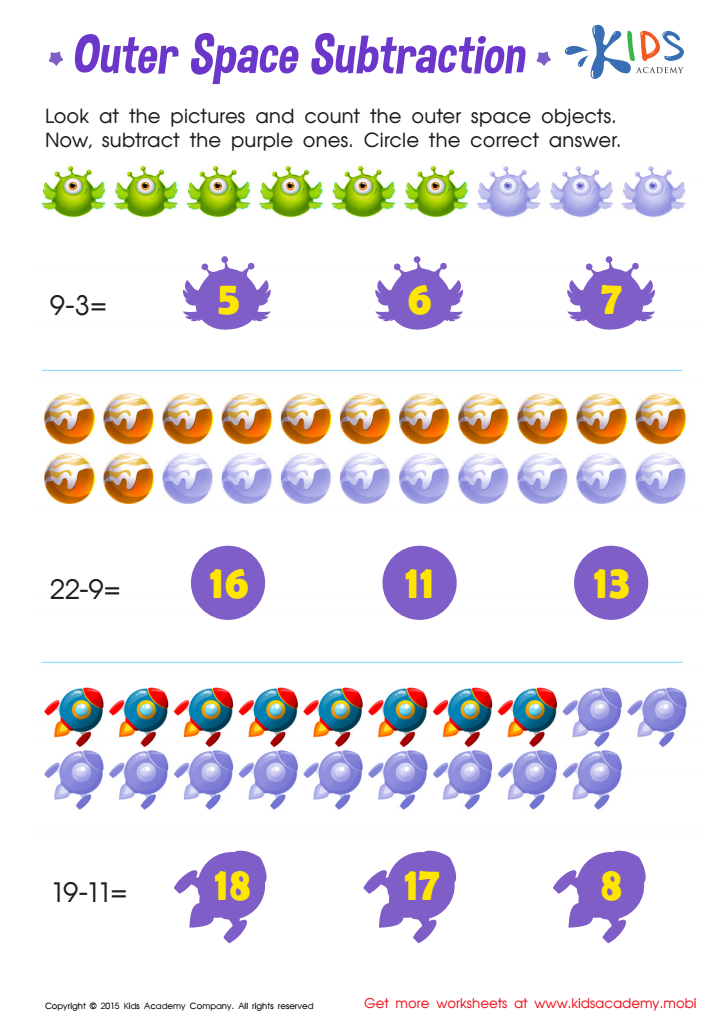
Outer Space Substraction Worksheet
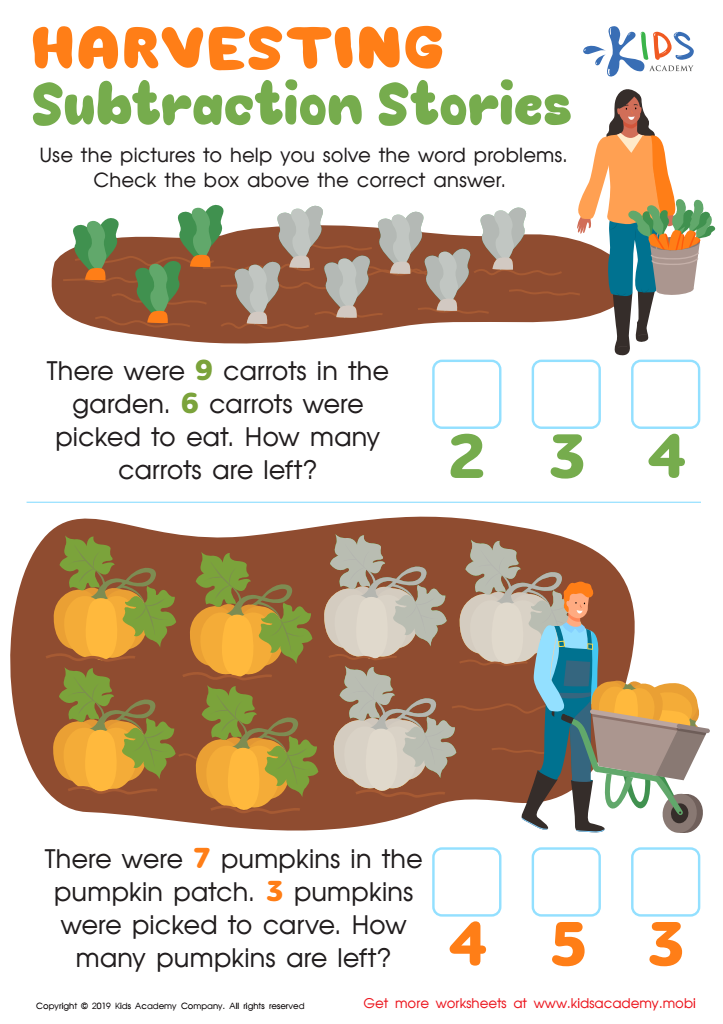
Harvesting Subtraction Stories Worksheet
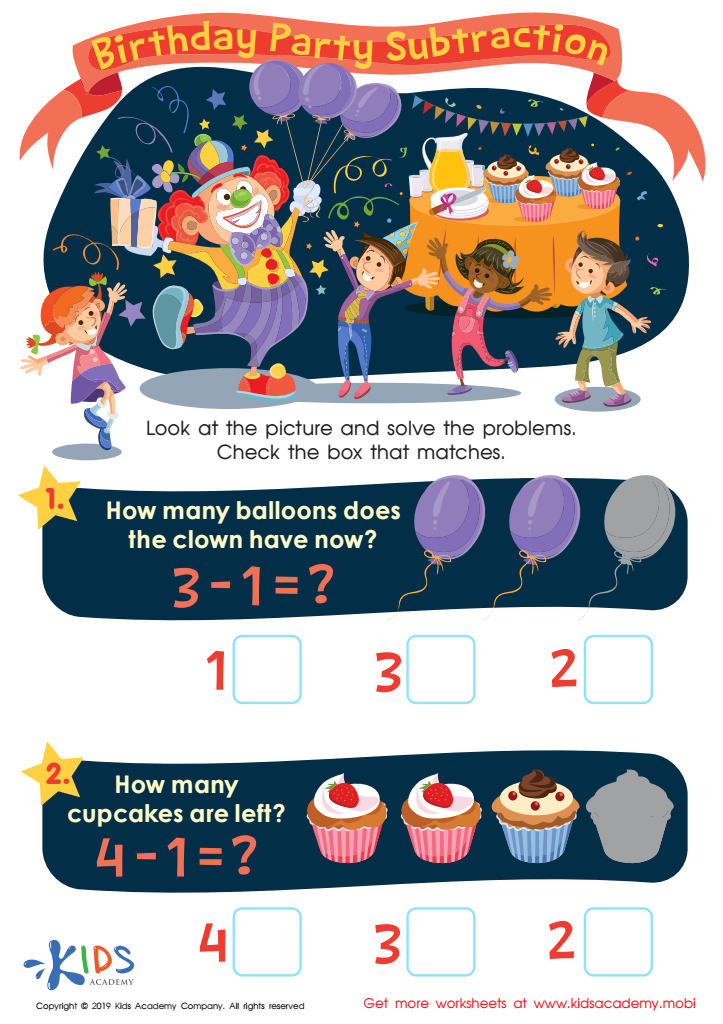
Birthday Party Subtraction Worksheet
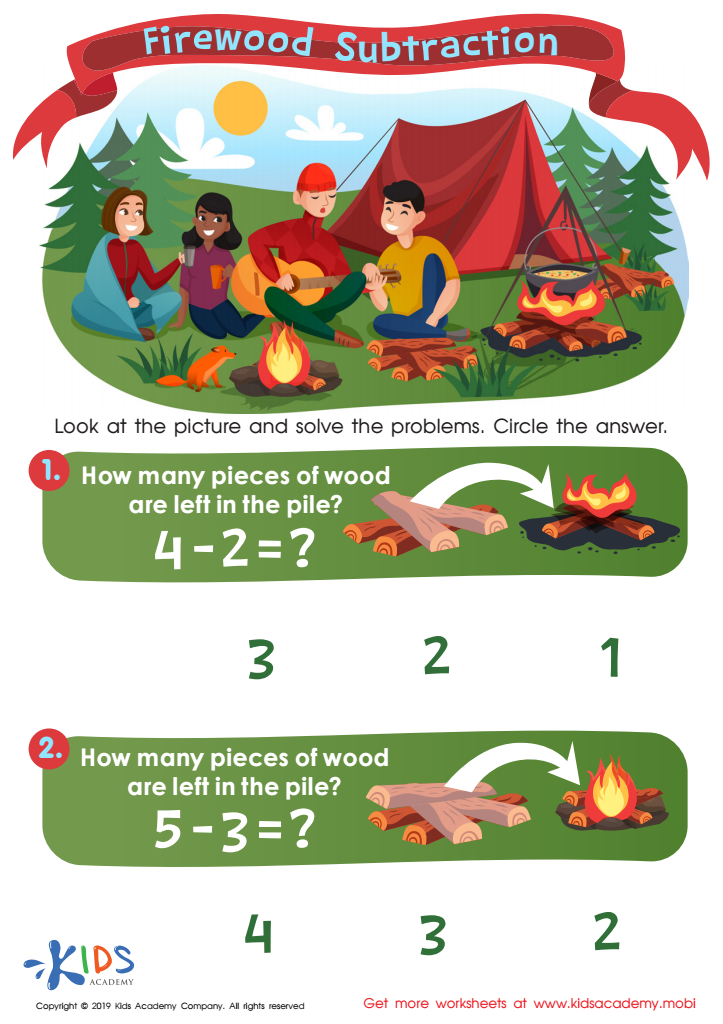
Firewood Subtraction Worksheet
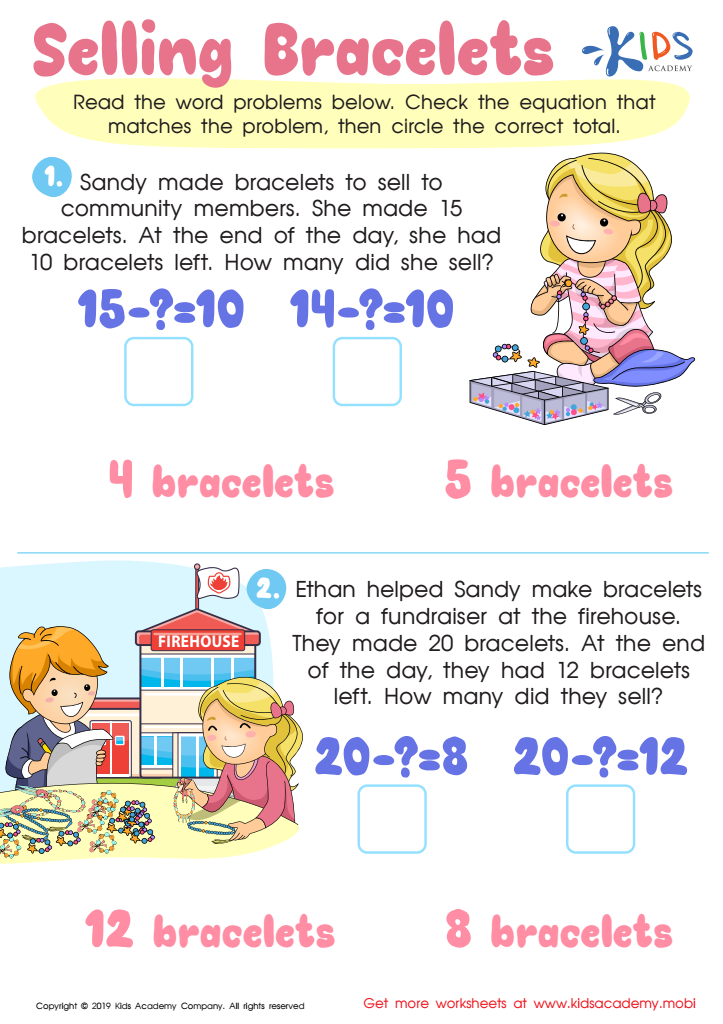
Selling the Bracelets Worksheet








Caring about problem-solving skills and easy subtraction for children ages 3-9 is crucial due to the formative nature of these years for cognitive development. Developing these skills early on establishes a foundation for more advanced mathematical concepts and critical thinking abilities that children will build upon throughout their education and daily lives.
Problem-solving is integral to a child’s ability to approach complex challenges with confidence and creativity. Through problem-solving activities, children learn to think critically, make decisions, and understand cause-and-effect relationships. It cultivates patience and perseverance as they work through various obstacles, thereby fostering a growth mindset.
Subtraction, one of the basic operations of arithmetic, serves as an essential skill in a child’s mathematical toolkit. Mastering easy subtraction helps children grasp more complicated math concepts in the future, such as division and algebra. It also has practical, everyday applications, such as in understanding time, money, and measurements.
Engaging children in problem-solving activities that involve subtraction can also make learning more interactive and enjoyable. Utilizing hands-on tools like counters or visual aids can transform abstract ideas into tangible experiences. Parents and teachers who prioritize these skills ensure children develop a solid mathematical foundation, confidence, and a lifelong love for learning.