
Basic counting skills Easy Worksheets for Ages 4-5
3 filtered results
Difficulty Level
Grade
Age
-
From - To
Subject
Activity
Standards
Discover our collection of engaging worksheets designed to enhance basic counting skills for children ages 4-5. These easy-to-use printable activities focus on fundamental counting concepts, helping young learners develop their numerical understanding in a fun and interactive way. Featuring colorful illustrations and simple exercises, our worksheets encourage kids to practice counting, recognize numbers, and engage in early math activities. Ideal for parents and teachers, these resources promote a solid foundation in math while keeping little ones entertained. Explore our basic counting skills worksheets today and watch your child build confidence and enjoyment in learning!
Favorites
With answer key
Interactive
 Assign to My Students
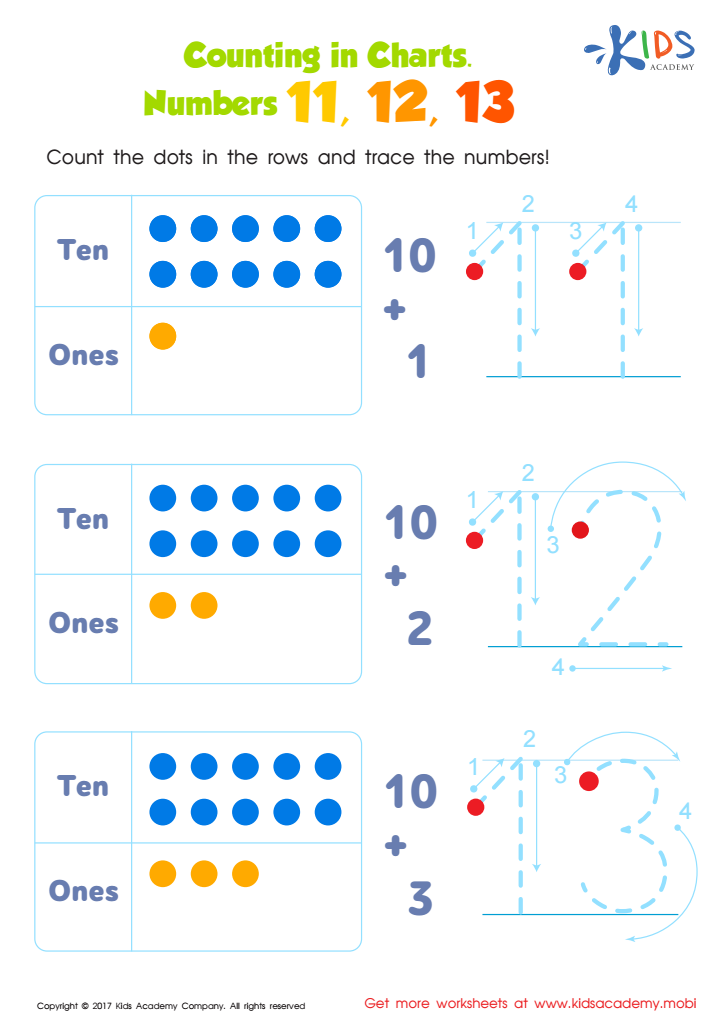
Number Tracing Worksheet For Kindergarten
Help your child develop addition skills and improve number recognition with this easy-to-use worksheet. Have them count the dots and add to solve each problem. Then, trace over the number to complete each row! It's a fun and simple way for kindergarteners to practice their math skills.
Number Tracing Worksheet For Kindergarten
Worksheet
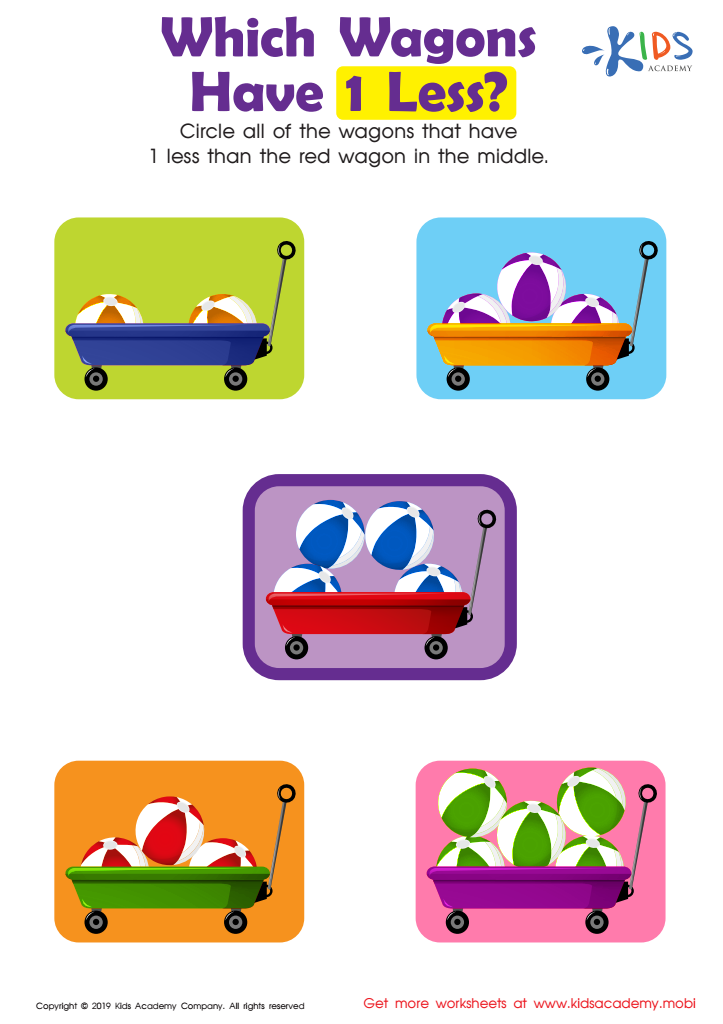
Which Wagons Have 1 Less? Worksheet
Test your kid's counting skills with a simple exercise. Ask them to count the balls in the five wagons shown and to circle the wagons with one less than the red wagon in the middle. This will give their brains a simple task that tests their knowledge of numbers.
Which Wagons Have 1 Less? Worksheet
Worksheet
Join Kids Academy for Free
Who is primarily going to use this learning content?




.jpg)
.jpg)


Basic counting skills are foundational for children's cognitive development and set the stage for more complex math concepts. For children aged 4-5, counting helps them understand quantities, enhance their number sense, and make connections between numbers and the world around them. Parents and teachers should care about these skills as they are not only vital for academic success but also for everyday life.
These early counting experiences cultivate critical thinking and problem-solving abilities. When children engage in counting tasks, they learn to group objects, recognize patterns, and classify items based on numerical attributes. Additionally, counting is often a precursor to understanding addition and subtraction, allowing children to grasp basic arithmetic more easily as they advance in their education.
Moreover, counting lays the groundwork for developing perseverance and attention to detail—skills that are useful far beyond mathematics. Parents and teachers can support these skills through fun, interactive activities like counting toys, playing games, and singing counting songs, making learning engaging and enjoyable.
By prioritizing basic counting skills, caregivers and educators equip young children with essential tools that foster a lifelong appreciation for math and learning, benefiting their overall academic journey.








