Cognitive Development Easy Worksheets for Ages 4-5 - Page 2
25 filtered results
-
From - To
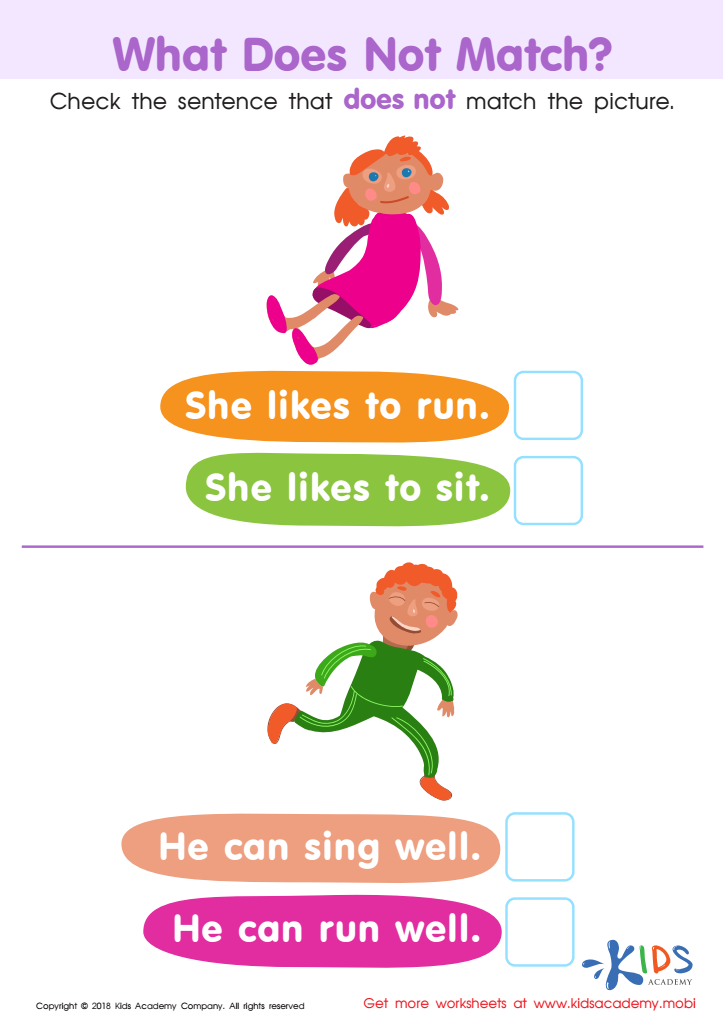
What Does Not Match? Worksheet
 Assign to My Students








Cognitive development in ages 4-5 is vital because it lays the foundation for lifelong learning and overall development. During this stage, children begin to think more logically, solve problems, and understand concepts more deeply. Parents and teachers should care about this aspect of development because it enhances children's ability to process information, communicate effectively, and make decisions.
Supporting cognitive development fosters curiosity and encourages exploration. Simple activities, like playing with building blocks or engaging in storytelling, stimulate a child's imagination and critical thinking skills. These activities help children learn about cause and effect, patterns, and relationships, enriching their understanding of the world.
Additionally, strong cognitive skills are closely linked to later academic success. Children who demonstrate early proficiency in skills like counting, sorting, and recognizing letters will likely find it easier to grasp more complex concepts in school. Furthermore, cognitive development is interrelated with social-emotional growth; as children become better problem solvers, they build confidence and improve their peer relationships.
In summary, nurturing cognitive development is crucial for parents and teachers as it supports children's learning, confidence, and social interactions, ultimately shaping their future success.








