
Shape Recognition Easy Worksheets for Ages 4-5
9 filtered results
Difficulty Level
Grade
Age
-
From - To
Subject
Activity
Standards
Introducing "Shape Recognition Easy Worksheets for Ages 4-5" — a fun and interactive way for young learners to master shapes! These easy worksheets from Kids Academy are designed to engage children with colorful activities that enhance their understanding of different shapes. Ideal for preschoolers, these exercises help develop cognitive skills, fine motor abilities, and hand-eye coordination. Each worksheet offers clear instructions with vibrant visuals to make learning shapes enjoyable. Incorporating these resources into your child’s routine will build a strong foundation for future mathematical and spatial reasoning skills. Unlock the joy of learning today with our printable shape recognition worksheets!
Favorites
With answer key
Interactive
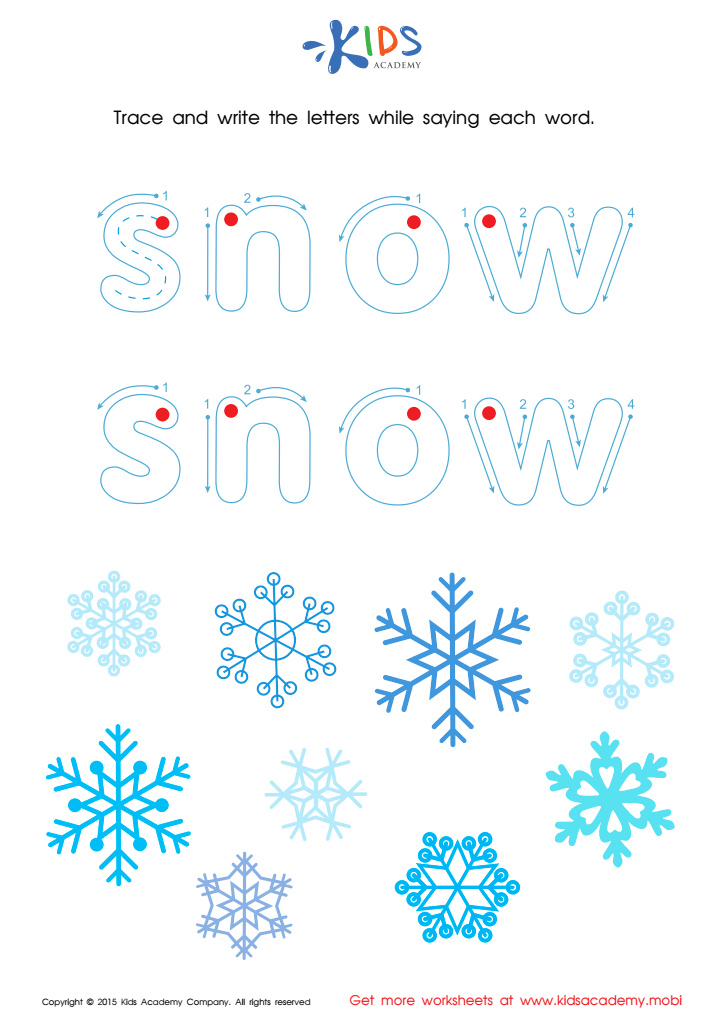
Snowflake Tracing Winter Words Worksheet
Get creative and have fun with our Snowflake handwriting worksheet! Trace the sight word, starting at the big red dots, and follow the arrows. It's a great way to help your little learner develop fine motor skills, work on spelling, and get ready for Christmas! More handwriting printables available on Kids Academy.
Snowflake Tracing Winter Words Worksheet
Worksheet
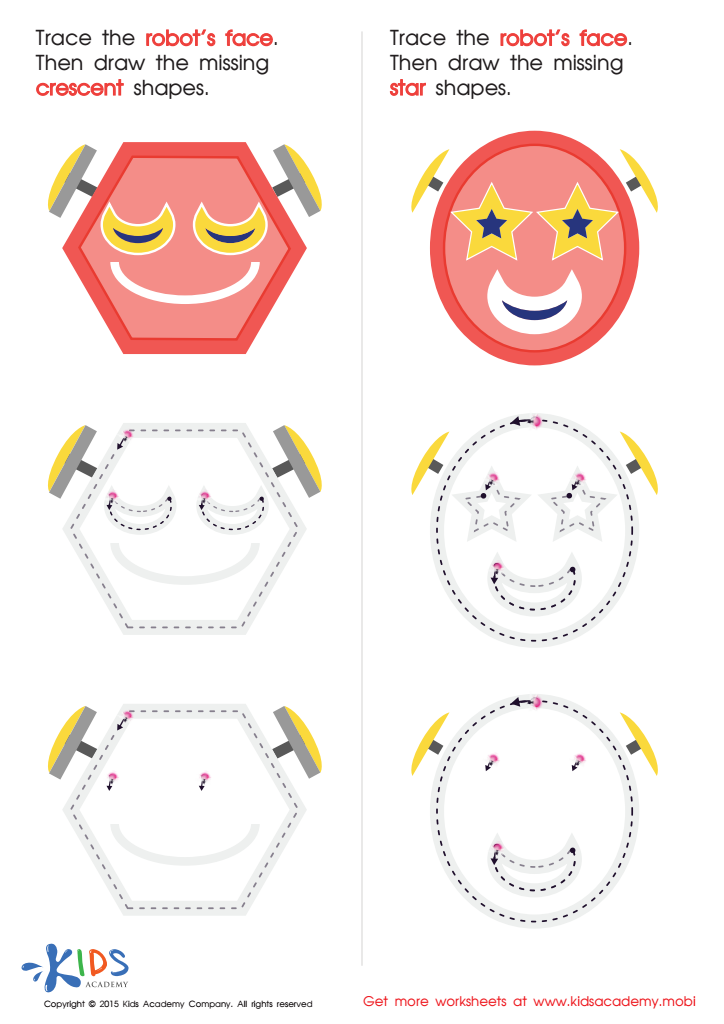
Composing a Robot's Face of Crescents And Stars Worksheet
Get free math geometry worksheets at Kids Academy! Help your child learn by practicing together - trace the robot's face and draw the missing crescent and star shapes. Be sure to remember their names! Have fun and learn with shapes for kids.
Composing a Robot's Face of Crescents And Stars Worksheet
Worksheet
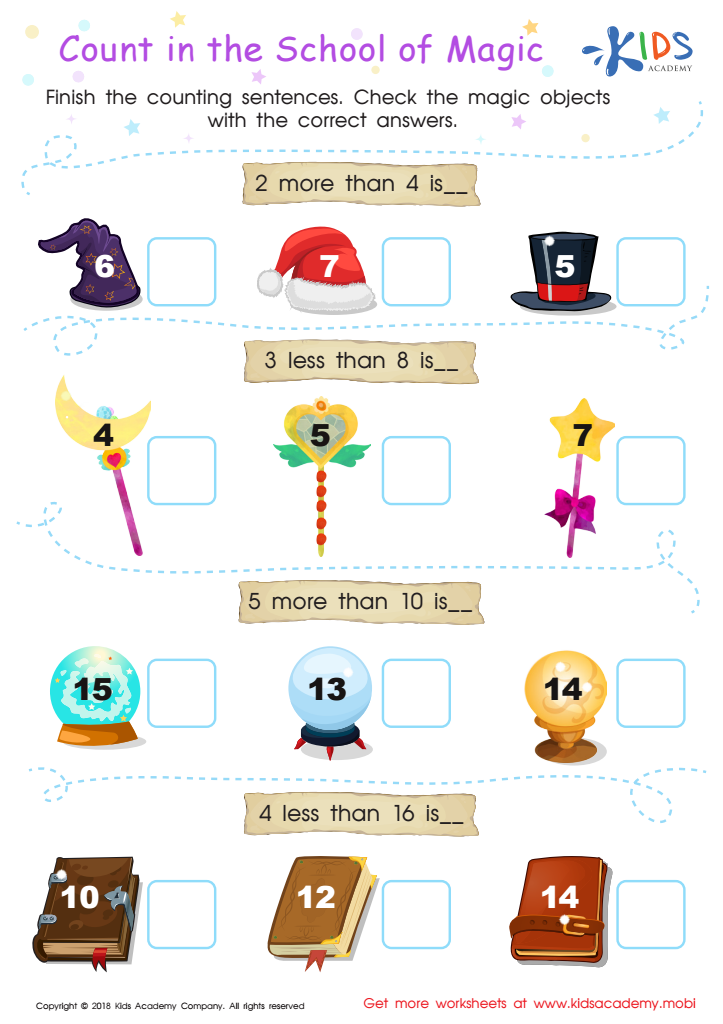
Count in the School of Magic Worksheet
Your math learners can explore the School of Magic with this worksheet. They'll read equations with addition and subtraction numbers under 20, count back and forth to find the answer, then complete the counting sentences. Fun pictures and easy accuracy make it an enjoyable and successful learning experience.
Count in the School of Magic Worksheet
Worksheet
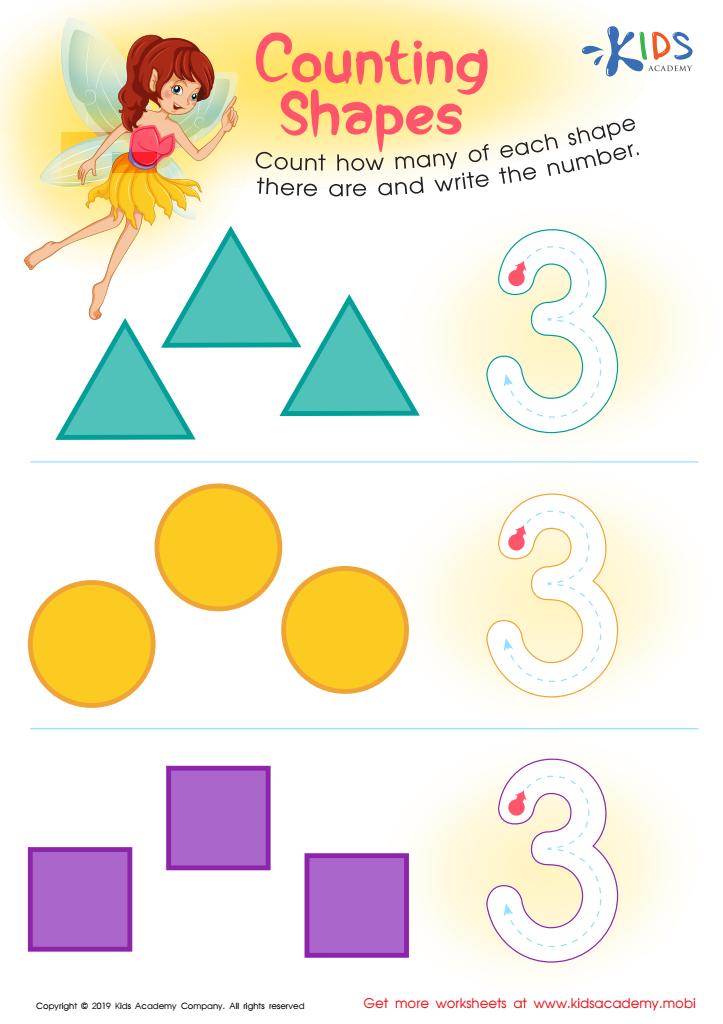
Counting Shapes Worksheet
Counting and number sense are essential skills. Picture representation helps kids understand and remember concepts. This free worksheet is perfect for introducing numbers and counting in groups of three. It also helps kids to practice writing numbers with traceable lines and guiding dots. It's an easy and fun way to give little mathematicians a successful start.
Counting Shapes Worksheet
Worksheet
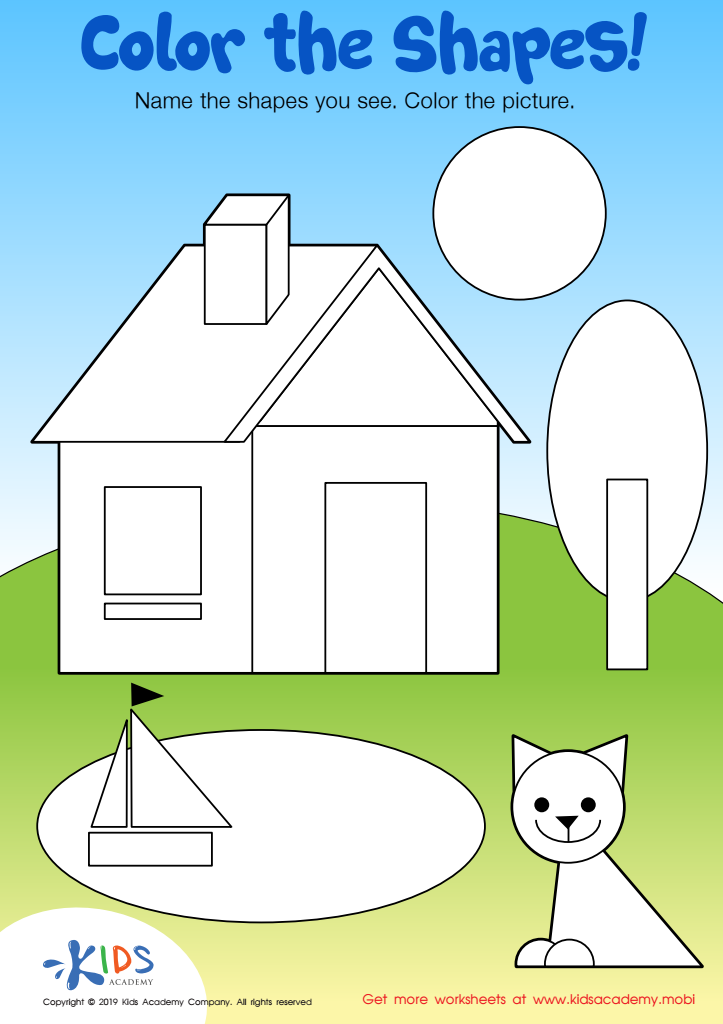
Color the Shapes Worksheet
Help your student master shape identification with this fun worksheet. Ask them to name the shapes in the picture, then color it! Ask questions like "How many squares do you see?" and "How many triangles?" to extend the learning. Identify squares, circles, triangles and rectangles with this enjoyable coloring page.
Download (PDF)
 Assign to My Students
Assign to My Students
Color the Shapes Worksheet
Worksheet
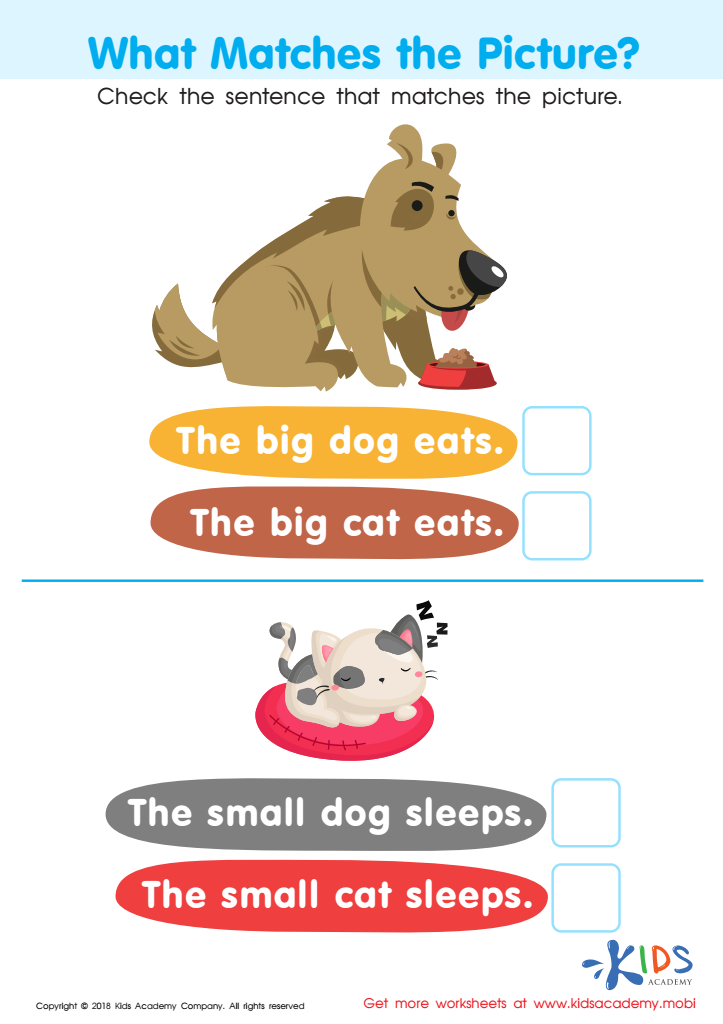
What Matches the Picture? Worksheet
Emerging readers can use pictures of cute pets and phrase repetition to match sentences to pics, building skills while having fun! It's a great way to bolster vocab and confidence, motivating them to keep reading.
What Matches the Picture? Worksheet
Worksheet
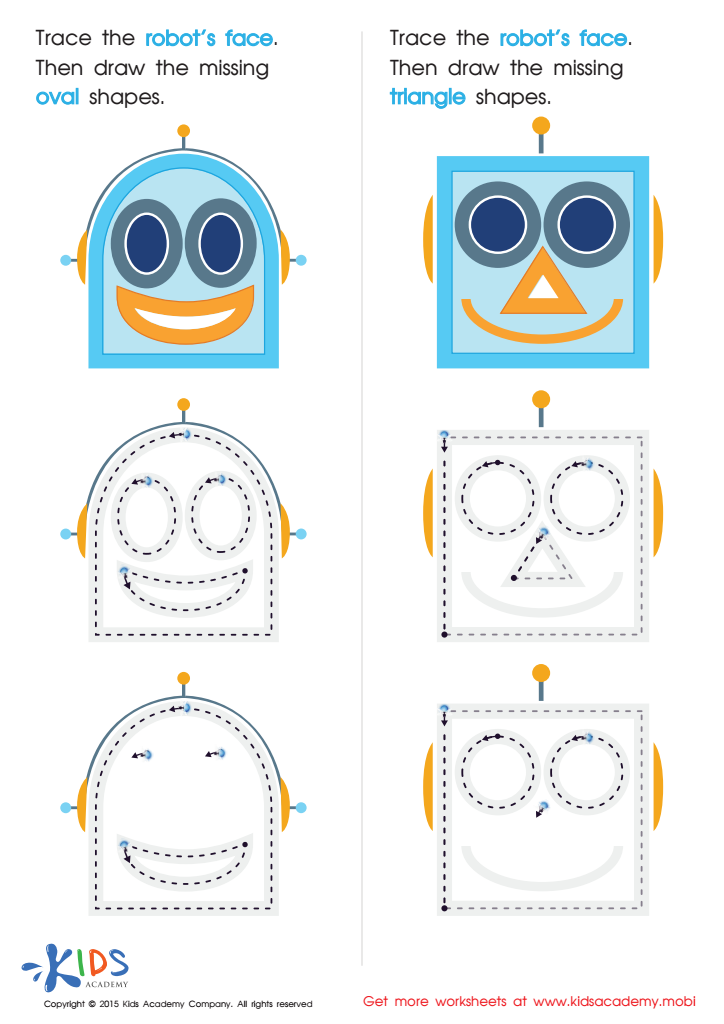
Drawing Ovals And Triangles with Fun Printable
Trace the face and draw missing ovals and triangles. Test your memory and recall shapes' names. Check if you remember how to draw them!
Drawing Ovals And Triangles with Fun Printable
Worksheet
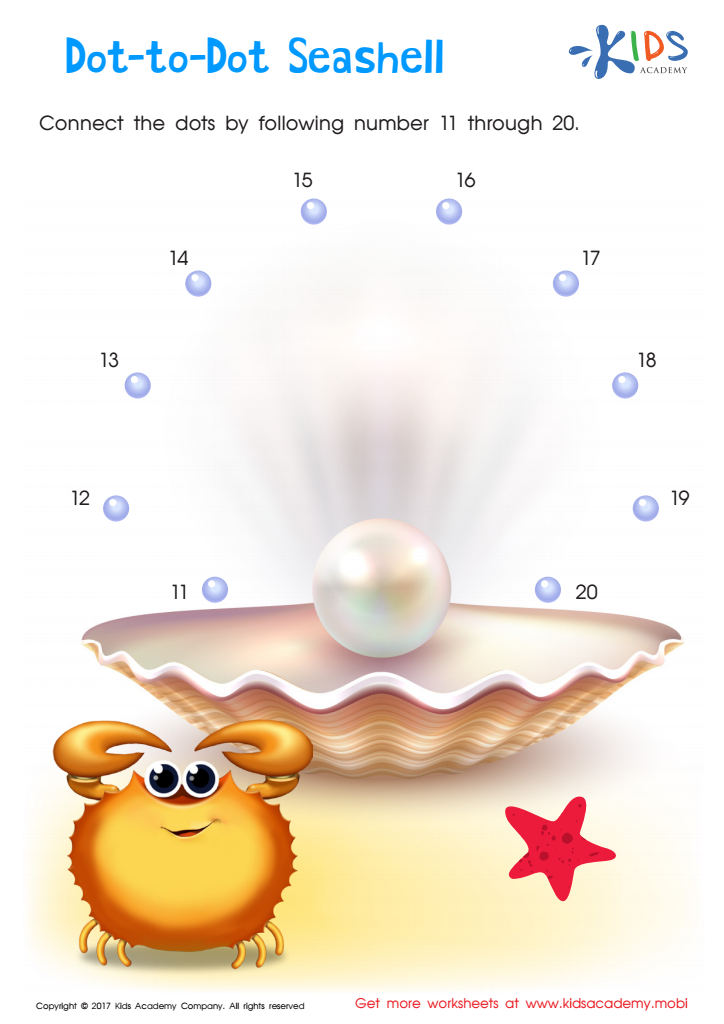
Ordering 11–20: Dot–to–dot Seashell Printable
Connecting the dots 11 to 20 is rewarding for kids, helping them practice counting, identifying numbers and gain cognitive and logical skills. Our worksheet features a vibrant image of a seashell, crab and sea star, and your child will feel rewarded creating it while honing their counting skills!
Ordering 11–20: Dot–to–dot Seashell Printable
Worksheet
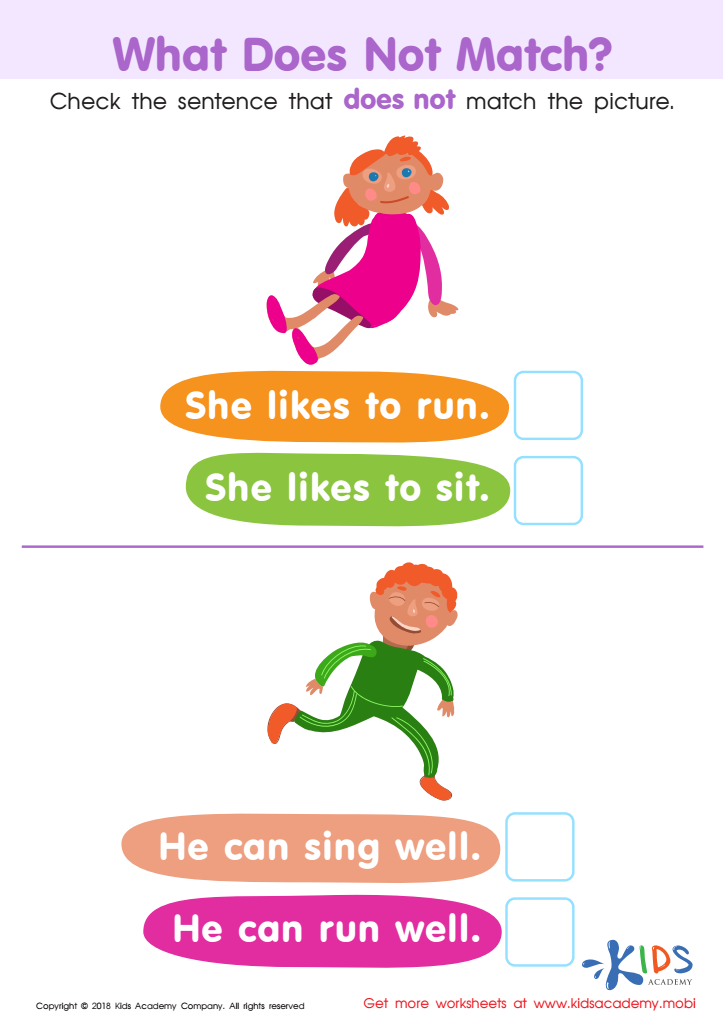
What Does Not Match? Worksheet
Emerging readers need to practice using visual cues and repetitive text. This colorful PDF provides them with an opportunity to look at pictures, use discrimination and discern which phrase does not match. It also enables them to gain familiarity with high-frequency words to aid decoding longer sentences.
What Does Not Match? Worksheet
Worksheet
Join Kids Academy for Free
Who is primarily going to use this learning content?







Shape recognition is a fundamental skill that plays a crucial role in the early development of children, particularly those aged 4-5. At this stage, children are like sponges, soaking up information that helps them understand the world around them. Recognizing and differentiating shapes helps in honing a child's visual perception and cognitive development, enabling them to identify patterns, categorize objects, and interpret visual information effectively.
This skill serves as the bedrock for more complex mathematical concepts. When children recognize shapes, they also learn about size, spatial relations, and dimensions. These are foundational skills that contribute directly to their future ability to understand geometry, measurement, and even more advanced math topics.
Moreover, knowing different shapes can significantly improve their literacy skills. The ability to discern shapes allows children to recognize letters and numbers, as many of these characters are composed of basic shapes and lines. When a child learns to identify shapes, they are also enhancing their fine motor skills by holding, drawing, or manipulating objects into various formations.
In a social and emotional context, shape recognition can boost a child's confidence and enjoyment in learning. It enables interactive play and activities that promote bonding with parents or teachers, making learning a fun and engaging experience. Thus, incorporating shape recognition into early childhood education is vital for a well-rounded and robust developmental foundation.








