
Understanding quantity Easy Worksheets for Ages 4-5
3 filtered results
Difficulty Level
Grade
Age
-
From - To
Subject
Activity
Standards
Introduce your young learners to the fundamental concept of quantity with our meticulously designed "Understanding Quantity Easy Worksheets for Ages 4-5." These thoughtfully crafted, age-appropriate worksheets help your preschoolers effortlessly grasp counting, comparing, and identifying different quantities. Each activity integrates fun visuals and engaging tasks, making learning both enjoyable and effective. Ideal for early math skills development, our worksheets help nurture your child’s number sense, setting a robust foundation for future mathematical success. Tailor-made for teachers and parents, these printable resources ensure every child finds joy in learning and grows confident in their counting abilities.
Favorites
With answer key
Interactive
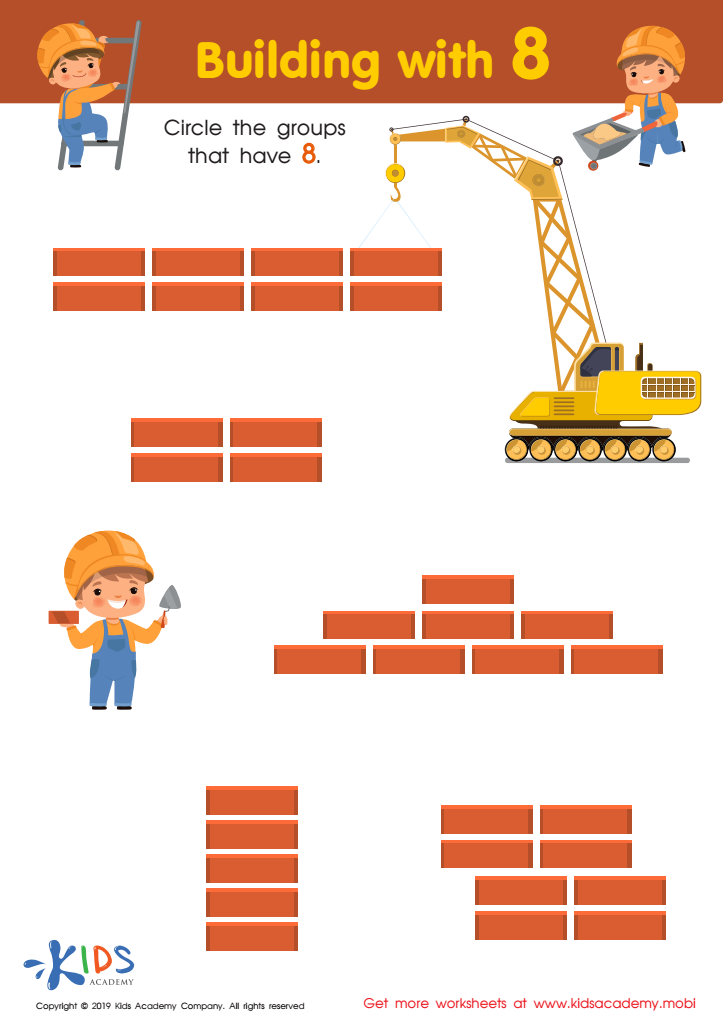
Building with 8 Worksheet
Your child can learn more with this simple exercise! Get them counting and help them circle the groups of 8 bricks. It's a great addition to their post-school lessons, supporting their counting skills. Plus, it's a fun way to learn!
 Assign to My Students
Building with 8 Worksheet
Worksheet
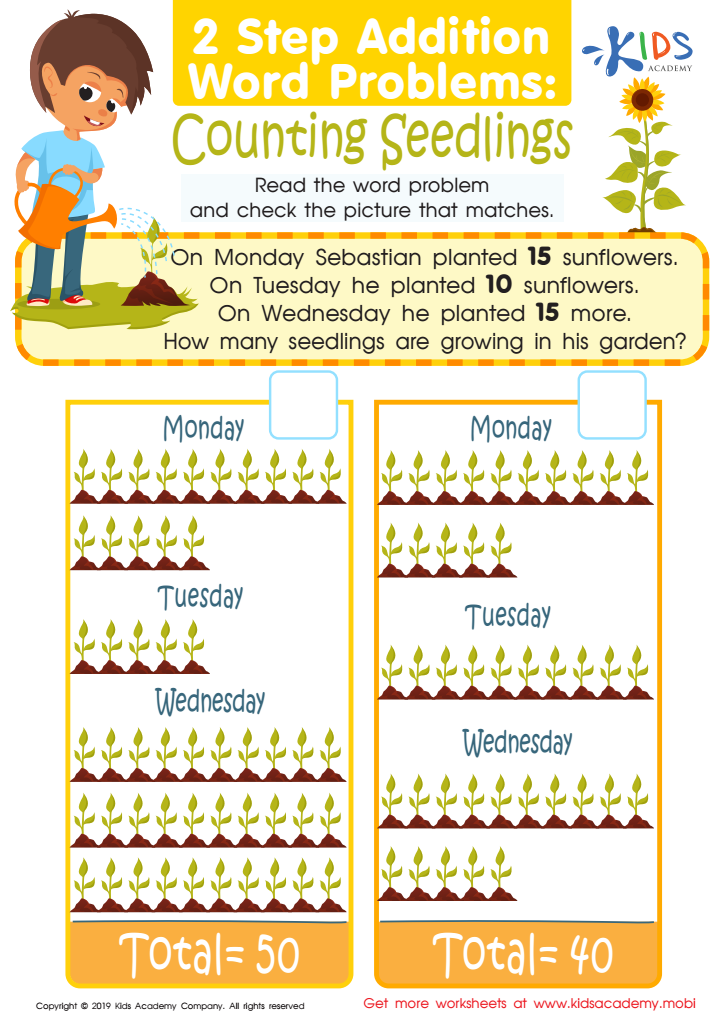
Counting Seedlings Worksheet
Understanding math word problems is key. Multiple steps can prove challenging - this free worksheet provides one-to-one picture representation to help kids solve multi-step addition word problems. Strengthen addition skills by choosing the matching picture to the answer.
Counting Seedlings Worksheet
Worksheet
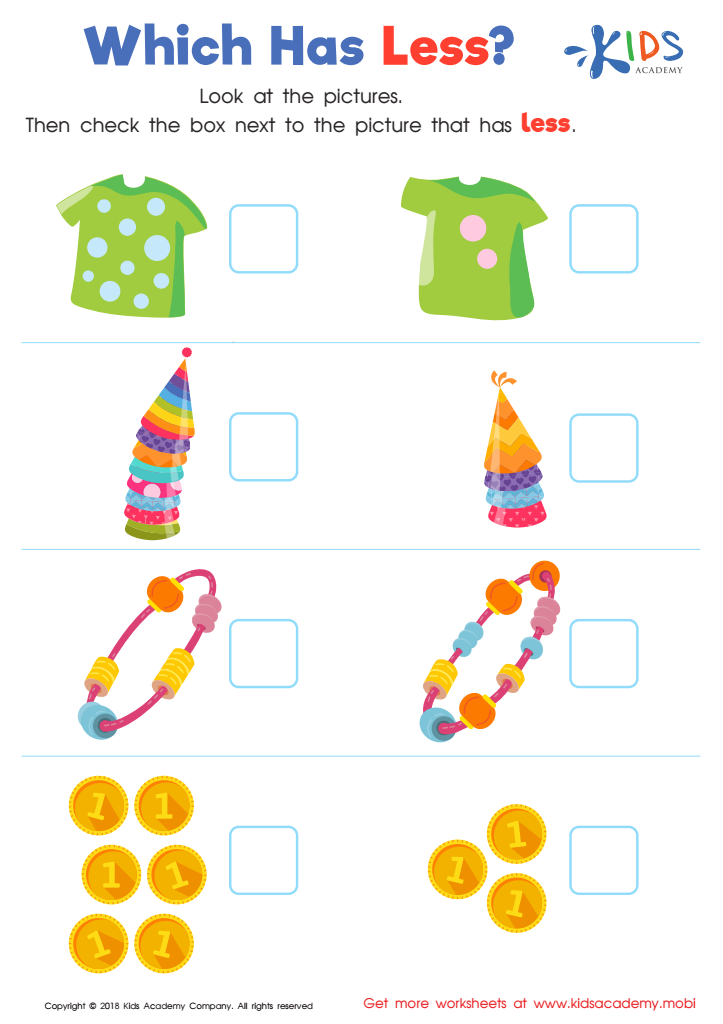
Which Has Less? Worksheet
Kids can develop their number sense by comparing and contrasting objects to identify which has less. This worksheet helps them practice: it's bright and colorful, featuring familiar objects and pictures to count, strengthening basic counting skills. It's the perfect warm-up for comparing and contrasting larger numbers.
Which Has Less? Worksheet
Worksheet
Join Kids Academy for Free
Who is primarily going to use this learning content?








Understanding quantity is a foundational math skill that significantly impacts a child's future learning and development. For ages 4-5, honing this skill prepares children for more complex mathematical concepts. Parents and teachers should prioritize this for several reasons:
First, a clear grasp of quantity enhances number sense—children develop an intuitive feel for numbers and their relationships. This early understanding fosters confidence and reduces math anxiety in later stages.
Playing with quantities also influences cognitive development beyond mathematics. It sharpens problem-solving abilities and logical thinking. Children learn to recognize patterns, make comparisons, and sequence events, critical aspects of cognitive development.
Moreover, everyday life hinges on these skills. Routine tasks, like determining how many apples fit in a basket, understanding sharing or even figuring time with days and hours, all involve quantity concepts. Mastery in this area therefore supports practical life skills.
Socially, children benefit from group activities involving quantities, such as games and storytime. Shared activities require understanding of numbers or quantities, encouraging teamwork and communication.
Lastly, educational success is heavily tied to mathematical readiness formed early on. A solid foundation in understanding quantity sets the stage for success in school. Parents and teachers fostering this early math literacy serve the child’s long-term intellectual and practical growth.








