Cognitive Development Easy Reading Comprehension Worksheets for Ages 4-5
3 filtered results
-
From - To
Explore our engaging cognitive development easy reading comprehension worksheets specifically designed for children ages 4-5. These fun and interactive resources help young learners enhance their reading skills while stimulating critical thinking and comprehension abilities. Our worksheets feature colorful illustrations and simple texts that encourage kids to recognize different letters, words, and patterns. Each worksheet is created to promote active learning, enabling children to answer questions and engage with the text meaningfully. Fostering cognitive development at an early age is crucial, and our comprehensive selection nurtures curiosity and comprehension with playful exercises. Start your child’s reading journey with us today!
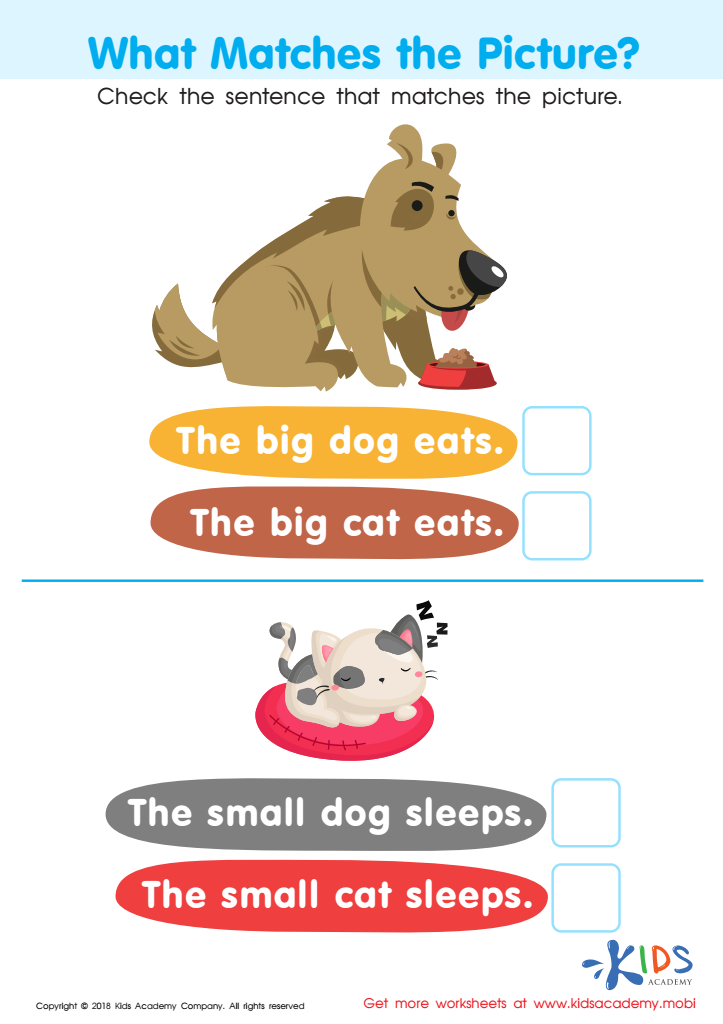
What Matches the Picture? Worksheet
 Assign to My Students
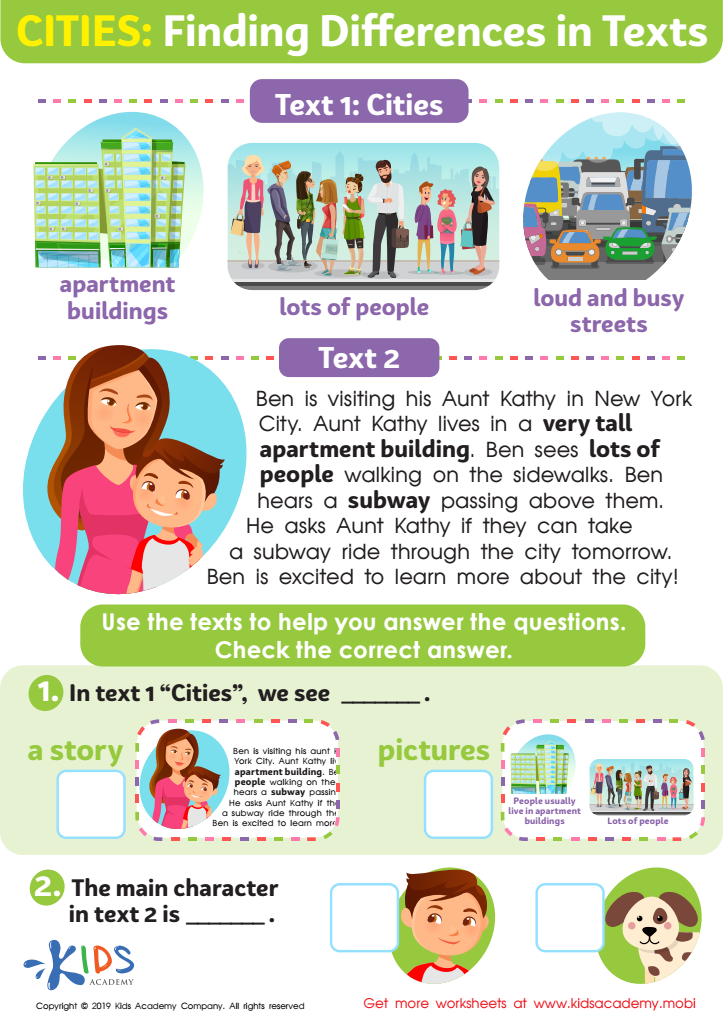
Cities: Finding Differences Worksheet
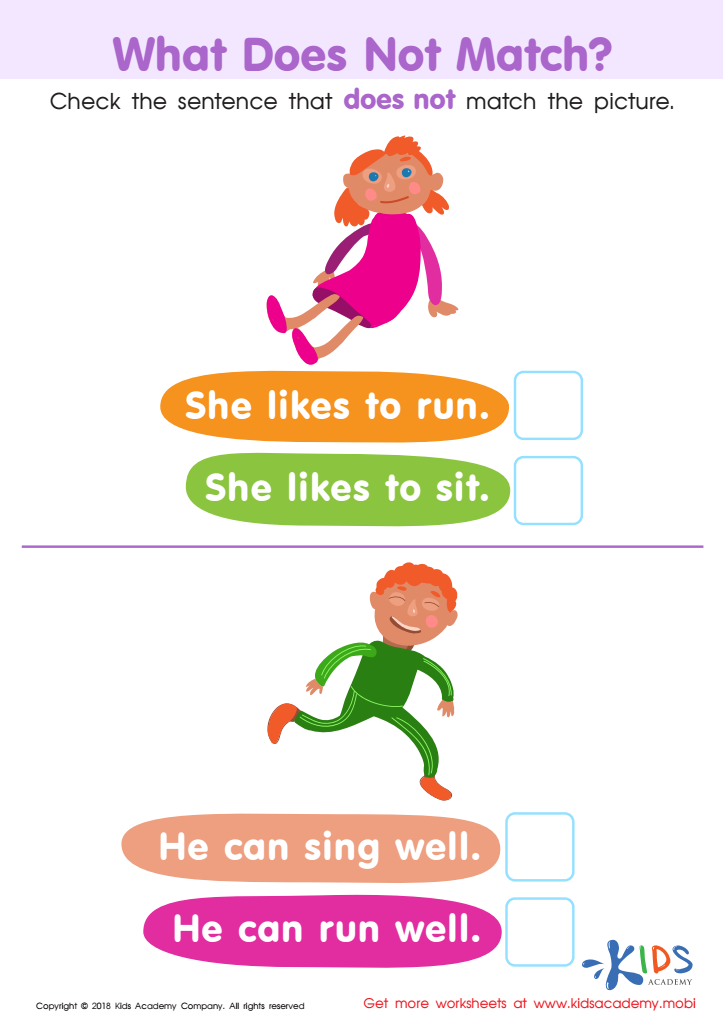
What Does Not Match? Worksheet








Cognitive development is a crucial aspect of a child's growth, particularly in early childhood. For children aged 4-5, easy reading comprehension plays a vital role in this process. During these formative years, children learn to think, reason, and understand the world around them. Strong reading comprehension skills help them make sense of stories and information, fostering curiosity and imagination.
Parents and teachers should prioritize these skills because they serve as the foundation for lifelong learning. Children who grasp basic comprehension can express their thoughts and questions more clearly, leading to improved communication skills. Engaging with reading materials boosts vocabulary and enhances critical thinking abilities, allowing children to analyze and interpret what they read.
Moreover, when parents and teachers introduce stories and encourage discussions about narratives, they promote a love for reading, making it a joyful activity rather than a chore. This enjoyment leads to increased reading practice, which further solidifies comprehension skills. By focusing on cognitive development through reading at this young age, caregivers can empower children with essential tools for academic success and social interaction as they progress in their education. Ultimately, nurturing these skills opens doors for future learners.