Filters

10 filtered results

Clear all filters
Favorites
With answer key
Interactive

10 filtered results

Difficulty Level

Grade


Enhance your child's reading skills with our "Reading Comprehension Easy Reading Fiction Worksheets" designed specifically for ages 4-5! These engaging worksheets provide a fun and interactive way to support early literacy development. Each activity features simple, age-appropriate stories that help children practice comprehension skills and improve their vocabulary. With colorful illustrations and relatable themes, kids will love diving into these charming tales. Ideal for both classroom and home use, our worksheets encourage young learners to think critically and explore the world of reading. Download today and inspire a lifelong love of literature in your little ones! Perfect for early childhood education.

Check out this FREE Trial Lesson on Reading Fiction for age 4-5!

Make Connections to Text and Self

Favorites
With answer key
Interactive
  • 4-5
  • Reading comprehension
  • Reading Fiction
  • Easy
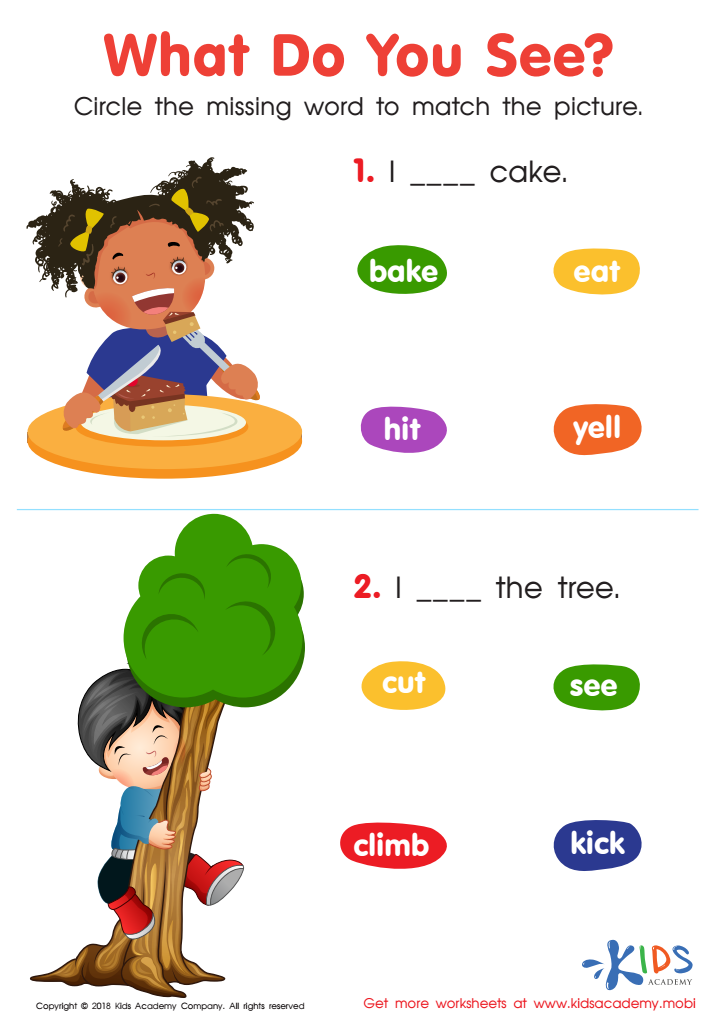
What Do You See? Reading Worksheet

What Do You See? Reading Worksheet

New readers can use the attractive pictures and high-frequency words on this worksheet to practice expressive language skills and decode as they fill in the blanks. As they circle the correct words, they'll feel like reading superstars!
What Do You See? Reading Worksheet
Worksheet
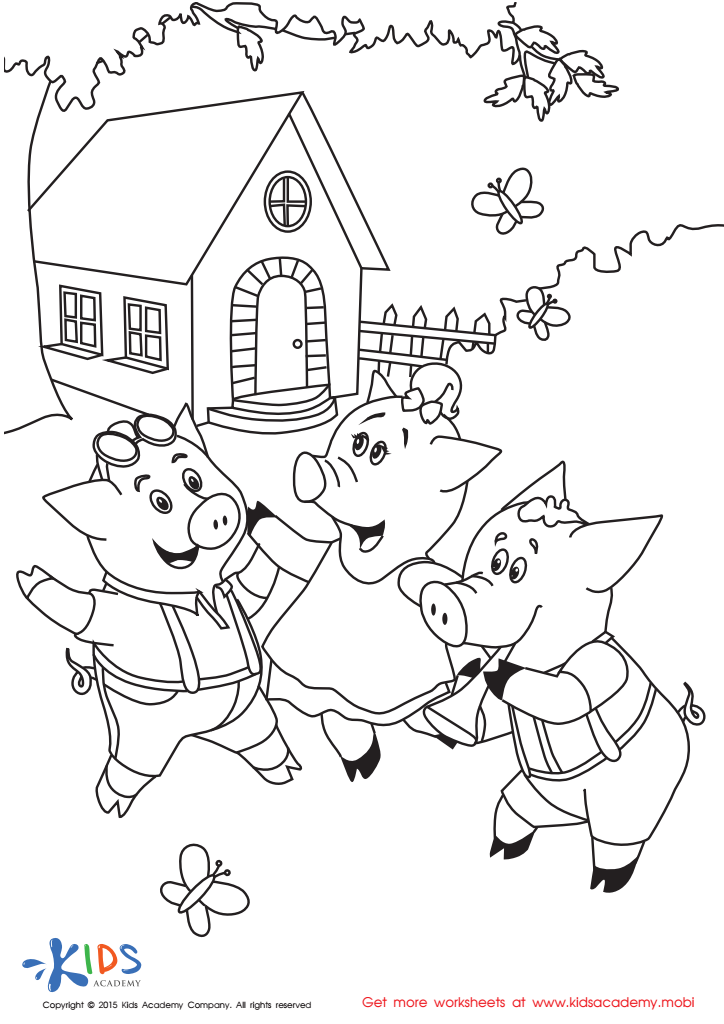
Folktales Printable PDF Worksheets: The 3 Little Pigs

Folktales Printable PDF Worksheet: The 3 Little Pigs

Then, help your child to color the scene with pink piglets, blue sky and green grass. Make the brick house bright and vivid. Enjoy!
Download (PDF)
Assign to My Students
Folktales Printable PDF Worksheet: The 3 Little Pigs
Worksheet
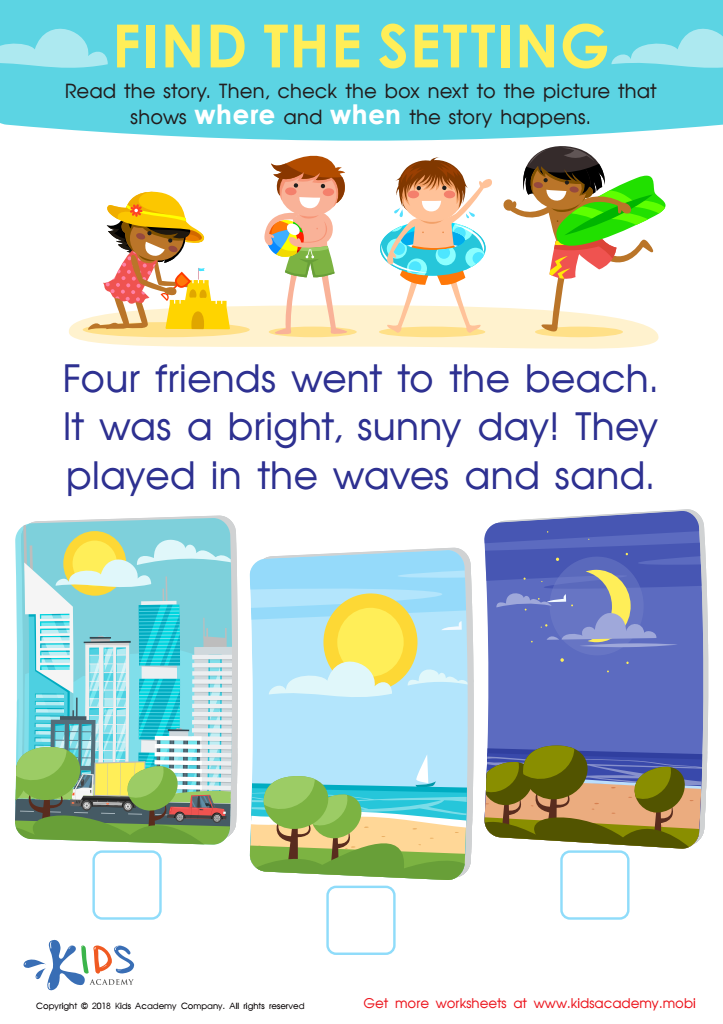
Find the Setting Worksheet

Find the Setting Worksheet

Writing a good story requires decisions about theme, plot, characters, and setting. Setting is the place and time where events occur. Read the story in this fun worksheet with your children and ensure they are paying attention. Guide them to check the box next to the picture that shows the story's setting. 80 words.
Find the Setting Worksheet
Worksheet
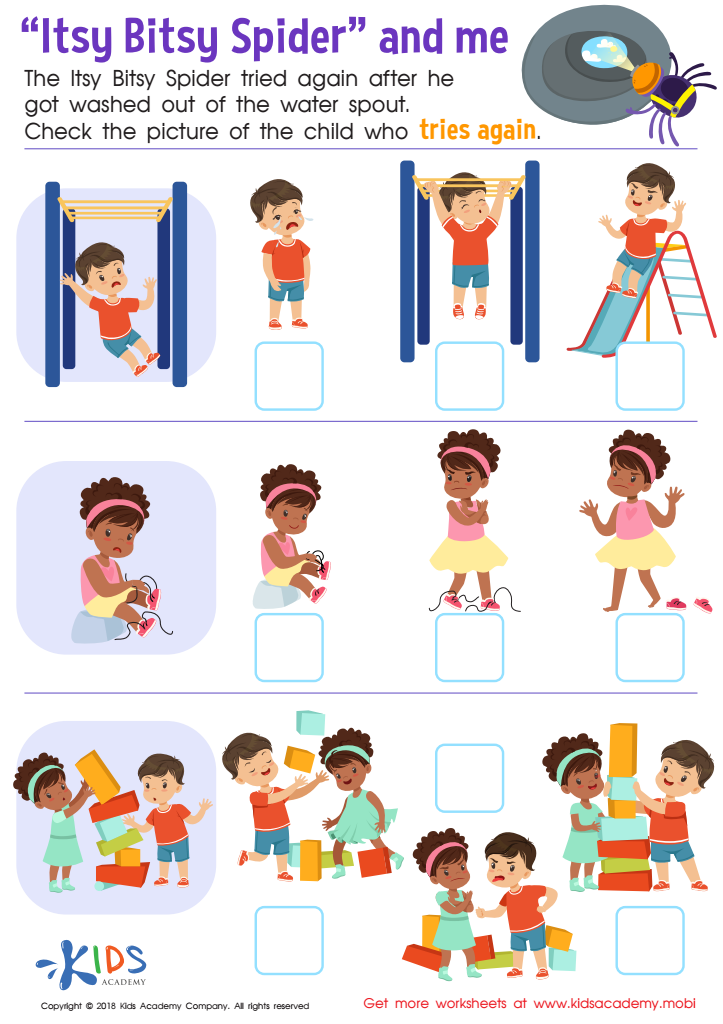
Itsy Bitsy Spider and Me Worksheet

Itsy Bitsy Spider and Me Worksheet

Ensure your child's success - teach them determination and perseverance! Introduce them to the Itsy-Bitsy spider and this fun worksheet. It shows kids working hard and teaches them to 'try again.' Have them identify scenes and check the box for those who succeeded.
Itsy Bitsy Spider and Me Worksheet
Worksheet
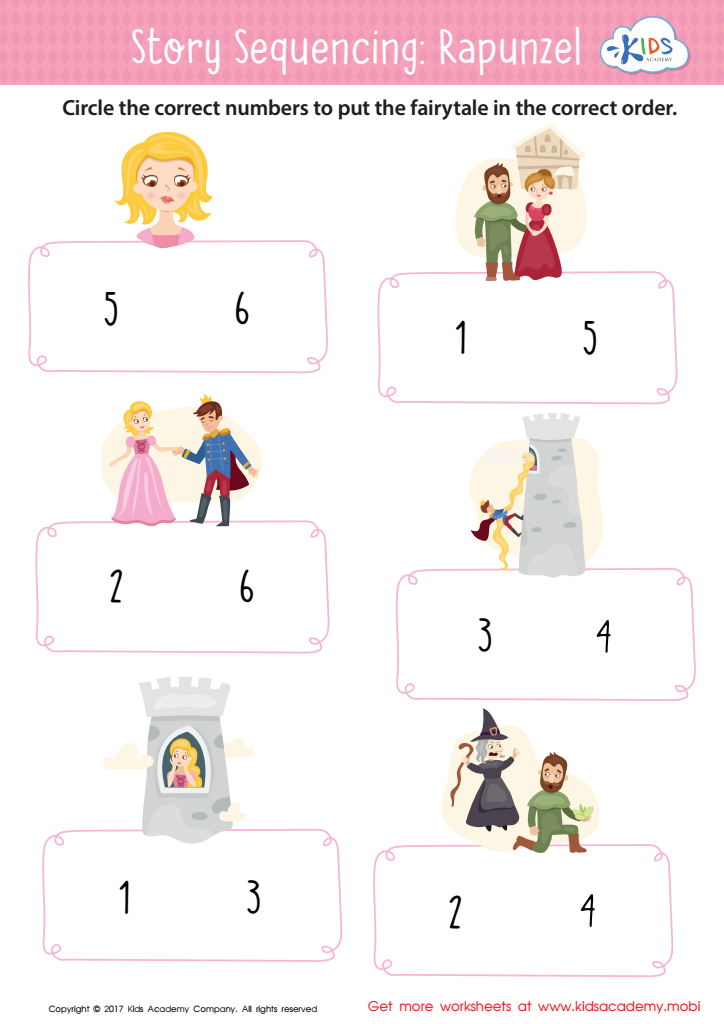
Rapunzel story sequencing worksheet

Rapunzel Story Sequencing Worksheet
Enhance your child's reading comprehension and help them sequence story events with this Rapunzel worksheet – it's thrilling and educational! Max 80 words. Help your child develop their reading comprehension with this exciting Rapunzel story sequencing worksheet! Kids view pictures from the classic fairytale and number them in the right order, reinforcing their understanding of story events. Educational and entertaining!
Rapunzel Story Sequencing Worksheet
Worksheet
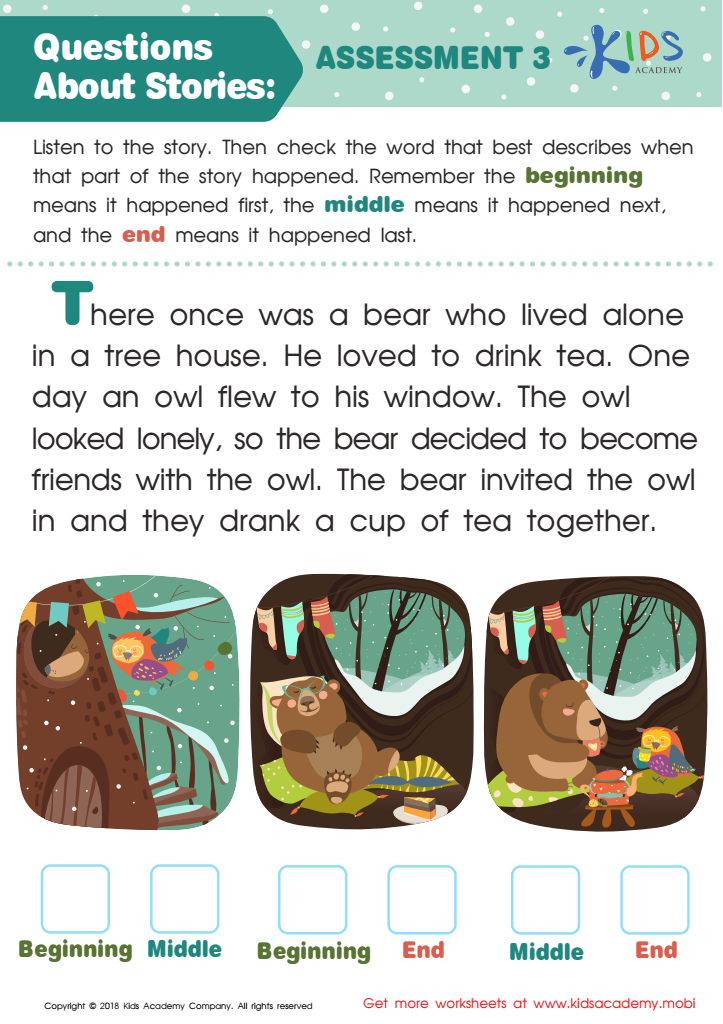
Questions About Stories: Assessment 3 Worksheet

Questions About Stories: Assessment 3 Worksheet

Help kids understand stories by having them listen to a story and check boxes for the beginning, middle, and end. This worksheet makes it fun for even the youngest learners to recall story elements and sequence of events. Let them listen to the story from start to finish, then look at the pictures to check which part of the story they depict.
Questions About Stories: Assessment 3 Worksheet
Worksheet
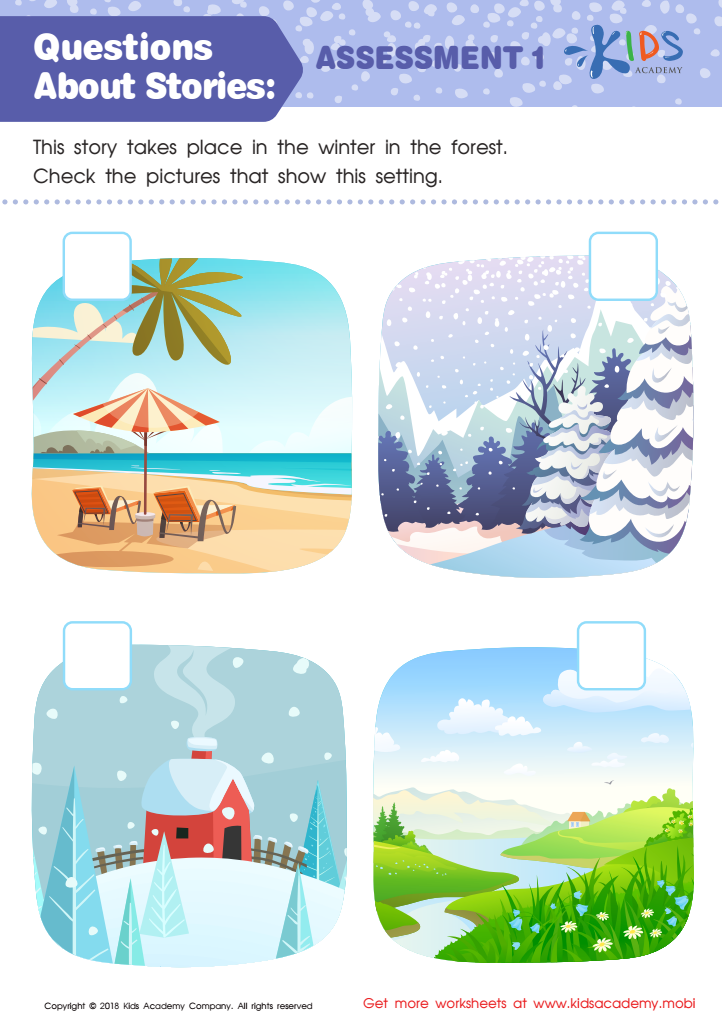
Questions About Stories: Assessment 1 Worksheet

Questions About Stories: Assessment 1 Worksheet

Winter brings snow, cold, short days, and darkness. Schools can even close due to heavy snow. Ask your child what their favourite winter activities are and what color they associate with 'winter'. This worksheet takes place in a winter forest. Look at the 4 pictures with your child, and help them identify which one shows the correct setting.
Questions About Stories: Assessment 1 Worksheet
Worksheet
When Does It Happen? Worksheet

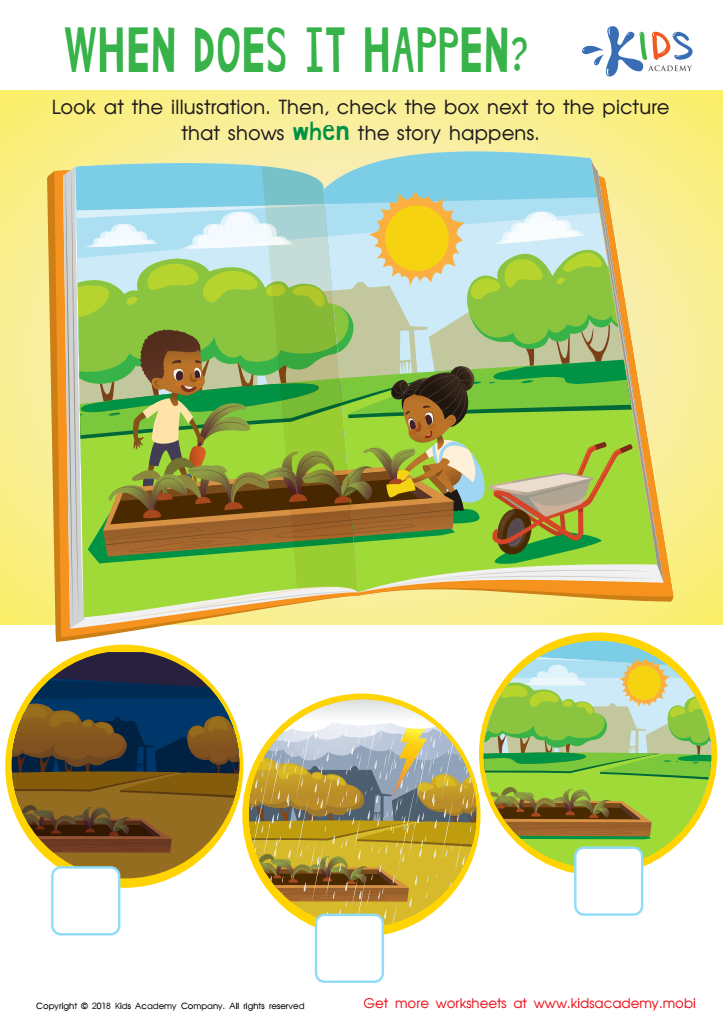
When Does It Happen? Worksheet

Help your kids learn about the different times of day and when events occur using this worksheet. Ask them to look at the pictures and determine which box shows when the story happened. Then, discuss how they can use this knowledge to better describe events that occur.
When Does It Happen? Worksheet
Worksheet
Nursery rhyme match-up worksheet

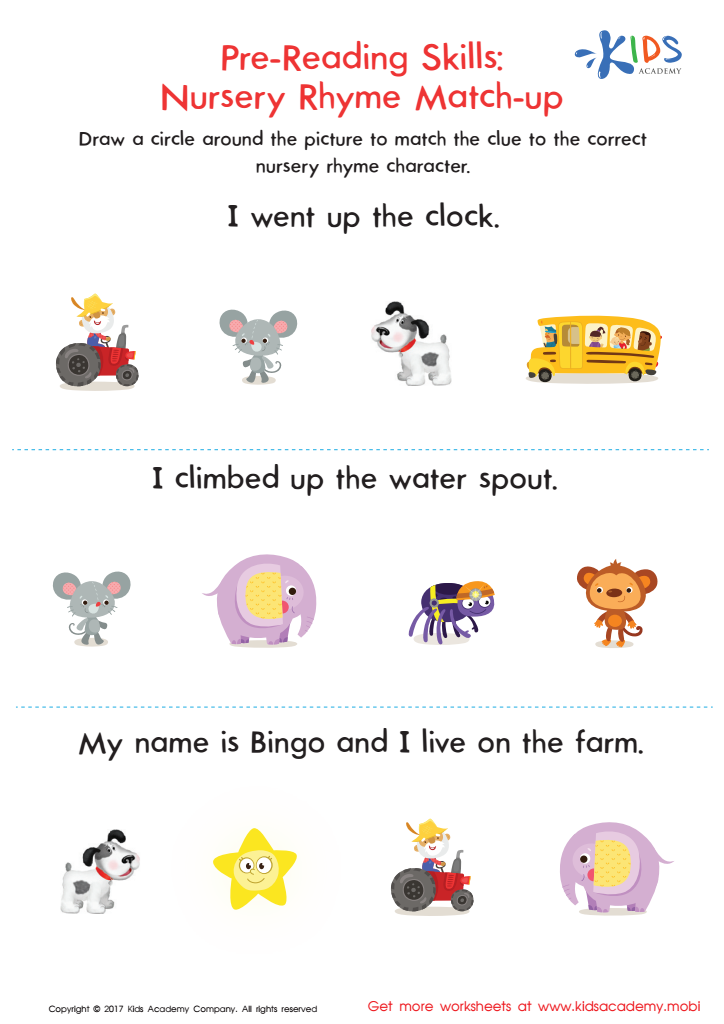
Nursery Rhyme Match–Up Worksheet
This worksheet helps kids build pre-reading skills using stories they know and love! By connecting with prior knowledge, kids can develop ideas about characters and set the stage for reading strategies.
Nursery Rhyme Match–Up Worksheet
Worksheet
Little Red Riding Hood: Illustrations Worksheet


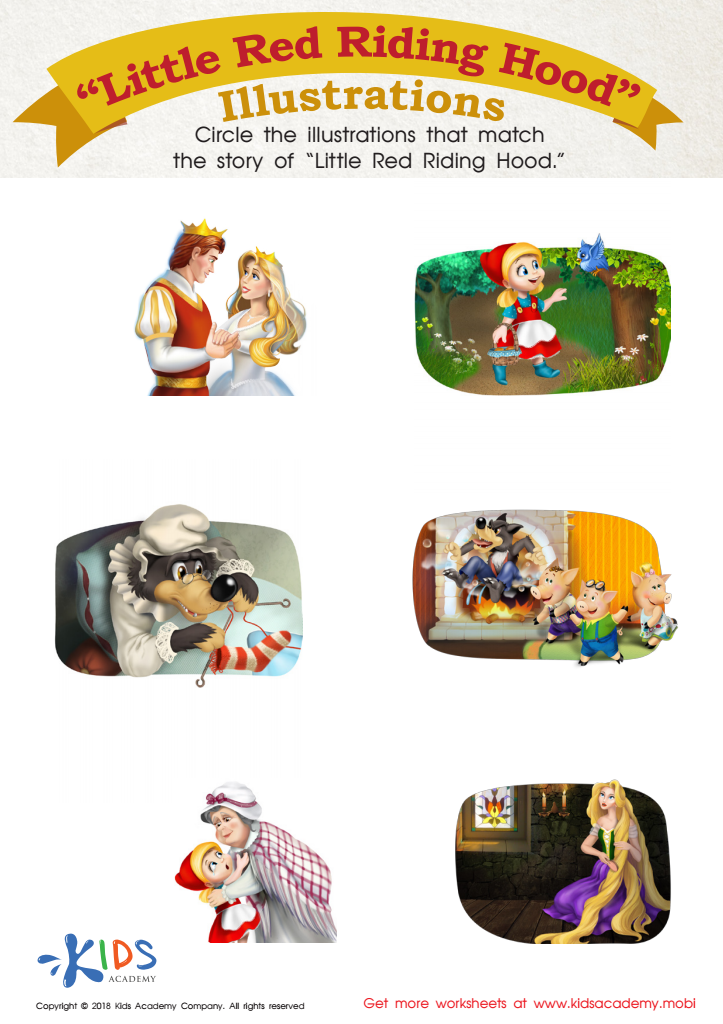
Little Red Riding Hood: Illustrations Worksheet

This worksheet encourages children to analyze illustrations from familiar fairy tales, such as Little Red Riding Hood, and decide which ones match the story and which don't. It's a great way to help them recall and retell stories they've heard or read. Illustrations are important elements that help children comprehend advanced readings.
Little Red Riding Hood: Illustrations Worksheet
Worksheet


Reading comprehension is a foundational skill crucial for young learners, particularly for ages 4-5. At this age, children are developing their language abilities and starting to understand the connection between spoken and written words. Easy reading fiction specifically designed for this age group plays a vital role in enhancing their comprehension skills, and here's why parents and teachers should care.

First, stories in accessible language capture children's imagination, fostering a love for reading and encouraging them to engage with text. Through relatable characters and simple plots, children can better understand concepts such as cause and effect, problem-solving, and moral lessons. This storytelling benefits critical thinking.

Moreover, reading fiction at a young age promotes vocabulary development, enhancing language acquisition. As children encounter new words in context, they learn not just what words mean but how they are used, paving the way for improved communication skills.

Furthermore, easy reading fiction strengthens listening skills and attention span. Active participation during story time helps children practice focusing while nurturing their ability to recall details and sequence events.

Overall, prioritizing reading comprehension in young children lays the groundwork for lifelong learning, creativity, and effective communication, making it essential for caregivers and educators alike.