Addition Practice Easy Worksheets for Ages 4-6 - Page 2
26 filtered results
-
From - To
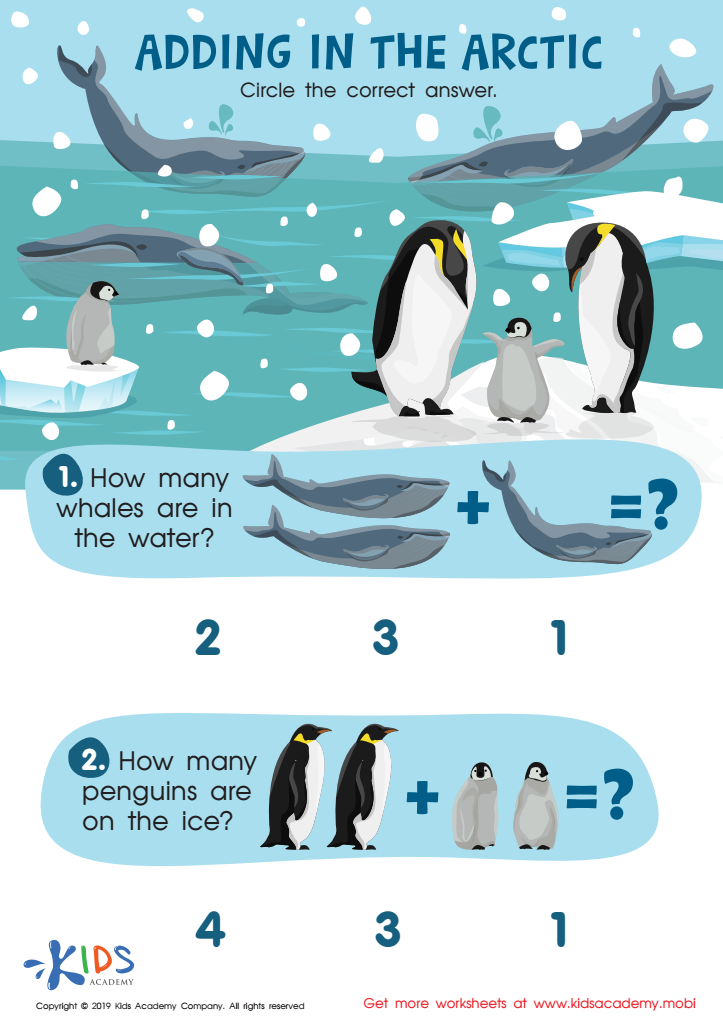
Adding in the Arctic Worksheet
 Assign to My Students
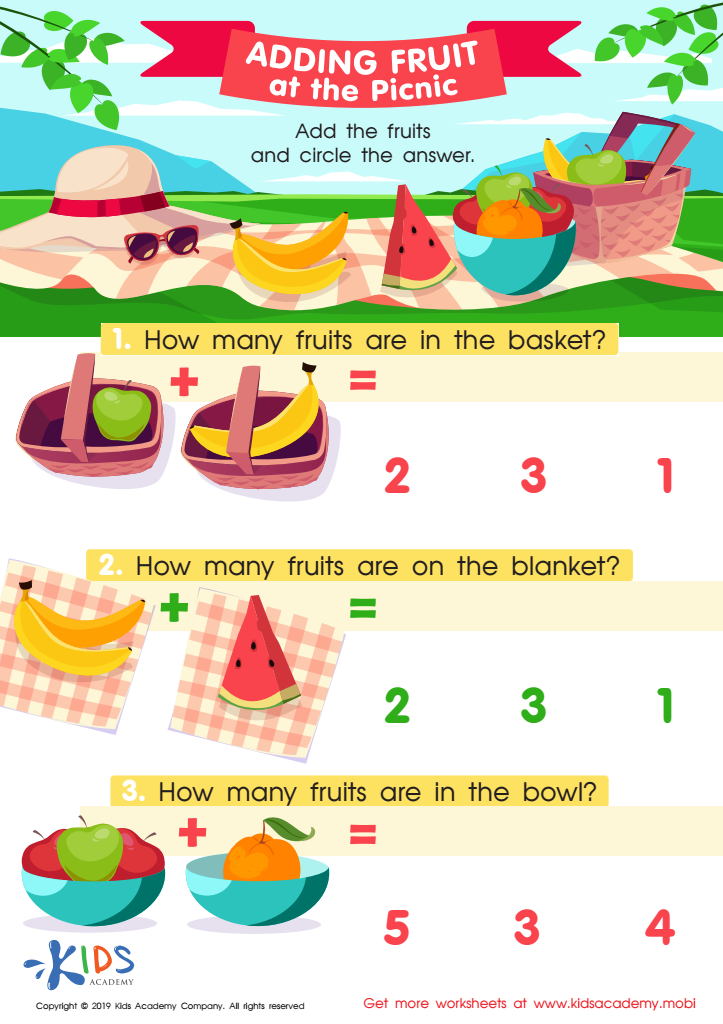
Adding Fruit at the Picnic Worksheet








Parents and teachers should care about Addition Practice Easy for children ages 4-6 because it establishes a critical foundation for future mathematical learning and boosts cognitive development. During these early years, children are like sponges, rapidly absorbing new information and forming essential neural connections. Simple addition exercises help youngsters develop number sense, which is an understanding of numbers and their relationships. This foundational knowledge is vital for dealing with more complex math concepts later in life.
Practicing addition at this age also sharpens various cognitive functions such as memory, attention, and problem-solving skills. Moreover, engaging in math activities fosters a positive attitude towards the subject, making children more likely to enjoy and excel in mathematics as they progress through school.
Furthermore, completing addition tasks enhances a child's fine motor skills and hand-eye coordination, particularly when they use physical objects such as blocks or counters to solve problems. Finally, early competence in addition empowers children with a sense of achievement and boosts their confidence, encouraging a growth mindset that reinforces the idea that effort leads to improvement. Given these reasons, incorporating easy addition practice into the daily routine can provide lasting educational and developmental benefits for young learners.








