Basic counting skills Easy Worksheets for Ages 4-6
5 filtered results
-
From - To
Discover our engaging Basic Counting Skills worksheets designed specifically for children ages 4-6! These easy-to-follow printable activities encourage early learners to develop essential counting abilities through fun exercises that capture their attention. Every worksheet focuses on core concepts, from counting objects to recognizing numbers, ensuring a solid foundation in mathematical skills. Our interactive approach fosters enthusiasm for learning while promoting fine motor skills and cognitive development. Whether in the classroom or at home, these worksheets make learning to count a pleasant experience. Start your child's counting journey today and watch them flourish with confidence! Visit us for fun, educational resources.
 Assign to My Students
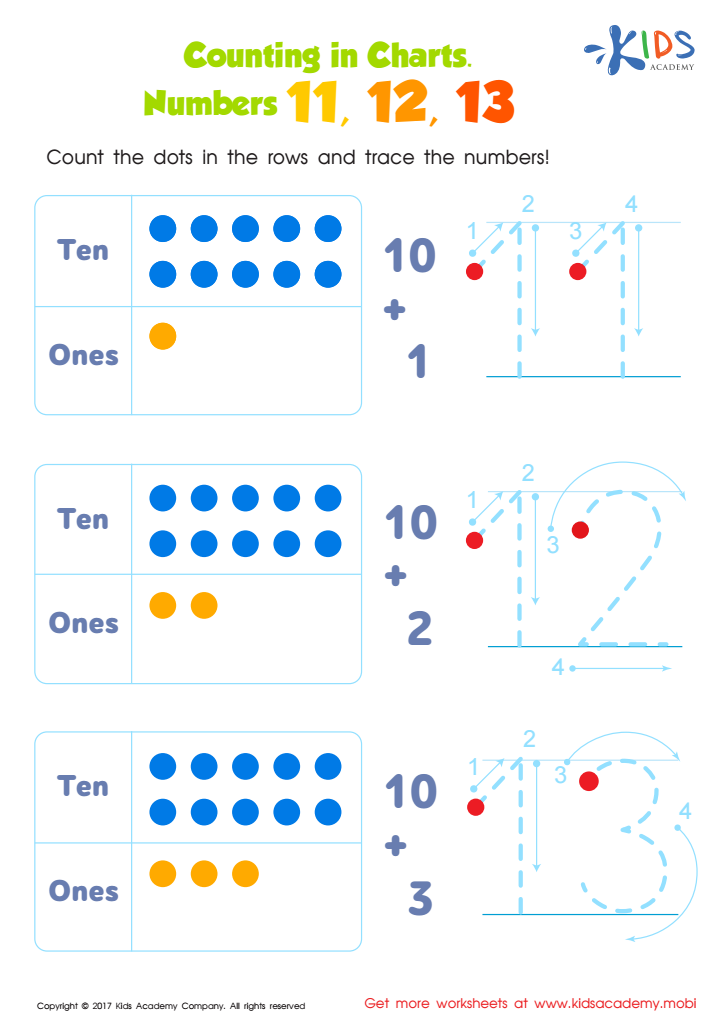
Number Tracing Worksheet For Kindergarten
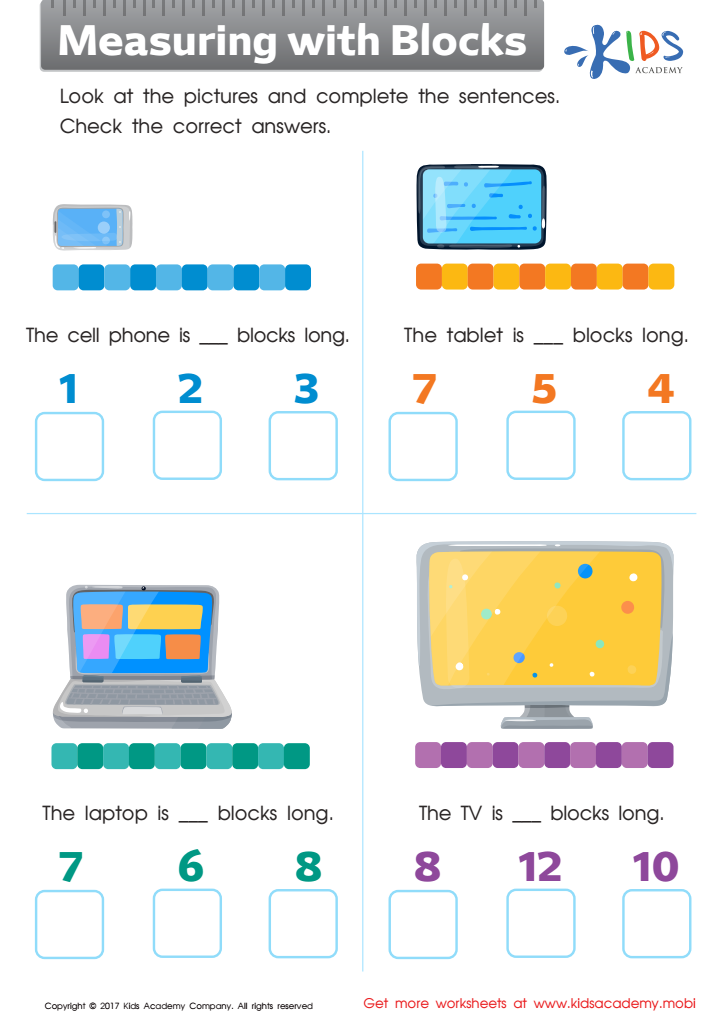
Measuring with Blocks Worksheet
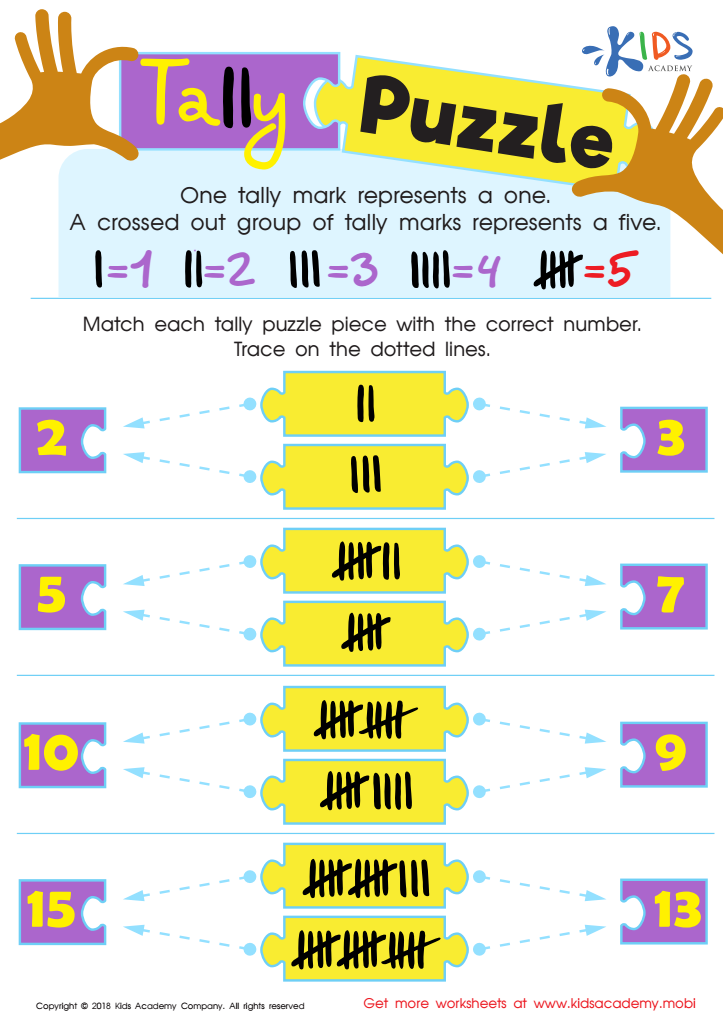
Tally Puzzle Worksheet
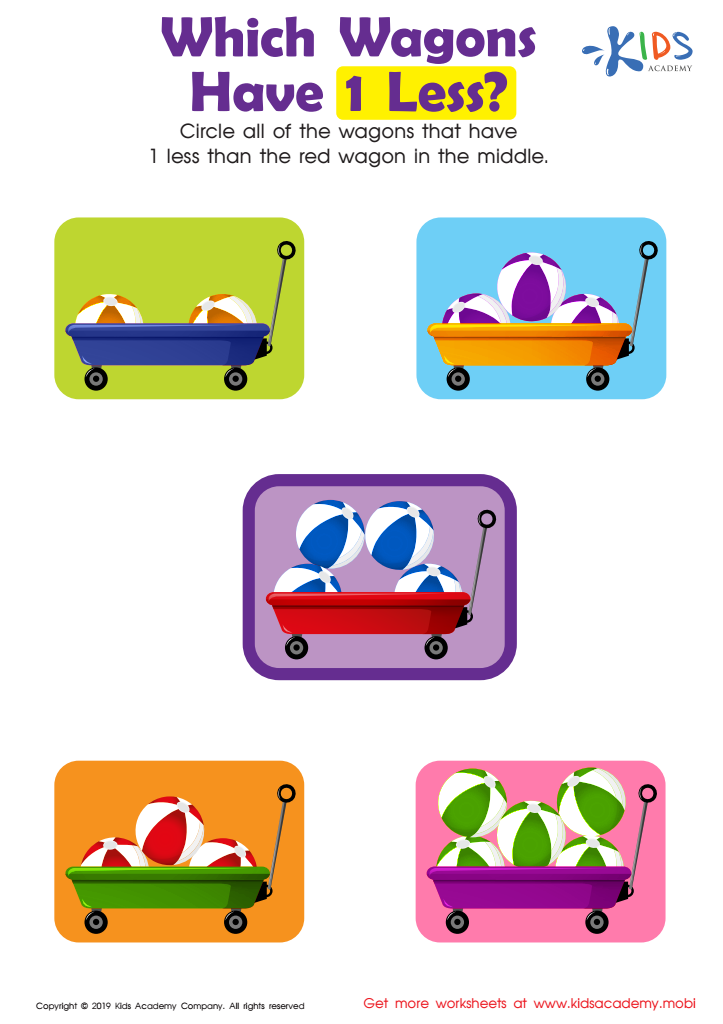
Which Wagons Have 1 Less? Worksheet






Basic counting skills are fundamental for children aged 4-6, and both parents and teachers should prioritize their development. During these formative years, children are involved in critical cognitive and social growth, where foundational skills can significantly impact their future learning experiences.
Firstly, counting serves as the building block for mathematics. Mastery of counting helps children understand quantities, which is essential for addition, subtraction, and more complex math concepts as they progress. This early proficiency boosts their confidence and fosters a positive attitude toward math, reducing anxiety in later grades.
Secondly, counting skills are linked to everyday life. Children utilize these skills when engaging in activities like sharing snacks, playing games, or even choosing toys, which reinforces their understanding of social interactions and fairness.
Moreover, counting exercises also enhance language development—for instance, they learn number words and improve their listening skills. Engaging in counting and related activities together strengthens the bond between children and their parents or teachers.
In summary, basic counting skills not only prepare children for academic success but also enhance social and language abilities, making it vital for parents and teachers to nurture them through various playful and interactive strategies.








