Basic subtraction Easy Worksheets for Ages 4-6
3 filtered results
-
From - To
Unlock the world of math with our Basic Subtraction Easy Worksheets for ages 4-6. These engaging activities help young learners grasp essential subtraction concepts through simple, fun exercises. Designed to build confidence and foundational skills, each worksheet offers colorful problems that keep kids interested and motivated. Perfect for home or classroom use, our worksheets support early math success and make learning subtraction an enjoyable journey. Introduce your child to the basics of math with materials designed to lay a strong foundation for future mathematical understanding. Download today and watch their skills grow!
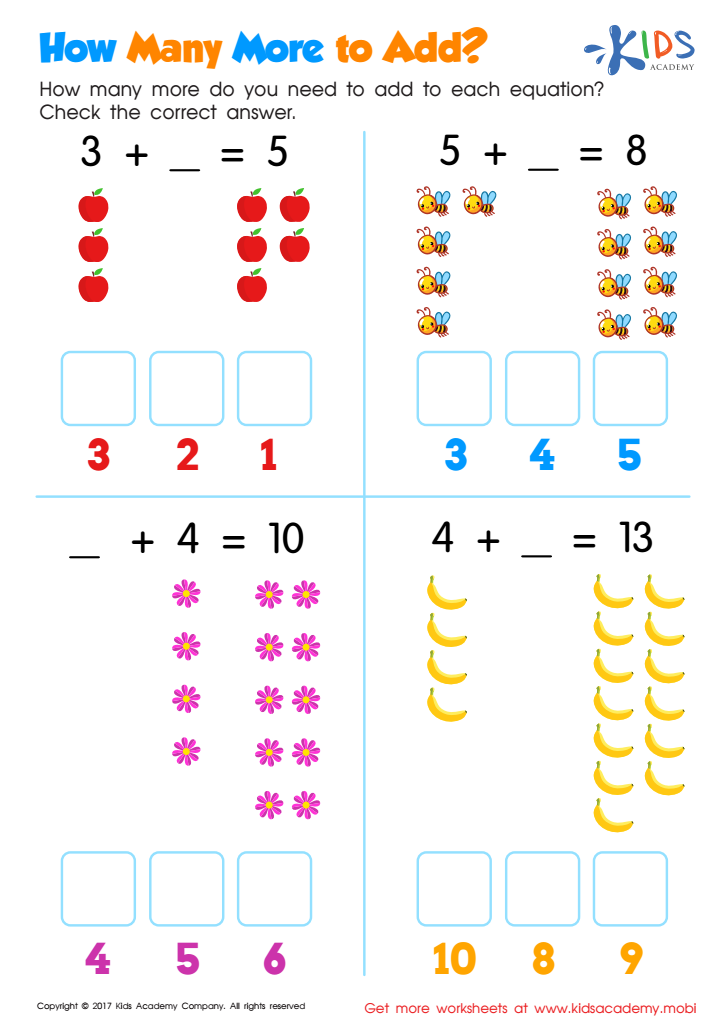
How Many More to Add Worksheet
 Assign to My Students
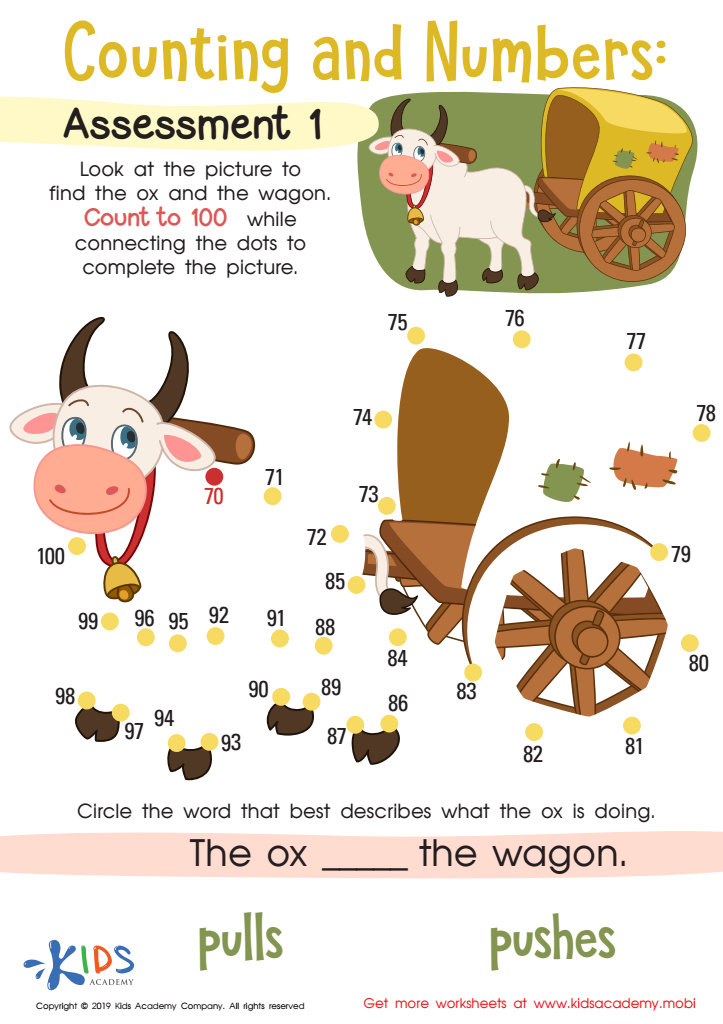
Counting and Numbers: Assessment 1 Worksheet
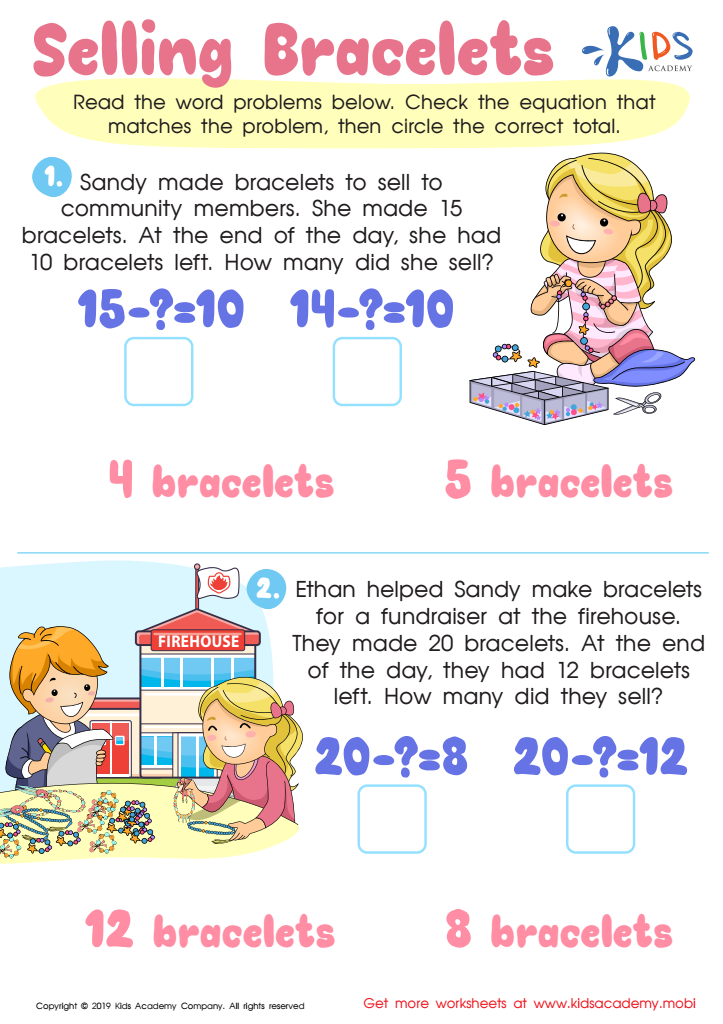
Selling the Bracelets Worksheet







Parents and teachers should care about basic subtraction for children ages 4-6 because it forms the cornerstone of mathematical understanding and cognitive development. Early exposure to foundational math concepts, like subtraction, enhances a child’s ability to grasp more complex math skills later in life. Subtraction allows children to understand the concept of taking away or comparing quantities, which builds their problem-solving skills and logical reasoning.
At ages 4-6, children’s brains are highly receptive, making it an ideal time to introduce fundamental math ideas. By incorporating basic subtraction into their daily learning, teachers and parents can foster numeracy skills in a fun and engaging way, ensuring that children develop a positive attitude toward math from an early age. This early engagement can help prevent future math-related anxiety or difficulties.
Moreover, a child’s confidence in their mathematical abilities extends to other subjects, as math is integrated across various disciplines. Learning subtraction through interactive activities, toys, or simple everyday situations not only nurtures their numeracy but also improves their concentration, precision, and ability to follow instructions. These benefits underscore the importance of integrating basic subtraction into early childhood education, setting a durable foundation for lifelong learning and academic success.








