Letter-sound correlation Easy Worksheets for Ages 4-6
4 filtered results
-
From - To
Unlock the magic of reading with our "Letter-Sound Correlation Easy Worksheets for Ages 4-6." These engaging and interactive worksheets help young learners master the foundational skill of matching letters to their corresponding sounds. Designed specifically for children aged 4-6, our worksheets make phonics fun and accessible, supporting early literacy development. Each activity is crafted to build confidence and fluency, using visual cues and playful exercises. Ideal for both classroom and home use, our worksheets offer a perfect blend of education and entertainment, ensuring that children enjoy every step of their reading journey. Start building strong reading skills today!
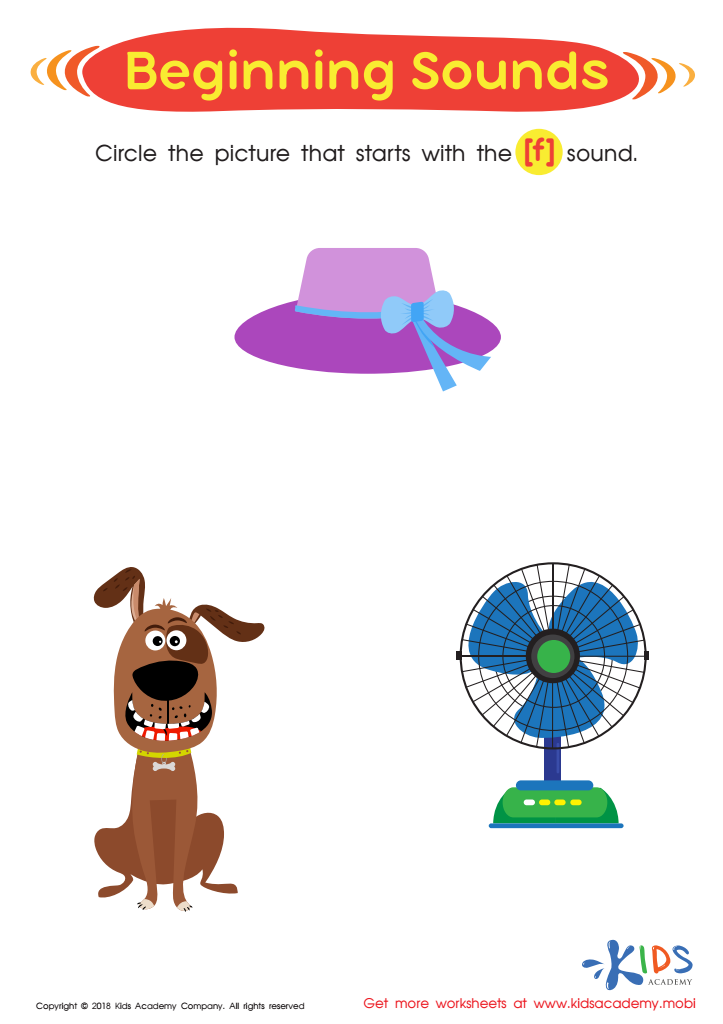
Beginning Sounds Assessment Printable
 Assign to My Students
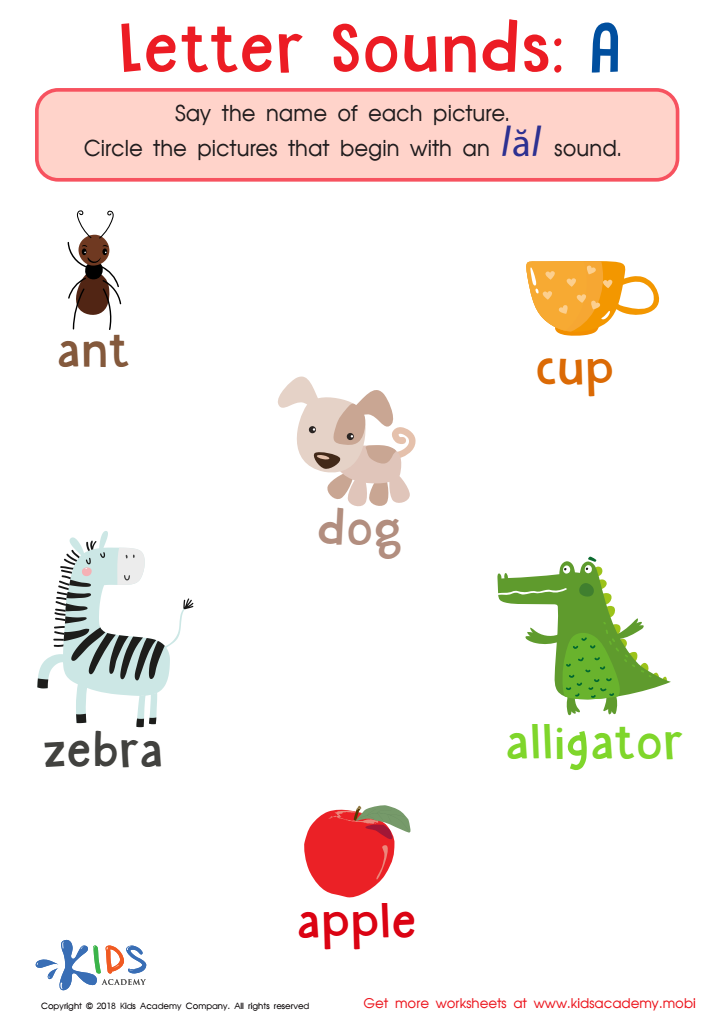
Letter A Sounds Worksheet
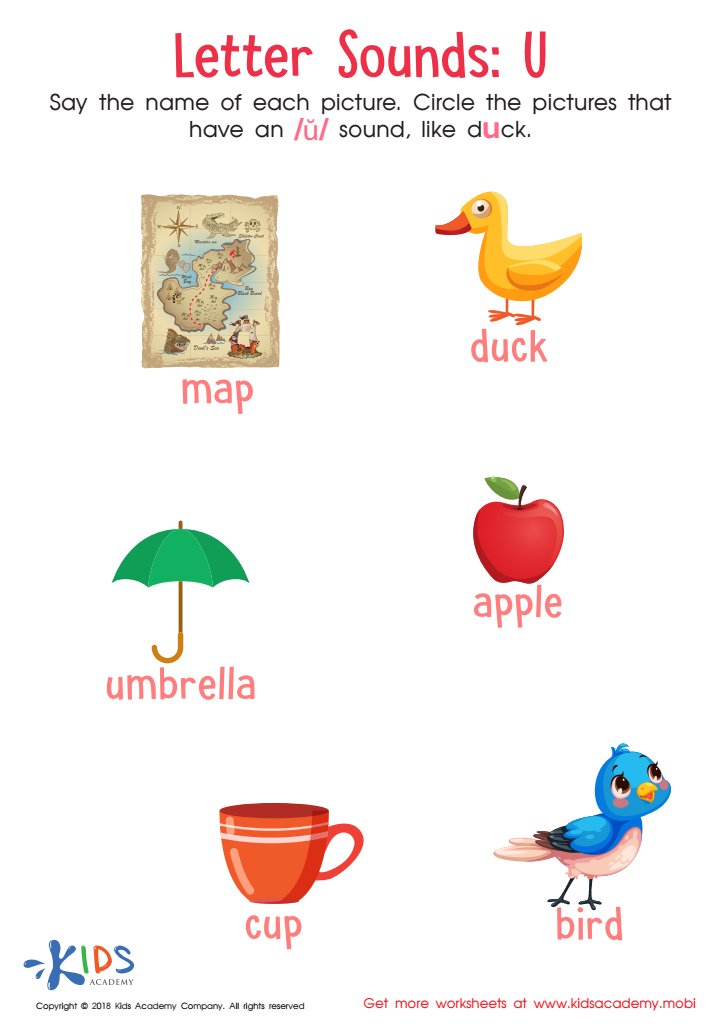
Letter U Sounds Worksheet
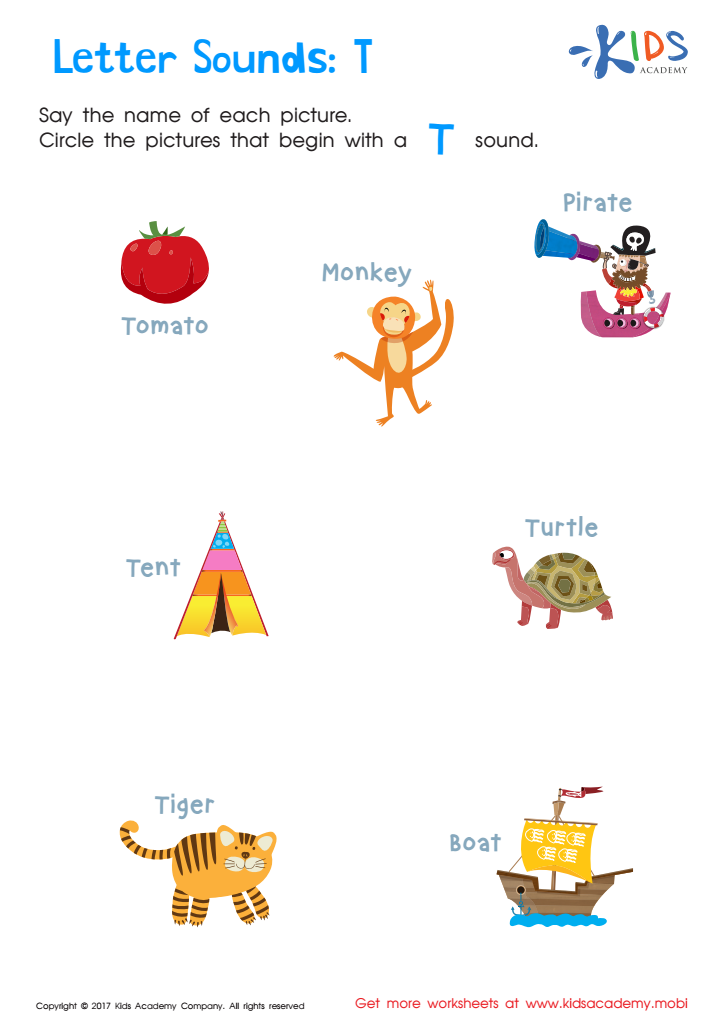
Letter T Sounds Worksheet







Understanding letter-sound correlation, or phonics, is fundamental in early literacy development for children aged 4-6. When parents and teachers emphasize this skill, they are laying a crucial foundation for reading and writing success. Knowing which sounds correspond to which letters allows young learners to decode words—a fundamental skill in reading fluently.
When children grasp letter-sound relationships early, they become more confident readers. They can sound out new words on their own, improving their ability to comprehend and enjoy books. This early success fosters a love of reading, which is closely linked to academic achievement in various subjects later on. Research consistently shows that strong reading skills are predictive of higher performance in other areas, such as math and science.
Letter-sound correlation also aids in spelling. Children who understand how letters represent sounds can start writing simple words, reinforcing their reading skills simultaneously. It's a cyclical process: good reading skills improve writing and good writing skills improve reading.
For teachers, incorporating fun, interactive phonics activities into the curriculum can make learning enjoyable and effective. Parents can reinforce these concepts at home through reading aloud, playing letter-sound games, and even everyday conversations. Prioritizing letter-sound correlation in these formative years sets children on a path to ongoing educational success.








