Understanding tally marks Easy Worksheets for Ages 4-6
4 filtered results
-
From - To
Discover the fun and engaging world of tally marks with our "Understanding Tally Marks Easy Worksheets" designed specifically for children ages 4-6. These worksheets provide a clear and simple introduction to tally marks, helping young learners recognize and practice counting and organizing information visually. Featuring colorful illustrations and age-appropriate activities, these worksheets make learning enjoyable and interactive. Perfect for home or classroom use, our resources encourage foundational math skills while fostering creativity and critical thinking. Print, learn, and enjoy the journey of understanding tally marks with your little ones today! Ideal for early math proficiency and cognitive development.
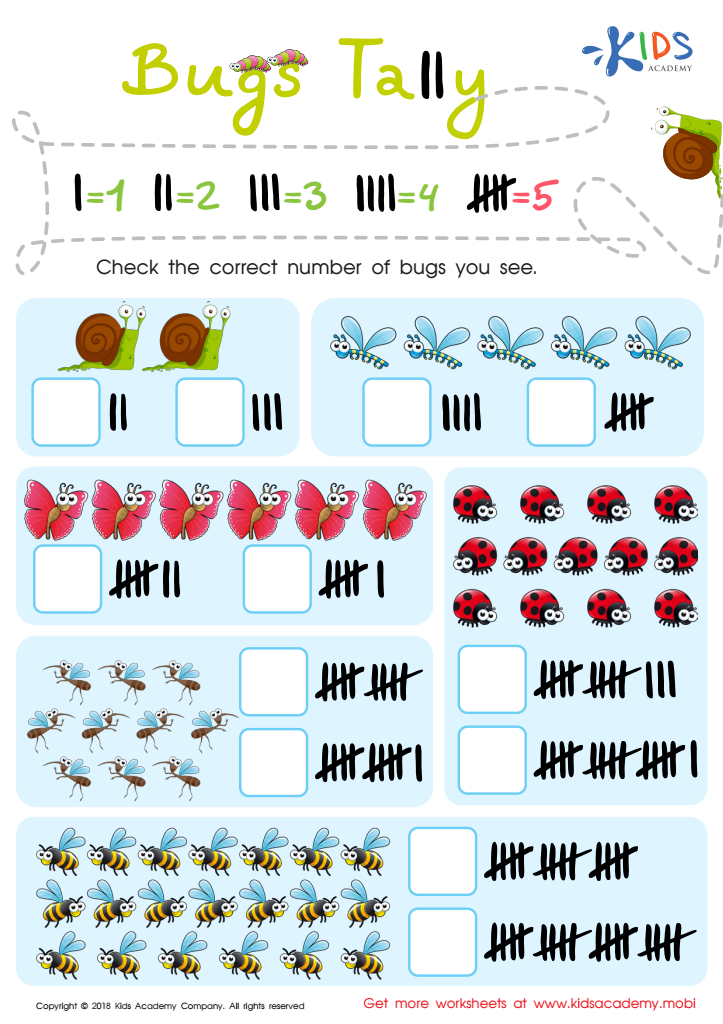
Bugs Tally Worksheet
 Assign to My Students
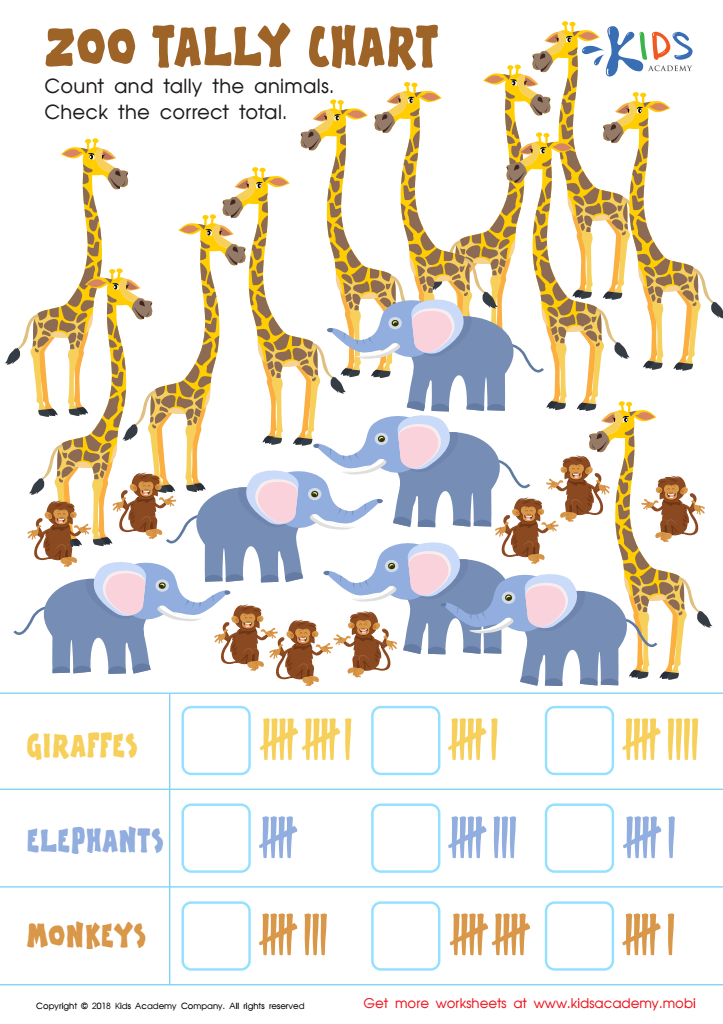
Zoo Tally Chart Worksheet
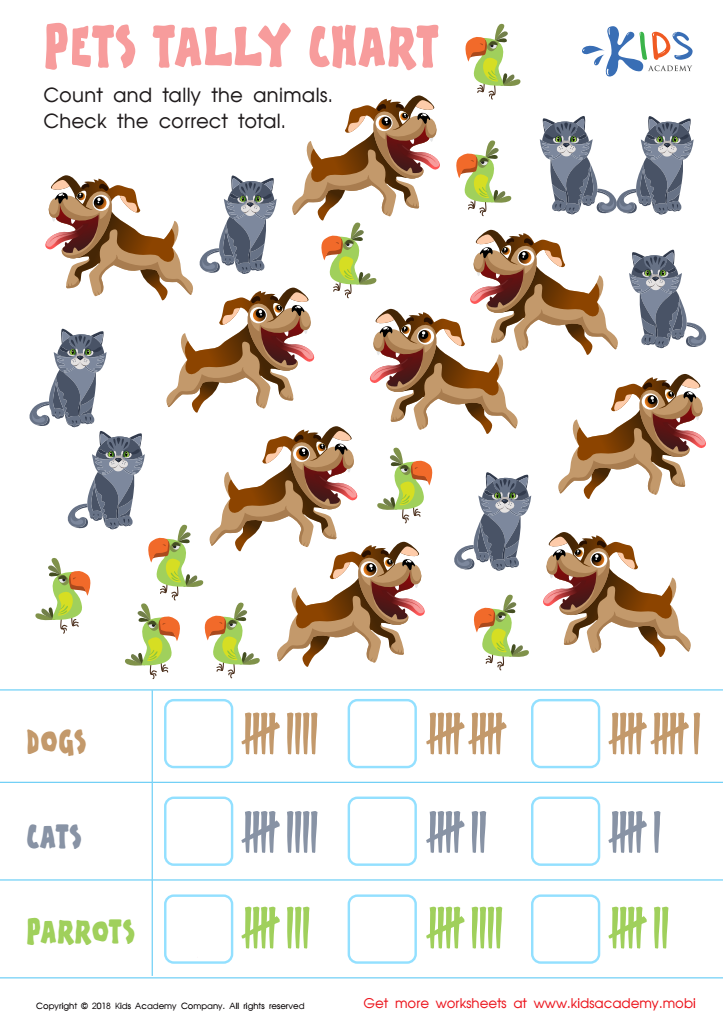
Pets Tally Chart Worksheet
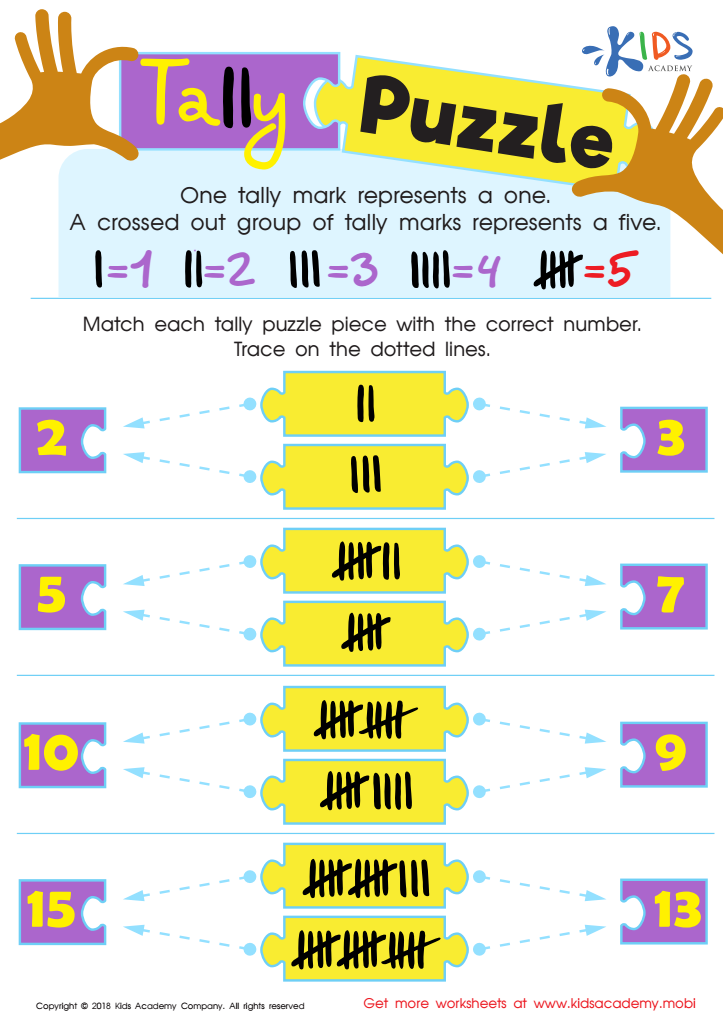
Tally Puzzle Worksheet





Understanding tally marks is crucial for young children, particularly those aged 4-6, as it lays a foundation for their mathematical skills and introduces basic concepts of counting and data representation. For parents and teachers, incorporating tally marks into early learning can foster a child’s ability to recognize patterns and develop number sense in an engaging way.
Tally marks provide a visual method for counting and organizing information, helping children grasp the concept of groups of five. This familiarity encourages them to understand larger numbers through small groupings, reinforcing arithmetic operations such as addition and subtraction.
Moreover, learning about tally marks promotes fine motor skills as children practice drawing them, creating a combination of cognitive and physical development. It also enhances their social skills when they collaborate on counting games or classroom activities.
Additionally, parents and teachers can connect tally marks to real-life situations, such as counting objects or tracking occurrences, making learning relevant and enjoyable. All of this contributes to forming positive attitudes towards mathematics learning, easing anxieties, and building confidence. Ultimately, by nurturing an understanding of tally marks, adults can empower young learners in their early educational journey.








