Visual discrimination Easy Worksheets for Ages 4-6
5 filtered results
-
From - To
Introduce your little learners to the world of visual discrimination with our easy worksheets designed for ages 4-6! These engaging activities help young children develop crucial skills in differentiating shapes, sizes, patterns, and colors. Ideal for early childhood education, our worksheets offer fun and interactive ways to boost attention to detail, match differences, and enhance overall cognitive abilities. With brightly colored illustrations and simple, clear instructions, young minds will enjoy practicing and learning independently. Perfect for parents and teachers, our printable worksheets ensure a solid foundation for future academic success. Visit Kids Academy to start the fun-filled journey of learning!
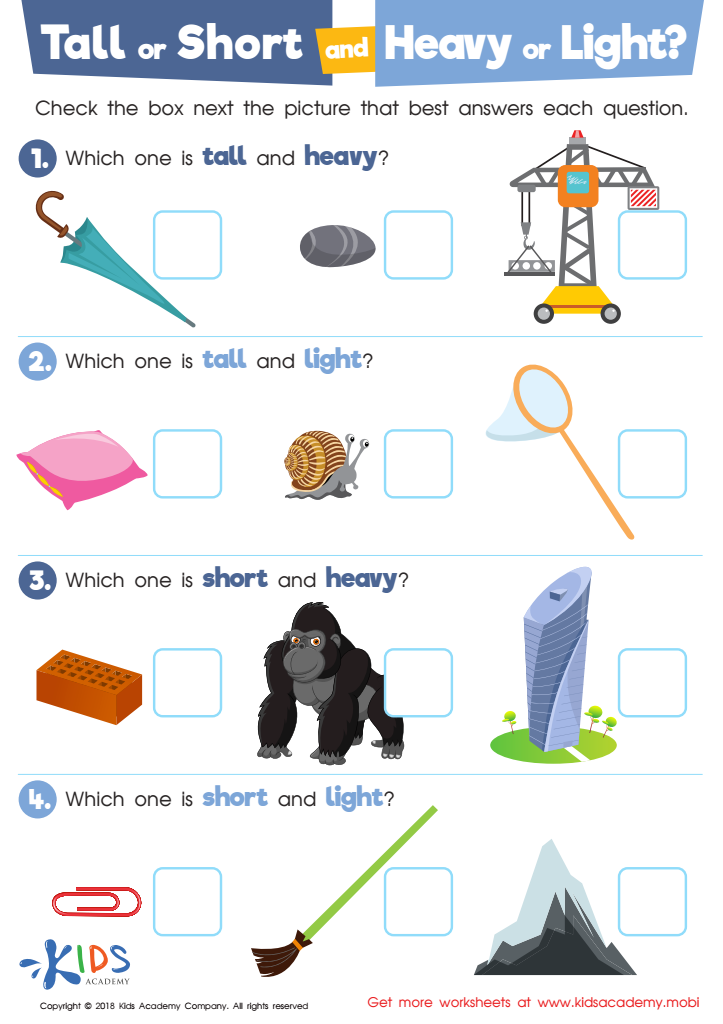
Tall or Short and Heavy or Light? Worksheet
 Assign to My Students
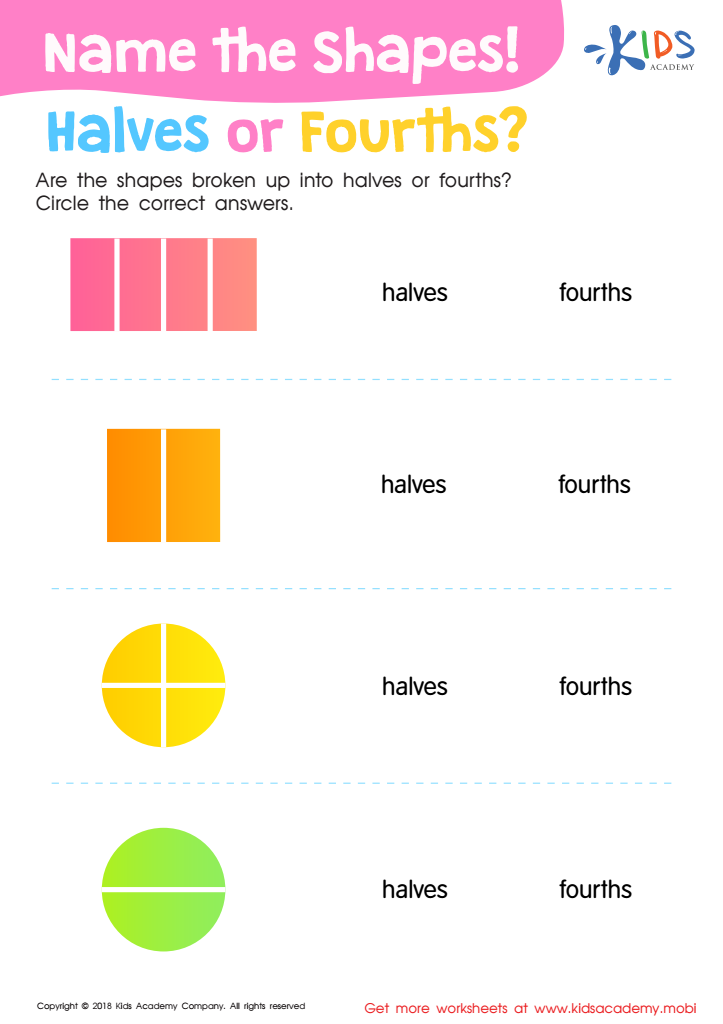
Name the Shapes Halves or Fourths? Worksheet
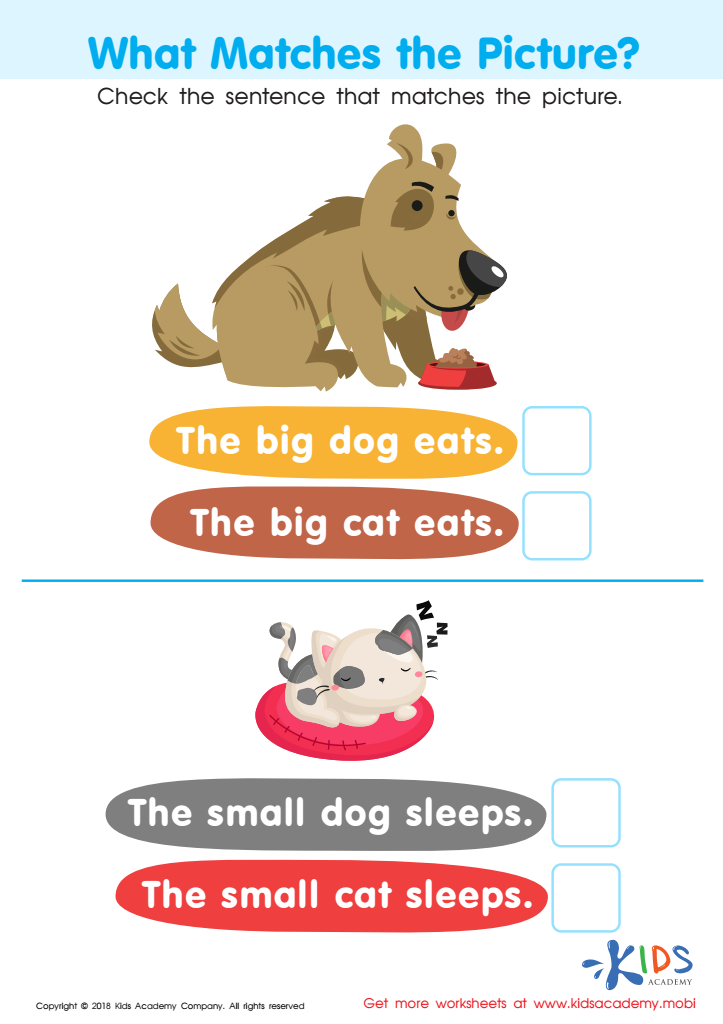
What Matches the Picture? Worksheet
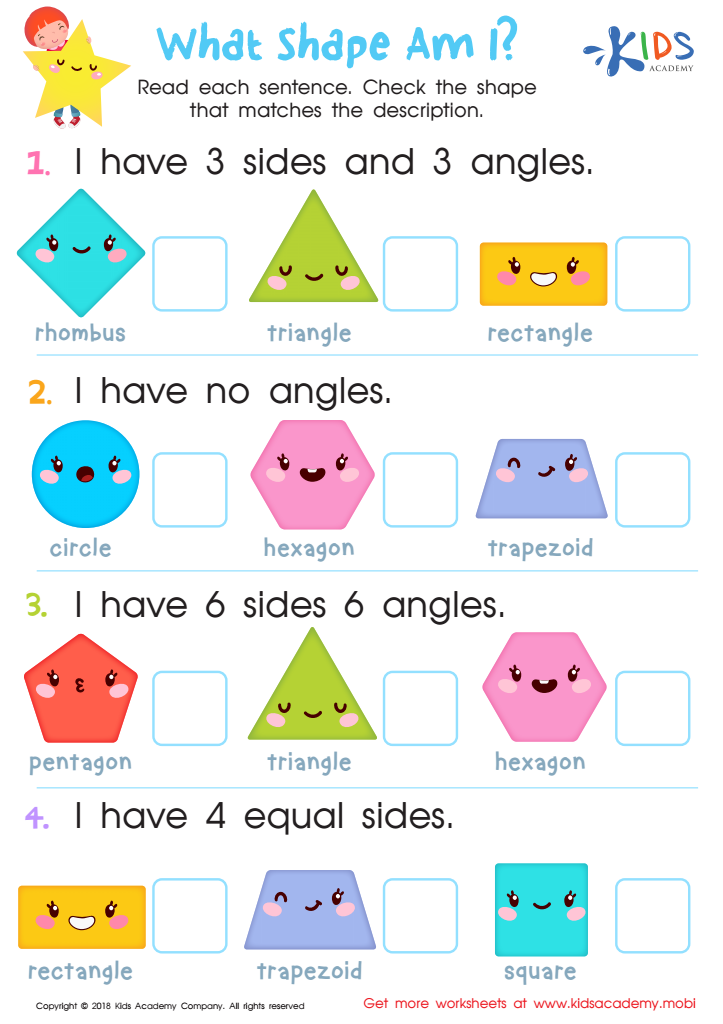
What Shape Am I? Worksheet
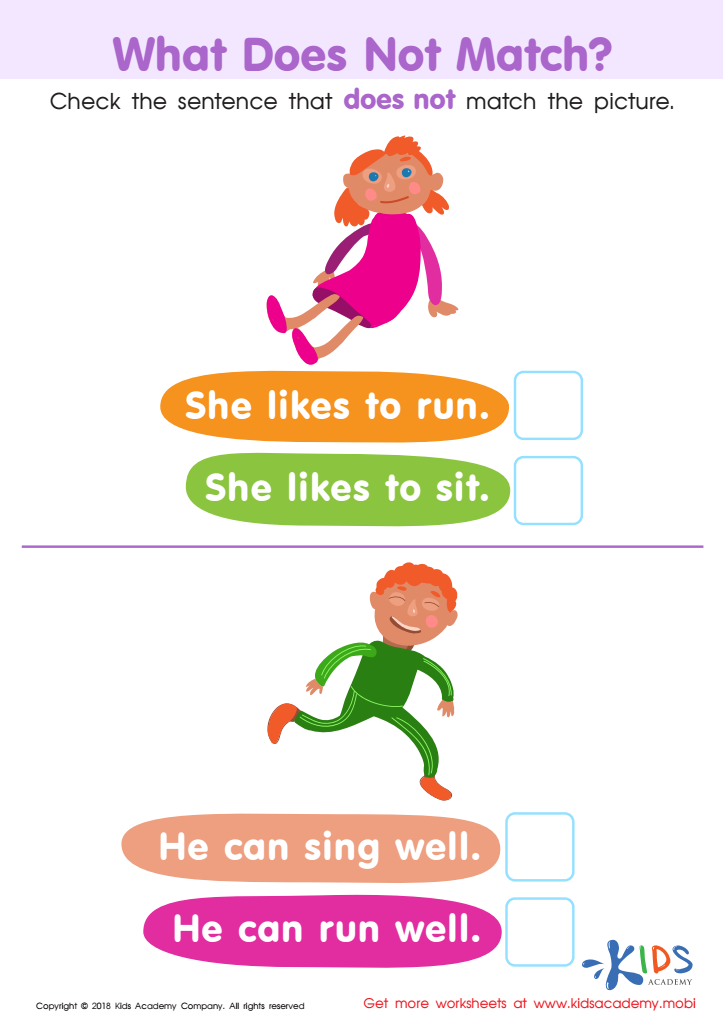
What Does Not Match? Worksheet








Visual discrimination refers to the ability to recognize details in visual images, identifying similarities and differences in shapes, patterns, colors, and objects. This skill is crucial for children ages 4-6 as it directly impacts their readiness for school and future academic success.
Parents and teachers should care about developing visual discrimination at an early age because it forms the foundation for reading and writing skills. Children who can easily distinguish letters, numbers, and geometric shapes are better equipped to understand written language and mathematics. For instance, recognizing the difference between "b" and "d" or "p" and "q" is essential for reading accuracy.
Moreover, effective visual discrimination enhances children's observation skills and attention to detail, fostering positive attitudes toward learning and problem-solving. In early childhood, engaging activities like matching games, puzzles, and drawing can help develop these skills in a fun and interactive way.
Beyond academics, visual discrimination plays a role in everyday tasks, such as distinguishing traffic signs, recognizing faces, and sorting objects — all activities critical to navigating the world safely and effectively. By nurturing this skill set, parents and teachers equip children with the tools necessary for both school and life success, promoting overall cognitive development and confidence.








