
Visual Perception Skills Easy Worksheets for Ages 4-6
5 filtered results
Difficulty Level
Grade
Age
-
From - To
Subject
Activity
Standards
Unlock your child's potential with our "Visual Perception Skills Easy Worksheets for Ages 4-6". These engaging, expertly-designed printables provide fun and effective ways to enhance young learners' visual perception abilities. Each worksheet focuses on essential skills such as pattern recognition, spatial reasoning, and object matching, tailored to the developmental stage of preschool to early elementary children. Perfect for classroom use or at-home activities, our worksheets make learning enjoyable through colorful and interactive exercises. Help your child build a strong foundation for reading, writing, and critical thinking with Kids Academy's visual perception worksheets. Start their journey today and watch them shine!
Favorites
With answer key
Interactive
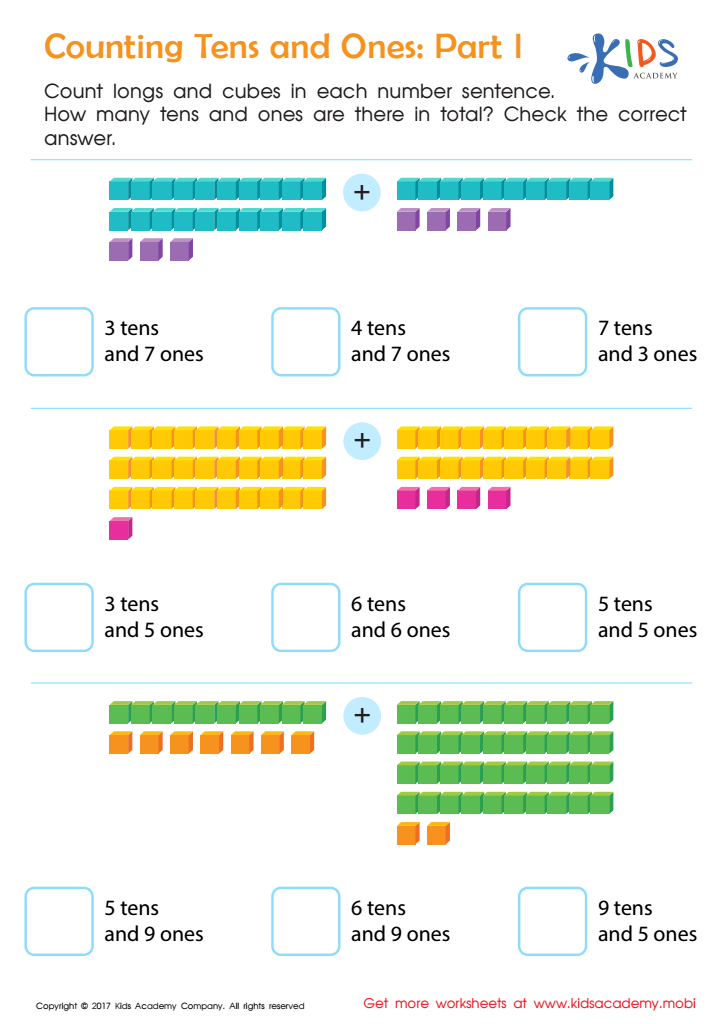
Counting Tens and Ones: Part 1 Worksheet
Kids Academy has a great place value worksheet to help kids learn when they don't have manipulatives at home! It includes longs and cubes that kids can count and add to find the sum. Colorful and downloadable, this page will help kids understand addition and place value better. Give it a try!
 Assign to My Students
Counting Tens and Ones: Part 1 Worksheet
Worksheet
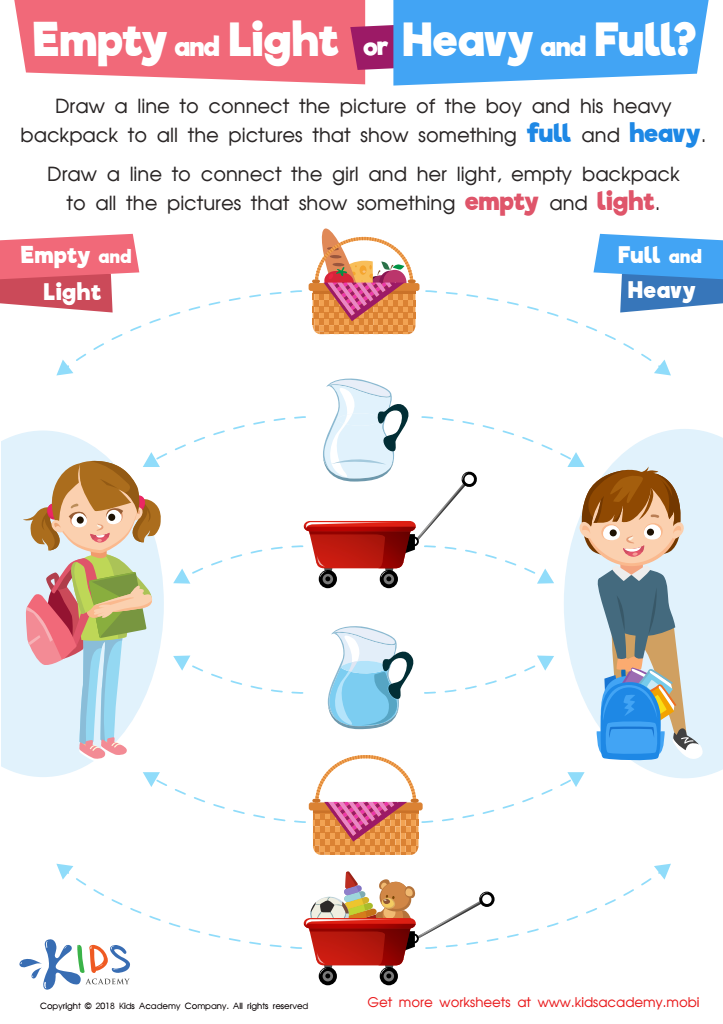
Empty and Light or Heavy and Full? Worksheet
Kids can have trouble understanding measurement, like the differences between heavy and light. This worksheet helps them associate full with heavy and empty with light, using familiar images. Plus, it's a fun way to practice fine motor skills, tracing the lines to connect the pictures.
Empty and Light or Heavy and Full? Worksheet
Worksheet
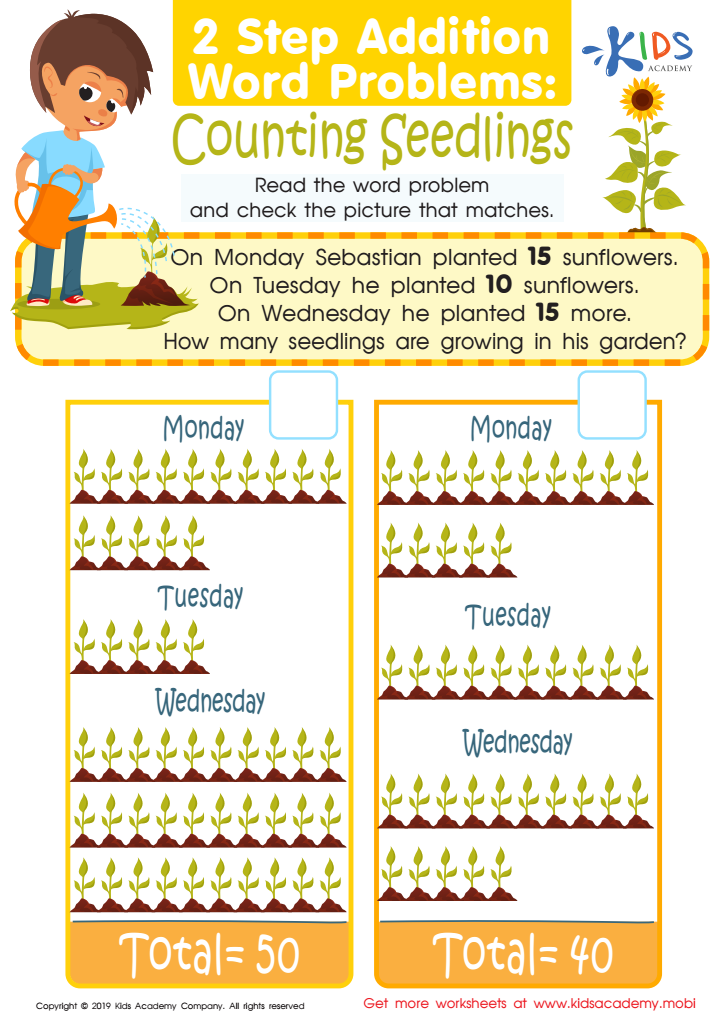
Counting Seedlings Worksheet
Understanding math word problems is key. Multiple steps can prove challenging - this free worksheet provides one-to-one picture representation to help kids solve multi-step addition word problems. Strengthen addition skills by choosing the matching picture to the answer.
Counting Seedlings Worksheet
Worksheet
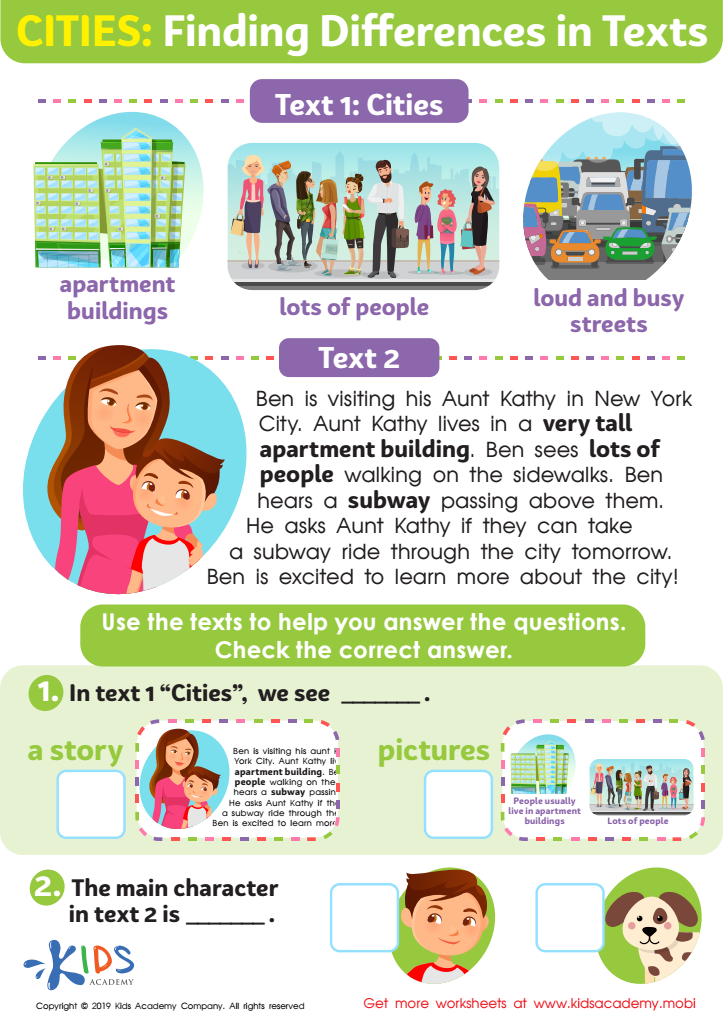
Cities: Finding Differences Worksheet
Critical thinking is essential for reading comprehension. New readers must be able to identify the key information in different text formats. This worksheet helps children learn what they might find in cities and how to differentiate between stories and pictures.
Cities: Finding Differences Worksheet
Worksheet
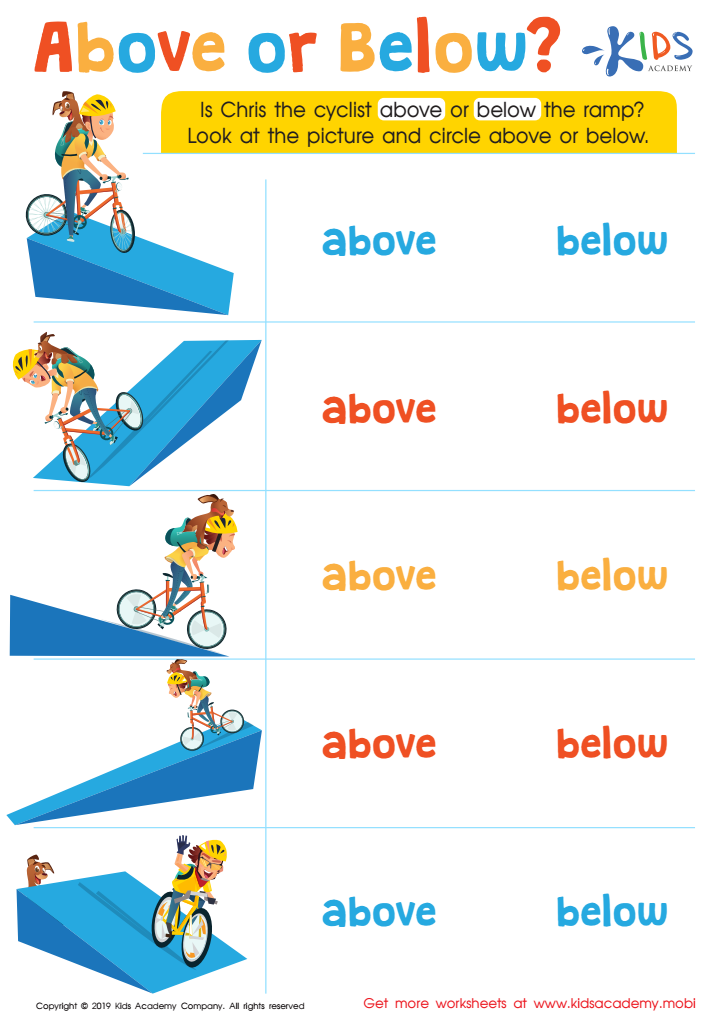
Above or Below? Worksheet
Do your kids cycle? Chris is a cyclist practicing on a ramp. Look at the pictures with them and decide if Chris is above or below the ramp. It's an important skill to help your kids become fluent speakers and writers - using the right words to describe something. Cycling is a fun sporting event.
Above or Below? Worksheet
Worksheet
Join Kids Academy for Free
Who is primarily going to use this learning content?








Visual perception skills are crucial for young children ages 4-6 because these abilities form the foundation for many cognitive and physical activities they will encounter as they grow. These skills include processes such as recognizing shapes, patterns, sizes, colors, spatial relationships, and more. Mastery of these visual perception skills is essential for several key developmental milestones and real-world tasks.
From an educational perspective, children with strong visual perception skills tend to excel in reading, writing, and math. These skills enable them to differentiate letters and numbers, understand symbols, and sense the spatial organization of text on a page. For instance, becoming adept at distinguishing between similar shapes like 'b' and 'd' or '2' and '5' is pivotal for reading and arithmetic success.
Furthermore, visual perception is integral to everyday activities, such as navigating spaces, completing puzzles, and drawing. Proper development of these skills also plays a role in social interactions, allowing children to interpret and respond to visual cues from peers or teachers efficiently.
Parents and teachers should encourage activities that foster visual perception skills, such as engaging in age-appropriate games, puzzles, and creative tasks. Addressing and nurturing these skills early can mitigate potential learning difficulties and build a strong foundation for lifelong learning and development. Taking active steps now ensures that children are prepared for the more complex challenges ahead in their educational journey.








