Easy Fractions of Shapes Worksheets for Ages 4-6
6 filtered results
-
From - To
Explore our "Easy Fractions of Shapes Worksheets for Ages 4-6" designed to introduce young learners to the concepts of fractions through engaging and visually appealing activities. Perfect for early grade students, these worksheets use colorful shapes and simple exercises to make learning fractions fun and accessible. Children will gain a solid foundation in recognizing, comparing, and understanding fractions using halves, thirds, and quarters. Ideal for classroom or home use, our printable worksheets ensure kids develop essential math skills while enjoying their educational journey. Start building a love for math with our easy-to-follow, expertly crafted resources today!
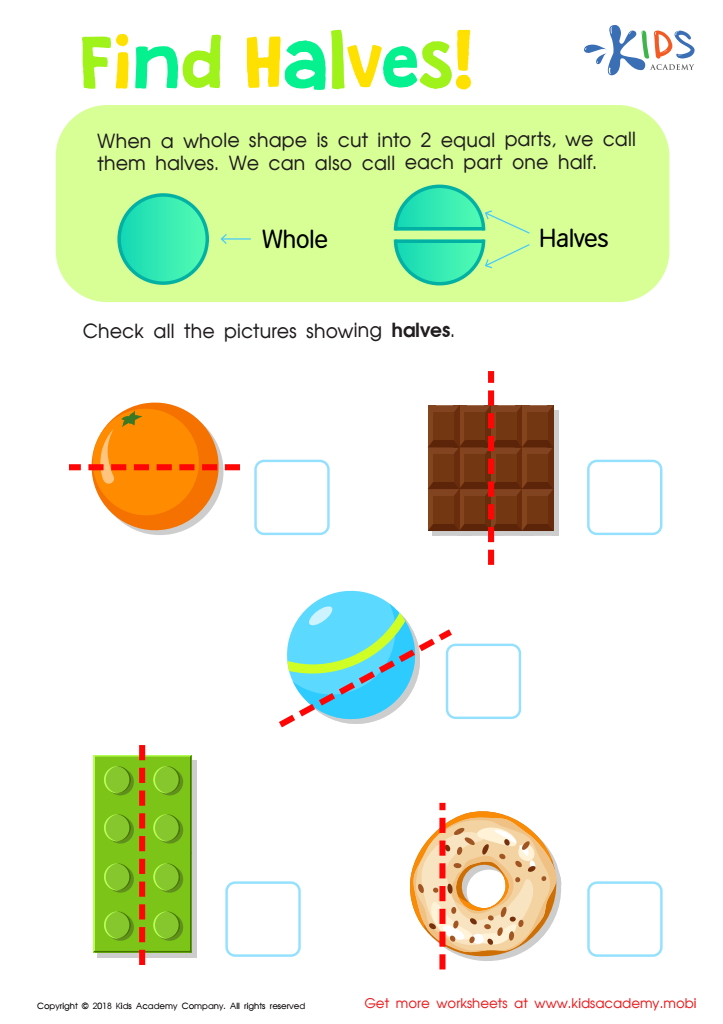
Find Halves Worksheet
 Assign to My Students
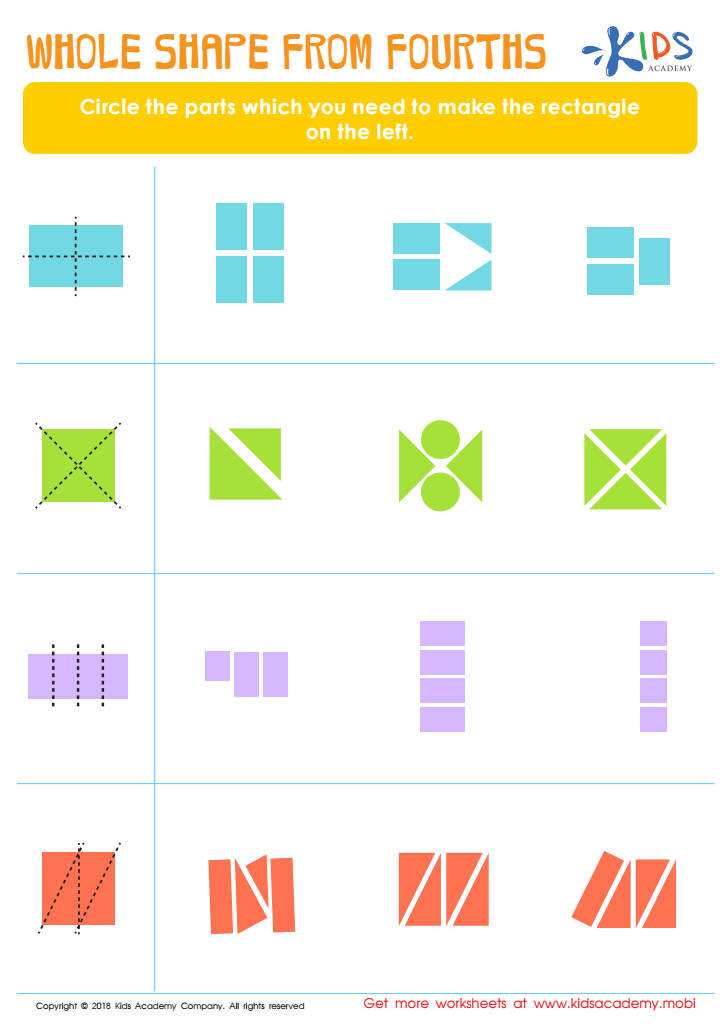
Whole Shape from Fourths Worksheet
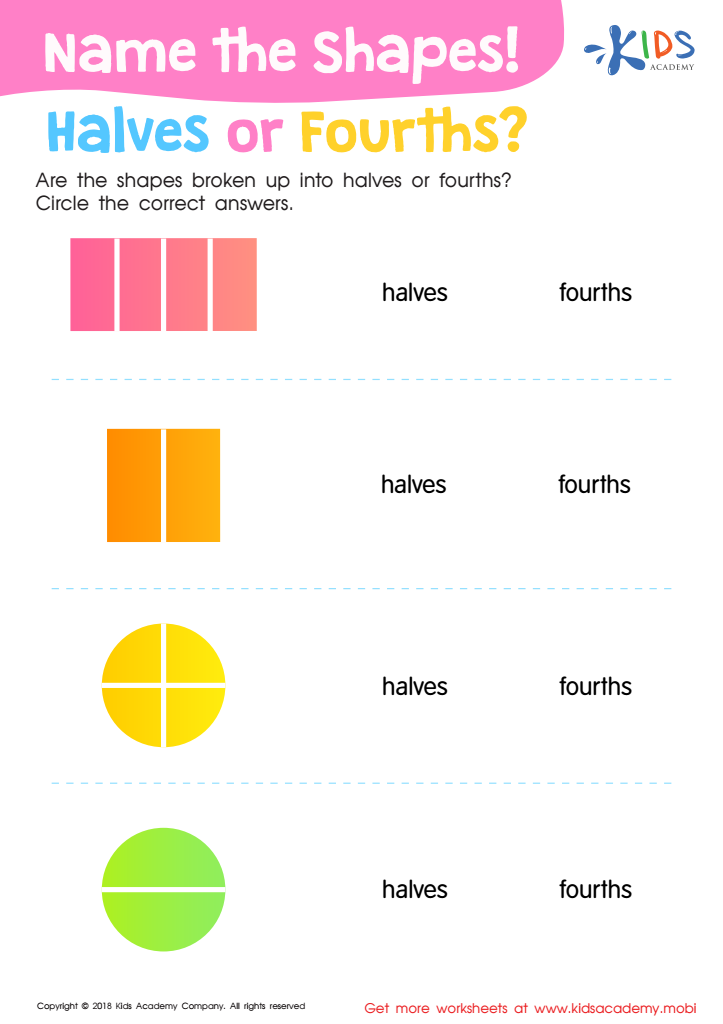
Name the Shapes Halves or Fourths? Worksheet
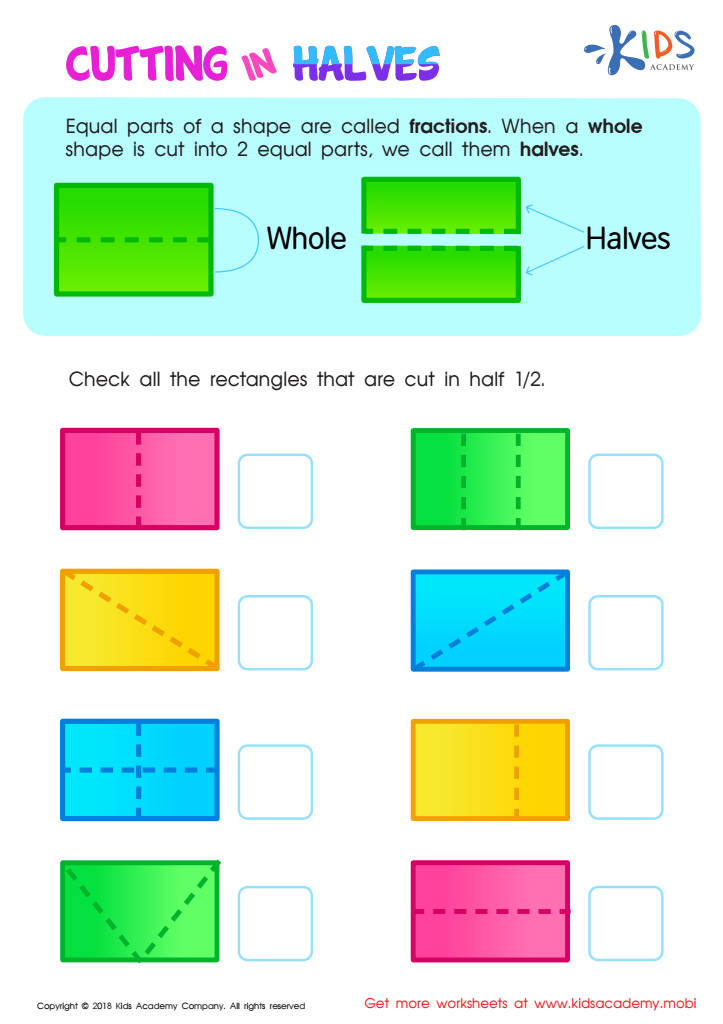
Cutting in Halves Worksheet
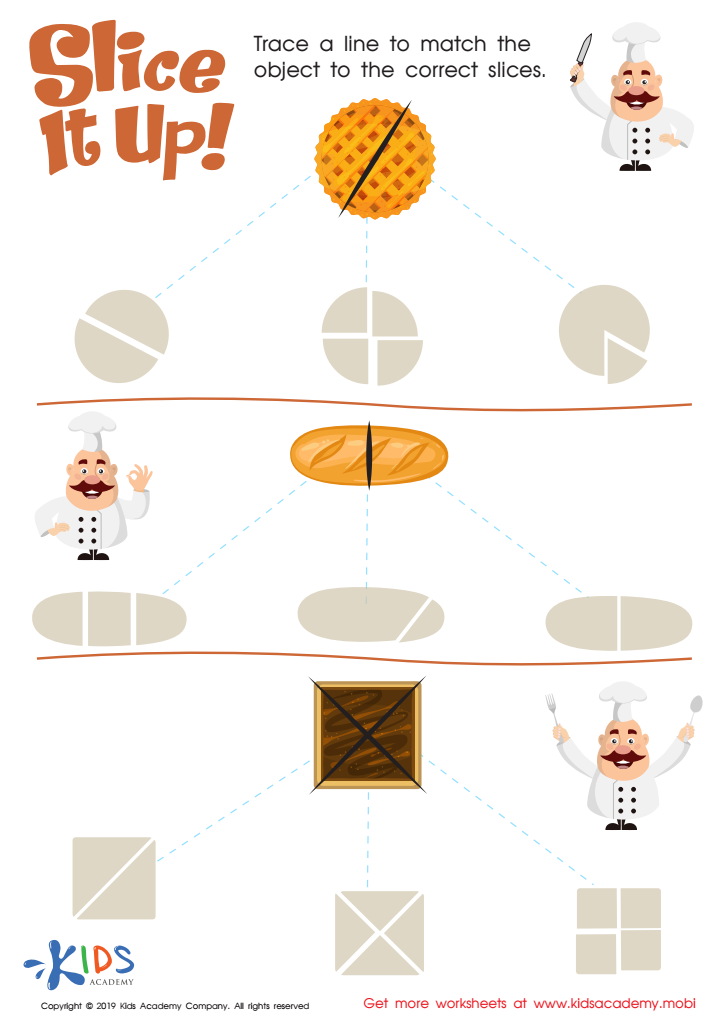
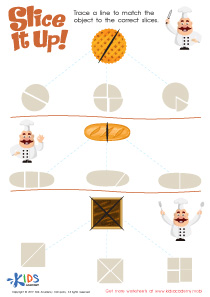
Slice It Up Worksheet
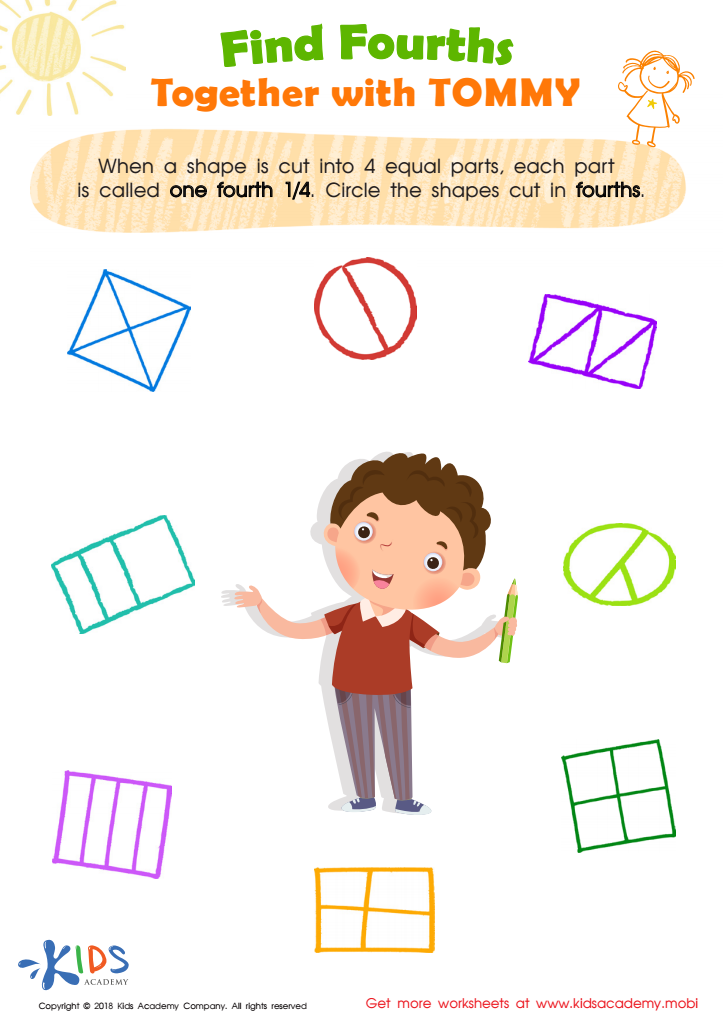
Find Fourths Together with Tommy Worksheet








Understanding fractions is a foundational mathematical skill, and introducing easy fractions of shapes to children aged 4-6 holds significant benefits. At this age, children are in the critical stages of cognitive and conceptual development. Fractions may seem advanced, but using shapes to illustrate these concepts makes learning visual, tangible, and accessible.
Shapes such as circles, squares, and triangles can be divided into equal parts, making fractions concrete rather than abstract. For example, showing how a circle divided into two equal halves helps children grasp what "half" means. This hands-on learning builds a strong numerical foundation and facilitates a seamless transition to more complex arithmetic concepts later.
Teaching fractions through shapes also enhances visual-spatial skills. Understanding how to partition shapes into equal parts reinforces the idea of division and proportional reasoning. This kind of early math exposure supports problem-solving and critical thinking, attributes that extend beyond mathematics and into everyday life.
Engaging children with fractions of shapes can also be fun and interactive, using activities like cutting fruits into pieces or coloring sections of a paper pizza. These activities make learning playful and stress-free, fostering a positive attitude towards math from an early age. Therefore, parents and teachers should prioritize this aspect of early education to set up young learners for long-term success.