
Following instructions Easy Math Worksheets for Ages 4-6
5 filtered results
Difficulty Level
Grade
Age
-
From - To
Subject
Activity
Standards
Welcome to our "Following Instructions Easy Math Worksheets for Ages 4-6" collection! Our engaging worksheets are designed to make learning math fun and easy for young children. By combining clear instructions with interactive activities, kids enhance their numerical skills, improve their ability to follow directions, and develop critical thinking. Ideal for preschool and kindergarten students, these worksheets cover fundamental concepts like counting, simple addition and subtraction, shapes, and patterns. Perfect for both classroom and at-home learning, our easy-to-follow exercises provide a solid foundation for future math success. Explore our resources to make math an enjoyable adventure for your child!
Favorites
With answer key
Interactive
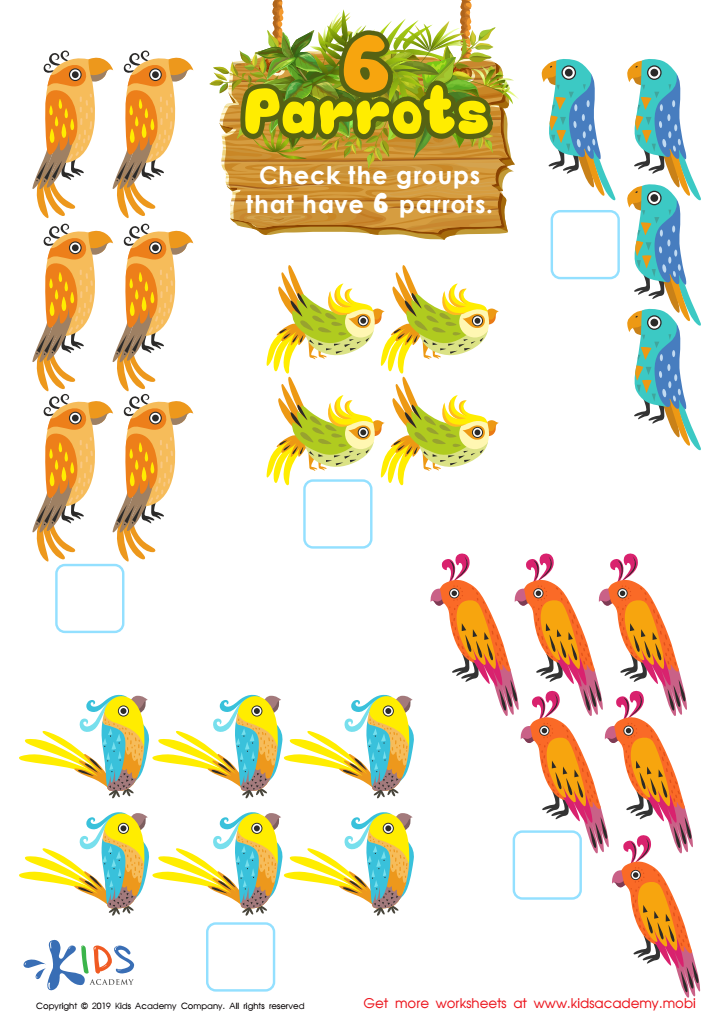
6 Parrots Worksheet
Love parrots? Here's a free worksheet to help your children practice counting to six with colorful parrot representations! Kids will adore counting the parrots and checking off groups of six - and it won't even feel like math! Just a fun way to make some new and exciting friends.
6 Parrots Worksheet
Worksheet
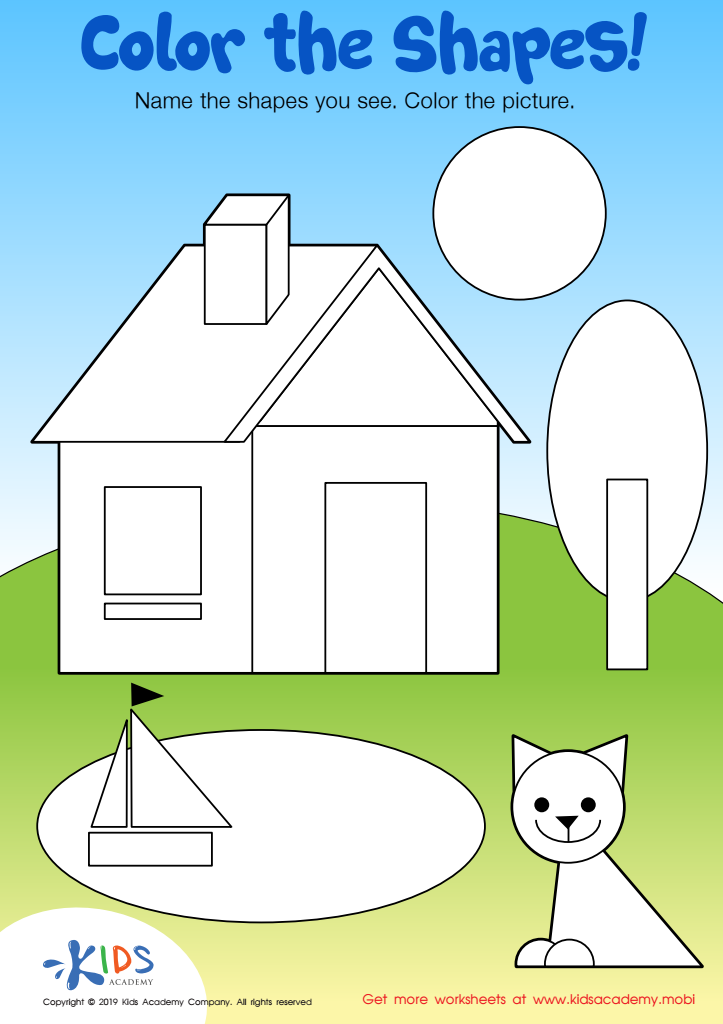
Color the Shapes Worksheet
Help your student master shape identification with this fun worksheet. Ask them to name the shapes in the picture, then color it! Ask questions like "How many squares do you see?" and "How many triangles?" to extend the learning. Identify squares, circles, triangles and rectangles with this enjoyable coloring page.
Download (PDF)
 Assign to My Students
Assign to My Students
Color the Shapes Worksheet
Worksheet
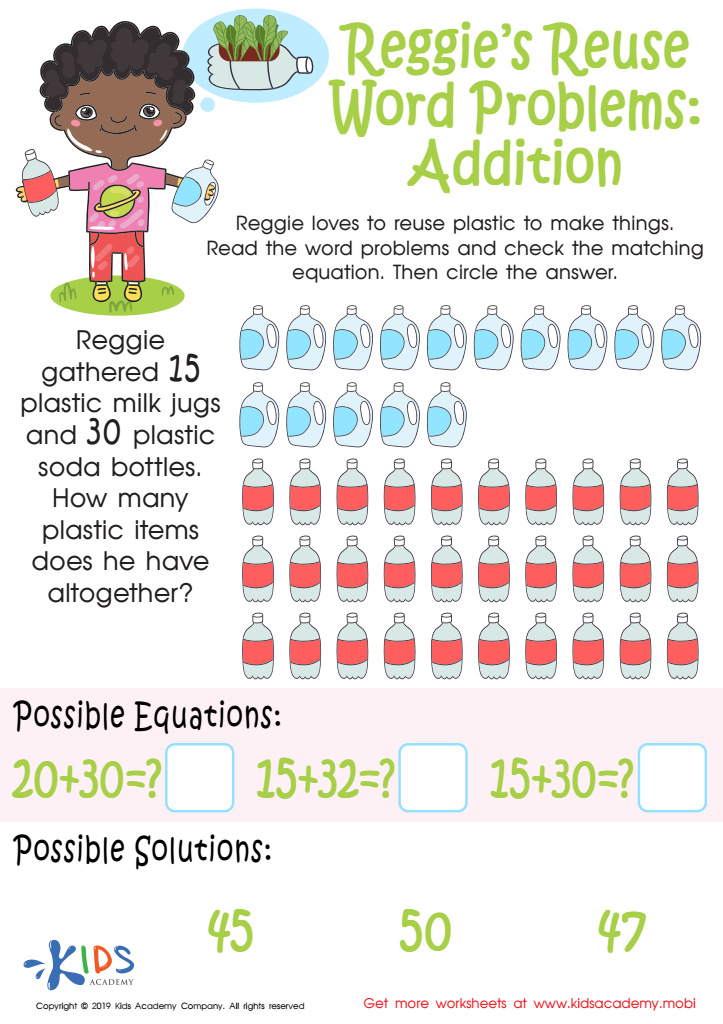
Reggie's Reuse Word Problems: Addition Worksheet
Help Reggie and your child save the planet by using this free worksheet! It reinforces addition word problems using one-to-one picture representation, and helps them pick out the correct number sentence and possible solutions. It's an easy way to help the planet and practice math!
Reggie's Reuse Word Problems: Addition Worksheet
Worksheet
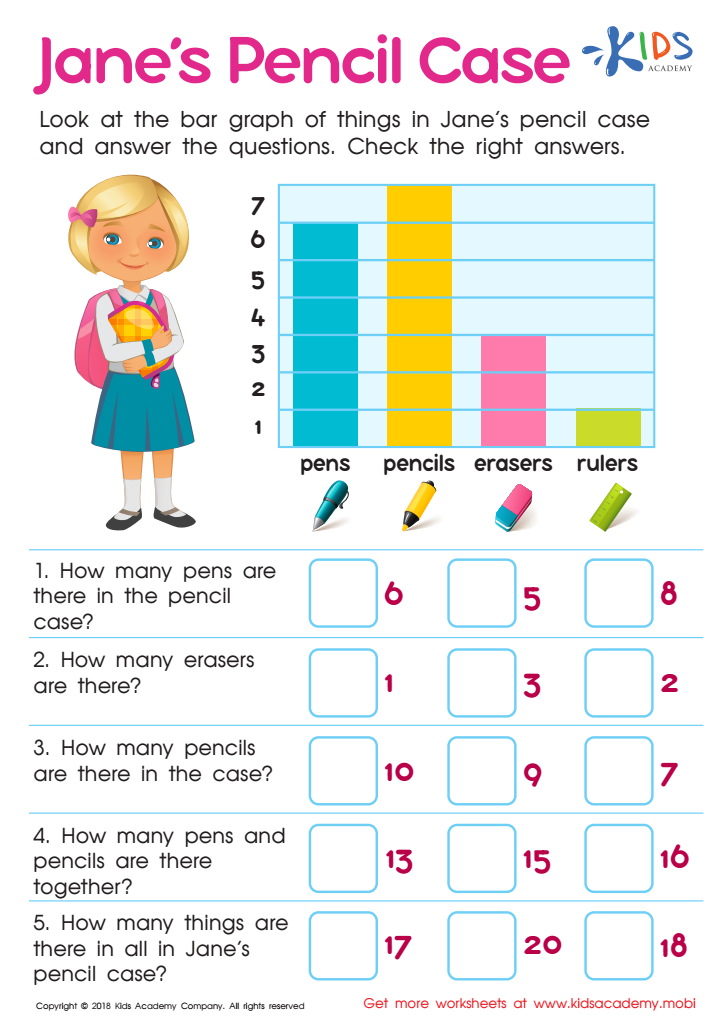
Jane's Pencil Case Worksheet
Help Jane organize her pencil case! Have your child look and the bar graph on the worksheet and interpret the data. Ask them to read each problem, then check the box next to the correct number. It's a fun way to practice reading graphs and reporting data.
Jane's Pencil Case Worksheet
Worksheet
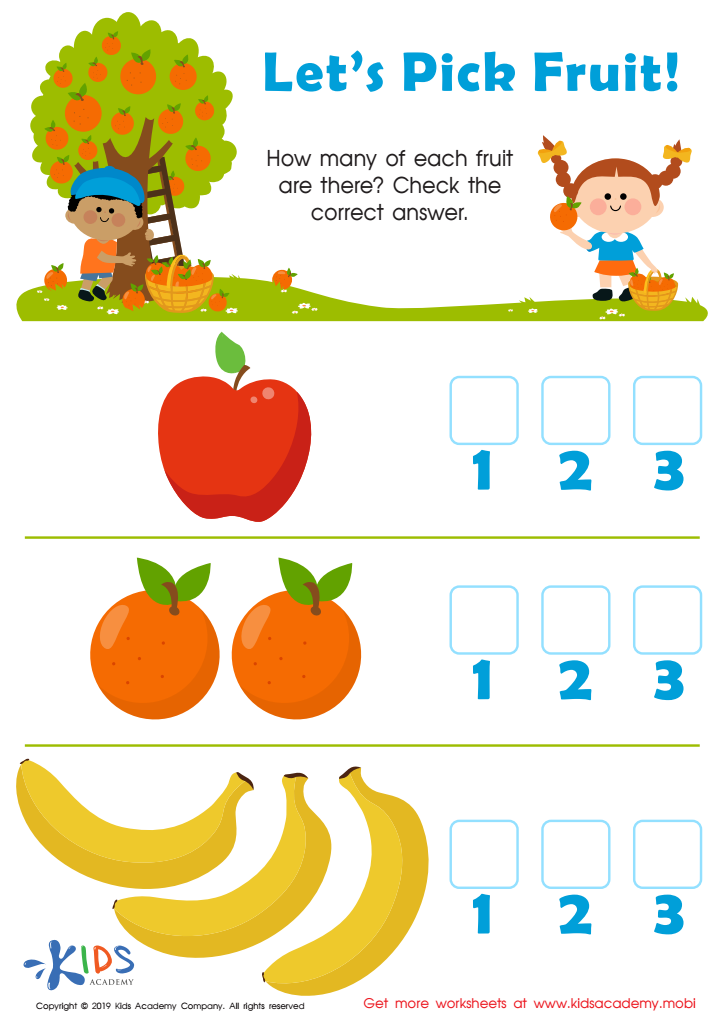
Let's Pick Fruit Worksheet
Picking fruit is fun - and counting it is even better! This free worksheet is perfect for young math learners. They'll use picture representation to count the fruit in each problem and then select the correct answer from the multiple-choice boxes. It's a great way to teach number sense in an easy, fun way!
Let's Pick Fruit Worksheet
Worksheet
Join Kids Academy for Free
Who is primarily going to use this learning content?






Parents and teachers should prioritize following instructions in easy math for children ages 4-6 because this fundamental skill lays the groundwork for more complex learning. At this formative stage, young children benefit tremendously from structured guidance, which helps them develop focus, discipline, and the ability to listen. Ensuring that they can follow simple math instructions cultivates their cognitive abilities and critical thinking skills.
Mastering basic instructions in math fosters a positive learning environment, which enhances a child’s confidence and eagerness to learn. When children successfully follow instructions, they experience a sense of achievement, motivating them to tackle increasingly challenging tasks. Additionally, early proficiency in math sets the stage for future academic success, as math is integral to many subjects.
Furthermore, understanding and following instructions in early math can enhance social skills such as cooperation, patience, and communication. These skills are imperative both inside and outside the classroom. By embedding good habits early, parents and teachers can ensure that children are well-prepared for their educational journey, making the process of learning both engaging and effective. Prioritizing this skill not only benefits their academic performance but also their personal development and future problem-solving abilities.








