
Fine motor skills (writing) Easy Worksheets for Ages 4-7
3 filtered results
Difficulty Level
Grade
Age
-
From - To
Subject
Activity
Standards
Welcome to our “Fine Motor Skills (Writing) Easy Worksheets” page designed specifically for children ages 4 to 7! Our engaging worksheets help young learners develop essential fine motor skills through enjoyable writing exercises. Featuring fun activities such as tracing letters, connecting dots, and practicing shapes, these worksheets are tailored to enhance hand-eye coordination and pencil control. Perfect for home or classroom use, each worksheet encourages creativity while reinforcing foundational writing skills. Explore our collection today and support your child's growth and confidence in writing with these interactive and educational resources! Let’s make writing fun and engaging!
Favorites
With answer key
Interactive
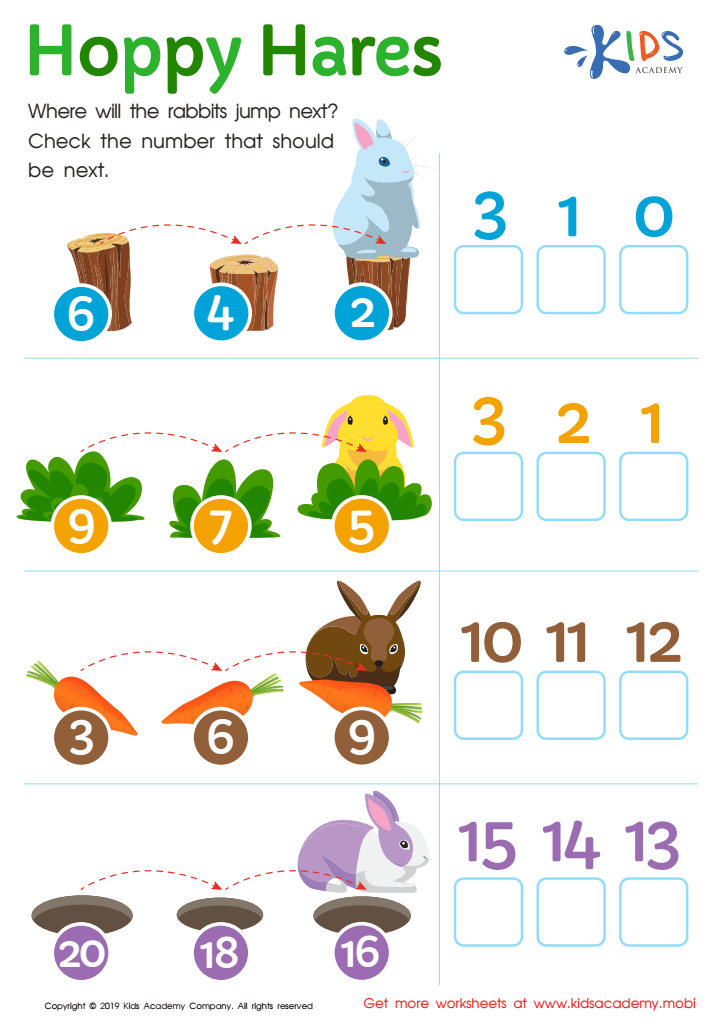
Hoppy Hares Worksheet
Ask your kids if they can identify the rabbits in the picture, then help them solve the math problems. The rabbits need to hop from place to place, so look at the numbers and help your kids figure out the next one. These cute and friendly little animals make great pets. Have fun solving this worksheet together!
 Assign to My Students
Hoppy Hares Worksheet
Worksheet
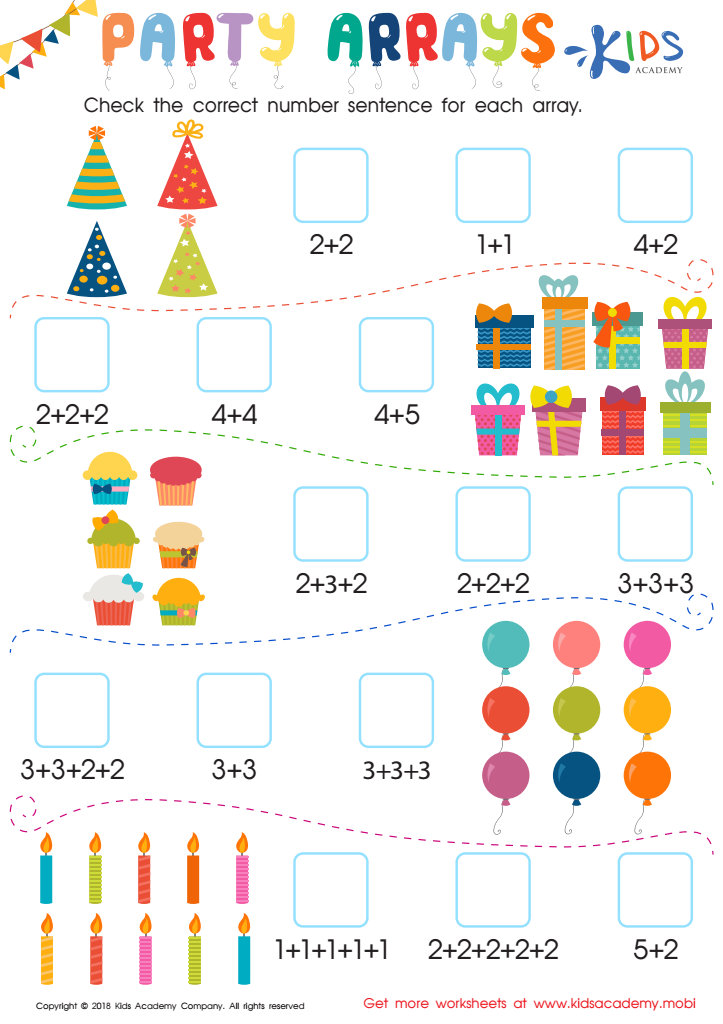
Party Arrays Worksheet
Help your child count the objects in each of the five arrays, then check the correct number sentence for each. This exercise will test their math skills and understanding of number sentences. Guide them to select the appropriate boxes.
Party Arrays Worksheet
Worksheet
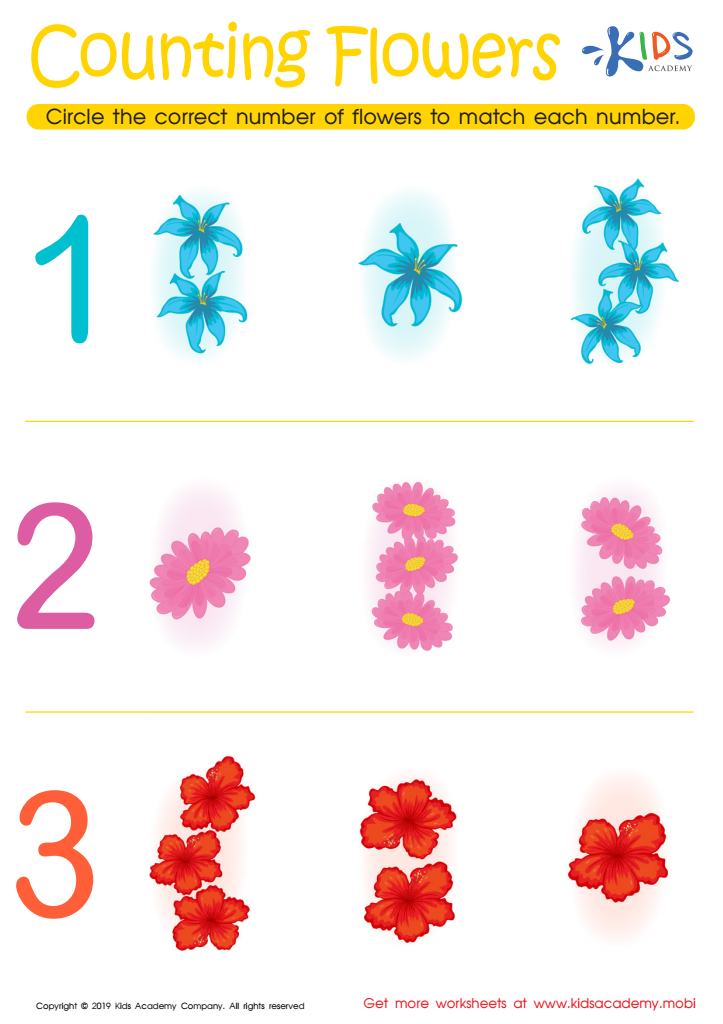
Counting Flowers Worksheet
Kids love Flower Power! This free PDF helps kids practice basic number sense and counting. They match the correct number of colorful flowers to the corresponding numeral. An enjoyable game that improves basic number sense - perfect!
Counting Flowers Worksheet
Worksheet
Join Kids Academy for Free
Who is primarily going to use this learning content?







%20(1).jpg)
Fine motor skills are crucial for children aged 4-7 as they support essential everyday tasks and overall development. Parents and teachers should care about these skills because they form the foundation for writing—a skill that is integral to academic success and personal expression. As children learn to control their hand movements, they strengthen the muscles in their hands and fingers, which enhances their ability to grip pencils, scissors, and other tools.
The development of fine motor skills is also linked to cognitive growth, as children learn to follow instructions, concentrate, and solve problems. Engaging in activities like coloring, cutting, and playing with small toys helps children develop these skills in a fun and interactive way.
Moreover, strong fine motor skills boost children's confidence. When they can write their names, draw pictures, or complete tasks independently, it fosters a sense of accomplishment. These skills are not only vital for academic tasks but also for daily life, as they empower children to participate in various activities—from buttoning their shirts to tying their shoes. By supporting the development of fine motor skills, parents and teachers can equip children for future challenges and promote their overall growth.








