Identifying objects Easy Worksheets for Ages 4-7
3 filtered results
-
From - To
Welcome to our "Identifying Objects Easy Worksheets" tailored for children ages 4-7! These engaging worksheets are designed to enhance young learners' observational skills and boost their ability to recognize and categorize everyday items. With colorful illustrations and age-appropriate activities, children will enjoy exploring various objects through fun tasks, including matching, sorting, and identifying. Our resources not only support early cognitive development but also encourage critical thinking and creativity. Perfect for classrooms or at-home learning, these worksheets provide an enjoyable way for kids to build their vocabulary and foundational skills. Start their learning adventure today!
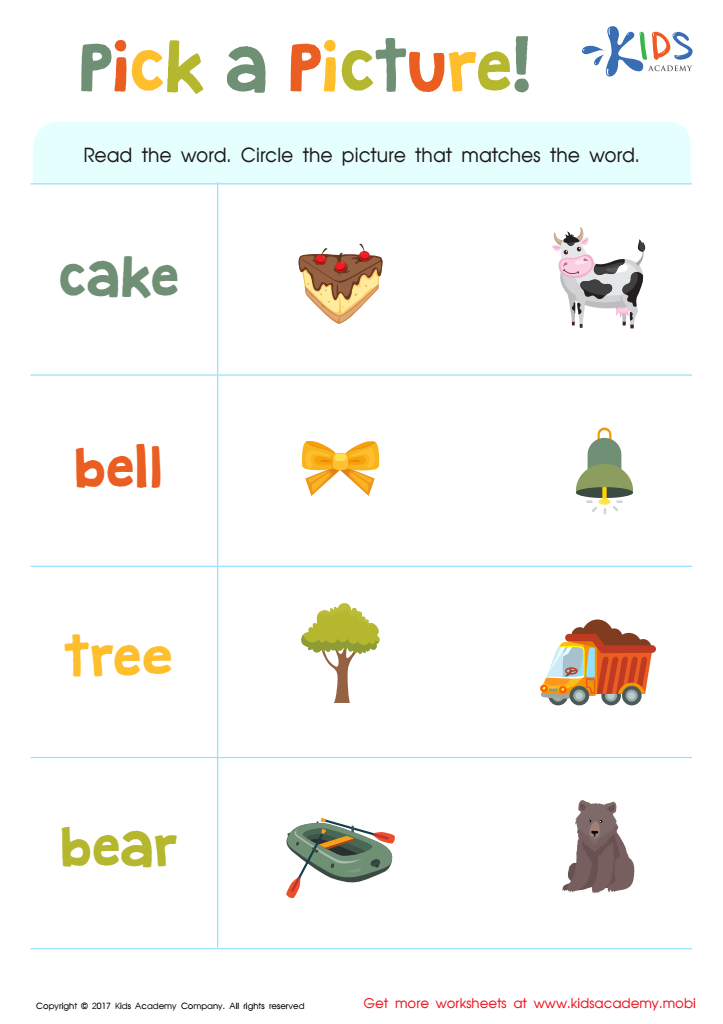
Pick a Picture Word Recognition Worksheet
 Assign to My Students
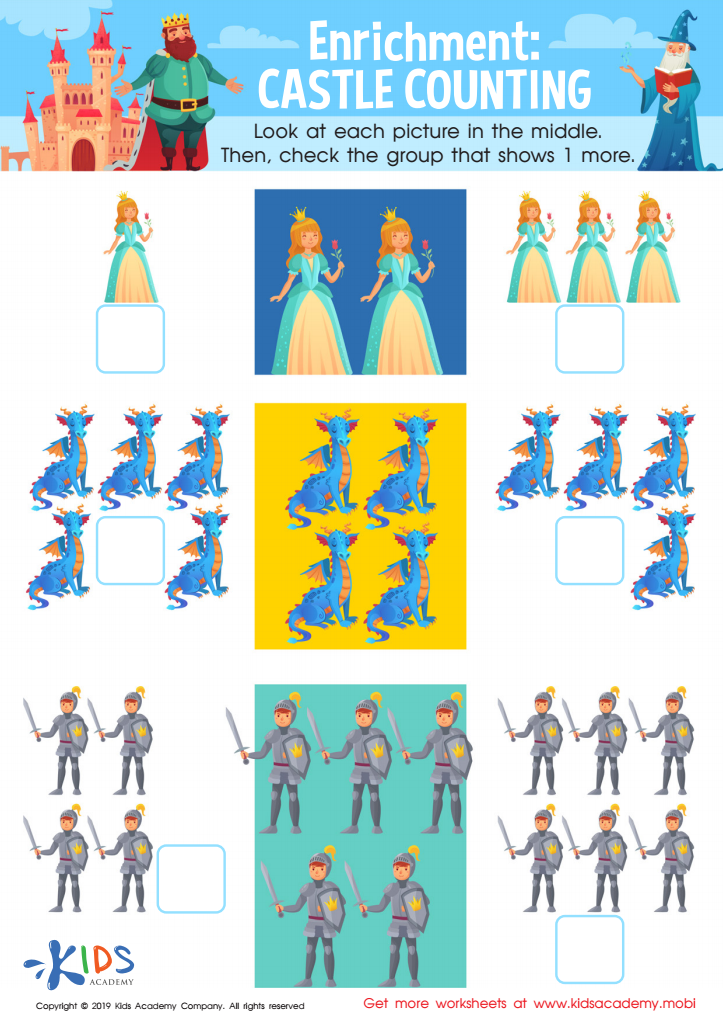
Enrichment: Castle Counting Worksheet
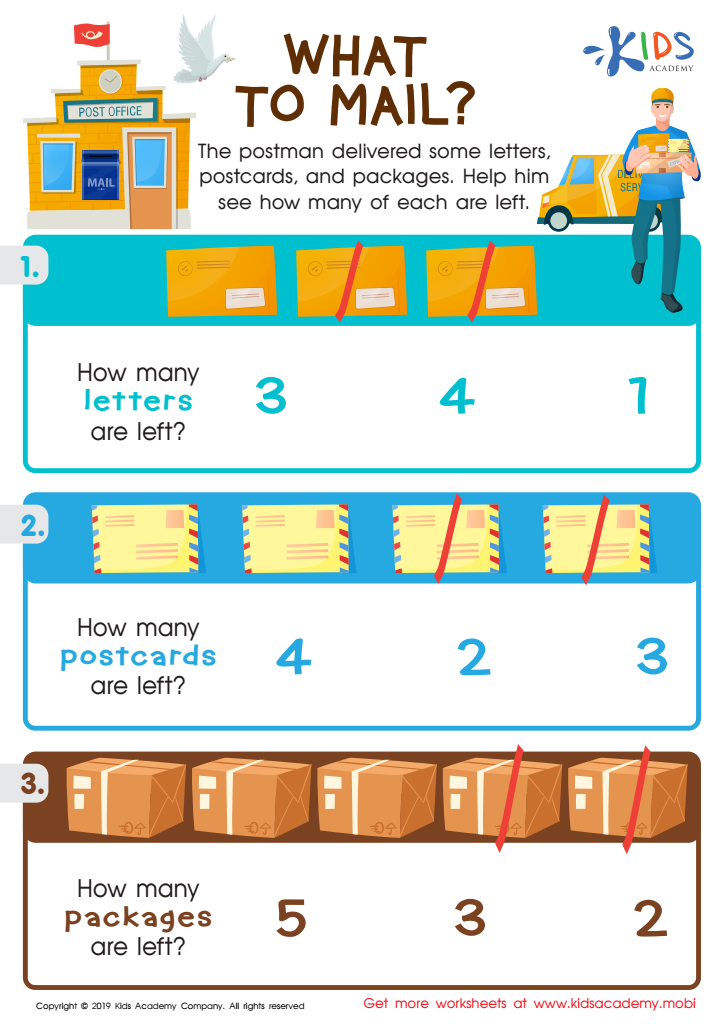
What to Mail? Worksheet








Identifying objects is a crucial developmental skill for children aged 4-7, impacting their cognitive, linguistic, and social growth. For parents and teachers, promoting object recognition helps in various ways. First, it enhances vocabulary, as children learn to name and categorize everyday items. This foundational language skill aids in reading and comprehension, setting them up for success in later academic endeavors.
Moreover, recognizing objects strengthens cognitive abilities by encouraging critical thinking and problem-solving. As children identify and match objects, they develop the skills necessary to make connections between concepts, fostering their ability to analyze and categorize information.
Socially, participating in activities that involve object identification promotes interaction among peers. Children learn to communicate, negotiate, and collaborate, which are vital skills for building relationships.
Additionally, understanding objects in their environment cultivates a sense of curiosity and exploration. This heightened awareness supports a love for learning, motivating children to seek out new experiences and knowledge.
Ultimately, investing time in teaching children to identify objects cultivates a solid foundation for future learning, enriching their academic experience and enhancing their overall development. Thus, parents and teachers play a pivotal role in fostering this essential skill.








