
Understanding line plots Easy Worksheets for Ages 4-7
8 filtered results
Difficulty Level
Grade
Age
-
From - To
Subject
Activity
Standards
Introduce young learners to the concept of line plots with our engaging and easy-to-use worksheets, tailored for ages 4-7. Understanding line plots has never been this fun and accessible! Our printable worksheets are designed to develop essential learning skills through colorful graphics and simple activities that visualize data in a clear, understandable way. By working through these exercises, children will grasp the basics of data collection, interpretation, and representation, helping to build a strong foundation for future math success. Visit our page to download these expertly crafted resources and support your child’s educational journey with ease and enjoyment.
Favorites
With answer key
Interactive
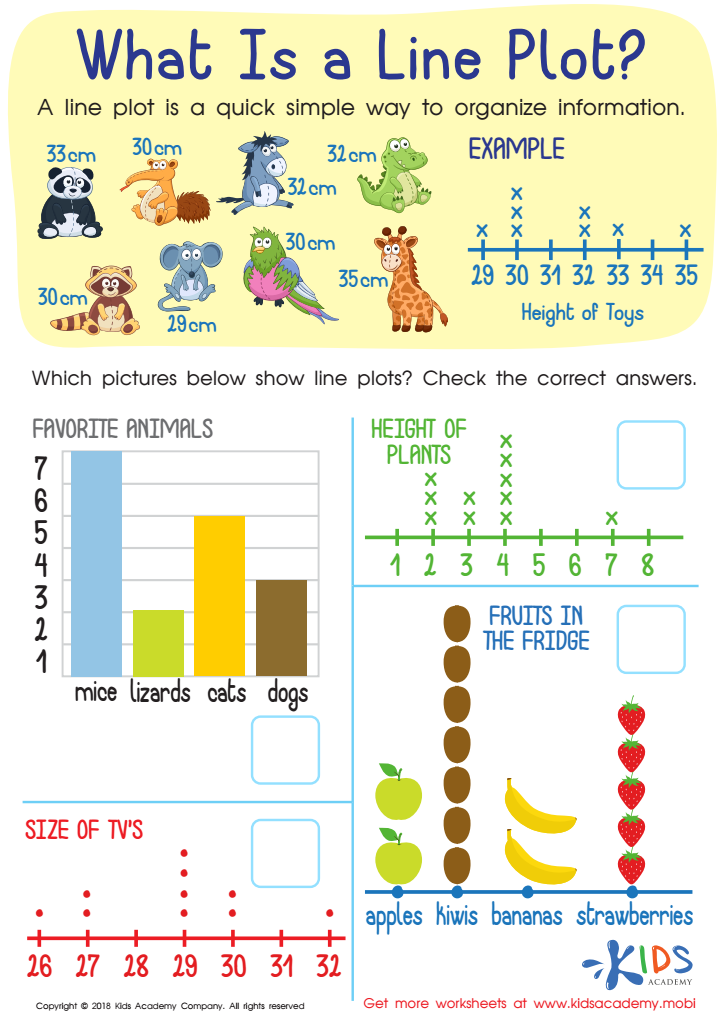
What Is a Line Plot? Worksheet
A line plot is an ideal method to organize data. For example, if your child needs to arrange objects for easy recognition, draw a line plot. This worksheet can help teach the skill. Kids must identify correct pictures that display line plots.
 Assign to My Students
What Is a Line Plot? Worksheet
Worksheet
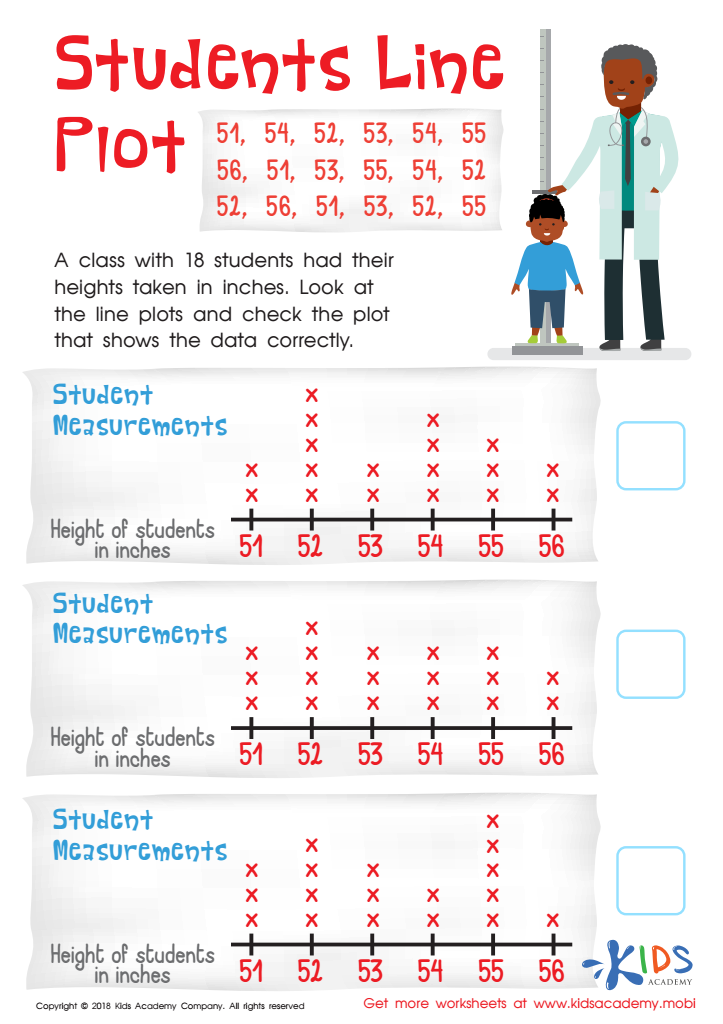
Students Line Plot Worksheet
Help your students learn to draw a line plot correctly by giving real examples. In this exercise, they must check the data of a class of 18 students' heights (in inches). Have them compare two line plots and figure out which one is correct.
Students Line Plot Worksheet
Worksheet
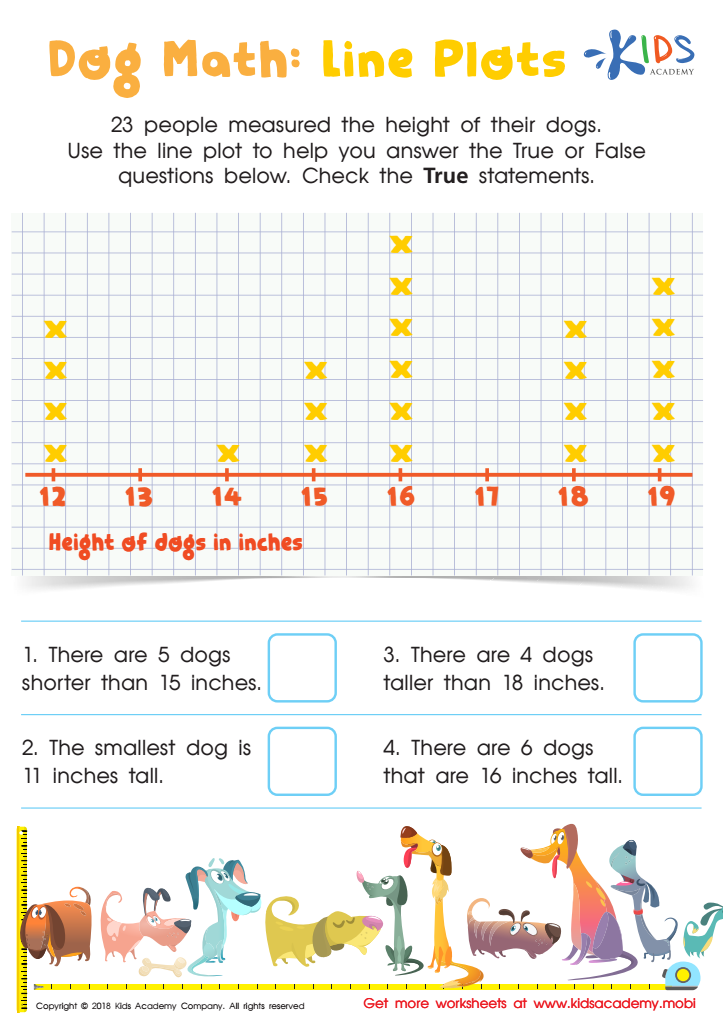
Dog Math: Line Plots Worksheet
Do your kids love dogs? If you have family pets, your kids may be excited to do this worksheet. It involves a line plot and True/False questions about 23 people measuring their dogs' heights. Assist your kids in verifying the statements that are True.
Dog Math: Line Plots Worksheet
Worksheet
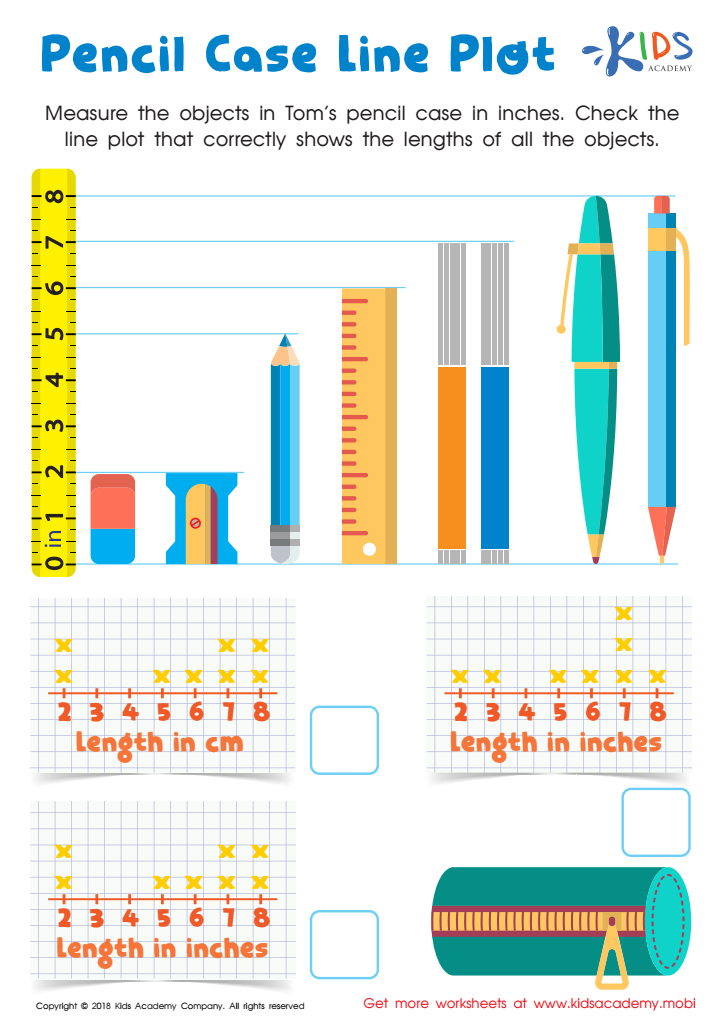
Pencil Case Line Plot Worksheet
Explain to your child that a line plot is a way to organize information. For example, if they need to arrange objects, they should draw a line plot. Now, have them help Tom measure the objects in his pencil case in inches. Then, have them check the line plot that accurately shows the length.
Pencil Case Line Plot Worksheet
Worksheet
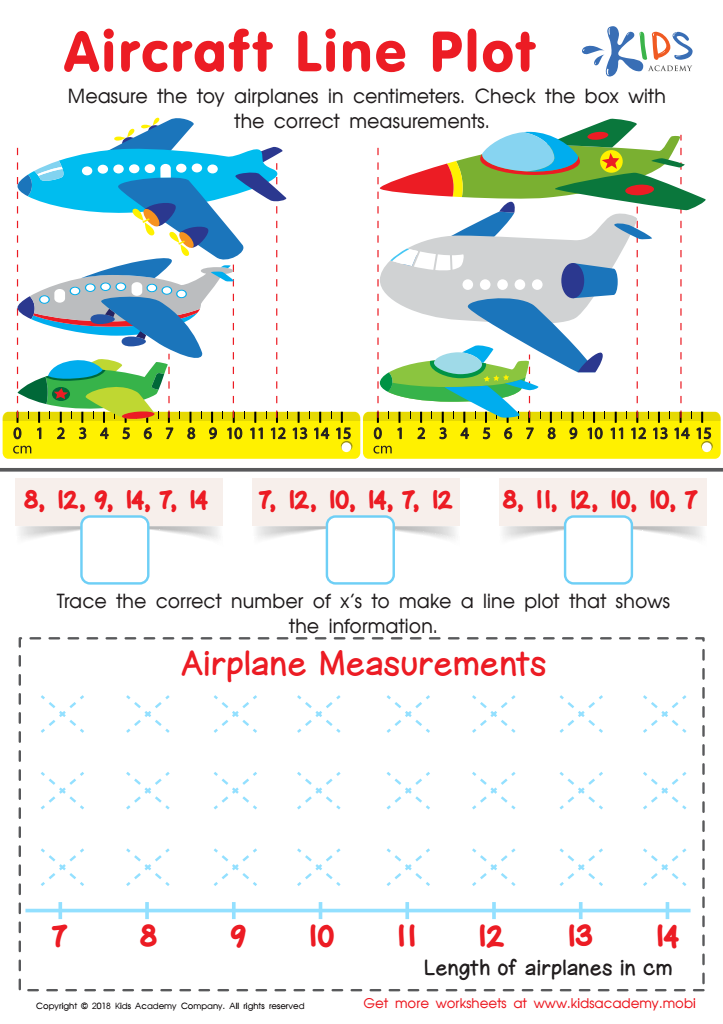
Aircraft Line Plot Worksheet
If your kids are aviation enthusiasts, they'll love this worksheet! Look at the picture with them, then ask them to measure the toy planes in cm. Check the box with the right measurements and then trace the x's to make a line plot with the data.
Aircraft Line Plot Worksheet
Worksheet
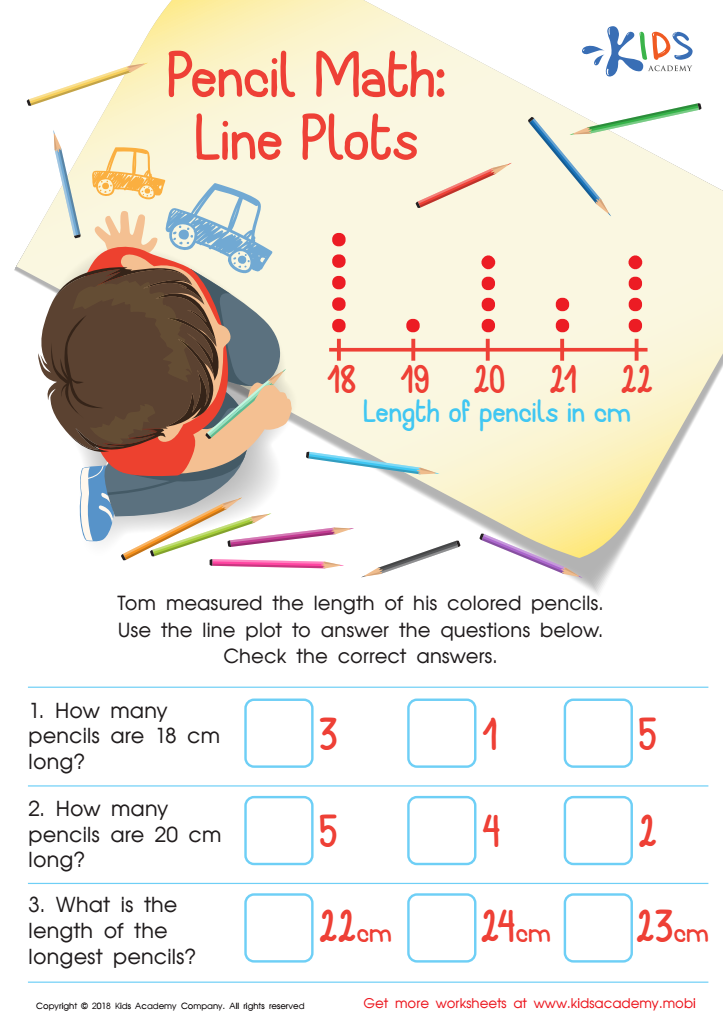
Pencil Math: Line Plots Worksheet
Your child will meet Tom in this worksheet, helping him find the length of his colored pencils. Tom has written the lengths in cm, and the line plot will help your kids answer the questions. Check the correct answers for each, including how many pencils are of a certain length. The line plot makes it easy to find the answers.
Pencil Math: Line Plots Worksheet
Worksheet
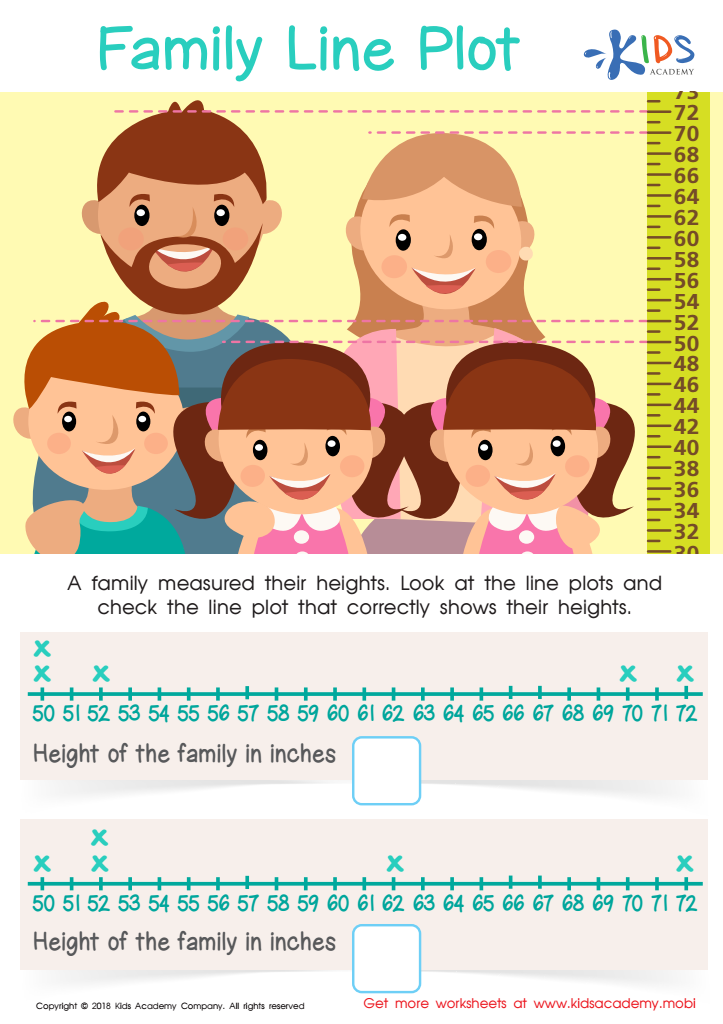
Family Line Plot Worksheet
Have you and your kids ever done a family height measurement? How did it go? If they're familiar with it, this worksheet may be simpler. The picture shows a family with their heights recorded. Get your kid to look at the line plots and choose the one that shows the family's heights accurately.
Family Line Plot Worksheet
Worksheet
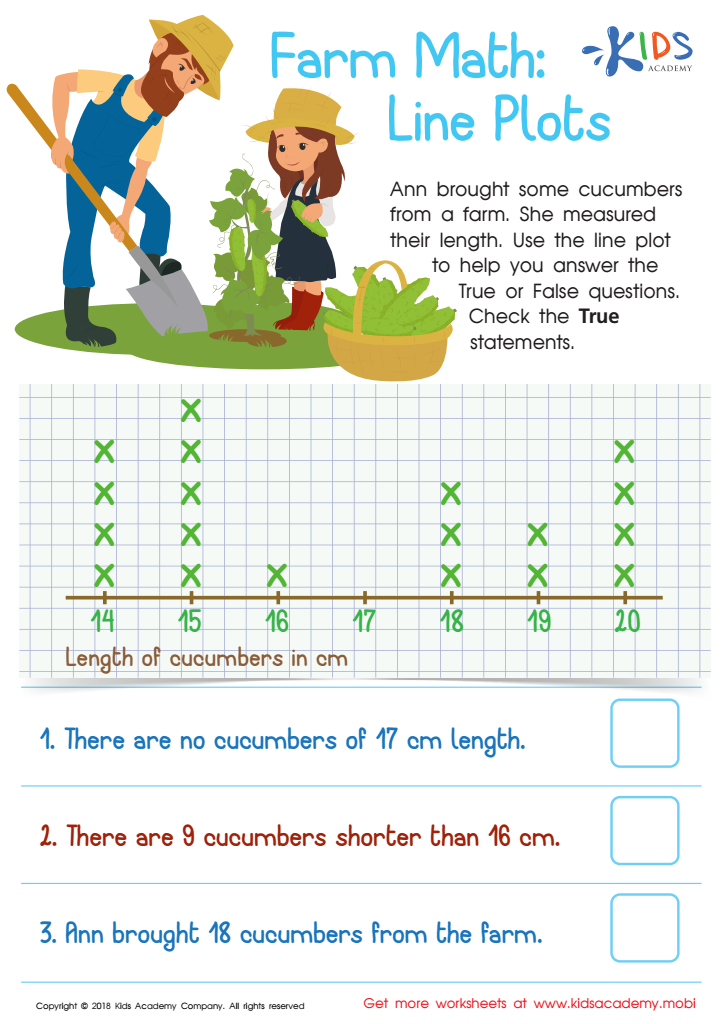
Farm Math: Line Plots Worksheet
Ann brought cucumbers from a farm and measured their length. She drew a line plot for your students to use to answer True/False questions about the number and length of the cucumbers. Ask your students to check only the True statements. (80 words)
Farm Math: Line Plots Worksheet
Worksheet
Join Kids Academy for Free
Who is primarily going to use this learning content?







Understanding line plots is crucial for young learners as it lays the foundation for essential math skills and critical thinking. For children aged 4-7, grasping the basics of line plots can significantly simplify their comprehension of more complex data visualization concepts later on. Line plots help kids learn to organize and represent data visually, nurturing their ability to interpret and analyze information at a young age.
For parents and teachers, encouraging familiarity with line plots offers a way to integrate practical math skills into everyday life. Children can engage in simple activities like tracking daily weather patterns or survey results on favorite fruits, making learning both fun and relatable. This not only piques their interest in mathematics but also enhances their observational skills and attention to detail.
Moreover, a solid understanding of line plots boosts children's confidence in tackling more advanced mathematical tasks, promoting a positive attitude towards the subject. It also supports logical thinking and problem-solving abilities, which are valuable across various academic disciplines. By caring about young learners' understanding of line plots, parents and teachers play an integral role in nurturing a generation of confident, analytical, and prepared individuals well-equipped for future educational challenges.








